
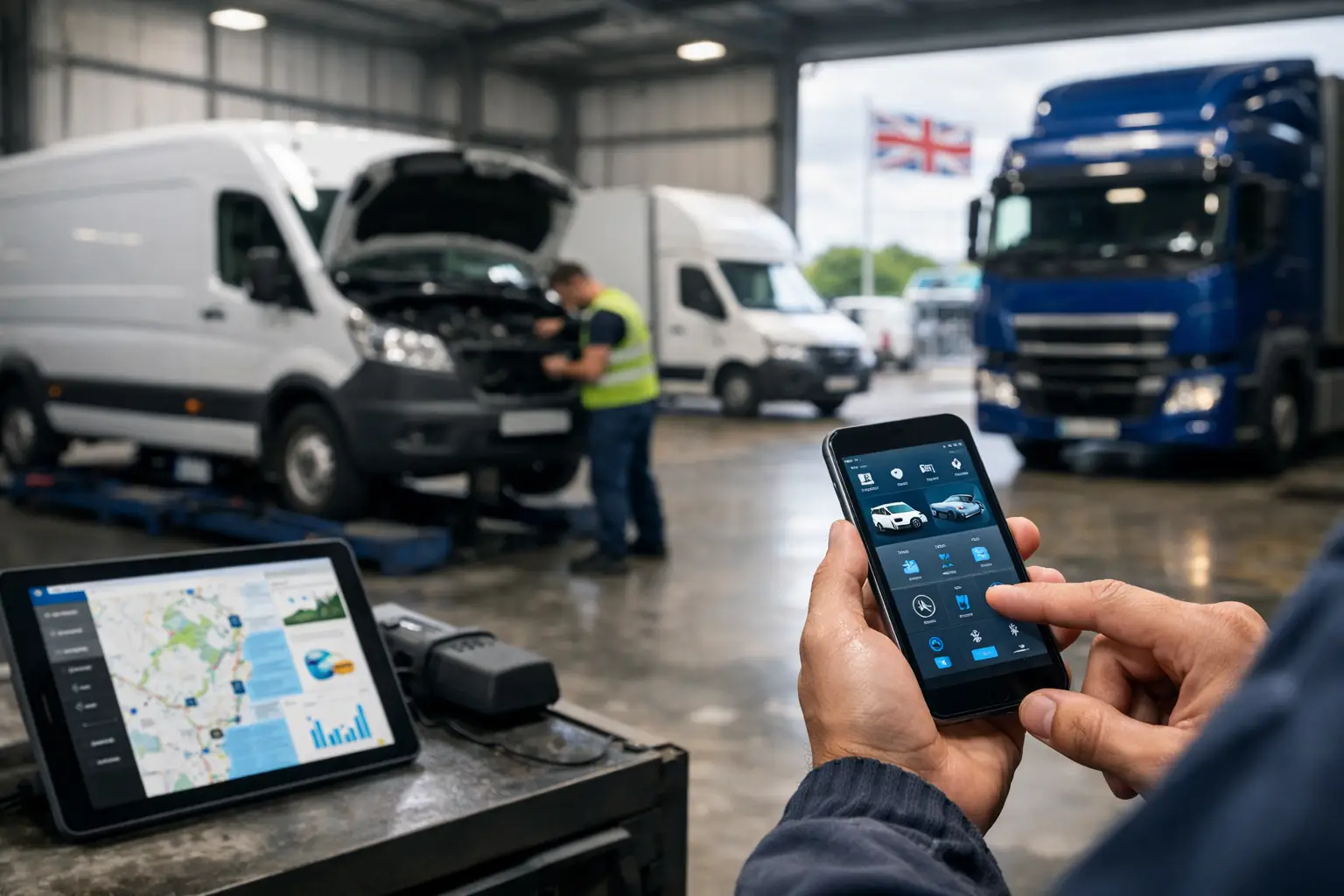
A missed service is rarely just a workshop problem. For a transport operator, it can mean a vehicle off the road, a failed delivery, an unexpected hire cost and difficult questions about maintenance controls. The best fleet maintenance apps give managers a clearer view of what is due, what has been reported and what needs action before a small issue becomes a costly disruption.
For UK HGV, van and mixed-fleet operators, the right choice also has to support the wider job. Maintenance records sit alongside daily walkaround checks, defect reporting, vehicle availability, driver behaviour and operator licence obligations. An app that only sends a reminder may be useful, but it will not necessarily reduce the admin and risk created by disconnected systems.
What makes the best fleet maintenance apps useful?
The strongest maintenance apps are not judged by the number of screens or reports. They are judged by whether a transport manager can answer practical questions quickly: Which vehicles are due for inspection? Has a driver-reported defect been acknowledged? Is a trailer available for tomorrow's work? What evidence is available if maintenance controls are reviewed?
At a minimum, the system should keep a complete asset record, schedule planned maintenance by date, mileage or engine hours, and retain an auditable history of work completed. It should also make it easy for drivers or depot staff to report defects from the roadside or yard, with photographs and clear status updates where appropriate.
For fleets operating under an O-licence, maintenance cannot be treated as a separate back-office task. The best systems help teams show that inspections, safety checks and repairs are being managed consistently. That does not remove the need for sound processes, competent maintenance providers or proper record keeping. It does make those processes easier to follow and supervise.
Five approaches to fleet maintenance software
There is no single best choice for every operator. A local delivery fleet with 15 vans has different priorities from a national haulier running tractors, trailers and drivers' hours rules. The comparison below focuses on the type of operational fit each platform may offer.
| Platform | Best suited to | Where it can help | Consider before choosing | |---|---|---|---| | Fleetio | Fleets wanting dedicated maintenance workflow management | Service schedules, work orders, inspections, parts and maintenance history | Check how easily it connects with your tracking, tachograph and driver data | | Fleetcheck | UK operators with a strong compliance and vehicle-check focus | Vehicle checks, maintenance planning and compliance administration | Review whether its live telematics and dispatch visibility meet your requirements | | Samsara | Larger or fast-growing fleets looking for a broad connected-operations platform | Telematics, cameras, safety data and maintenance alerts in one environment | Consider hardware, contract structure and whether the feature set is proportionate to your fleet | | Webfleet | Fleets already focused on vehicle tracking and route activity | Vehicle data, maintenance notifications and day-to-day fleet visibility | Confirm the depth of defect, workshop and compliance workflow you need | | Fleetalyse | UK HGV, van, trailer and mixed fleets that need compliance and live operational control together | Tracking, driver hours, remote tachograph downloads, maintenance reminders and utilisation reporting | Assess whether your workshop needs require dedicated job-card or stock-control software alongside the platform |
A standalone maintenance platform can be the right answer where a workshop team needs detailed job cards, labour tracking, parts control and supplier management. An integrated telematics platform is often stronger where the main issue is visibility: knowing vehicle mileage, location, usage, defects and compliance status without moving data between spreadsheets and separate portals.
Start with the maintenance problem, not the app
Many fleets buy software after a single painful event: a roadside prohibition, a missed PMI, repeated breakdowns or a driver who continues using a vehicle with an unresolved defect. Those events matter, but the selection process should look at the underlying failure point.
If services are missed because mileage is not captured reliably, an app needs a direct source of live odometer data or a disciplined process for updates. If defects are reported by phone, paper or WhatsApp, the priority is a simple driver workflow that records the issue, time, vehicle and action taken. If vehicles are unavailable unexpectedly, the system needs to show planned work against actual utilisation so dispatch can make decisions earlier.
This is also where HGV and trailer fleets need to be more demanding. A maintenance app that works well for a car fleet may not handle trailer inspections, coupled assets, off-site maintenance providers or the evidence required across an operating centre. Ask to see your asset types, your inspection intervals and your actual escalation process in the product before committing.
The features that reduce admin and risk
Planned maintenance based on real use
Calendar reminders are useful, but mileage- and engine-hours-based schedules are usually more practical for working vehicles. A lorry covering long motorway routes may reach its service point well before the planned date, while a lightly used vehicle may not. The app should support the intervals set in your maintenance plan and flag upcoming work early enough to book it without taking a vehicle out of service at short notice.
For trailers, the same principle applies. They should not disappear from view simply because they are not always coupled to the same tractor unit. Individual asset records and clear trailer status are essential for mixed operations.
Defect reporting that closes the loop
A driver raising a defect is only the first step. The useful record shows whether the defect affects roadworthiness, who reviewed it, what decision was made and when the repair was completed. Without that loop, a digital form is just a neater version of paper.
Look for an approach that is quick enough for drivers to use consistently. It should avoid forcing them through unnecessary fields while still providing managers with the information needed to prioritise work. Photographs can be valuable for body damage, tyres, warning lights and visible safety issues, but the workflow matters more than the camera feature.
One view of vehicle availability
Maintenance planning becomes more effective when it is connected to fleet activity. Dispatch planners need to know which vehicles are in service, due into the workshop, unavailable because of a defect or approaching a maintenance threshold. Transport managers need the same information without chasing several people for updates.
This is a major advantage of integrated platforms. Live tracking and utilisation data can help identify assets that are underused, vehicles that are being worked harder than expected and opportunities to schedule maintenance around quieter periods. It will not replace depot knowledge, but it gives that knowledge a more reliable operational picture.
Evidence that stands up to scrutiny
A maintenance system should make records easy to retrieve by vehicle, date and event. That includes inspection schedules, reported defects, repair details and supporting documents where required. The objective is not to create reports for their own sake. It is to demonstrate that the fleet has effective controls and that issues are not being ignored.
For operators managing tachographs as well as vehicle maintenance, there is an additional benefit in having compliance activity visible in the same working environment. Driver hours, remote downloads, vehicle use and maintenance reminders can then inform the same planning conversation rather than sitting in separate systems.
Questions to ask before signing a contract
A convincing demonstration is not enough. Ask how the system receives mileage and engine-hour data, how drivers submit a defect when signal is poor, and whether reminders can be configured for your own inspection intervals. Establish who can close defects, whether an audit trail remains after a record is amended, and how easily records can be exported if an external maintenance provider needs them.
It is equally sensible to ask about implementation. A platform that requires a lengthy installation programme may still be worthwhile for a complex fleet, but many operators need a quicker route to better control. Self-install hardware, clear monthly pricing and practical onboarding reduce the risk that a maintenance project becomes another unfinished system rollout.
Finally, be honest about who will use the app. Drivers need a process they can complete without friction. Workshop staff need enough detail to plan and complete work. Transport managers need exceptions and evidence, not another dashboard to monitor all day. The best product is the one that improves each of those handovers.
Choose an app that supports the way your fleet runs
The right maintenance app should make planned work easier to schedule, reported defects harder to lose and vehicle availability clearer for the people planning tomorrow's jobs. For some fleets, that means a specialist maintenance system with deep workshop controls. For others, it means bringing maintenance reminders into the same platform as tracking, tachograph compliance and driver activity.
The deciding factor is not the longest feature list. Choose the system that gives your team a dependable routine for spotting issues early, acting on them properly and keeping clear evidence of what happened. That is where fewer surprises, less admin and stronger fleet control start.