
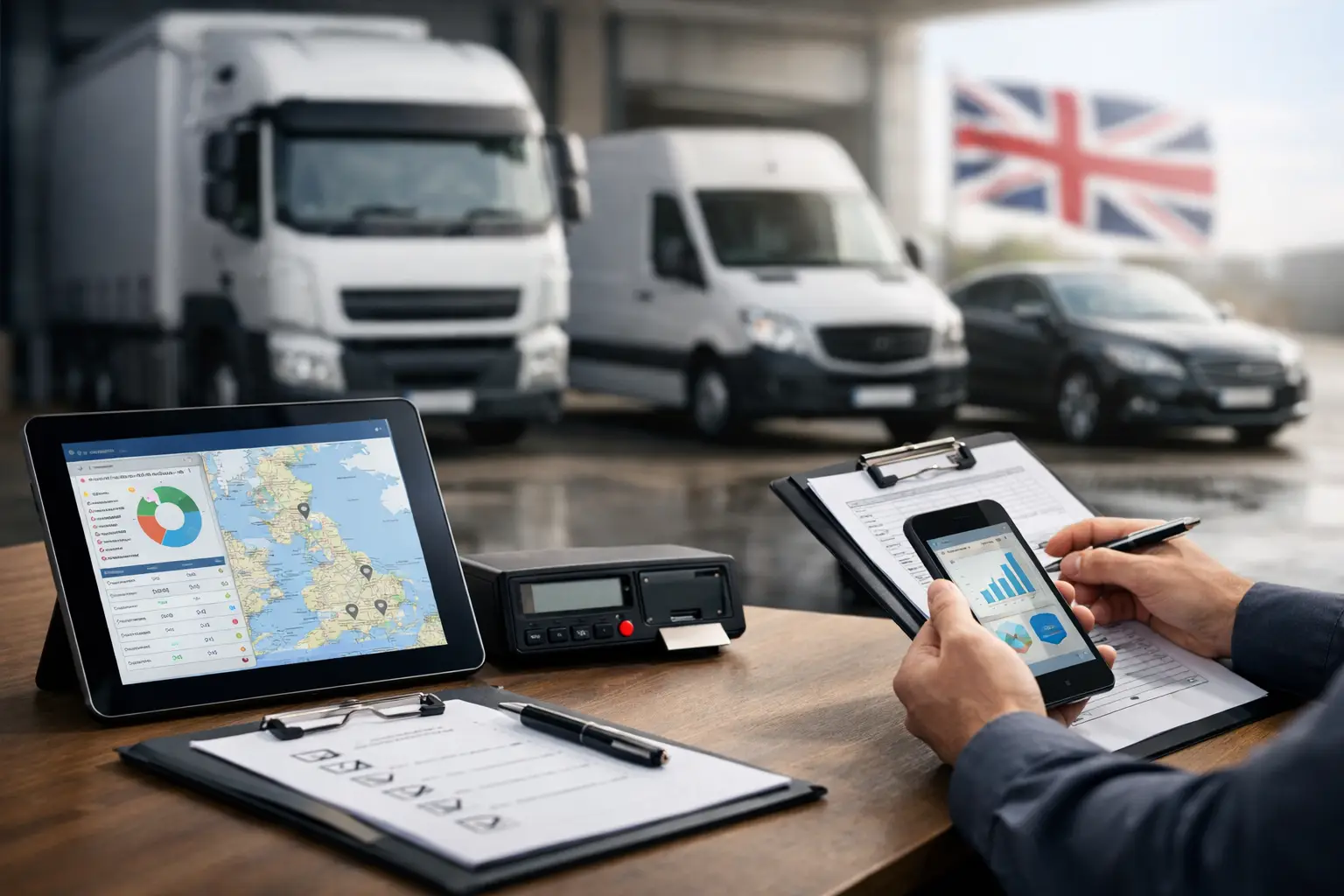
A missed card download, an overdue walkaround defect or a driver approaching their daily limit can become a much bigger problem when it is discovered after the event. The best transport compliance tools give operators earlier warning, clearer evidence and less dependence on spreadsheets, phone calls and manual checks.
For UK haulage and commercial fleet businesses, the right system is not simply a tracking map with a compliance label attached. It needs to support the practical work behind an operator licence: managing drivers’ hours, securing tachograph data, acting on vehicle defects, planning maintenance and proving that controls are in place. The strongest option is usually the one that brings those tasks into a single daily workflow rather than adding another login for the transport office.
What transport compliance software should solve
Transport compliance is often treated as an administrative task. In practice, it affects dispatch, payroll queries, workshop scheduling, driver conversations and the ability to keep vehicles earning. A tool that only creates a report at the end of the week does little to help a planner decide whether a driver can take a late collection today.
A useful platform should show current risk, not just historic data. That means live or near-live driver hours status, automated remote downloads, visible vehicle and trailer locations, maintenance prompts and records that can be retrieved quickly. It should also make exceptions obvious. A compliance manager needs to see which cards, vehicle units or inspections require attention without manually checking every asset.
The balance matters. A small operator may need a straightforward system that reduces administrative pressure, while a larger multi-depot business may need clear user permissions, scheduled reporting and the ability to separate performance by depot, vehicle type or contract. More features are not always better if the team cannot use them consistently.
Best transport compliance tools: the essential categories
The best transport compliance tools tend to combine several capabilities. Whether they are bought as one platform or integrated from specialist providers, each area should have a clear owner and a dependable process behind it.
Remote tachograph download and analysis
Manual downloads create avoidable risk. They rely on a vehicle returning to base, a card being available, somebody remembering the deadline and files being saved in the right place. Remote tachograph downloads remove much of that dependency by collecting driver card and vehicle unit data automatically according to a schedule.
Analysis is where the operational value appears. The system should identify potential drivers’ hours and working time infringements, show the relevant events and make acknowledgement or follow-up easier to manage. It should retain original data securely and give the office a clear view of download due dates.
Look closely at how quickly new data becomes available and whether the service supports the mix of vehicles you operate. Remote download hardware, data coverage and driver card processes can differ between suppliers. The lowest monthly price may not be the lowest cost if the office still has to chase files or combine reports manually.
Live driver hours monitoring
Historic infringement reports are essential, but they arrive too late to prevent a poor decision on the road. Live driver hours monitoring gives planners an operational view of remaining driving time, breaks and rest requirements before allocating work.
This is particularly valuable when traffic, customer delays or last-minute jobs disrupt a planned day. Dispatch can see where flexibility exists rather than calling drivers one by one or relying on assumptions. It also supports better conversations with drivers, because decisions can be based on a shared view of the available time.
Live figures should be treated as a planning aid, not a substitute for professional judgement. Drivers remain responsible for complying with the rules, and the office must account for the context of the duty, relevant exemptions and accurate manual entries. The right tool helps teams make safer, better-informed decisions under pressure.
Vehicle, trailer and asset tracking
Tracking earns its place in a compliance toolkit when it improves control. A location history can help verify journey activity, investigate a customer query or find a trailer before a collection is missed. Geofences can show arrivals and departures at depots, customer sites and unauthorised locations.
Trailer tracking is especially useful for fleets where assets are dropped, exchanged or hired. Knowing where the tractor unit is does not answer the question of where the loaded trailer has gone. Separate visibility reduces search time and helps operators identify underused assets.
Choose a system that presents information in a way the transport office will actually use. Live location, journey history, ignition status and sensible alerts are often more valuable than a crowded map full of settings. Coverage, hardware reliability and installation requirements should be assessed before committing to a contract.
Defect reporting and maintenance control
Daily walkaround checks are only useful when defects are recorded, reviewed and closed properly. Paper reports can be lost, delayed or filed without a clear repair trail. Digital defect reporting gives drivers a simple route to raise issues, including photographs where appropriate, and gives managers a record of action taken.
Maintenance planning should then bring together inspection dates, MOTs, servicing, tyre activity and defect repairs. Reminders are helpful, but the real test is whether the workshop or external maintenance provider can see what needs doing and whether the completed work is evidenced. A missed inspection is not solved by an alert that nobody owns.
For mixed fleets, check that the system can manage vans, HGVs, trailers and ancillary equipment without forcing teams into separate registers. One maintenance view reduces the chance of an asset falling between operational and workshop responsibilities.
Driver behaviour, fuel and utilisation reporting
Compliance and commercial performance overlap more than many operators expect. Harsh braking, speeding events, excessive idling and poor route discipline can increase fuel spend, wear and collision exposure. These metrics should be used to identify patterns and support coaching, not to create a league table that drivers distrust.
Utilisation reports also help establish whether fleet capacity is being used effectively. A lorry that spends long periods idle may point to planning issues, spare capacity or a vehicle that could be redeployed. When combined with driver hours and maintenance availability, utilisation data makes fleet decisions more grounded.
How to compare systems without buying extra admin
Start with the process that currently creates the most risk or wasted time. If drivers and vehicle units are regularly downloaded late, remote tachograph management should be non-negotiable. If planners struggle with late changes, live driver hours and tracking may deliver the quickest gain. If the workshop is working from paper folders, defect and maintenance controls deserve priority.
Then test the daily experience, not just the sales demonstration. Ask how a compliance manager sees overdue downloads at 8am, how a planner checks a driver’s available time, and how a workshop controller confirms a defect has been repaired. If these answers require exporting data into a spreadsheet, the platform is not removing the work you intended to remove.
When comparing providers, assess these practical points:
- Whether tachograph, tracking, maintenance and reporting sit in one system or require separate contracts and exports.
- How hardware is installed, replaced and supported, particularly for vehicles that cannot be off the road for long.
- Which alerts are configurable, who receives them and how teams can record follow-up action.
- Whether pricing clearly states hardware, subscriptions, data services, installation and any minimum contract commitments.
- How easily reports can be filtered by driver, vehicle, depot, date range or fleet group during an internal review or audit.
Integration is valuable, but only when it reduces handovers. A generic telematics product may provide good location data yet leave tachograph analysis and maintenance evidence elsewhere. A specialist compliance platform may offer deep reporting but limited dispatch visibility. For many UK operators, the better choice is a connected platform built around operator licence responsibilities and everyday fleet activity.
Fleetalyse brings remote tachograph downloads, live driver hours, vehicle and trailer tracking, smart dashcam data, maintenance reminders and fleet reporting together in one platform. That approach is designed to replace disconnected checks with a clearer operational picture, while plug-and-play hardware and transparent monthly pricing keep implementation practical.
Make the tool part of the operating routine
Software does not protect an operator licence on its own. The value comes from assigning responsibility and acting on what the system shows. Decide who reviews infringements, who follows up overdue downloads, who owns outstanding defects and who checks that maintenance actions have been completed.
Set a small number of scheduled reviews that match the way your fleet works. A daily exceptions check, a weekly driver hours review and a regular maintenance planning review are more effective than a large monthly report nobody has time to read. Keep driver communication factual and consistent, especially where behaviour or infringement data is involved.
Before rollout, clean up driver, vehicle and trailer records, agree naming conventions and explain the purpose of the change to the people using it. Drivers are more likely to engage with technology when it helps them report a defect, avoids unnecessary calls and gives them fair, accurate feedback.
The right compliance tool should make the next correct action easier: download the missing data, plan the legal job, repair the reported defect or find the available asset. That is how software moves from a record-keeping cost to practical control at every depot.