
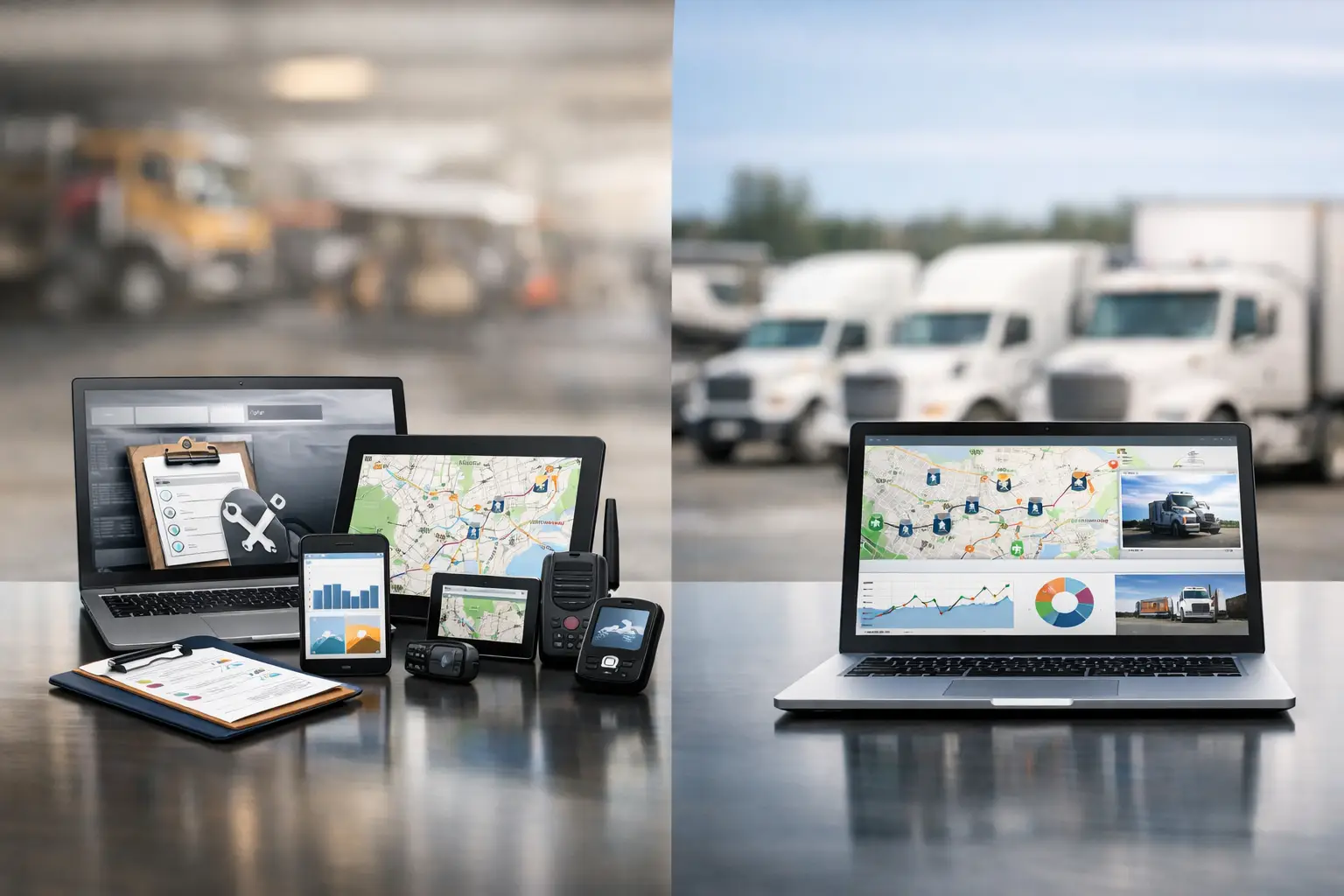
A transport manager should not need three logins, two spreadsheets and a phone call to establish whether a driver has hours available, where a lorry is, and whether a tachograph download is due. The choice between separate tools vs single fleet platform is not simply an IT decision. It affects daily dispatch, compliance exposure, fuel control and the amount of time your team spends chasing information.
For UK operators, fragmented systems often grow gradually. Vehicle tracking is bought first. Tachograph management is added later. Dashcams, maintenance records and trailer visibility follow when a particular issue arises. Each tool may do its job well, but the operational picture remains split across systems that do not naturally speak to one another.
Why separate fleet tools become difficult to manage
Separate systems can appear cheaper or less disruptive at the outset. A business may already have tracking fitted, use a bureau or card reader process for tachograph downloads, and manage maintenance on a spreadsheet. Replacing everything at once can feel unnecessary.
The issue is not that every standalone tool is poor. The issue is the handover between them. A planner looking for the nearest suitable vehicle may see location data but not an upcoming driver-hours restriction. A compliance manager can identify missing downloads, but needs to ask the transport office which vehicle and driver are actually available. A workshop may rely on an emailed mileage figure that does not match the latest operational data.
That creates avoidable delay. It also encourages workarounds: exporting reports, maintaining duplicate records and relying on experienced staff to join the dots from memory. Those methods can hold together for a small fleet, but become less reliable as vehicle numbers, depots, drivers and customer demands increase.
The hidden cost is administration, not just subscriptions
Looking only at monthly software fees misses the wider cost. The real expense can sit in the time spent downloading driver card and vehicle unit data, checking multiple dashboards, resolving conflicting records and building reports manually.
Consider a common Monday morning task. The transport team needs to plan the week, address missing tachograph data, check vehicle availability and respond to a customer asking for an ETA. If those answers live in four places, staff spend time gathering evidence before they can make a decision. The process may be familiar, but familiarity is not efficiency.
Fragmented data can also make accountability unclear. When an infringement occurs, is the root cause a missed download, poor planning, an unaddressed driver-hours warning, or a manager who did not receive the right information in time? A system split by function makes that question harder to answer quickly.
Separate tools vs single fleet platform: the operational difference
A single fleet platform brings core fleet data into one working view. Rather than treating compliance, tracking, safety and maintenance as isolated functions, it supports the way a transport operation actually runs: vehicles move, drivers work regulated hours, trailers change hands, defects arise and planners make decisions in real time.
For an HGV operator, that means remote tachograph downloads and live driver-hours information can sit alongside vehicle location. A planner can make a more informed allocation decision without switching systems or waiting for a compliance update. A compliance manager can focus on exceptions and risk rather than routine data collection.
For van and mixed fleets, the benefit may centre on live tracking, driver behaviour, mileage-based maintenance reminders and utilisation reporting. The principle is the same. Decisions improve when operational data is current, accessible and connected.
This does not mean a single platform must replace every specialist system in the business. Larger operators may retain payroll, transport management or workshop software with deeper function in a particular area. The key question is whether fleet-critical information is available where decisions are being made, without forcing staff to rekey or reconcile it repeatedly.
Better control of operator licence responsibilities
Operator licence protection depends on consistent processes, not last-minute checks. Tachograph data must be downloaded and reviewed to the required schedules. Driver hours and Working Time compliance need active management. Vehicles must be maintained and defects acted on.
A platform that combines remote downloads, driver-hours monitoring, vehicle tracking and maintenance reminders can reduce the gaps between those responsibilities. It gives managers a clearer view of overdue activity, missing data and emerging issues before they become a pattern.
That is particularly valuable when responsibility is shared across a depot. The transport manager, compliance lead and planner may all need different information from the same fleet. A single source of operational data reduces the risk that one team assumes another team has dealt with an issue.
Where separate systems can still make sense
There are circumstances where retaining standalone tools is sensible. A fleet with a recently renewed tracking contract may not want to remove working hardware before the agreement ends. A highly specialised workshop package may remain the best place to manage parts, job cards and technician workflows. Some large businesses also have established reporting infrastructure that a new platform must fit around.
The practical approach is to assess the highest-friction processes first. If manual tachograph downloads are taking hours each week, remote downloads may offer the quickest return. If dispatch cannot confidently locate trailers or see driver availability, visibility and planning should take priority. If driver behaviour complaints and fuel spend are rising, telematics and dashcam evidence may be the immediate need.
A phased move can be more sensible than a wholesale change. What matters is having a defined direction rather than adding another disconnected dashboard whenever a new problem appears.
What to assess before choosing one platform
A fleet platform should simplify work, not create a lengthy implementation project. Before choosing, transport operators should look beyond the feature list and test how the system performs in normal day-to-day use.
First, check whether it covers the assets you actually operate. HGVs, vans, trailers and mixed fleets have different visibility requirements. Trailer tracking, for example, matters little on a product sheet if your team cannot quickly identify which trailer is at a customer site or attached to a particular unit.
Next, look at compliance workflows. Can the system automate remote driver card and vehicle unit downloads? Does it provide live driver-hours visibility that planners can use? Are missing downloads and potential issues clearly flagged, rather than buried in reports?
Then consider installation and support. Hardware that can be self-installed can reduce vehicle downtime and make a rollout more manageable. Clear monthly pricing and straightforward contract terms also make it easier to budget accurately, especially when expanding the fleet.
Finally, ask who will use the information. A director may need utilisation and fuel trends. A planner needs live location and availability. A compliance manager needs accurate exception reporting. The platform should provide each role with useful answers without making every user a telematics specialist.
Turn fleet data into quicker daily decisions
The strongest case for an integrated platform is not that it gives you more data. Most transport businesses already have plenty of data. The value comes from reducing the time between seeing an issue and taking action.
If a driver is approaching an hours limit, the planner can adjust the job before the schedule fails. If a vehicle is stationary unexpectedly, the team can investigate before the customer calls. If a trailer has been left at an unauthorised location, its position is visible. If a maintenance interval is approaching, the workshop can plan around operational demand rather than react to a missed service.
Fleetalyse is designed around these practical links between compliance and live fleet control, with telematics, smart dashcams, tracking and tachograph management in one platform. The aim is not to add another layer of technology. It is to remove unnecessary admin from the work transport teams already need to do.
The right setup depends on your contracts, existing hardware and operational complexity. Start with one honest question: when a manager needs an answer about a driver, vehicle or trailer, how many places do they have to look? Reducing that number is often the most useful improvement a fleet can make.