
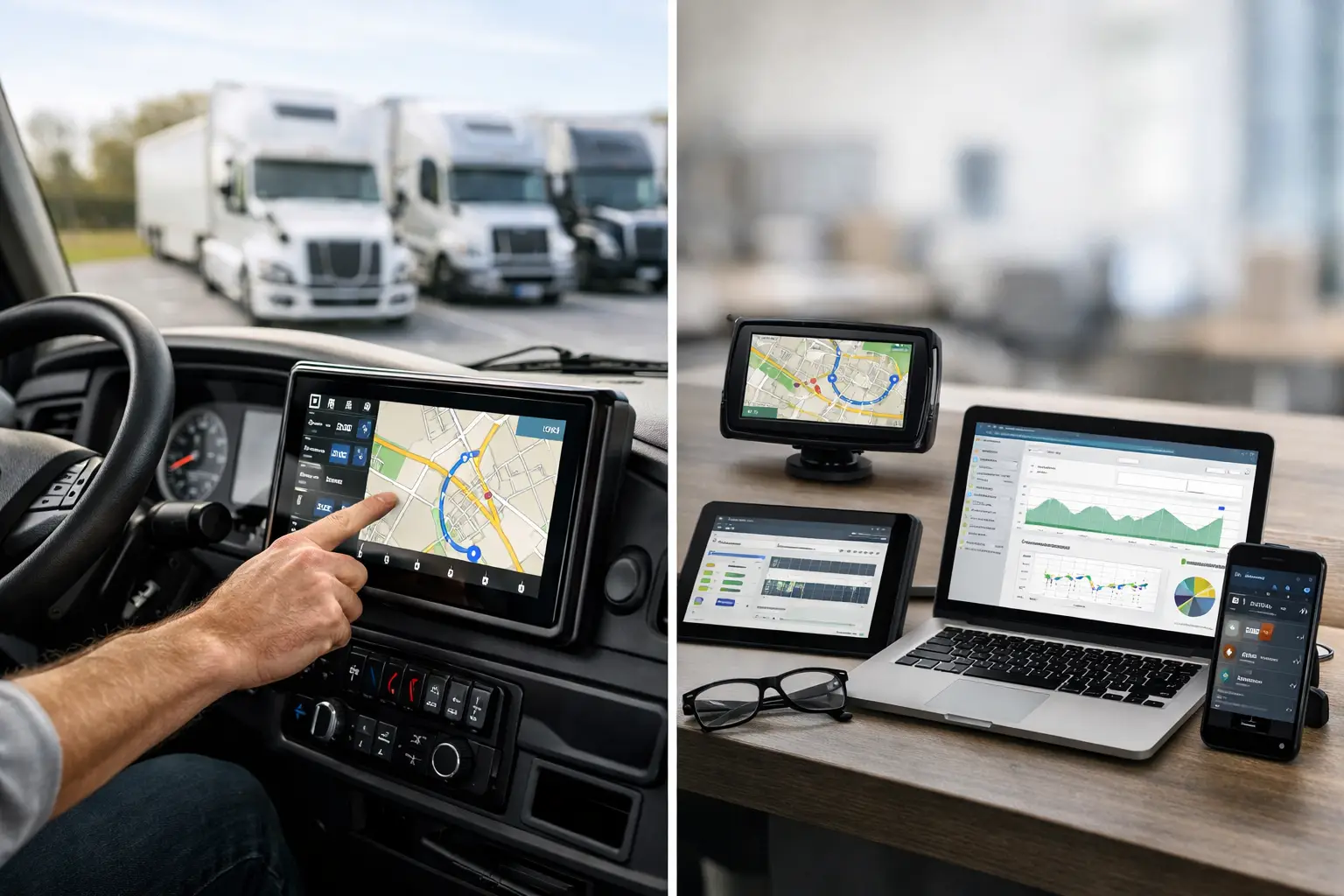
A transport manager should not need three logins, two spreadsheets and a chain of emails to answer a simple question: where is the vehicle, can the driver complete the job legally, and is the asset fit to run? That is the practical difference behind integrated telematics vs separate systems. The choice affects far more than reporting. It shapes how quickly your team can plan work, respond to disruption and demonstrate control over compliance.
Separate systems can appear manageable when a fleet is small or the operation has grown around existing suppliers. One provider tracks vehicles, another handles tachograph downloads, dashcam footage sits elsewhere, and maintenance reminders may live in a spreadsheet. The problem emerges when the depot needs a joined-up view during a busy shift. Data is available, but not necessarily usable at the moment a decision is required.
What integrated telematics means in practice
Integrated telematics brings operational data into one platform rather than treating tracking, driver hours, compliance, safety and asset management as unrelated tasks. For a UK commercial fleet, that can mean live vehicle and trailer locations sitting alongside remote tachograph downloads, driver hours status, driver behaviour, maintenance prompts and utilisation reporting.
The value is not simply having more information on screen. It is the ability to connect information that already affects the same decision. A planner looking for a vehicle can see its location, whether it is moving, its likely availability and the driver’s remaining time. A compliance manager can identify overdue downloads and investigate infringements without chasing separate exports. A workshop team can act on maintenance reminders with a clearer picture of vehicle use.
That connection reduces handovers between people and systems. It also makes exceptions easier to spot before they become expensive problems, such as assigning work to a driver who is close to their available hours or overlooking a trailer that has been parked away from base.
The hidden cost of separate fleet systems
The monthly price of each individual system rarely tells the whole story. Separate products create work around the product: exporting data, matching vehicle registrations, checking timestamps, reconciling driver records and producing reports in a format management can use.
For an operator running HGVs, vans and trailers, these small tasks add up. Dispatch may be checking location data in one place while driver hours are checked in another. A tachograph file may have downloaded successfully, yet its status is not visible to the person planning tomorrow’s work. A safety event may be reviewed after a complaint, but without easy access to the journey context or driver activity.
The operational cost is delay. Teams wait for someone else to confirm a fact, or make a judgement with incomplete information. In a tight transport operation, that can mean avoidable empty running, missed collection windows, unnecessary phone calls to drivers or a rushed response to a compliance issue.
There is also a governance issue. When evidence is spread across multiple systems, responsibility can become blurred. Someone may assume another department is monitoring download schedules, maintenance dates or driver exceptions. A single platform does not remove the need for clear processes, but it makes ownership and oversight much easier to establish.
One view does not mean one-size-fits-all
Integrated systems are not automatically right for every business. A large operator may have a specialist transport management system, payroll platform or workshop system that must remain in place. In that situation, replacing everything is neither sensible nor necessary.
The better question is where fragmentation is creating daily risk or wasted effort. If tachograph compliance, live vehicle visibility, trailer tracking and driver behaviour are managed by different people in different tools, integration can deliver immediate value. If a specialist system already performs a critical role well, it may simply need to sit alongside a fleet platform with clear data flows and responsibilities.
The goal is not to centralise every piece of business software. It is to give operational and compliance teams a dependable source of truth for the information they use every day.
Integrated telematics vs separate systems for compliance
For holders of a UK operator licence, compliance cannot be treated as an end-of-month admin task. Driver hours, tachograph downloads, vehicle roadworthiness and defect reporting all require ongoing control. The consequences of weak processes extend beyond a fine. They can affect your ability to demonstrate effective management to the Traffic Commissioner.
With separate systems, compliance teams often spend time collecting evidence before they can assess it. Files need downloading, driver cards need checking, and exceptions may be identified after the work has already been completed. The process can work, but it depends heavily on disciplined manual routines and on key people being available.
An integrated platform changes the working rhythm. Remote tachograph downloads can be scheduled and monitored, while live driver hours information gives planners a more current view of availability. Alerts and dashboards direct attention towards missing downloads, approaching limits and potential infringements rather than asking staff to search through reports for issues.
That does not replace professional judgement. Driver hours rules include exemptions, working time considerations and operational circumstances that require proper review. However, it gives the right people earlier visibility, creates a more consistent audit trail and reduces the chance that a critical task is missed because it sat in the wrong inbox or spreadsheet.
Better dispatch decisions from connected data
The strongest case for integration is often made at the planning desk. A vehicle marker on a map is useful, but it is only one part of dispatch control. The planner also needs to know whether the vehicle is available, whether the driver can legally take on additional work, whether the trailer is attached and whether the vehicle requires attention.
When those details are visible together, allocation decisions become faster and more defensible. Instead of ringing several drivers to locate the nearest available unit, the team can narrow down suitable options from live data. If a job changes at short notice, the planner can assess the likely impact without relying solely on estimates.
This matters particularly for mixed fleets. Vans, HGVs and trailers have different operating patterns, yet the business still needs a clear view of where each asset is, how it is being used and whether it is contributing to productive work. Integrated tracking and utilisation reporting can reveal assets that are underused, repeatedly delayed or spending too much time at a location.
Over time, that information supports better planning decisions around fleet size, trailer allocation, depot activity and customer service commitments. It turns telematics from a location tool into operational evidence.
Safety and fuel data need context
Smart dashcam events and driver behaviour data are most useful when they support fair, specific conversations. A harsh braking event, for example, could indicate poor driving, but it could also reflect a vehicle cutting in, congestion or a developing road hazard. Reviewing the event alongside route, speed and journey information helps managers deal with the facts.
The same principle applies to fuel. A report showing high fuel use is a starting point, not a verdict. It may be linked to excess idling, route conditions, payload, driving style or a mechanical issue. Bringing behaviour, journey and utilisation data together makes it easier to identify the likely cause and choose a practical response.
Separate systems can still provide these reports, but the team spends more time assembling the story. An integrated platform shortens that process, helping managers focus on coaching, maintenance action or planning changes rather than report preparation.
Implementation should reduce friction, not create it
Some operators delay changing systems because they expect a long installation programme, vehicle downtime and a difficult staff rollout. Those concerns are reasonable, especially where vehicles are working across multiple depots or spending nights away from base.
A practical fleet platform should minimise this disruption. Plug-and-play hardware and clear onboarding reduce the need for complex installations. Transparent monthly pricing also makes it easier to understand the operational cost of bringing tracking, compliance and safety data together, rather than managing unexpected charges across several suppliers.
Before choosing a provider, test the day-to-day workflow rather than only comparing feature lists. Ask how remote downloads are monitored, how driver hours are presented to planners, how trailers are tracked, how maintenance reminders are managed and how quickly a manager can investigate an incident. The right system should save steps during a normal working day, not add another dashboard to check.
Fleetalyse is designed around that operational reality, combining live fleet visibility with tachograph compliance controls for UK operators who need practical oversight without more administration.
Choose the system around the decision you need to make
The most useful test is simple: when a problem occurs at 16:30 on a Friday, can your team find the relevant facts quickly enough to act? If location, driver availability, compliance status, vehicle condition and safety evidence are scattered across separate tools, the answer may depend on who is still in the office.
An integrated approach gives transport teams a clearer route from data to action. It will not remove every exception from fleet operations, but it can remove much of the avoidable chasing, duplication and uncertainty that makes those exceptions harder to manage. The strongest platform is the one that helps your people make the next sound operational decision with confidence.