
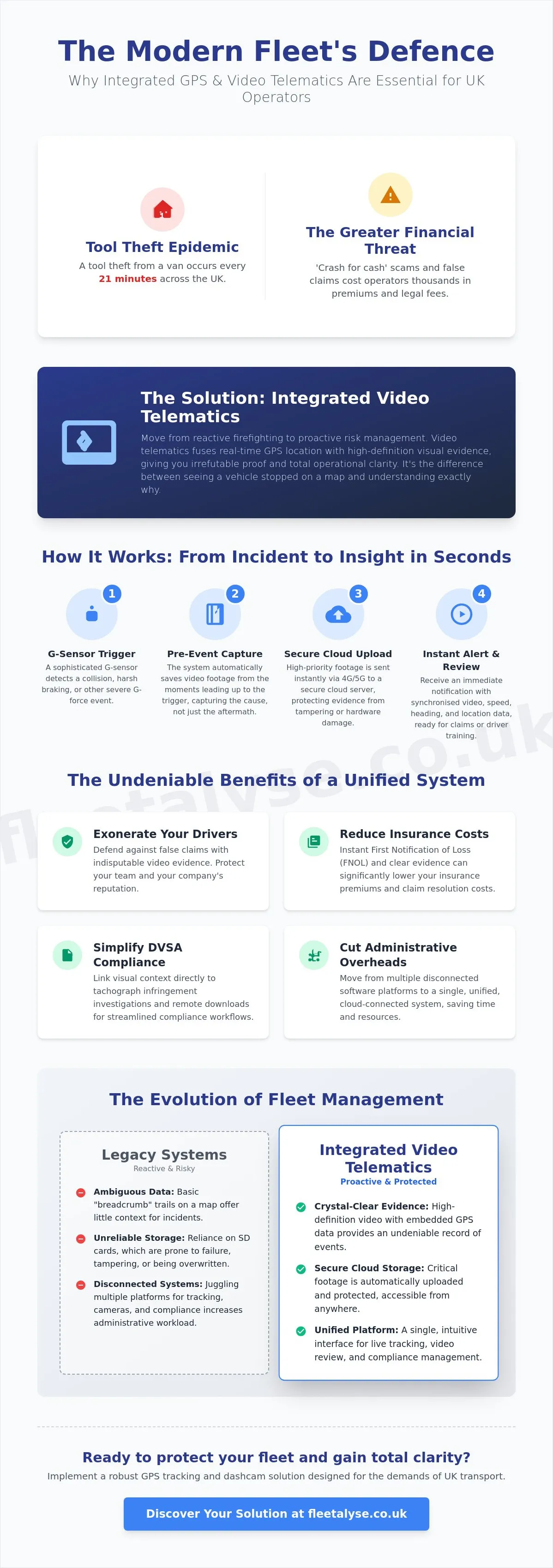
In 2025, tool theft from vans occurred every 21 minutes across the UK, yet for many regional operators, the greater financial threat isn't what's being taken from the vehicle, but what's being falsely claimed against it. Relying on disconnected systems makes it nearly impossible to defend your drivers against "crash for cash" scams or verify incidents quickly. Implementing a robust GPS tracking and dashcam solution for fleets is no longer a luxury. It's the only way to verify the truth in seconds and protect your bottom line.
We recognise that managing multiple software platforms whilst fighting rising insurance premiums is a relentless drain on your resources. You need a system that works as hard as your vehicles do. This article explains how integrating video evidence with live telematics protects your team, ensures strict DVSA compliance, and reduces administrative overheads. We will examine the practical benefits of unified data, from lower insurance costs to clearer evidence for claims, helping you move from reactive management to total operational clarity.
Key Takeaways
- Defend your drivers against false insurance claims by pairing real-time location data with high-definition video evidence.
- Learn why an integrated GPS tracking and dashcam solution for fleets is essential for protecting your bottom line from 'crash for cash' scams.
- Simplify your compliance workflow by linking visual context directly to tachograph infringement investigations and remote downloads.
- Reduce administrative costs by moving away from disconnected software platforms to a unified, cloud-connected system.
- Understand the critical differences between hardware options to ensure your installation meets UK data protection and visibility regulations.
Why Modern UK Fleets Require an Integrated GPS Tracking and Dashcam Solution
Modern transport management has moved beyond simply knowing where a vehicle is. Integrated video telematics is the fusion of real-time GPS location data with high-definition visual context. It's the difference between seeing a vehicle stopped on the M6 and seeing exactly why it stopped. For UK operators, this shift represents a move from reactive firefighting to proactive risk management. You aren't just collecting data; you're gaining operational intelligence that protects your workforce and your bottom line.
The UK insurance market is increasingly demanding. With the "crash for cash" epidemic still a significant threat to regional businesses, insurers value the "first notification of loss" (FNOL) that integrated systems provide. Beyond costs, it's about duty of care. Protecting your drivers with a comprehensive GPS tracking and dashcam solution for fleets proves you take their safety and your legal obligations seriously. It transforms the cabin from a place of isolation into a connected, protected environment where the truth is always accessible.
The Evolution from Basic GPS to Video Telematics
A standard vehicle tracking system provides breadcrumb trails. It's useful for routing but often useless for driver exoneration. If a driver is accused of harsh braking, GPS shows the deceleration. Video shows the cyclist who swerved without looking. By July 2026, newly sold vehicles in the UK must meet the EU General Safety Regulation (GSR II) standards, including Advanced Driver Distraction Warning systems. This sets a higher bar for safety. Basic dots on a map are no longer enough to defend your business against modern road risks or meet evolving legal requirements.
Protecting Your Reputation Amongst UK Transport Operators
Your standing with the DVSA depends on clear, demonstrable compliance. Visual proof is the ultimate arbiter in disputes. When a scammer targets your fleet, immediate video evidence can save thousands in premiums and legal fees. It also builds trust with your clients. Using a GPS tracking and dashcam solution for fleets allows you to provide irrefutable data regarding delivery times and road safety behaviour. This transparency differentiates your business from less specialised competitors who rely on guesswork. It's about being a reliable ally to your customers whilst protecting your own assets from unfair claims and reputational damage.
How Video Telematics Combines Real-Time Location with Visual Evidence
Video telematics isn't just a camera stuck to a windscreen. It's a sophisticated data hub that bridges the gap between raw coordinates and real-world context. The technical synergy between GPS satellites and cellular connectivity is the foundation of a modern GPS tracking and dashcam solution for fleets. When a vehicle is on the road, the GPS module constantly communicates with global positioning satellites to pinpoint latitude and longitude. Simultaneously, the dashcam records a continuous loop. The real value emerges when these two streams merge. By embedding location data directly into the video metadata, operators get a synchronised record of speed, heading, and visual context.
Cloud storage has replaced the unreliable SD cards of the past. Modern systems utilise 4G and 5G networks to upload high-priority footage instantly. This ensures that even if a vehicle is severely damaged or the hardware is tampered with, the evidence remains secure on a remote server. Multi-camera setups incorporating front, rear, and side-facing lenses provide a 360-degree view. This leaves no blind spots for scammers to exploit and provides a complete picture of every incident. If you are ready to upgrade your visibility, you can view our integrated hardware options to find the right fit for your specific vehicle types.
The Mechanism of Event-Based Recording
Sophisticated G-sensors are the heart of event-based recording. These sensors distinguish between a minor pothole and a genuine collision or harsh braking incident. When a threshold is crossed, the system automatically triggers a video clip. Crucially, these systems use "pre-event" recording. The camera constantly buffers video, so when an incident occurs, the upload includes the ten seconds before the trigger. This captures the root cause of the event, not just the aftermath. This selective uploading is a cornerstone of efficient fleet management, as it reduces data costs by ignoring hours of uneventful motorway driving.
Real-Time Visibility for Remote Fleet Managers
The introduction of 5G connectivity in 2026 has revolutionised video retrieval speeds. Fleet managers can now access live streams with negligible latency to assist drivers in hazardous conditions or verify site arrivals. Combining geofencing with visual evidence allows you to prove exactly when a vehicle entered a zone and the condition of the cargo at that moment. This level of oversight reduces disputes and streamlines client reporting. A robust GPS tracking and dashcam solution for fleets ensures that distance is no longer a barrier to effective management. It provides the transparency needed to maintain high operational standards across the UK.
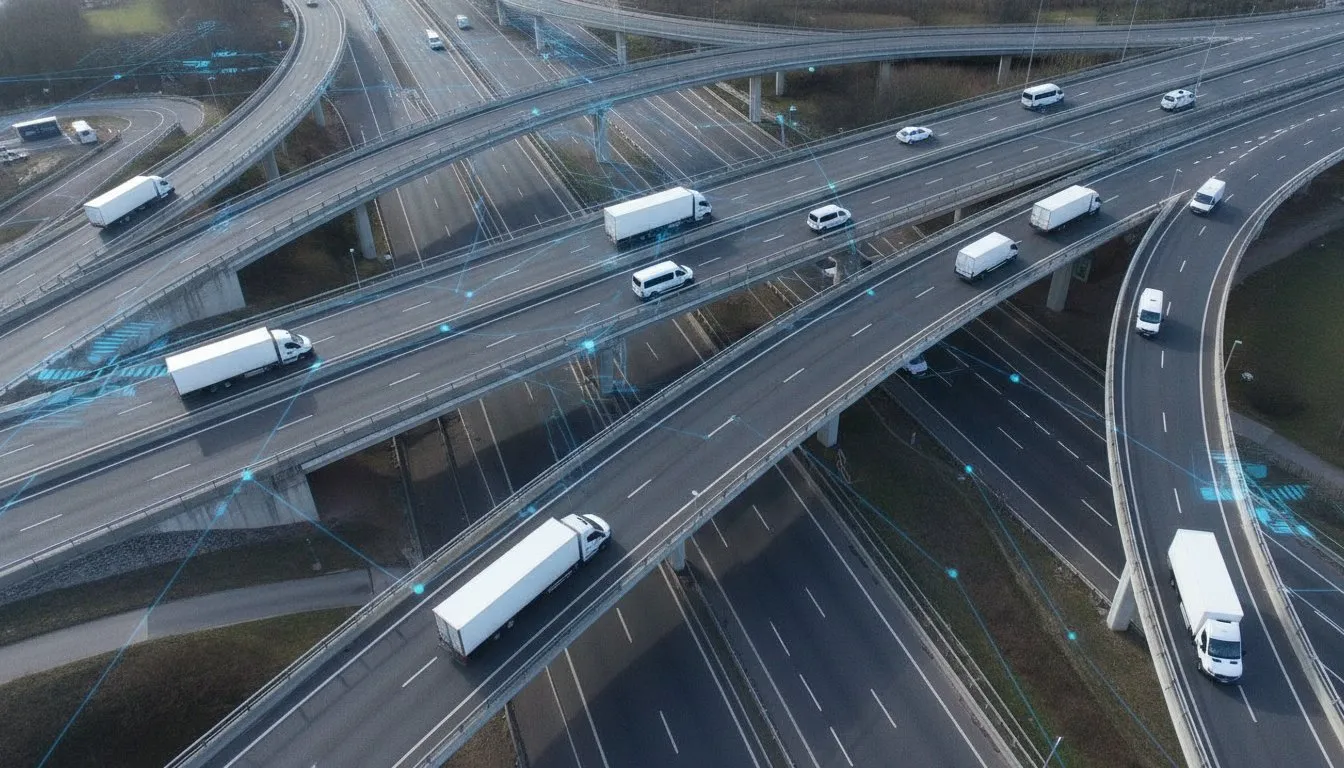
Beyond Safety: Linking Dashcam Data with Tachograph Compliance
Most transport managers view dashcams as safety tools and tachographs as compliance tools. This siloed approach is a missed opportunity for operational efficiency. Video evidence is often the missing link in tachograph infringement investigations. It provides the visual context that raw data lacks. When a driver is flagged for a potential violation, having immediate access to footage allows you to see the reality of the situation on the road. This integrated approach ensures that your disciplinary or coaching sessions are based on objective facts rather than assumptions.
At Fleetalyse, we specialise in bridging this data gap. Our system integrates GPS with remote tachograph downloads to provide a unified dashboard. Instead of jumping between disconnected software platforms, you can view live driver hours alongside safety events. This level of transparency is essential for modern operators. It simplifies the annual operator licence audit by providing a centralised repository of compliance and safety data. A comprehensive GPS tracking and dashcam solution for fleets ensures that every mile driven is accounted for and every incident is visually documented.
The push for higher standards is reflected in recent UK government vehicle safety standards, which highlight the importance of advanced technology in reducing road casualties. By aligning your fleet with these standards, you aren't just ticking a box. You are building a more resilient business. Integrated data allows you to identify trends that siloed systems miss, such as a correlation between long shifts and increased harsh braking incidents. This foresight is what separates proactive fleets from those constantly reacting to DVSA enquiries.
Correlating Driving Events with Driver Hours
Fatigue is a leading cause of road incidents. By checking live driver hours immediately after a safety event trigger, you can identify if tiredness contributed to the error. Dashcam footage also provides vital context for "unknown movements" on a tachograph. It helps verify if a vehicle was moved for legitimate reasons, such as terminal security requirements, whilst the driver was on a break. This multi-source data streamlines the disciplinary process and ensures fairness for your team.
Meeting DVSA Standards for National Transport Operators
Integrated systems are a cornerstone of the DVSA Earned Recognition scheme. Maintaining a "Green" OCRS score requires consistent, accurate reporting. A GPS tracking and dashcam solution for fleets automates much of this data collection. It reduces the administrative burden on your office staff and ensures that compliance records are always audit-ready. Centralising your tracking and tachograph analysis into one platform makes your operation leaner and more transparent to regulatory bodies.
Implementation Guide: Selecting and Installing Dashcam Hardware
Transitioning to an integrated GPS tracking and dashcam solution for fleets requires a structured approach. It isn't just about buying cameras; it's about system integration. Start by auditing your current assets to identify which vehicles require multi-camera setups. Professional, tamper-proof installation is non-negotiable. Self-installed units often suffer from loose cables or poor positioning. In the UK, a dashcam must not obstruct the driver's view by more than 40mm into the swept area of the windscreen. Failure to comply can result in a £100 fine and 3 penalty points. Choosing professional fitting ensures your hardware stays operational and legally compliant under the rigours of daily haulage.
Move away from basic SD card systems. These are prone to card corruption and require time-consuming manual data collection. Cloud-connected hardware is the modern standard. It provides instant remote access to footage and ensures data isn't lost if the unit is damaged. AI-powered units offer even greater protection by identifying driver distraction or fatigue in real-time. This proactive stance helps you meet the latest safety mandates whilst protecting your drivers from avoidable incidents. To get started with the right equipment, you can select your fleet hardware package today and begin the integration process.
Choosing the Right Hardware for HGVs and Vans
HGVs require ruggedised, IP-rated equipment to withstand high vibrations and varied weather conditions. Dual-facing cameras are becoming more common for vans to provide evidence of driver focus, whilst road-facing units remain the priority for HGVs. For UK winter driving, high dynamic range (HDR) is essential. It ensures clear night vision and balances the glare from low sun or wet roads. Wide-angle lenses are also vital to cover multiple motorway lanes, ensuring no detail is missed during a lane-change incident.
Navigating Driver Privacy and Data Protection
Compliance with UK GDPR and ICO regulations is mandatory for any business using dashcams. You must register with the ICO and pay the annual data protection fee, which stands at £52 as of March 2026. Your dashcam policy should be built on a "benefit-first" approach. Clearly explain to your drivers that the system's primary role is their protection and exoneration. Set rigid boundaries regarding when footage is accessed. Limiting reviews to safety-triggered events or specific customer disputes helps maintain trust and ensures your data remains legally admissible.
Streamlining Your Operations with Fleetalyse: Transparency and Compliance First
Fleetalyse operates as a pragmatic expert partner for regional operators across Britain. We understand that you don't need flashy, unnecessary features; you need functional utility that solves daily operational struggles. By implementing our GPS tracking and dashcam solution for fleets, you consolidate your tech stack into a single, efficient workflow. This integration eliminates the frustration of managing multiple disconnected platforms. It allows you to focus on asset management and driver safety rather than manual data entry or software troubleshooting.
Transparency is the cornerstone of our service. Unlike generic competitors who often hide costs in the fine print, we provide a high level of financial and contractual detail upfront. There are no hidden complexities in a Fleetalyse agreement. We believe in fairness and operational clarity. Combining remote tachograph downloads with live vehicle tracking ensures you have a complete, honest picture of your fleet's performance. You move beyond theoretical data collection to achieve real-world operational gains that protect your bottom line.
Why a Specialised UK Partner Matters
Working with a localised specialist offers distinct advantages over global software providers. We understand the specific nuances of UK infrastructure and the rigour of national regulations. Our support isn't delivered from a distant call centre. It comes from experts who speak your language and understand the pressure of maintaining a "Green" OCRS score amongst your peers. We provide straightforward, honest industry advice that helps you navigate the complexities of transport law without the unnecessary jargon. It's about building a relationship based on reliability and industry insight.
Your Next Steps Toward a Safer Fleet
Improving your fleet's safety and compliance starts with a clear, actionable plan. Our pricing is published, not quoted: Essential £5.99, Pro £7.99 and HGV Pro £11.99 per device per month inc VAT (AI dashcams run on Pro), with API access included on every tier. Our team ensures the process of integrating your existing tachograph analysis software is frictionless and logical. We don't just provide hardware; we provide a foundation for long-term business resilience and driver protection. To move your operation forward and reduce your administrative burden, organise a consultation with Fleetalyse today and discover the difference that specialised expertise makes.
Upgrade Your Fleet Visibility and Compliance
Relying on disconnected systems leaves your business vulnerable to false claims and regulatory gaps. By integrating video telematics with location data, you gain the irrefutable evidence needed to exonerate drivers and reduce insurance overheads. This unified approach transforms tachograph analysis from a manual burden into a streamlined, automated process. Implementing a GPS tracking and dashcam solution for fleets is the most practical step you can take to protect your assets and maintain your standing with the DVSA.
At Fleetalyse, we provide pragmatic, UK-based support grounded in industry expertise. Our specialisation in remote tachograph download and live driver hours ensures your compliance is never left to chance. We prioritise transparency in everything we do. You won't find hidden contractual complexities or unexpected fees here. It's time to move beyond fragmented data and embrace a system built for the rigours of the British transport industry.
Secure your fleet with a transparent GPS and dashcam solution from Fleetalyse. Taking control of your operational data today ensures a safer, more profitable future for your business.
Frequently Asked Questions
Do fleet dashcams record all the time or only during accidents?
Fleet dashcams record continuously on a loop whilst the ignition is on. However, they don't upload every minute of footage to the cloud. Instead, the system uses G-sensors to identify specific events like harsh braking or collisions. These clips are automatically saved and transmitted for immediate review. This approach ensures you have the necessary evidence without wasting storage space or data on hours of uneventful motorway driving.
Can I use GPS tracking and dashcams to reduce my insurance premiums?
Yes, most UK insurers look favourably on a robust GPS tracking and dashcam solution for fleets. Providing irrefutable video evidence allows for faster claim settlements and protects your business from "crash for cash" scams. By reducing the First Notification of Loss (FNOL) time, you can often negotiate lower annual premiums. Some providers even offer specific telematics-based policies that reward safe driving behaviour with tangible financial savings.
How does dashcam integration help with my UK Operator Licence compliance?
Dashcam integration provides the visual context required to investigate tachograph infringements thoroughly. When the DVSA audits your operation, being able to prove why an "unknown movement" occurred or showing that a safety event was caused by a third party is invaluable. It supports your Earned Recognition status and helps maintain a "Green" OCRS score. Centralising this data demonstrates a proactive approach to your Operator Licence obligations.
What is the difference between a standard dashcam and video telematics?
A standard dashcam is a standalone device that saves footage to a local SD card. Video telematics is a connected system that merges video with GPS location, speed, and engine data. This allows fleet managers to retrieve footage remotely via the cloud without needing to visit the vehicle. It transforms a simple recording device into a proactive management tool that provides real-time alerts for risky driving behaviour.
Is it legal to have in-cab cameras for HGV drivers in the UK?
It's entirely legal to install in-cab cameras in the UK, provided you adhere to UK GDPR and ICO guidelines. You must have a clear, written policy explaining the purpose of the cameras and display prominent signage in the vehicle. Most operators use dual-facing cameras to monitor for driver distraction or fatigue. This protects the driver by providing proof of their professional conduct in the event of a disputed incident.
How much data does a fleet dashcam system use per month?
Data usage typically ranges from 500MB to 2GB per month, depending on how often events are triggered. Standard GPS tracking uses very little data, whilst high-definition video uploads and live streaming consume more. Modern systems are designed to be efficient, only uploading high-priority clips to the cloud whilst keeping the rest of the loop on local storage. This keeps your monthly cellular costs predictable and manageable for regional operations.
Can Fleetalyse integrate with my existing tachograph analysis tools?
Fleetalyse is built specifically for tachograph analysis integration. Our platform allows you to link remote tachograph downloads and live driver hours directly with your vehicle tracking data. This creates a unified dashboard for all your compliance needs. You don't have to jump between different software providers to see how a safety event correlates with a driver's remaining hours. It's a deeply practical solution for busy transport offices.
What happens if a driver tampers with the GPS or camera hardware?
If a driver attempts to tamper with the hardware, the system generates an immediate alert. Our GPS tracking and dashcam solution for fleets uses tamper-proof seals and internal batteries to detect power loss or lens obstruction. If a camera is unplugged or the GPS signal is intentionally blocked, the fleet manager receives a notification via the dashboard or email. This ensures your data remains reliable and your equipment stays protected at all times.
Frequently asked questions
The Evolution from Basic GPS to Video Telematics
A standard vehicle tracking system provides breadcrumb trails. It's useful for routing but often useless for driver exoneration. If a driver is accused of harsh braking, GPS shows the deceleration. Video shows the cyclist who swerved without looking. By July 2026, newly sold vehicles in the UK must meet the EU General Safety Regulation (GSR II) standards, including Advanced Driver Distraction Warning systems. This sets a higher bar for safety. Basic dots on a map are no longer enough to defend your business against modern road risks or meet evolving legal requirements.
Protecting Your Reputation Amongst UK Transport Operators
Your standing with the DVSA depends on clear, demonstrable compliance. Visual proof is the ultimate arbiter in disputes. When a scammer targets your fleet, immediate video evidence can save thousands in premiums and legal fees. It also builds trust with your clients. Using a GPS tracking and dashcam solution for fleets allows you to provide irrefutable data regarding delivery times and road safety behaviour. This transparency differentiates your business from less specialised competitors who rely on guesswork. It's about being a reliable ally to your customers whilst protecting your own assets from unfair claims and reputational damage. Video telematics isn't just a camera stuck to a windscreen. It's a sophisticated data hub that bridges the gap between raw coordinates and real-world context. The technical synergy between GPS satellites and cellular connectivity is the foundation of a modern GPS tracking and dashcam solution for fleets. When a vehicle is on the road, the GPS module constantly communicates with global positioning satellites to pinpoint latitude and longitude. Simultaneously, the dashcam records a continuous loop. The real value emerges when these two streams merge. By embedding location data directly into the video metadata, operators get a synchronised record of speed, heading, and visual context. Cloud storage has replaced the unreliable SD cards of the past. Modern systems utilise 4G and 5G networks to upload high-priority footage instantly. This ensures that even if a vehicle is severely damaged or the hardware is tampered with, the evidence remains secure on a remote server. Multi-camera setups incorporating front, rear, and side-facing lenses provide a 360-degree view. This leaves no blind spots for scammers to exploit and provides a complete picture of every incident. If you are ready to upgrade your visibility, you can view our integrated hardware options to find the right fit for your specific vehicle types.
The Mechanism of Event-Based Recording
Sophisticated G-sensors are the heart of event-based recording. These sensors distinguish between a minor pothole and a genuine collision or harsh braking incident. When a threshold is crossed, the system automatically triggers a video clip. Crucially, these systems use "pre-event" recording. The camera constantly buffers video, so when an incident occurs, the upload includes the ten seconds before the trigger. This captures the root cause of the event, not just the aftermath. This selective uploading is a cornerstone of efficient fleet management, as it reduces data costs by ignoring hours of uneventful motorway driving.
Real-Time Visibility for Remote Fleet Managers
The introduction of 5G connectivity in 2026 has revolutionised video retrieval speeds. Fleet managers can now access live streams with negligible latency to assist drivers in hazardous conditions or verify site arrivals. Combining geofencing with visual evidence allows you to prove exactly when a vehicle entered a zone and the condition of the cargo at that moment. This level of oversight reduces disputes and streamlines client reporting. A robust GPS tracking and dashcam solution for fleets ensures that distance is no longer a barrier to effective management. It provides the transparency needed to maintain high operational standards across the UK. Most transport managers view dashcams as safety tools and tachographs as compliance tools. This siloed approach is a missed opportunity for operational efficiency. Video evidence is often the missing link in tachograph infringement investigations. It provides the visual context that raw data lacks. When a driver is flagged for a potential violation, having immediate access to footage allows you to see the reality of the situation on the road. This integrated approach ensures that your disciplinary or coaching sessions are based on objective facts rather than assumptions. At Fleetalyse, we specialise in bridging this data gap. Our system integrates GPS with remote tachograph downloads to provide a unified dashboard. Instead of jumping between disconnected software platforms, you can view live driver hours alongside safety events. This level of transparency is essential for modern operators. It simplifies the annual operator licence audit by providing a centralised repository of compliance and safety data. A comprehensive GPS tracking and dashcam solution for fleets ensures that every mile driven is accounted for and every incident is visually documented. The push for higher standards is reflected in recent UK government vehicle safety standards, which highlight the importance of advanced technology in reducing road casualties. By aligning your fleet with these standards, you aren't just ticking a box. You are building a more resilient business. Integrated data allows you to identify trends that siloed systems miss, such as a correlation between long shifts and increased harsh braking incidents. This foresight is what separates proactive fleets from those constantly reacting to DVSA enquiries.
Correlating Driving Events with Driver Hours
Fatigue is a leading cause of road incidents. By checking live driver hours immediately after a safety event trigger, you can identify if tiredness contributed to the error. Dashcam footage also provides vital context for "unknown movements" on a tachograph. It helps verify if a vehicle was moved for legitimate reasons, such as terminal security requirements, whilst the driver was on a break. This multi-source data streamlines the disciplinary process and ensures fairness for your team.
Meeting DVSA Standards for National Transport Operators
Integrated systems are a cornerstone of the DVSA Earned Recognition scheme. Maintaining a "Green" OCRS score requires consistent, accurate reporting. A GPS tracking and dashcam solution for fleets automates much of this data collection. It reduces the administrative burden on your office staff and ensures that compliance records are always audit-ready. Centralising your tracking and tachograph analysis into one platform makes your operation leaner and more transparent to regulatory bodies. Transitioning to an integrated GPS tracking and dashcam solution for fleets requires a structured approach. It isn't just about buying cameras; it's about system integration. Start by auditing your current assets to identify which vehicles require multi-camera setups. Professional, tamper-proof installation is non-negotiable. Self-installed units often suffer from loose cables or poor positioning. In the UK, a dashcam must not obstruct the driver's view by more than 40mm into the swept area of the windscreen. Failure to comply can result in a £100 fine and 3 penalty points. Choosing professional fitting ensures your hardware stays operational and legally compliant under the rigours of daily haulage. Move away from basic SD card systems. These are prone to card corruption and require time-consuming manual data collection. Cloud-connected hardware is the modern standard. It provides instant remote access to footage and ensures data isn't lost if the unit is damaged. AI-powered units offer even greater protection by identifying driver distraction or fatigue in real-time. This proactive stance helps you meet the latest safety mandates whilst protecting your drivers from avoidable incidents. To get started with the right equipment, you can select your fleet hardware package today and begin the integration process.
Choosing the Right Hardware for HGVs and Vans
HGVs require ruggedised, IP-rated equipment to withstand high vibrations and varied weather conditions. Dual-facing cameras are becoming more common for vans to provide evidence of driver focus, whilst road-facing units remain the priority for HGVs. For UK winter driving, high dynamic range (HDR) is essential. It ensures clear night vision and balances the glare from low sun or wet roads. Wide-angle lenses are also vital to cover multiple motorway lanes, ensuring no detail is missed during a lane-change incident.
Navigating Driver Privacy and Data Protection
Compliance with UK GDPR and ICO regulations is mandatory for any business using dashcams. You must register with the ICO and pay the annual data protection fee, which stands at £52 as of March 2026. Your dashcam policy should be built on a "benefit-first" approach. Clearly explain to your drivers that the system's primary role is their protection and exoneration. Set rigid boundaries regarding when footage is accessed. Limiting reviews to safety-triggered events or specific customer disputes helps maintain trust and ensures your data remains legally admissible. Fleetalyse operates as a pragmatic expert partner for regional operators across Britain. We understand that you don't need flashy, unnecessary features; you need functional utility that solves daily operational struggles. By implementing our GPS tracking and dashcam solution for fleets, you consolidate your tech stack into a single, efficient workflow. This integration eliminates the frustration of managing multiple disconnected platforms. It allows you to focus on asset management and driver safety rather than manual data entry or software troubleshooting. Transparency is the cornerstone of our service. Unlike generic competitors who often hide costs in the fine print, we provide a high level of financial and contractual detail upfront. There are no hidden complexities in a Fleetalyse agreement. We believe in fairness and operational clarity. Combining remote tachograph downloads with live vehicle tracking ensures you have a complete, honest picture of your fleet's performance. You move beyond theoretical data collection to achieve real-world operational gains that protect your bottom line.
Why a Specialised UK Partner Matters
Working with a localised specialist offers distinct advantages over global software providers. We understand the specific nuances of UK infrastructure and the rigour of national regulations. Our support isn't delivered from a distant call centre. It comes from experts who speak your language and understand the pressure of maintaining a "Green" OCRS score amongst your peers. We provide straightforward, honest industry advice that helps you navigate the complexities of transport law without the unnecessary jargon. It's about building a relationship based on reliability and industry insight.
Your Next Steps Toward a Safer Fleet
Improving your fleet's safety and compliance starts with a clear, actionable plan. Our pricing is published, not quoted: Essential £5.99, Pro £7.99 and HGV Pro £11.99 per device per month inc VAT (AI dashcams run on Pro), with API access included on every tier. Our team ensures the process of integrating your existing tachograph analysis software is frictionless and logical. We don't just provide hardware; we provide a foundation for long-term business resilience and driver protection. To move your operation forward and reduce your administrative burden, organise a consultation with Fleetalyse today and discover the difference that specialised expertise makes. Relying on disconnected systems leaves your business vulnerable to false claims and regulatory gaps. By integrating video telematics with location data, you gain the irrefutable evidence needed to exonerate drivers and reduce insurance overheads. This unified approach transforms tachograph analysis from a manual burden into a streamlined, automated process. Implementing a GPS tracking and dashcam solution for fleets is the most practical step you can take to protect your assets and maintain your standing with the DVSA. At Fleetalyse, we provide pragmatic, UK-based support grounded in industry expertise. Our specialisation in remote tachograph download and live driver hours ensures your compliance is never left to chance. We prioritise transparency in everything we do. You won't find hidden contractual complexities or unexpected fees here. It's time to move beyond fragmented data and embrace a system built for the rigours of the British transport industry. Secure your fleet with a transparent GPS and dashcam solution from Fleetalyse. Taking control of your operational data today ensures a safer, more profitable future for your business.
Do fleet dashcams record all the time or only during accidents?
Fleet dashcams record continuously on a loop whilst the ignition is on. However, they don't upload every minute of footage to the cloud. Instead, the system uses G-sensors to identify specific events like harsh braking or collisions. These clips are automatically saved and transmitted for immediate review. This approach ensures you have the necessary evidence without wasting storage space or data on hours of uneventful motorway driving.
Can I use GPS tracking and dashcams to reduce my insurance premiums?
Yes, most UK insurers look favourably on a robust GPS tracking and dashcam solution for fleets. Providing irrefutable video evidence allows for faster claim settlements and protects your business from "crash for cash" scams. By reducing the First Notification of Loss (FNOL) time, you can often negotiate lower annual premiums. Some providers even offer specific telematics-based policies that reward safe driving behaviour with tangible financial savings.
How does dashcam integration help with my UK Operator Licence compliance?
Dashcam integration provides the visual context required to investigate tachograph infringements thoroughly. When the DVSA audits your operation, being able to prove why an "unknown movement" occurred or showing that a safety event was caused by a third party is invaluable. It supports your Earned Recognition status and helps maintain a "Green" OCRS score. Centralising this data demonstrates a proactive approach to your Operator Licence obligations.
What is the difference between a standard dashcam and video telematics?
A standard dashcam is a standalone device that saves footage to a local SD card. Video telematics is a connected system that merges video with GPS location, speed, and engine data. This allows fleet managers to retrieve footage remotely via the cloud without needing to visit the vehicle. It transforms a simple recording device into a proactive management tool that provides real-time alerts for risky driving behaviour.
Is it legal to have in-cab cameras for HGV drivers in the UK?
It's entirely legal to install in-cab cameras in the UK, provided you adhere to UK GDPR and ICO guidelines. You must have a clear, written policy explaining the purpose of the cameras and display prominent signage in the vehicle. Most operators use dual-facing cameras to monitor for driver distraction or fatigue. This protects the driver by providing proof of their professional conduct in the event of a disputed incident.
How much data does a fleet dashcam system use per month?
Data usage typically ranges from 500MB to 2GB per month, depending on how often events are triggered. Standard GPS tracking uses very little data, whilst high-definition video uploads and live streaming consume more. Modern systems are designed to be efficient, only uploading high-priority clips to the cloud whilst keeping the rest of the loop on local storage. This keeps your monthly cellular costs predictable and manageable for regional operations.
Can Fleetalyse integrate with my existing tachograph analysis tools?
Fleetalyse is built specifically for tachograph analysis integration. Our platform allows you to link remote tachograph downloads and live driver hours directly with your vehicle tracking data. This creates a unified dashboard for all your compliance needs. You don't have to jump between different software providers to see how a safety event correlates with a driver's remaining hours. It's a deeply practical solution for busy transport offices.
What happens if a driver tampers with the GPS or camera hardware?
If a driver attempts to tamper with the hardware, the system generates an immediate alert. Our GPS tracking and dashcam solution for fleets uses tamper-proof seals and internal batteries to detect power loss or lens obstruction. If a camera is unplugged or the GPS signal is intentionally blocked, the fleet manager receives a notification via the dashboard or email. This ensures your data remains reliable and your equipment stays protected at all times.