
Your Operator Licence is the most valuable asset you own, yet it's often the one most at risk from simple administrative errors. Manual tachograph downloads are a notorious bottleneck, leaving transport managers buried in paperwork while risking heavy DVSA fines for missing data. An integrated tachograph and tracking system solves this by merging live vehicle location with real-time driver hours. It's about moving away from reactive firefighting and towards a model of quiet, reliable compliance that works for the operator, not against them.
We know the pressure of keeping a fleet moving whilst staying on the right side of the law. This guide explains how to automate the entire download process, removing the need for drivers to return to the depot just to clear their cards. You'll learn how to gain total visibility over your HGVs, vans, and trailers through a single, transparent interface. We also cover the critical July 2026 Smart Tachograph 2 deadlines for light commercial vehicles. By the end, you'll have a clear roadmap for protecting your business and running a more efficient, bulletproof operation.
Key Takeaways
- Discover how to eliminate manual data collection through automated remote tachograph downloads that keep your fleet moving without unnecessary depot visits.
- Learn how an integrated tachograph and tracking system provides real-time visibility of driver hours to prevent accidental infringements and costly DVSA fines.
- Understand the operational gains of unified telematics, from reducing fuel consumption to securing assets like trailers and vans through custom geofencing.
- Identify the specific technical requirements for your fleet to ensure your software is fully compatible with existing tachograph analysis tools.
- Secure your Operator Licence by automating the entire compliance cycle from the vehicle cab directly to your transport office.
What is an Integrated Tachograph and Tracking System in 2026?
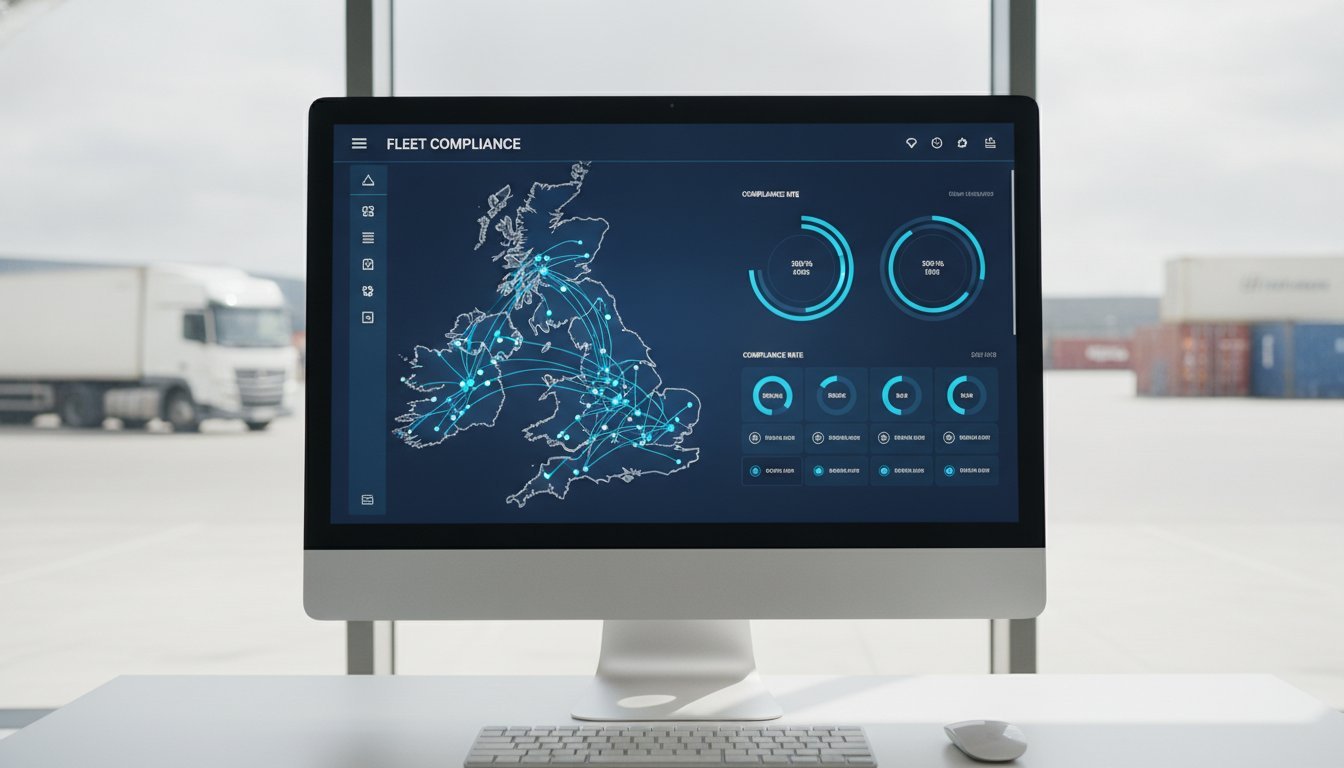
An integrated tachograph and tracking system is a unified telematics platform. It bridges the gap between simple GPS location and complex digital tachograph data. In the past, fleet managers often used two separate tools. One showed a dot on a map. The other required a manual download to see if the driver was legal. This fragmented approach is now a major liability. Modern systems merge these data streams into a single, live dashboard.
This represents a critical shift from passive location tracking to active compliance intelligence. You aren't just seeing where your HGVs are; you're seeing exactly how many minutes of driving time remain for every person in the cab. For a foundation on the hardware itself, you can read more about What is a Tachograph. In 2026, this technology is a regulatory necessity. It's the primary shield for your Operator Licence. A single serious infringement can trigger a DVSA audit, making automated oversight essential for protecting your business reputation and operational freedom.
The Evolution of Fleet Compliance
The roll-out of 5G connectivity has transformed how data moves. It enables the constant streaming of live driver hours directly from the vehicle. Transport offices no longer rely on drivers returning to a depot to clear their cards. Manual record-keeping is dead. Automated, cloud-based data storage is the new standard. By partnering with specialists like Fleetalyse, operators can automate the entire compliance cycle. This transition is about moving from reactive to preventative management. Cloud systems eliminate the risk of lost data or damaged cards, providing a digital archive that is accessible during any inspection.
Regulatory Deadlines for UK Operators
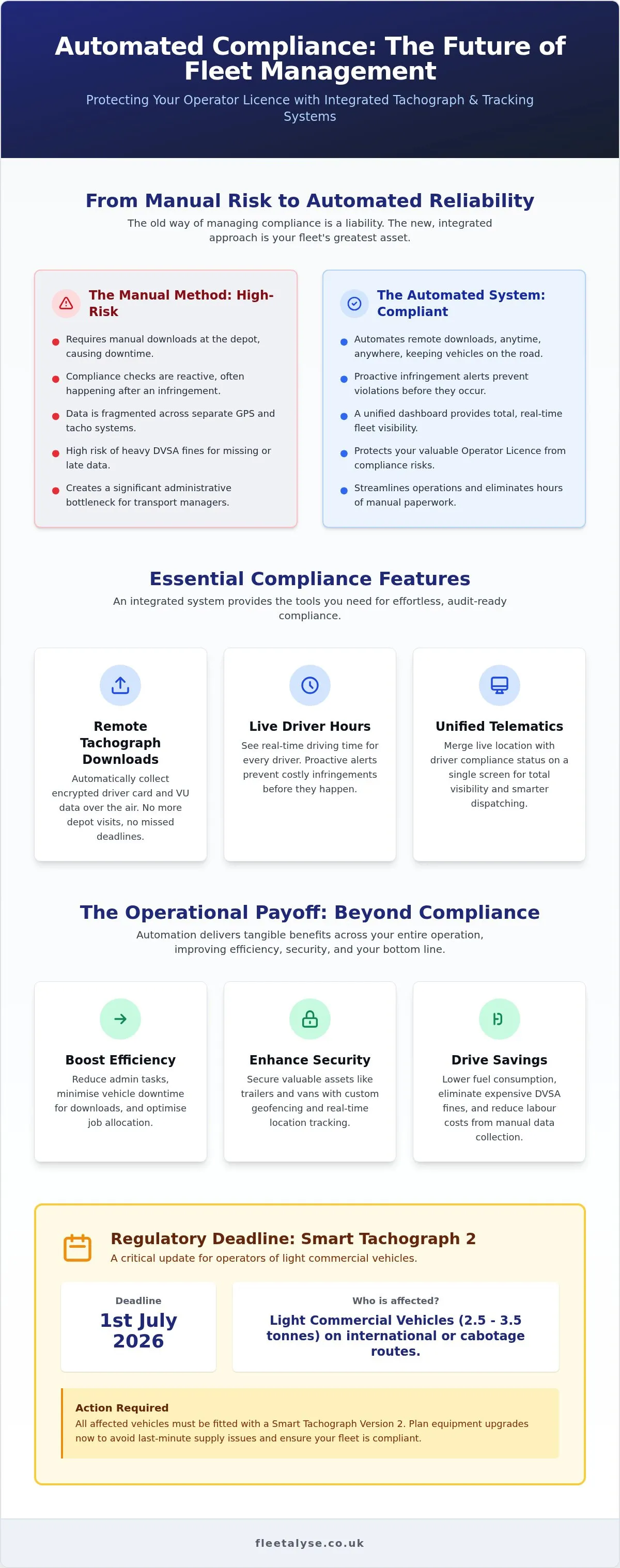
The regulatory landscape is tightening. By July 1, 2026, light commercial vehicles (LCVs) between 2.5 and 3.5 tonnes used for international transport or cabotage must be equipped with a Smart Tachograph Version 2. This is a massive change for van operators who haven't previously dealt with these requirements. Preparing early is vital to avoid the expected rush for hardware and calibration as the deadline approaches. Using an integrated tachograph and tracking system helps you meet DVSA standards through automated, error-free data collection. These systems provide a comprehensive audit trail that ensures your fleet remains fully compliant with the Working Time Directive by tracking all on-duty hours automatically.
Essential Compliance Features for Modern Transport Managers
An integrated tachograph and tracking system does more than just plot a vehicle on a map. It creates a live link between the driver's tachograph and your office computer. This integration removes the guesswork from fleet management. You no longer need to wait for a driver to return to the depot to check their compliance status. Instead, the data flows continuously, providing a clear picture of your fleet's legal standing at any given moment.
Remote Tachograph Downloads Explained
Manual downloads are a drain on resources. They require vehicles to be physically present and drivers to stop working whilst data is retrieved. Remote download technology changes this by pulling encrypted data over the air while the vehicle is operational on the road. This ensures you never miss a deadline for vehicle unit (VU) or driver card downloads. Staying audit-ready is much simpler when the system manages these frequencies automatically. It aligns your business with the official 2022 tachograph regulations, which established the framework for modern data handling and Smart Tachograph 2 requirements. By automating this process, you significantly reduce administrative overhead and eliminate the labour costs associated with manual data collection.
Monitoring Live Driver Hours in Real-Time
Live visibility is the best defence against accidental infringements. Transport managers can see exactly how much driving time remains for every driver in the fleet. This isn't based on an estimate; it's the actual data from the tachograph head. Proactive alerts notify you before a driver reaches their limit, allowing you to plan breaks or driver swaps effectively. Dispatchers can make better decisions by assigning jobs only to those with sufficient legal hours remaining. Real-time data monitoring reduces the risk of roadside prohibitions and heavy DVSA fines by ensuring every shift stays within legal limits. It's a pragmatic way to secure your fleet's compliance without constant manual checking.
The system also bridges the gap with your chosen analysis provider. Data moves seamlessly from the vehicle to the analysis software, where it's checked for infringements and archived. Automated alerts act as a safety net. They flag missing data, upcoming driver card expiries, or vehicle download deadlines before they become a problem. This level of automation is what separates a modern, efficient transport office from one that's constantly firefighting compliance issues. It's a straightforward approach built for the rigours of the UK road haulage industry.
Operational Benefits: Efficiency, Security, and Savings
Beyond ticking regulatory boxes, an integrated tachograph and tracking system serves as a powerful engine for business growth. It provides the granular data needed to trim waste from your daily operations. By optimising routes based on real-time vehicle locations and remaining driver hours, you reduce fuel consumption and minimise vehicle wear and tear. This isn't just about saving pennies. It's about extending the lifecycle of your fleet and ensuring every mile driven contributes to the bottom line.
HGV Trailer and Asset Tracking
Large logistics yards present a unique challenge: the "lost" trailer. Finding a specific asset amongst hundreds of identical units wastes valuable time and delays departures. Trailer tracking solves this by providing precise coordinates for every asset in your fleet. Operators can choose between battery-powered units for long-term standby or hardwired tracking for assets that are frequently coupled. This constant visibility is vital for securing high-value cargo. Custom geofencing allows you to set virtual boundaries. These trigger immediate movement alerts if an asset leaves a designated area without authorisation, providing a robust layer of security for your equipment.
Fuel Management and Driver Behaviour
Fuel is often the largest variable cost for a UK transport business. Monitoring driver behaviour through your integrated tachograph and tracking system identifies patterns that drive these costs up. Excessive idling, harsh braking, and aggressive acceleration are the primary culprits. You can use this data to organise targeted driver training programmes or incentive schemes that reward a smooth, efficient driving culture. There is also a direct link between improved driving behaviour and lower fleet insurance premiums. Insurers increasingly value the risk mitigation provided by telematics, rewarding fleets that can prove a commitment to safety.
Effective asset management means knowing exactly where every trailer is parked across the country at any time. This level of oversight prevents the under-utilisation of expensive equipment. When you combine this with the compliance automation provided by Fleetalyse, the business moves from a state of constant reaction to one of controlled, efficient planning. It's a pragmatic shift that turns raw data into a genuine competitive advantage in a crowded market.
How to Choose the Right Integrated Tachograph System
Selecting an integrated tachograph and tracking system requires a clear understanding of your fleet's specific composition. HGV operators need deep integration with the vehicle's FMS (Fleet Management System) to pull accurate fuel data. Van operators, particularly those facing the July 2026 mandate, need a solution that is easy to retrofit without excessive downtime. You must verify that any hardware is reliable enough for the rigours of long-distance haulage. Ask about the ease of nationwide installation. A system is only useful if it's installed correctly and consistently across your entire fleet of HGVs, trailers, and vans.
Software compatibility is equally vital. Your chosen system must speak the same language as your existing tachograph analysis tools. If the data doesn't flow seamlessly into your reporting software, you're back to manual entry and increased error risks. Always request a compatibility check before signing any long-term agreement to ensure the data transfer is fully automated and error-free.
Compliance-First vs. Location-Only Systems
A cheap GPS tracker might show you where a vehicle is, but it offers zero protection for your Operator Licence. These basic units often lack the processing power to handle encrypted tachograph files. This creates a dangerous gap in your record-keeping. You risk heavy DVSA fines if data is missing or corrupted during a remote download. An integrated tachograph and tracking system prioritises the secure, automated transfer of tacho data and live driver hours. It acts as a regulatory shield. Ensure the system you choose is scalable. It should handle your current fleet while having the capacity to add more assets as your business grows.
Financial and Contractual Transparency
Hidden fees are a common pain point in the telematics industry. Some providers charge extra for data roaming, software updates, or even every time a remote download is triggered. These small fees quickly erode the administrative savings the system was supposed to provide. Look for a partner that offers transparent contract terms and accessible, UK-based support. The true ROI comes from balancing the monthly subscription against the time saved by your transport office. A pragmatic partner understands that you need clear, predictable costs to manage your margins effectively. You can secure your fleet with transparent tracking terms to avoid these unexpected overheads and protect your business from hidden costs.
Organise Your Fleet Compliance with Fleetalyse
Fleetalyse provides pragmatic, expert-led tracking solutions built for the unique demands of the UK transport industry. We don't offer generic, one-size-fits-all software. Instead, we deliver a specialised integrated tachograph and tracking system that bridges the gap between the vehicle cab and the transport office. By automating the entire compliance cycle, we remove the administrative burden that often slows down regional operators. This allows hauliers to focus on what they do best: moving goods efficiently across the country.
Our approach centres on total visibility. We merge live GPS tracking with remote tachograph downloads into a single, intuitive interface. This unified view gives you the confidence that your fleet is operating within legal limits at all times. It's not just about data collection; it's about active compliance management. We help you move away from the stress of manual record-keeping and towards a streamlined, automated future. By removing the need for physical card reading, we ensure your business stays productive and your drivers stay on the road.
Integrated Tachograph Analysis
A critical part of our service is ensuring a seamless flow of information. We integrate directly with your chosen analysis provider so that data moves from the vehicle to the report without human touch. This keeps your fleet audit-ready 24/7. We provide reliable hardware designed to withstand the rigours of commercial use, whether it's fitted to an HGV, a van, or a trailer. Our commitment to transparency means you'll always know exactly what you're paying for. There are no hidden complexities or surprise fees for data roaming. We believe in straightforward fleet management that serves the operator's practical needs first, ensuring your integrated tachograph and tracking system delivers genuine value.
Getting Started with a Compliance Audit
Transitioning from manual downloads to an automated, integrated system is a significant step towards protecting your Operator Licence. Many businesses start this journey with a compliance audit. This identifies where your current record-keeping might be vulnerable to DVSA scrutiny. We help you bridge those gaps with technology that works in the real world. Taking the first step towards a more efficient, compliant, and secure operation is simple. You can book a consultation or explore our services at Fleetalyse to see how we can transform your fleet management. We act as your reliable ally, prioritising functional utility and long-term regulatory adherence for your entire transport operation.
Secure the Future of Your Transport Operation
Managing a fleet in 2026 requires more than just reliable drivers; it demands a system that handles the heavy lifting of regulatory adherence automatically. An integrated tachograph and tracking system provides the protection your Operator Licence needs while eliminating the friction of manual data collection. You've seen how real-time visibility of driver hours prevents costly infringements and how remote downloads keep your vehicles on the road where they belong. By unifying location data with compliance intelligence, you move from reactive firefighting to proactive fleet management.
Transitioning to an automated model doesn't have to be complex or filled with hidden costs. At Fleetalyse, we bring UK-based expertise in transport compliance to every partnership. We specialise in remote tachograph and live driver hours monitoring, offering transparent pricing with no hidden complexities. It's about giving you back the time to focus on growth rather than paperwork. Streamline your fleet compliance with Fleetalyse today. Take control of your data and build a more resilient, profitable transport business for the years ahead.
Frequently Asked Questions
Are commercial vehicle tracking systems legal in the UK?
Commercial tracking is entirely legal in the UK, provided you comply with GDPR and employment laws. Operators must have a legitimate interest for monitoring, such as safety or compliance, and must inform drivers about what data is being collected. Having a clear, written policy ensures your business remains transparent and maintains trust with your workforce whilst fulfilling your legal obligations.
How much does an integrated tachograph and tracking system cost?
The investment for an integrated tachograph and tracking system depends on your specific fleet requirements, such as the number of HGVs, vans, or trailers you operate. Instead of focusing on a single figure, consider the ROI through reduced administration and avoided DVSA fines. Fleetalyse prioritises transparent pricing with no hidden complexities for data roaming or software updates, ensuring you get predictable monthly costs.
What is remote tachograph download and how does it work?
Remote tachograph download is the automated, wireless transfer of data from the vehicle to your transport office. A small telematics unit connected to the tachograph head sends encrypted files over the mobile network. This eliminates the need for manual downloads and physical card reading. It ensures you never miss a deadline while the vehicle remains operational on the road, saving hours of administrative labour.
Can tracking systems help with DVSA compliance and O-Licence protection?
These systems are a critical tool for protecting your Operator Licence. By providing live driver hours and automated alerts, they stop accidental infringements before they happen. This creates a robust audit trail for the DVSA, proving that you have professional systems in place to manage driver behaviour and legal working limits. It moves your business from reactive firefighting to a proactive compliance model.
Do tracking systems work for trailers and non-powered assets?
Specialised tracking units are available for trailers and other non-powered assets. You can choose between long-life battery units for standby trailers or hardwired devices that charge when coupled to a tractor. This ensures you maintain total visibility of every asset across your logistics network. It significantly improves security and yard management efficiency by showing you exactly where every trailer is parked at any time.
How often should tachograph data be downloaded in 2026?
In 2026, the legal requirement remains to download driver cards at least every 28 days and vehicle units every 90 days. However, using an integrated tachograph and tracking system allows for much more frequent, automated downloads. This ensures your analysis is always current. It's particularly useful for managing the 56-day data storage capacity found in the latest Smart Tachograph Version 2 units.
Will an integrated tracking system reduce my fleet insurance premiums?
Many UK insurers look favourably on fleets that use integrated telematics. By proving a commitment to monitoring driver behaviour and maintaining strict compliance, you reduce the overall risk profile of your business. This often leads to lower premiums or better terms. The data demonstrates a safer, more professional driving culture, which insurers reward because it leads to fewer accidents and claims over time.
Can drivers see the tracking and tachograph data being collected?
Drivers can and should be aware of the data being collected to ensure full transparency. Most modern systems allow drivers to view their remaining hours directly on the tachograph head or via a dedicated smartphone app. Promoting this visibility helps drivers manage their own breaks and shifts more effectively. It reduces the likelihood of unintentional infringements and improves the overall safety of your transport operation.
Frequently asked questions
Are commercial vehicle tracking systems legal in the UK?
Commercial tracking is entirely legal in the UK, provided you comply with GDPR and employment laws. Operators must have a legitimate interest for monitoring, such as safety or compliance, and must inform drivers about what data is being collected. Having a clear, written policy ensures your business remains transparent and maintains trust with your workforce whilst fulfilling your legal obligations.
How much does an integrated tachograph and tracking system cost?
The investment for an integrated tachograph and tracking system depends on your specific fleet requirements, such as the number of HGVs, vans, or trailers you operate. Instead of focusing on a single figure, consider the ROI through reduced administration and avoided DVSA fines. Fleetalyse prioritises transparent pricing with no hidden complexities for data roaming or software updates, ensuring you get predictable monthly costs.
What is remote tachograph download and how does it work?
Remote tachograph download is the automated, wireless transfer of data from the vehicle to your transport office. A small telematics unit connected to the tachograph head sends encrypted files over the mobile network. This eliminates the need for manual downloads and physical card reading. It ensures you never miss a deadline while the vehicle remains operational on the road, saving hours of administrative labour.
Can tracking systems help with DVSA compliance and O-Licence protection?
These systems are a critical tool for protecting your Operator Licence. By providing live driver hours and automated alerts, they stop accidental infringements before they happen. This creates a robust audit trail for the DVSA, proving that you have professional systems in place to manage driver behaviour and legal working limits. It moves your business from reactive firefighting to a proactive compliance model.
Do tracking systems work for trailers and non-powered assets?
Specialised tracking units are available for trailers and other non-powered assets. You can choose between long-life battery units for standby trailers or hardwired devices that charge when coupled to a tractor. This ensures you maintain total visibility of every asset across your logistics network. It significantly improves security and yard management efficiency by showing you exactly where every trailer is parked at any time.
How often should tachograph data be downloaded in 2026?
In 2026, the legal requirement remains to download driver cards at least every 28 days and vehicle units every 90 days. However, using an integrated tachograph and tracking system allows for much more frequent, automated downloads. This ensures your analysis is always current. It's particularly useful for managing the 56-day data storage capacity found in the latest Smart Tachograph Version 2 units.
Will an integrated tracking system reduce my fleet insurance premiums?
Many UK insurers look favourably on fleets that use integrated telematics. By proving a commitment to monitoring driver behaviour and maintaining strict compliance, you reduce the overall risk profile of your business. This often leads to lower premiums or better terms. The data demonstrates a safer, more professional driving culture, which insurers reward because it leads to fewer accidents and claims over time.
Can drivers see the tracking and tachograph data being collected?
Drivers can and should be aware of the data being collected to ensure full transparency. Most modern systems allow drivers to view their remaining hours directly on the tachograph head or via a dedicated smartphone app. Promoting this visibility helps drivers manage their own breaks and shifts more effectively. It reduces the likelihood of unintentional infringements and improves the overall safety of your transport operation.