
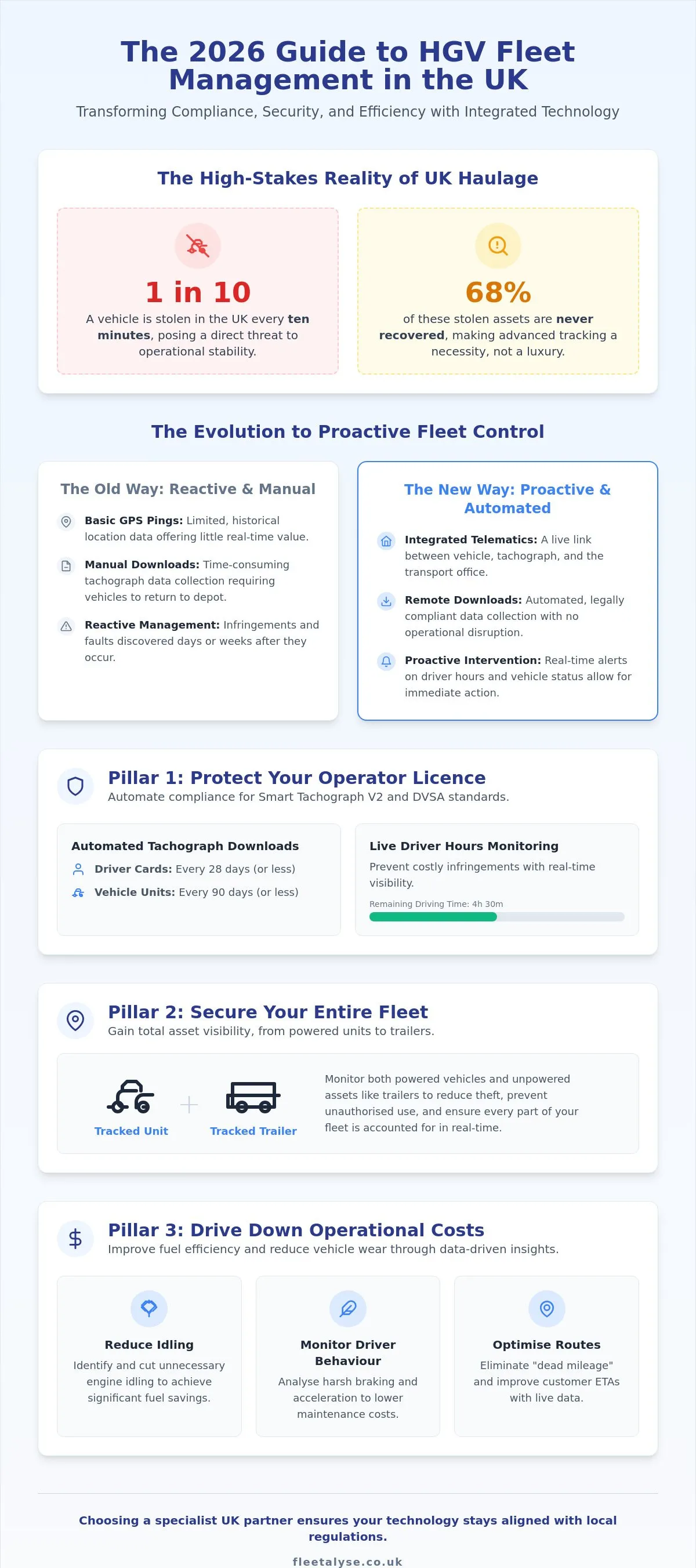
In 2025, a vehicle was stolen in the UK every ten minutes, and a staggering 68% of those assets were never recovered. For transport managers, this isn't just a security headache; it's a direct threat to operational stability. Implementing robust HGV fleet tracking solutions has become the baseline for survival in a landscape where Smart Tachograph Version 2 regulations and stricter Direct Vision Standards are now mandatory for many operators.
Managing a fleet in 2026 feels like a constant battle against rising fuel costs and the administrative weight of manual tachograph downloads. You're likely aware that a single missed deadline or a driver hours infringement can put your Operator Licence at risk. It's a high-stakes environment where "good enough" data no longer satisfies the DVSA, and manual processes simply can't keep pace with modern requirements.
This guide shows you how to turn that data burden into a practical advantage. You'll learn how integrated HGV tracking and remote tachograph solutions protect your licence whilst streamlining your logistics. We'll cover the transition to automated compliance, real-time visibility for every trailer, and the specific methods used to lower fuel consumption through better driver behaviour.
Key Takeaways
- Automated remote tachograph downloads and live driver hours monitoring are essential for maintaining your Operator Licence and meeting 2026 DVSA standards.
- Modern HGV fleet tracking solutions provide total visibility by monitoring both powered vehicles and trailers, reducing the risk of asset theft and unauthorised use.
- Improving driver behaviour through real-time data identifies excessive idling and harsh braking, leading to significant fuel savings and reduced vehicle wear.
- Seamless integration between your tracking hardware and tachograph analysis software eliminates manual data collection and ensures you are always audit-ready.
- Choosing a specialist UK partner ensures your technology stays aligned with local regulations like the Smart Tachograph Version 2 requirements.
The Evolution of HGV Fleet Tracking Solutions in the UK
HGV fleet tracking solutions in 2026 represent a total departure from the basic GPS "pings" of the past. A modern vehicle tracking system is now the central nervous system of any professional transport operation. It provides a direct, live link between the vehicle's engine, the tachograph head, and the transport manager's desk. This evolution has turned tracking from a simple security tool into a comprehensive compliance and efficiency platform.
The shift from reactive to proactive management is the most significant change for UK hauliers. In previous years, managers often discovered driver infringements or vehicle faults days or weeks after the event. Now, integrated telematics allow you to intervene before a problem escalates. This level of control isn't just a benefit; it's essential for protecting your Operator Licence. The DVSA expects operators to use every tool available to ensure roadworthiness and driver compliance. If you aren't monitoring live data, you're managing with one eye closed.
The Role of Real-Time Telematics
Live data gives dispatchers the power to make decisions based on reality rather than estimates. When a new job comes in, you can see which driver has the remaining hours to complete it without risking a breach. This visibility is key to reducing "dead mileage". By optimising routes and ensuring every mile driven is productive, you directly combat rising fuel costs. Engine status monitoring also plays a part. It flags minor faults before they become expensive roadside breakdowns, keeping your fleet on the move.
Why National Hauliers are Moving to Integrated Systems
Running disparate systems for tracking and compliance is expensive and inefficient. Office staff shouldn't have to jump between different software packages to match a GPS location with a driver's tacho record. Integrated HGV fleet tracking solutions bring everything into a single view. This consolidation slashes administrative overheads and makes your business far more agile.
Customers in 2026 demand transparency. They expect accurate ETAs backed by real-time data. An integrated system allows you to provide these updates automatically, improving your service levels without adding to the office workload. By choosing a specialist partner that understands the UK market, you ensure your technology is built for the specific rigours of regional logistics and domestic regulations.
Compliance-First Tracking: Remote Tachograph and Driver Hours
For a transport manager, the tachograph is the ultimate source of truth. Relying on manual downloads is a liability that most modern fleets can no longer afford. In 2026, the introduction of Smart Tachograph Version 2 has made data accuracy even more critical. Effective HGV fleet tracking solutions now bridge the gap between simple location data and the rigorous requirements of the DVSA. By linking your GPS hardware directly to the tachograph head, you turn a passive recording device into a proactive compliance tool.
This integration ensures your fleet remains audit-ready at all times. Instead of reacting to infringements found weeks after the event, you gain the ability to spot trends and rectify issues immediately. This proactive stance is what separates a healthy Operator Licence from one at risk of a public inquiry. Every data point collected is a layer of protection for your business.
Automated Remote Tachograph Downloads
Manual data collection is a drain on time and resources. It requires vehicles to return to the depot and staff to physically connect download tools. Remote tachograph download technology removes this burden entirely. The hardware securely transmits encrypted driver card and vehicle unit files via the mobile network directly to your cloud platform.
You can set up automated schedules to ensure you never miss a legal deadline. Driver cards are typically downloaded every 28 days and vehicle units every 90 days, but many operators now choose weekly schedules for better oversight. This centralised data is then ready for immediate analysis. If you are looking to eliminate the administrative headache of manual filing, you can start automating your compliance data today.
Live Driver Hours Monitoring
Live visibility of driver hours is the most effective way to prevent costly infringements. You no longer have to rely on phone calls or manual logbooks to know if a driver is approaching their limit. Your tracking dashboard shows real-time stats on driving time, remaining shift allowance, and required rest periods.
This data allows dispatchers to assign the right driver to the right job with total confidence. You can see at a glance who has the legal capacity to take on an extra drop or a long-distance run. This level of oversight significantly reduces the risk of "points" on your licence. It also supports driver welfare by ensuring everyone stays within safe, legal working limits without the stress of manual calculations.
Securing the Whole Fleet: Trailer and Asset Tracking
A tractor unit is only half the story in any logistics operation. Comprehensive HGV fleet tracking solutions must account for the trailer and the cargo it carries. Without this visibility, you have a significant blind spot in your supply chain. High-value loads are frequently left unattended at customer sites or in third-party yards, making them vulnerable to unauthorised use or theft. Monitoring these assets ensures you maintain control over your equipment, regardless of whether it's currently coupled to a vehicle.
Modern tracking goes beyond just the HGVs themselves. It involves a diverse range of hardware designed for specialised assets. Whether you're managing refrigerated units, curtain-siders, or flatbeds, having a live data feed for every piece of kit is vital. This approach protects your investment and ensures your fleet remains productive. It's about knowing exactly where every asset is, how long it's been there, and if it's being used as intended.
Trailer Tracking for Improved Utilisation
Identifying underused trailers is one of the fastest ways to improve your bottom line. Many hauliers suffer from "trailer drift," where assets are left at customer premises and forgotten. This leads to poor asset utilisation and forces businesses to invest in more equipment than they actually need. Tracking hardware allows you to see which trailers are sitting idle and for how long. You can then reallocate these assets to busier routes, maximising your capital investment.
Correct coupling is another operational hurdle. Integrated HGV fleet tracking solutions show you exactly which tractor unit is paired with which trailer. This prevents drivers from picking up the wrong load and helps office staff coordinate swaps more efficiently. Depending on your needs, you can choose between battery-powered trackers for long-term uncoupled storage or line-powered units that provide constant updates whilst the trailer is in transit.
Security and Theft Recovery
Security is a primary concern for any UK operator. Geofencing allows you to draw virtual boundaries around your depot or a customer's distribution centre. If a trailer or asset moves outside this designated area without authorisation, you receive an instant alert. This early warning system is often the difference between a successful recovery and a total loss.
In the event of a theft, live location data is indispensable. It provides the police with the exact coordinates needed for rapid recovery, often before the thieves have a chance to strip the vehicle or unload the cargo. These systems also create an irrefutable digital trail. Having a detailed history of an asset's movements provides essential proof for insurance claims and legal proceedings, ensuring your business is protected against false claims or liability disputes.
Driving Down Costs: Behaviour and Fuel Efficiency
Fuel is the largest variable cost for any UK haulier. In 2026, with the government's Fuel Finder scheme increasing transparency at the pumps, the focus has shifted to how that fuel is actually consumed on the road. Professional HGV fleet tracking solutions provide the granular data needed to bridge the gap between high pump prices and operational profit. It's not just about where the truck is; it's about how it's being handled.
There's a direct, measurable correlation between driver behaviour and the bottom line. Small changes in driving style lead to significant savings when multiplied across a whole fleet. By using telematics to monitor performance, you move away from guesswork and towards a culture of efficiency and safety.
Analysing Driver Behaviour
Objective data removes the tension from driver management. By monitoring speeding, harsh acceleration, and aggressive cornering, you can identify high-risk patterns before they lead to accidents. This creates a quantifiable safety culture where expectations are clear. Drivers are more likely to engage with coaching when it's based on impartial telematics rather than subjective opinion. Over time, a proven record of safer driving can also lead to lower insurance premiums, as underwriters reward fleets that actively use data to mitigate risk.
Fuel Management and Idling Reduction
Idling is a silent drain on your margins. Across a national fleet, even ten minutes of unnecessary idling per vehicle each day adds up to thousands of pounds in wasted fuel annually. Telematics allow you to calculate this true cost and take corrective action with specific drivers. Optimised routing also plays a part, ensuring that every mile driven is necessary and productive.
Integrated data helps you spot fuel theft or inaccuracies. By comparing fuel card spend with actual vehicle location and engine data, you can identify discrepancies immediately. This level of oversight ensures that you only pay for the fuel your vehicles actually use. The long-term ROI of implementing specialised HGV fleet tracking solutions is undeniable, often paying for the system itself through fuel savings alone. If you're ready to cut operational waste and improve your margins, you can set up your fleet tracking account here.
Choosing the Right HGV Tracking Partner in the UK
Selecting a partner for your HGV fleet tracking solutions is a strategic decision that affects your operational safety and financial health. In an industry where regulations like the Smart Tachograph Version 2 are now standard, a generalist software provider often falls short. You need a partner that understands the specific pressures of UK transport law and the rigours of a DVSA audit. A gadget alone won't protect your licence; the expertise behind it will.
Transparency must be your first priority. Avoid providers that bury contractual terms in complex legalese or hide the true cost of hardware and data. A reliable partner offers straightforward pricing and clear service level agreements. This honesty is vital in a sector where unexpected costs can quickly erode the thin margins of a haulage business. Clear terms reflect a business that values fairness and long-term partnership over quick wins.
The Importance of Industry Expertise
A partner with a background in compliance adds far more value than a generic tracking firm. They don't just provide dots on a map; they provide the data structure required to defend your Operator Licence. Look for providers that offer seamless tachograph analysis integration. This ensures that your tracking data and tacho files flow into a single, audit-ready system without manual intervention. It eliminates the administrative silos that often lead to missed infringements.
Ask direct questions about data security and system uptime. Your compliance records are sensitive and essential for daily operations. A specialist provider will have robust protocols in place to ensure your data is secure and accessible whenever an inspector calls. National coverage is also non-negotiable. Ensure your chosen partner provides reliable hardware support across the UK to minimise vehicle downtime and keep your fleet moving.
Fleetalyse: Your Pragmatic Compliance Partner
Fleetalyse focuses on the real-world needs of UK hauliers. We don't offer flashy, unnecessary features that clutter your dashboard. Instead, we provide the essential tools needed for regulatory adherence and asset management. Our approach is grounded in industry experience and a commitment to operational clarity. We understand the daily struggles of a transport manager because we built our service to solve them.
Moving from manual processes to automated visibility shouldn't be a friction-filled experience. We prioritise functional utility and straightforward communication. By choosing a localised specialist, you gain a reliable ally that values your time and resources. Our systems are built for the rigours of regional logistics, ensuring your fleet remains efficient, compliant, and profitable. It is time to move beyond theoretical data collection and implement a system that works for your business.
Securing the Future of Your Fleet Compliance
The logistics landscape in 2026 demands more than basic GPS. Safeguarding your Operator Licence requires a proactive approach to data management. By integrating HGV fleet tracking solutions that focus on regulatory adherence, you eliminate the risks associated with manual processes. Automated systems ensure you never miss a deadline and provide the live visibility needed to prevent driver infringements before they happen.
Focusing on specialised tools like remote tachograph downloads and trailer tracking doesn't just improve security; it drives operational efficiency. You reduce fuel waste, identify underused assets, and create a culture of safer driving. This level of control is essential for maintaining margins in a competitive market. It turns a compliance necessity into a clear business advantage.
Fleetalyse acts as your pragmatic partner in this transition. We are specialists in remote tachograph downloads and live driver hours monitoring for DVSA compliance. With national UK support for transport operators, we provide the reliable hardware and expertise you need to stay audit-ready. Optimise your fleet compliance with Fleetalyse today. It's time to let automation handle the administrative burden so you can focus on the road ahead.
Frequently Asked Questions
How often should HGV tachograph data be downloaded in the UK?
In the UK, you're legally required to download driver card data at least every 28 days and vehicle unit data every 90 days. Most operators using modern HGV fleet tracking solutions choose to automate this process on a weekly basis. This frequent schedule ensures that potential infringements are identified early and that data is never lost. It removes the risk of missing a legal deadline and keeps your records current for any snap inspections.
Can HGV tracking help me pass a DVSA audit?
Yes, a robust tracking system is a vital tool for demonstrating compliance during a DVSA audit. It provides a digital audit trail of vehicle movements, driver hours, and rest periods. By showing that you actively monitor live data and intervene when issues arise, you prove to the DVSA that you're a responsible operator. This proactive management is exactly what inspectors look for when assessing the health of an Operator Licence.
What is the difference between vehicle tracking and trailer tracking?
Vehicle tracking monitors the tractor unit or van, providing engine data and live driver hours. Trailer tracking focuses on the asset itself, whether it's coupled or standing in a yard. Specialised trailer hardware often includes long-life batteries to track unpowered assets for months. Using both ensures you have total visibility of your entire fleet, preventing "lost" trailers and improving overall asset utilisation across your logistics operations.
Do I need a specific type of hardware for remote tachograph downloads?
You need a telematics device that is physically connected to the back of the digital tachograph head. This hardware must be compatible with your specific tachograph model, such as the Smart Tachograph Version 2. Once installed, it securely transmits encrypted files over the mobile network. This setup allows for automated downloads without the driver needing to take any action or the vehicle returning to the depot.
How does live driver hours tracking prevent infringements?
Live tracking gives you a real-time view of every driver's remaining shift time and required rest breaks. Instead of relying on manual tallies, your dashboard calculates these figures automatically based on actual tachograph data. Dispatchers can see exactly who has the legal capacity for a new job. This immediate visibility allows you to stop a driver before they breach their hours, protecting both the driver and your business.
Is it difficult to integrate tracking with my current tachograph analysis software?
Integration is typically a straightforward process when working with a specialist provider. Most HGV fleet tracking solutions are designed to feed data directly into industry-standard analysis platforms. Once the data bridge is set up, your remote downloads will appear in your analysis software automatically. This seamless flow eliminates manual file uploads and ensures your compliance reporting is always based on the most recent data available.
Will my drivers feel like they are being watched unfairly?
Transparency is key to maintaining a positive relationship with your drivers. Explain that the system is primarily a safety and compliance tool designed to protect their licences as much as yours. When drivers understand that the data provides objective proof of their hard work and helps prevent accidental hours breaches, they usually accept it. Using the data for fair incentive programmes rather than just punishment also builds trust.
What is the typical ROI for an HGV fleet tracking system?
Return on investment usually comes through three main channels: fuel savings, administrative efficiency, and risk mitigation. Reducing idling and improving driver behaviour can cut fuel costs significantly. Automating tachograph downloads saves hours of office labour every week. Perhaps most importantly, avoiding a single DVSA fine or a public inquiry can save your business thousands of pounds. Many operators find the system pays for itself within the first year.
Frequently asked questions
How often should HGV tachograph data be downloaded in the UK?
In the UK, you're legally required to download driver card data at least every 28 days and vehicle unit data every 90 days. Most operators using modern HGV fleet tracking solutions choose to automate this process on a weekly basis. This frequent schedule ensures that potential infringements are identified early and that data is never lost. It removes the risk of missing a legal deadline and keeps your records current for any snap inspections.
Can HGV tracking help me pass a DVSA audit?
Yes, a robust tracking system is a vital tool for demonstrating compliance during a DVSA audit. It provides a digital audit trail of vehicle movements, driver hours, and rest periods. By showing that you actively monitor live data and intervene when issues arise, you prove to the DVSA that you're a responsible operator. This proactive management is exactly what inspectors look for when assessing the health of an Operator Licence.
What is the difference between vehicle tracking and trailer tracking?
Vehicle tracking monitors the tractor unit or van, providing engine data and live driver hours. Trailer tracking focuses on the asset itself, whether it's coupled or standing in a yard. Specialised trailer hardware often includes long-life batteries to track unpowered assets for months. Using both ensures you have total visibility of your entire fleet, preventing "lost" trailers and improving overall asset utilisation across your logistics operations.
Do I need a specific type of hardware for remote tachograph downloads?
You need a telematics device that is physically connected to the back of the digital tachograph head. This hardware must be compatible with your specific tachograph model, such as the Smart Tachograph Version 2. Once installed, it securely transmits encrypted files over the mobile network. This setup allows for automated downloads without the driver needing to take any action or the vehicle returning to the depot.
How does live driver hours tracking prevent infringements?
Live tracking gives you a real-time view of every driver's remaining shift time and required rest breaks. Instead of relying on manual tallies, your dashboard calculates these figures automatically based on actual tachograph data. Dispatchers can see exactly who has the legal capacity for a new job. This immediate visibility allows you to stop a driver before they breach their hours, protecting both the driver and your business.
Is it difficult to integrate tracking with my current tachograph analysis software?
Integration is typically a straightforward process when working with a specialist provider. Most HGV fleet tracking solutions are designed to feed data directly into industry-standard analysis platforms. Once the data bridge is set up, your remote downloads will appear in your analysis software automatically. This seamless flow eliminates manual file uploads and ensures your compliance reporting is always based on the most recent data available.
Will my drivers feel like they are being watched unfairly?
Transparency is key to maintaining a positive relationship with your drivers. Explain that the system is primarily a safety and compliance tool designed to protect their licences as much as yours. When drivers understand that the data provides objective proof of their hard work and helps prevent accidental hours breaches, they usually accept it. Using the data for fair incentive programmes rather than just punishment also builds trust.
What is the typical ROI for an HGV fleet tracking system?
Return on investment usually comes through three main channels: fuel savings, administrative efficiency, and risk mitigation. Reducing idling and improving driver behaviour can cut fuel costs significantly. Automating tachograph downloads saves hours of office labour every week. Perhaps most importantly, avoiding a single DVSA fine or a public inquiry can save your business thousands of pounds. Many operators find the system pays for itself within the first year.