
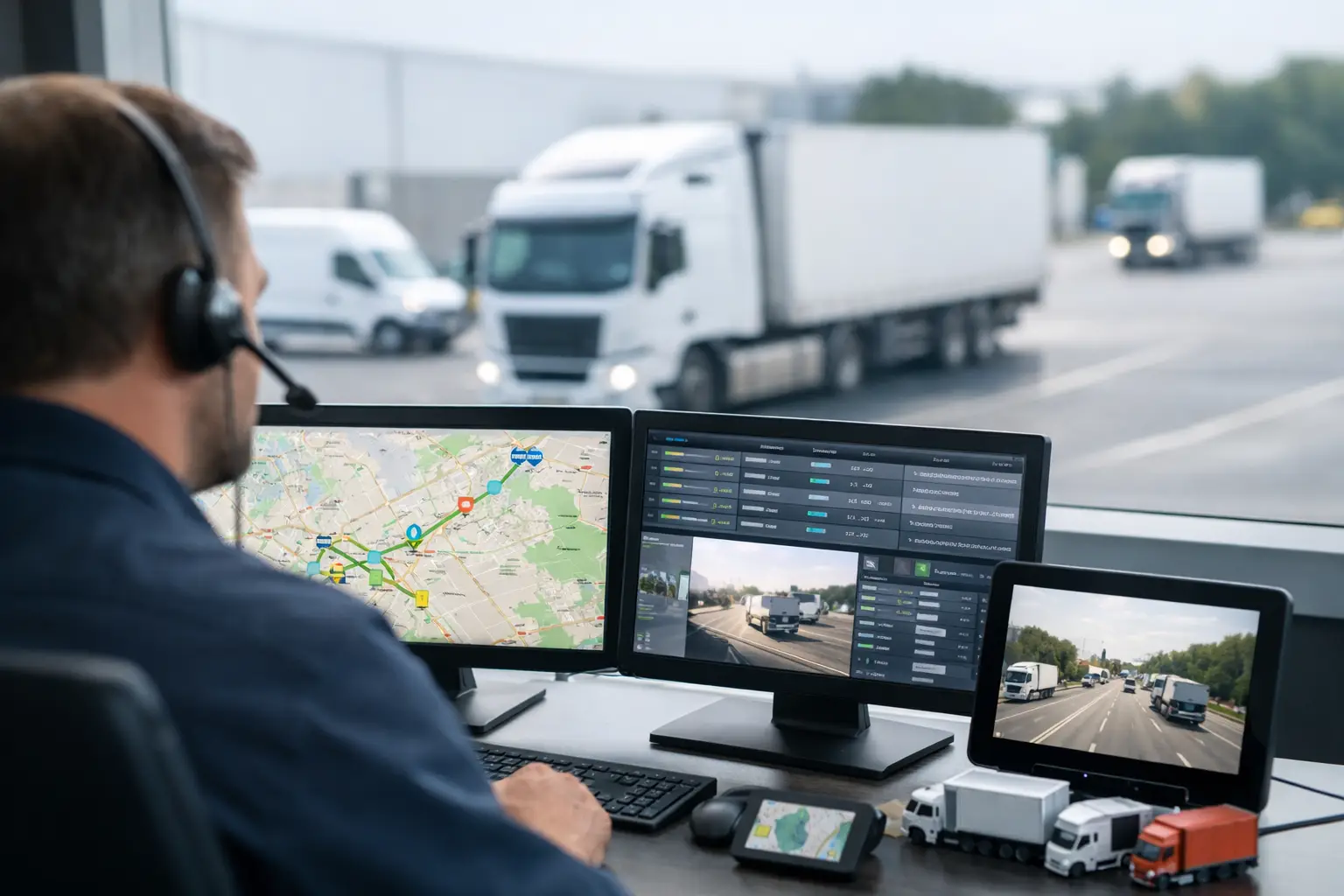
A late-running lorry is not always the problem. The real problem is discovering it too late to move a collection, warn a customer, check the driver’s remaining hours or send another vehicle. Fleet dispatch visibility tools give planners the operational picture needed to make those decisions while there is still time to protect the day’s work.
For UK transport operators, that picture must go beyond a dot on a map. Dispatch affects driver hours, vehicle availability, trailer location, maintenance status, fuel use and customer commitments. If those details sit across separate tracking portals, spreadsheets and manual tachograph files, the depot spends its time chasing information instead of managing exceptions.
What fleet dispatch visibility tools should show
The most useful visibility tools bring live and planned activity into one working view. A dispatcher should be able to see where a vehicle is, whether it is moving, stopped or delayed, and whether it is likely to reach its next job within the planned window. That is the starting point, not the finished requirement.
For HGV operations, driver availability matters just as much as vehicle location. A vehicle can be physically close to a collection point but unsuitable for the work if the driver is approaching a break, daily driving limit or rest requirement. Live driver-hours information helps planners avoid assigning work that creates an infringement or leaves the driver unable to complete the return leg.
Asset visibility is equally relevant in trailer operations and mixed fleets. Knowing that a unit is available is of limited use if the required trailer is at another site, detached at a customer location or due for inspection. A single view of tractors, trailers, vans and drivers makes planning more realistic and reduces unnecessary calls between depots.
Good fleet dispatch visibility tools also show the conditions behind the location. This may include ignition status, route history, geofence arrivals and departures, current speed, idling, driver behaviour events and maintenance alerts. The aim is not to create more data for its own sake. It is to give the person planning the work enough context to decide what should happen next.
Dispatch visibility is also a compliance control
Dispatch planning and operator licence compliance are often treated as separate jobs. In practice, they influence each other all day. A planner under pressure to cover a final delivery may unknowingly allocate a driver with insufficient available time. A compliance manager may later find that preventable infringements were caused by poor access to live information rather than poor driver intent.
Bringing tachograph data and driver-hours status into the same platform as GPS tracking changes that position. Planners can check available driving and working time before making an allocation, while transport managers can review emerging risks before they become routine issues. Remote tachograph downloads also reduce the reliance on drivers returning to base with cards or manual files ready for processing.
This does not remove the need for competent transport management or regular compliance review. Live information can be delayed, incomplete or affected by a driver card issue, so teams still need clear procedures for exceptions. But it gives dispatch staff a more reliable basis for decisions than memory, paper notes and assumptions.
The value of a shared operational view
When dispatch, compliance and maintenance teams work from different systems, each team sees only part of the operation. Dispatch may plan a vehicle that is due a safety check. Maintenance may hold an asset that has already been promised to a customer. Compliance may identify a recurring driver-hours issue after the jobs have been completed.
A shared platform makes these conversations earlier and more constructive. The question becomes, “What can we move now?” rather than, “Why did no one tell us?” For smaller operators, this can be especially valuable because the same person may be planning work, speaking to drivers and checking compliance records in the space of one morning.
Where dispatch teams see immediate benefits
The clearest benefit is faster response to disruption. If a vehicle is held in traffic, waiting at a customer site or taking longer than expected on a job, the planner can assess the impact on later work and contact the right people. Customers receive a practical update rather than a missed time slot followed by an explanation.
Visibility also improves utilisation. Route history and stop data can reveal whether vehicles are spending long periods waiting, returning empty or being allocated inefficiently between depots. That does not mean every delay is avoidable. Loading queues, site restrictions and driver rest are operational realities. It does mean managers can distinguish a genuine constraint from a recurring planning weakness.
Fuel is another area where live and historic data supports better decisions. Unnecessary mileage, excessive idling, harsh driving and poorly planned diversions all carry a cost. A dispatch tool will not solve fuel waste alone, but it gives managers evidence to adjust routes, workloads and driver support rather than relying on broad assumptions.
Vehicle availability improves when maintenance reminders are visible alongside planned work. Scheduling a service or inspection before a vehicle becomes a problem is less disruptive than taking it out of service during a busy day. For fleets operating older vehicles, varied asset types or demanding schedules, this is a direct way to reduce avoidable downtime.
Choosing fleet dispatch visibility tools for a UK fleet
The right system depends on fleet size, operating pattern and the level of regulatory exposure. A local van fleet focused on multi-drop work may prioritise live location, proof of attendance and vehicle utilisation. A long-haul HGV operator needs deeper driver-hours and tachograph controls. A mixed fleet may need all of these, plus reliable trailer tracking.
Start with the questions your team struggles to answer quickly. Which vehicle can take this job? Where is the trailer? Will this driver have enough time? Has the vehicle arrived on site? Is it due maintenance? If answering those questions requires several calls and three separate systems, the issue is not a lack of effort. It is fragmented visibility.
Look closely at implementation as well as features. Hardware that is difficult to fit, unclear contract terms or unexpected data costs can undermine the business case. Plug-and-play devices and transparent monthly pricing help operators introduce visibility without creating another prolonged depot project. The platform should also be straightforward enough for dispatch staff to use during a pressured shift, not only for an administrator producing reports at the end of the week.
Data quality deserves the same attention. Location updates need to be timely, drivers and vehicles must be assigned correctly, and geofences should reflect real customer and depot sites. A system cannot produce dependable planning information if the asset list is out of date or the working rules are poorly configured.
Turning visibility into better daily decisions
Technology produces value when it changes the routine. Start each shift by reviewing exceptions: vehicles delayed, drivers nearing limits, assets due maintenance and unassigned trailers. This creates a short, practical priority list before the first disruption becomes urgent.
During the day, use alerts selectively. Too many notifications teach people to ignore them. Focus on the events that require action, such as unexpected long stops, late arrivals, unauthorised movement, excessive idling or a driver-hours threshold. Each alert should have an owner and an agreed response, whether that is contacting a driver, reallocating work or recording the reason for the delay.
At the end of the week, review patterns rather than individual incidents alone. Repeated late arrivals at one customer may point to an unrealistic booking window. Regular trailer searches may show a gap in asset tracking. Persistent driver-hours pressure on one route may indicate that the workload needs redesigning. This is where fleet data becomes an operational improvement tool rather than a record of what went wrong.
Fleetalyse brings vehicle and trailer tracking, live driver-hours visibility, remote tachograph management, driver behaviour and maintenance reminders into one platform, helping UK operators replace fragmented checks with a clearer working picture.
The best dispatch decision is usually made before a delay becomes a customer complaint or a compliance issue. Give planners live, relevant information they can trust, and they can spend less time finding the fleet and more time keeping it moving.