
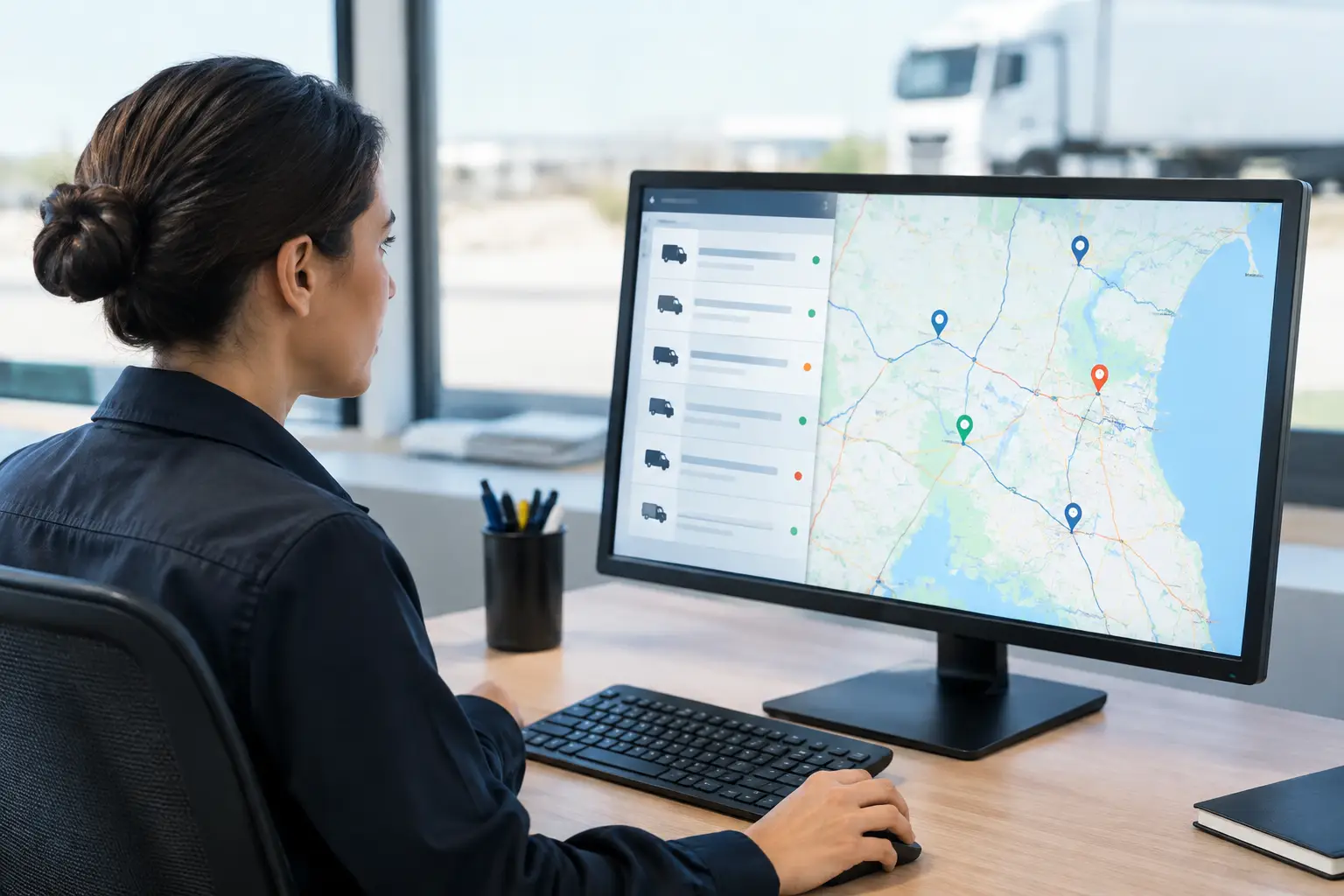
At 14:30, a customer calls asking where their pallet delivery is. The planner can see the vehicle left the depot, but not whether the driver has enough working time to complete the next collection, whether the trailer is available, or whether a defect has been reported. That is the gap a proper depot dispatch visibility example exposes: tracking a vehicle on a map is useful, but it is not enough to make a safe, profitable dispatch decision.
For a UK operator, dispatch visibility needs to bring together live vehicle position, driver availability, remaining hours, trailer status and maintenance information. When those details sit in separate systems, or worse, in spreadsheets and phone calls, the depot team spends its day chasing answers rather than managing the plan.
What depot dispatch visibility should show
Dispatch visibility is the operational picture a planner needs before assigning work and while that work is under way. It should answer practical questions in seconds: which vehicles are close enough to cover a job, which drivers can legally take it, which trailers are attached, and which assets need attention before they leave the yard.
The distinction matters. A basic GPS system may show that a lorry is travelling on the M6. It may not show whether the driver is approaching a break requirement, whether the vehicle is due for inspection, or whether a remote tachograph download has identified an issue requiring action. A dispatcher who only sees location can make an assignment that looks efficient but creates a compliance or service problem later in the shift.
For mixed fleets, the picture becomes more complicated. Vans may operate on flexible local routes, HGVs may be governed by drivers' hours rules, and trailers can move between units. Visibility has to reflect the way each asset is actually used, rather than forcing the team to piece information together from several screens.
A practical depot dispatch visibility example
Consider a regional haulier operating 28 HGVs, 40 trailers and a small group of vans from one depot. The transport office plans next-day work in the afternoon, then manages collection changes and delivery delays as they arise. Previously, the planner relied on a tracking portal, printed driver-hour reports and a whiteboard showing trailer allocation.
At 13:45, a customer requests a same-day collection in Birmingham. The job needs a curtain-sided trailer and must be collected before 17:00. The usual vehicle is delayed at a delivery point near Stoke-on-Trent, so the planner needs an alternative.
In a single fleet management platform, the dispatcher checks live positions and sees two suitable units within reach. The first is closer, but live driver hours show that its driver will need a break before reaching the collection point and has limited remaining driving time after that. The second unit is 20 minutes farther away but has a driver with sufficient available time and is pulling a compatible trailer.
The planner also checks the vehicle status. A maintenance reminder on the first unit shows an upcoming inspection, while the second has no reported defects and is operating normally. The decision is clear: assign the second vehicle, notify the driver, and update the customer with a realistic ETA.
This is not simply a faster way to find the nearest lorry. It prevents a poor allocation that could lead to a missed collection, an unnecessary driver-hours risk or a last-minute vehicle swap. The dispatcher can act on live operational facts, not assumptions.
What changes at the depot
The immediate benefit is less time spent calling drivers and searching through records. A planner can see which assets are working, waiting, parked or moving, then filter options using the factors that matter to that job.
The wider benefit is control. If a vehicle is running late, the transport team can assess the impact on the following job before it becomes an issue. If a driver is nearing a limit, work can be reassigned early. If a trailer has not moved when expected, the depot can investigate before a customer rings to chase an order.
That control also improves communication. Customer service teams receive realistic updates rather than estimated arrival times based on a planned route. Drivers receive fewer calls asking for their position because the office already has the information it needs.
Why driver hours belong in the dispatch picture
For HGV fleets, dispatch planning without driver-hours visibility is incomplete. A driver may be geographically close to a collection point but unable to complete the work within legal driving and working limits. Sending that driver because they are nearest can create pressure to continue when they should stop.
Live driver-hours information lets the planner consider remaining driving time, breaks, rests and working time alongside vehicle location. It does not replace the operator's responsibility to plan work properly or investigate potential infringements. It does, however, give the dispatch team a better chance to prevent avoidable problems before they happen.
There is a trade-off. Driver-hours data is only useful when vehicle units, driver cards and tachograph records are managed consistently. A business with weak driver identification processes may first need to tighten its daily routines. Remote tachograph downloads and clear exception reporting reduce that admin burden, but the depot still needs ownership of the process.
Bringing trailers and maintenance into the decision
A vehicle can be available while the job is not. A trailer may be in use, parked at a customer site, awaiting repair or simply not suitable for the load. For operators running large trailer fleets, knowing the tractor unit's location without trailer visibility leaves a significant blind spot.
Tracking trailers alongside vehicles helps the depot plan collections, reduce time spent locating idle assets and spot equipment that has been left in the wrong place. It is especially valuable where trailers are exchanged between depots, subcontractors or customer sites.
Maintenance status should also be visible at dispatch level. This does not mean planners need to diagnose faults. It means they should be able to see whether an asset has a reported defect, an overdue check or a scheduled maintenance requirement that affects availability. The workshop and transport office can then work from the same information instead of discovering a problem when a driver arrives for keys.
How to introduce better dispatch visibility
Start with the decisions that currently cause the most disruption. For some fleets, that is same-day allocation. For others, it is keeping track of trailers, preventing driver-hours infringements or reducing the morning rush to identify available vehicles.
Then make sure the data supports those decisions. Vehicle tracking should be current and reliable. Drivers need to be correctly associated with vehicles. Trailer tracking should cover the assets that regularly disappear from view. Tachograph downloads and driver-hours monitoring need to be available to the people who plan work, not held only in a compliance folder.
Avoid making the depot team work through five different dashboards. A single platform is valuable because it provides one operational view, not because it adds another system to learn. Fleetalyse combines GPS tracking, trailer visibility, remote tachograph downloads, live driver-hours monitoring and maintenance reminders so dispatch and compliance teams can work from the same information.
Implementation does not need to be disruptive. Plug-and-play hardware can reduce vehicle downtime, while a phased rollout lets the business establish consistent processes before extending the system across every asset. The right approach depends on fleet size, existing equipment and whether the immediate priority is compliance, utilisation or customer service.
Measure the result in operational terms
The best measure is not how often the map is opened. Look at the decisions it improves. Monitor late collections, unproductive vehicle time, driver calls to the office, trailer search time, missed maintenance actions and driver-hours exceptions linked to poor planning.
A depot may find that visibility exposes a deeper issue, such as recurring delays at a customer site or a route that regularly consumes more time than planned. That is useful. Good dispatch information should challenge assumptions and give managers evidence to adjust schedules, resource levels or customer commitments.
The most useful depot view is the one that helps your team make the next decision with confidence. When location, driver hours, trailers and vehicle condition are visible together, dispatch stops being a daily chase for information and becomes a controlled part of fleet operations.