
Centralising multi-depot compliance is not about buying more software; it's about eliminating the manual retrieval of site-specific data. If you are currently managing multiple depots with one tacho system or trying to consolidate several manual processes, you know the struggle of keeping records consistent. It's a constant battle to ensure every remote depot hits its download deadlines, and the risk of a DVSA fine for missing data is a stress you don't need. You've likely found that fragmented records make it nearly impossible to maintain a clear overview of your fleet's health.
This guide explains how to centralise your tachograph compliance into a single view, reducing the administrative burden whilst safeguarding your Operator Licence. We will explore the practicalities of automated remote downloads and how to ensure your records are audit-ready 24/7. Discover how to move from reactive site-by-site management to a streamlined, proactive operation that works for every site in your network.
Key Takeaways
- Centralise digital records from every geographical site into one dashboard to eliminate fragmented data and missing driver hours.
- Automate data collection using remote tachograph download hardware that transmits vehicle and driver files directly to your central server via GPRS or 4G.
- Standardise hardware across your fleet to ensure compatibility and streamline support when managing multiple depots with one tacho system.
- Monitor live driver hours and set central alerts for infringements to maintain uniform disciplinary standards across your entire national operation.
- Safeguard your Operator Licence by ensuring all compliance records are accurate and audit-ready 24/7 without relying on manual site-level downloads.
The Complexity of Managing Multiple Depots with One Tacho System
Multi-depot tacho management is the strategic centralisation of digital records from disparate geographical sites into a single database. When you are managing multiple depots with one tacho system, the primary objective is to eliminate the data silos that naturally form when sites operate in isolation. Fragmented data represents a significant operational risk. It leads to missing driver hours, late vehicle unit downloads, and inconsistent analysis across the wider fleet. Without a central view, you are often guessing at the compliance health of your remote locations.
If a single remote site falls behind national standards, the entire Operator Licence is jeopardised. The DVSA does not view your depots as individual entities; they hold the licence holder accountable for the whole operation. Traditional manual collection centres rely on site managers to remember download schedules and handle hardware. This is a fragile process. Modern, cloud-based systems replace this manual burden with automated, real-time data flows. This transition is essential for staying compliant with tachograph regulations and technology requirements in the UK. Centralisation ensures that every site, regardless of its distance from head office, meets the same rigorous standards.
The Hidden Costs of Manual Data Retrieval
Manual retrieval is expensive. Site managers often spend several hours every week chasing drivers for card downloads. These are hours lost to productive operational tasks or vehicle maintenance. There is also a logistical cost to consider. Physically moving data keys between depots or posting them to a central office incurs fuel and administrative expenses that quickly add up. Human error remains the most persistent hidden cost. Manually uploading files to analysis software frequently leads to duplicated or missing records. These gaps often only come to light during an audit, when it's too late to rectify the error.
Why Geographical Distance Breeds Compliance Gaps
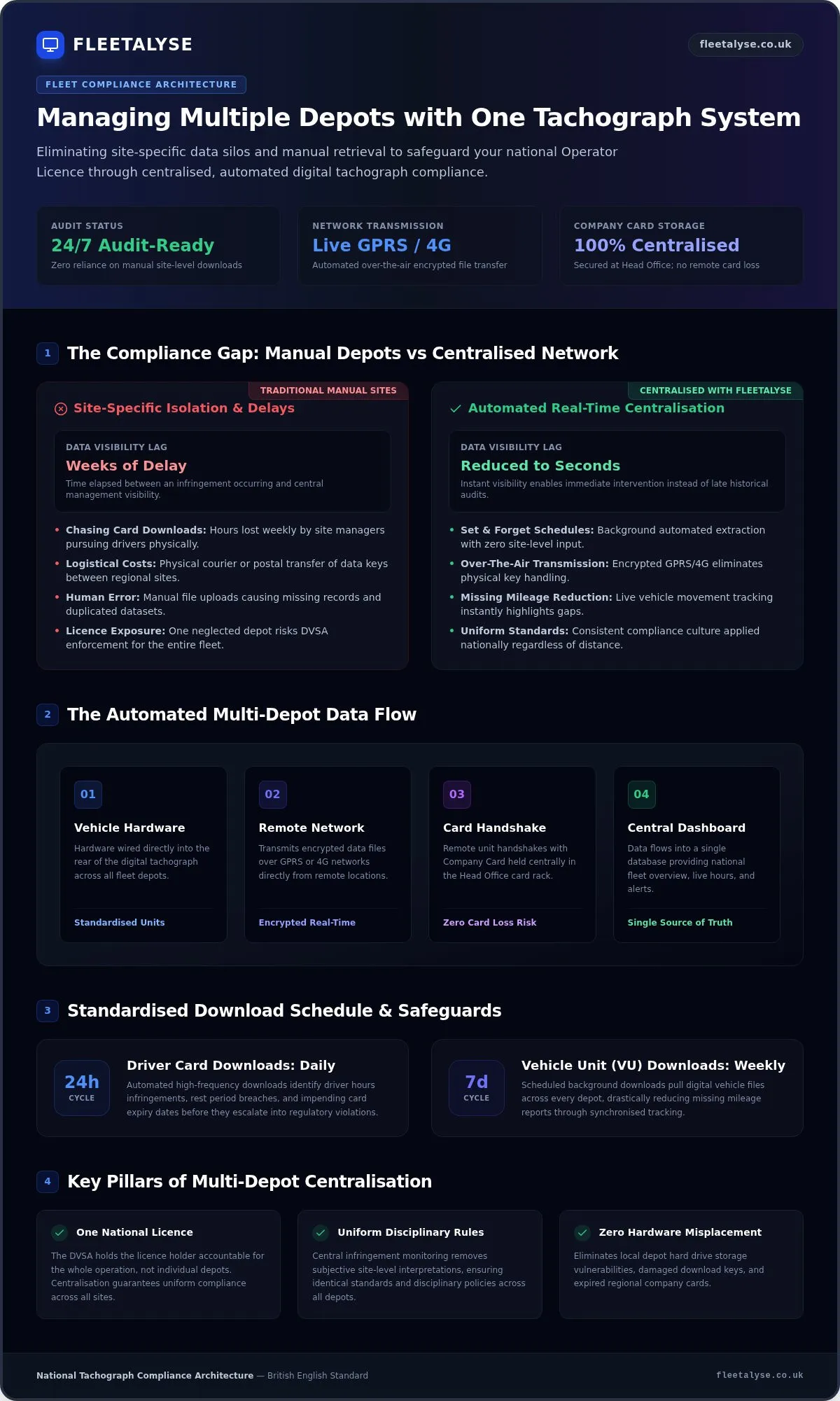
Distance often leads to a lack of central oversight. This creates "favourite" depots that perform well and neglected ones that struggle. It's difficult to maintain a uniform compliance culture when managers at different sites interpret rules differently. We define the "Compliance Gap" as the delay between a tacho event occurring and a manager having visibility of it. In manual systems, this gap can be weeks. By using a centralised approach with Fleetalyse, that gap is reduced to seconds. This allows for immediate intervention rather than historical reporting, ensuring that a small error at a remote depot doesn't escalate into a serious regulatory breach.
How Remote Technology Eliminates Site-Specific Data Gaps
Remote download hardware is the backbone of a modern, centralised compliance strategy. These units are wired directly into the back of the digital tachograph, acting as a persistent bridge between the vehicle and your central dashboard. They use GPRS or 4G networks to transmit encrypted data files in real time. This process completely bypasses the need for local site managers to physically access the vehicle. When managing multiple depots with one tacho system, this automation ensures no remote site is left behind due to a busy schedule or an absent driver.
The Company Card is a critical part of this mechanism. Instead of being kept at individual depots, the card stays in a secure, central location, such as a card rack at your head office. The remote hardware initiates a secure handshake with this card over the air to authenticate the download. This centralisation removes the risk of cards being lost, damaged, or expired at remote depots. You can implement "set and forget" schedules that run in the background. Once configured, the system pulls the necessary files automatically without any human intervention at the site level.
Automating the Compliance Workflow
Automation changes the pace of your compliance workflow. Most systems are configured to download driver cards daily and vehicle units weekly. This high frequency ensures you catch potential infringements or card expiry issues long before they become a regulatory problem. It also significantly reduces "Missing Mileage" reports. Because the system tracks vehicle movement alongside tachograph data, it identifies gaps immediately. You get a complete picture of every mile driven across the national network without manual cross-referencing. This proactive approach is far more reliable than waiting for a driver to return to a specific depot to download their card.
Securing Your Data Across the National Network
Storing compliance data on local depot PCs is a significant security risk. Local hard drives can fail, and manual backups are often neglected amongst the daily pressure of transport office tasks. Cloud-based storage ensures your data is redundant and accessible from any location with an internet connection. Central managers can grant site-specific access, allowing a local manager to see only their own team's data whilst head office maintains master control over the entire fleet. Fleetalyse supports remote tachograph download for mixed fleets, with compatibility for 342 different devices. This flexibility is vital for operators who have inherited different vehicle makes across their depots. To begin centralising your records, you can configure your remote download subscription today.
Step-by-Step: Organising One System Across Multiple Depots
Successfully managing multiple depots with one tacho system requires a structured implementation roadmap. You can't simply flip a switch; you need to align your physical hardware with your digital strategy. Start by standardising the download tools across every site. If Depot A uses manual keys and Depot B has older telematics, your data will remain inconsistent. Centralise your Company Card hosting immediately. By placing your card in a central rack at head office, you enable nationwide remote authentication. This allows vehicles in any location to download files without physical card access, removing the logistical nightmare of posting cards between sites.
Auditing Your Current Multi-Site Setup
Begin with a fleet-wide audit. You must identify the mix of digital and smart tachographs across your different locations. Older vehicles may require different remote download interfaces compared to the latest smart units. Check which vehicles already have telematics installed. Many existing systems support remote downloads but haven't been activated or configured correctly. Finally, evaluate the current behaviour of drivers at each depot. Some sites may have a culture of daily downloads, whilst others might be lagging. Identifying these gaps early allows you to provide targeted training and bring every location up to the same national compliance standard.
Choosing a Unified Tacho Analysis Platform
Your software must support a "One View" philosophy. Such a system allows you to see every vehicle and driver hour on a single screen, regardless of where they are based. Ensure the platform allows for multiple depot logins with tiered permissions. Tiered access lets local site managers handle their daily checks and sign off infringements whilst you maintain master control. A critical feature is tachograph analysis integration. Integrating these systems removes the need for manual file transfers by connecting your raw data directly to your reporting tools. Once the platform is live, establish a unified reporting schedule that applies to every site. Whether a depot has five vehicles or fifty, the deadlines for data review must be identical. Train your site-level staff to use the central dashboard for their local daily checks. Empowering staff ensures that managing multiple depots with one tacho system becomes a routine part of your operational excellence.
Centralising Compliance: The Single Source of Truth
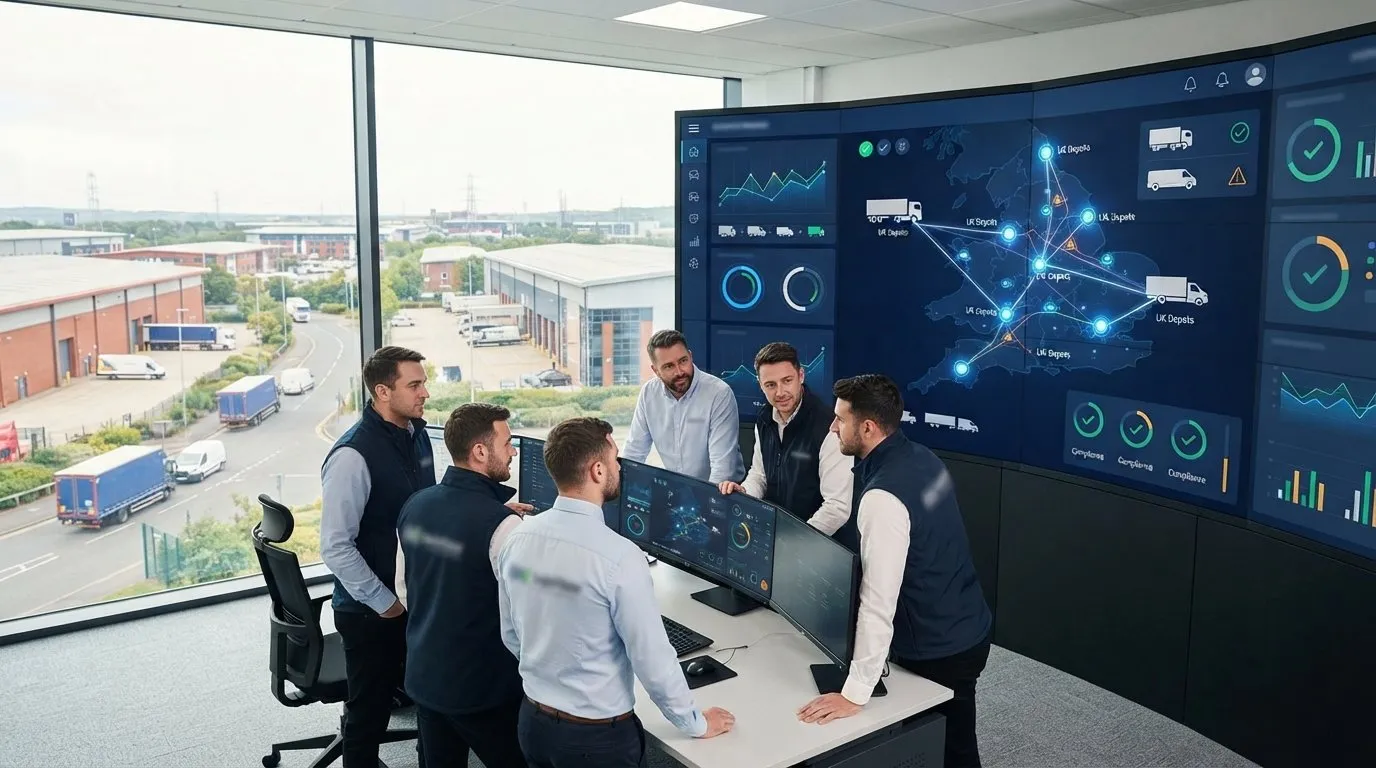
Establishing a single source of truth is the ultimate goal of managing multiple depots with one tacho system. It moves the burden of data management from local site managers to a central, verified database. You gain the ability to see live driver hours for every depot on a single map. This high-level visibility allows you to monitor the entire national fleet in real time, ensuring that no single site drifts away from your core compliance standards. Centralised alerts for infringements mean you can take immediate, uniform disciplinary action across all locations. This consistency is vital for maintaining a professional culture amongst your drivers, as every employee is held to the same clear standard regardless of their home base.
Real-Time Visibility of Driver Hours
Seeing live driver hours prevents infringements before they occur. Instead of reviewing a violation weeks after the event, your central team can see when a driver is approaching their driving limit. This benefit extends directly to your dispatchers. They can view available hours across the whole network, allowing them to assign loads to drivers with the most remaining time. This data-driven approach reduces the need for constant phone calls between depots to check driver availability. It streamlines your logistics and ensures that every route is planned with absolute compliance in mind. You gain a connected workflow rather than a series of isolated screens.
Audit Readiness Across Every Location
A centralised system makes producing records for a DVSA visit effortless. If an officer visits a specific depot, you can generate the required reports from head office in seconds. This ensures that no site remains the "weak link" during an audit. We define Audit Readiness as having 100% of your data available 100% of the time. This level of preparation is essential for operators participating in the DVSA Earned Recognition programme. Because the data is collected automatically and stored centrally, its accuracy is far superior to manual records. You can run national compliance reports in seconds rather than days, giving you the quiet confidence that your Operator Licence is secure. This transparency proves to the authorities that you have full control over your multi-site operation. To secure your fleet's future, you can start centralising your tachograph records now.
Streamlining Your National Fleet with Fleetalyse
Fleetalyse acts as a pragmatic partner for UK operators focused on operational clarity. We provide a grounded solution for managing multiple depots with one tacho system that avoids the hyperbole of generic software providers. Our "One View" philosophy brings GPS tracking and tacho data together into a single, efficient interface. This integration removes the need for site managers to juggle different logins for vehicle locations and driver compliance. Our UK-based support team understands the specific rigours of national haulage and the pressure of DVSA inspections. We offer transparent pricing with remote tacho downloads starting from £4.99/mo. This openness regarding costs ensures you can scale across multiple sites without encountering hidden fees or complex contracts.
The Practical Route to Fleet Control
Rolling out a centralised system shouldn't be a logistical hurdle. You can register Fleetalyse-ready trackers quickly for a rapid rollout across your national network. This efficiency is crucial for businesses that cannot afford downtime during a transition. We offer a 14-day trial for eligible devices to prove the system's utility in your specific environment. It allows you to verify the reliability of remote downloads and live hour monitoring before making a full commitment. You can start your connected fleet rollout today to eliminate the manual chasing of driver cards.
Support for Mixed and Growing Fleets
Growing fleets often face the challenge of mixed assets. Our platform supports HGVs, vans, and trailers in a single dashboard, providing a uniform view of your entire inventory. Whether you are managing a few vehicles at a local site or hundreds across a national network, the software remains fast and logical. The platform is compatible with 342 devices, ensuring that your existing hardware investments are protected. As your business acquires more depots, Fleetalyse scales effortlessly to maintain your central compliance standards. This structured approach prevents information overload and keeps your team focused on safety and efficiency. Get started with Fleetalyse compliance solutions to bring every depot under one reliable system.
Consolidate Your Compliance Strategy Today
Centralising your records is the most effective way to eliminate the risks of fragmented data. By moving away from manual site-level downloads, you gain a single source of truth that protects your Operator Licence across the entire national network. Remote technology provides real-time visibility across all assets, ensuring that no depot becomes a compliance weak link. You've seen how managing multiple depots with one tacho system reduces administrative overhead whilst providing audit-ready records 24/7. This transition isn't just about software; it's about establishing operational excellence at every site.
Fleetalyse offers a pragmatic route to total fleet control. With remote tacho downloads starting from £4.99/mo and UK-based expert support, you have the tools to scale your business with confidence. Our platform is built for the rigours of real-world haulage, providing the clarity you need to make informed dispatch decisions. Don't let geographical distance compromise your standards. Streamline your multi-depot compliance at Fleetalyse and bring your entire operation into one reliable view. Your fleet is ready for a smarter, more efficient future.
Frequently Asked Questions
Can I manage multiple depots with one tacho system if my sites are far apart?
Yes. Physical distance is irrelevant because the data is transmitted via GPRS or 4G networks. Whether your sites are 5 miles or 500 miles apart, the cloud-based dashboard centralises everything. This is the primary advantage of managing multiple depots with one tacho system. It removes the need for physical proximity to vehicles or site managers to collect data, ensuring every location meets the same standard.
How does remote tachograph download work for a multi-site operation?
Hardware is installed in each vehicle and connects to the digital tachograph. This device authenticates with a centrally hosted Company Card via a secure over-the-air handshake. Once authenticated, it transmits driver card and vehicle unit files directly to a central server. This automated process ensures that data from every remote location arrives in your analysis software without any manual intervention, bypassing the need for local site managers to handle hardware.
Do I need a separate company card for every depot?
No. You can host a single Company Card in a central card rack at your head office. The remote download hardware at any depot can access this central card via the internet to authorise downloads. This centralisation saves the cost of multiple cards and eliminates the logistical risk of cards being lost or expired at remote sites. It ensures that authentication is always available for vehicles anywhere in the country.
What are the benefits of centralising my tachograph data?
Centralisation provides a "One View" philosophy for your entire national operation. You gain live visibility of driver hours, which helps dispatchers plan routes more accurately. It also ensures consistent compliance standards across all sites. By managing multiple depots with one tacho system, you reduce administrative overhead and ensure that no single depot falls behind on its download deadlines, protecting your Operator Licence from site-level compliance gaps.
Is one tacho system enough to satisfy a DVSA audit for multiple sites?
Yes, provided the system captures all required data and integrates with analysis software. A centralised system is often more robust for audits because it proves you have full oversight of all locations. You can generate national or site-specific reports in seconds. This transparency demonstrates to the DVSA that you are proactively managing compliance rather than reacting to site-level errors, ensuring you remain audit-ready at all times.
How much does it cost to implement a centralised tacho system?
Implementation costs typically include a one-off hardware fee for each vehicle and an ongoing monthly subscription. Fleetalyse offers remote tacho downloads starting from £4.99 per month per vehicle. This transparent pricing model allows you to scale the system as your fleet grows. Because the software is cloud-based, there are no expensive local server installations or maintenance fees required at individual depots.
Can I give depot managers access to only their own fleet data?
Yes. The platform supports tiered permissions and multiple depot logins. You can create specific user accounts for site managers that restrict their visibility to only the vehicles and drivers under their direct control. This allows them to manage local daily checks and sign off infringements independently. Meanwhile, head office maintains a master view of the entire national fleet to ensure uniform standards across the whole business.
What happens if a vehicle is away from its home depot for a long period?
The system continues to work seamlessly regardless of the vehicle's location. Because downloads occur remotely via mobile networks, the vehicle does not need to return to its home depot for data collection. As long as it has a GPRS or 4G signal, scheduled downloads proceed automatically. This is particularly useful for long-distance tramping or when vehicles are moved between sites to cover seasonal demand or maintenance.
Frequently asked questions
Can I manage multiple depots with one tacho system if my sites are far apart?
Yes. Physical distance is irrelevant because the data is transmitted via GPRS or 4G networks. Whether your sites are 5 miles or 500 miles apart, the cloud-based dashboard centralises everything. This is the primary advantage of managing multiple depots with one tacho system. It removes the need for physical proximity to vehicles or site managers to collect data, ensuring every location meets the same standard.
How does remote tachograph download work for a multi-site operation?
Hardware is installed in each vehicle and connects to the digital tachograph. This device authenticates with a centrally hosted Company Card via a secure over-the-air handshake. Once authenticated, it transmits driver card and vehicle unit files directly to a central server. This automated process ensures that data from every remote location arrives in your analysis software without any manual intervention, bypassing the need for local site managers to handle hardware.
Do I need a separate company card for every depot?
No. You can host a single Company Card in a central card rack at your head office. The remote download hardware at any depot can access this central card via the internet to authorise downloads. This centralisation saves the cost of multiple cards and eliminates the logistical risk of cards being lost or expired at remote sites. It ensures that authentication is always available for vehicles anywhere in the country.
What are the benefits of centralising my tachograph data?
Centralisation provides a "One View" philosophy for your entire national operation. You gain live visibility of driver hours, which helps dispatchers plan routes more accurately. It also ensures consistent compliance standards across all sites. By managing multiple depots with one tacho system, you reduce administrative overhead and ensure that no single depot falls behind on its download deadlines, protecting your Operator Licence from site-level compliance gaps.
Is one tacho system enough to satisfy a DVSA audit for multiple sites?
Yes, provided the system captures all required data and integrates with analysis software. A centralised system is often more robust for audits because it proves you have full oversight of all locations. You can generate national or site-specific reports in seconds. This transparency demonstrates to the DVSA that you are proactively managing compliance rather than reacting to site-level errors, ensuring you remain audit-ready at all times.
How much does it cost to implement a centralised tacho system?
Implementation costs typically include a one-off hardware fee for each vehicle and an ongoing monthly subscription. Fleetalyse offers remote tacho downloads starting from £4.99 per month per vehicle. This transparent pricing model allows you to scale the system as your fleet grows. Because the software is cloud-based, there are no expensive local server installations or maintenance fees required at individual depots.
Can I give depot managers access to only their own fleet data?
Yes. The platform supports tiered permissions and multiple depot logins. You can create specific user accounts for site managers that restrict their visibility to only the vehicles and drivers under their direct control. This allows them to manage local daily checks and sign off infringements independently. Meanwhile, head office maintains a master view of the entire national fleet to ensure uniform standards across the whole business.
What happens if a vehicle is away from its home depot for a long period?
The system continues to work seamlessly regardless of the vehicle's location. Because downloads occur remotely via mobile networks, the vehicle does not need to return to its home depot for data collection. As long as it has a GPRS or 4G signal, scheduled downloads proceed automatically. This is particularly useful for long-distance tramping or when vehicles are moved between sites to cover seasonal demand or maintenance.