
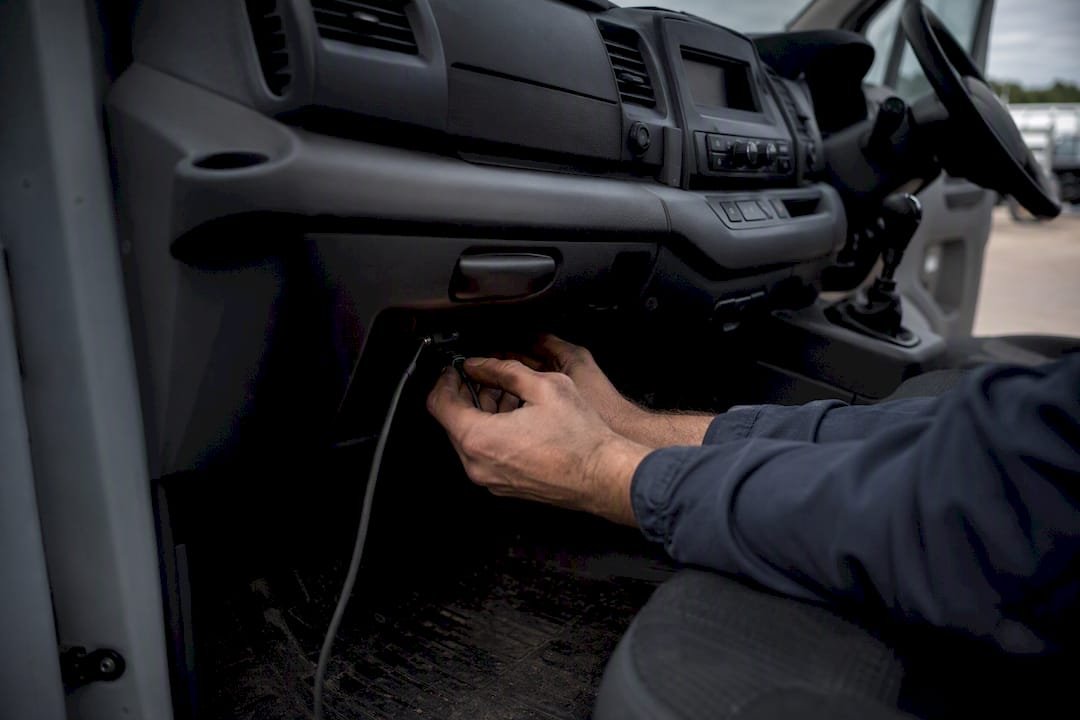
How long you must keep tachograph data in the UK
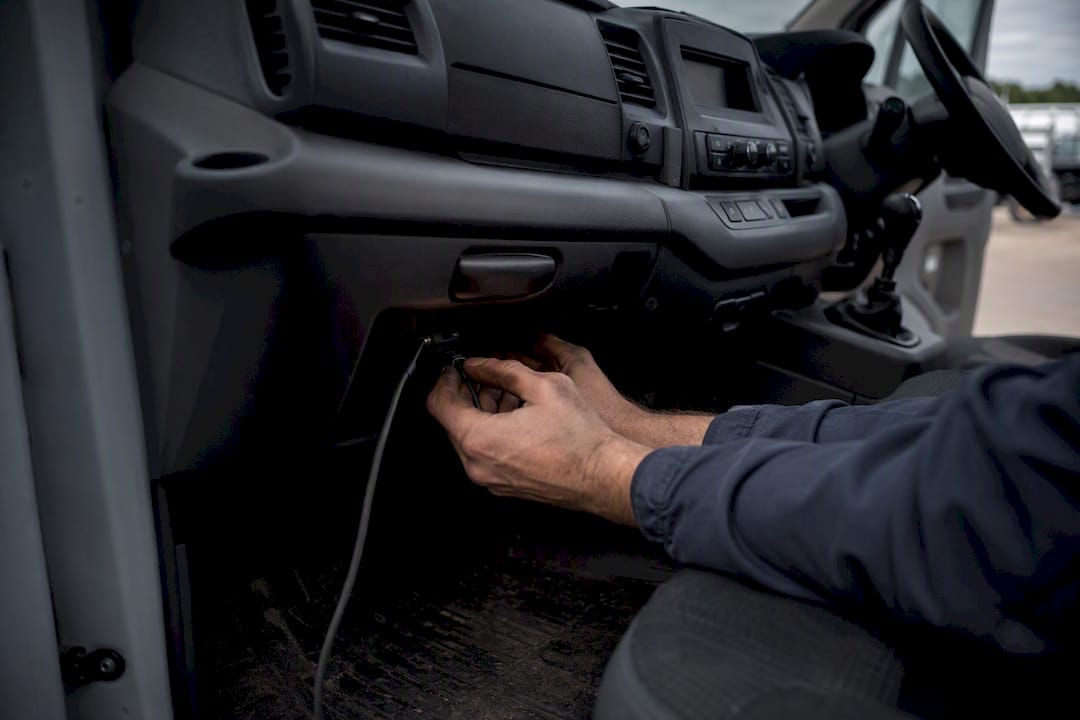
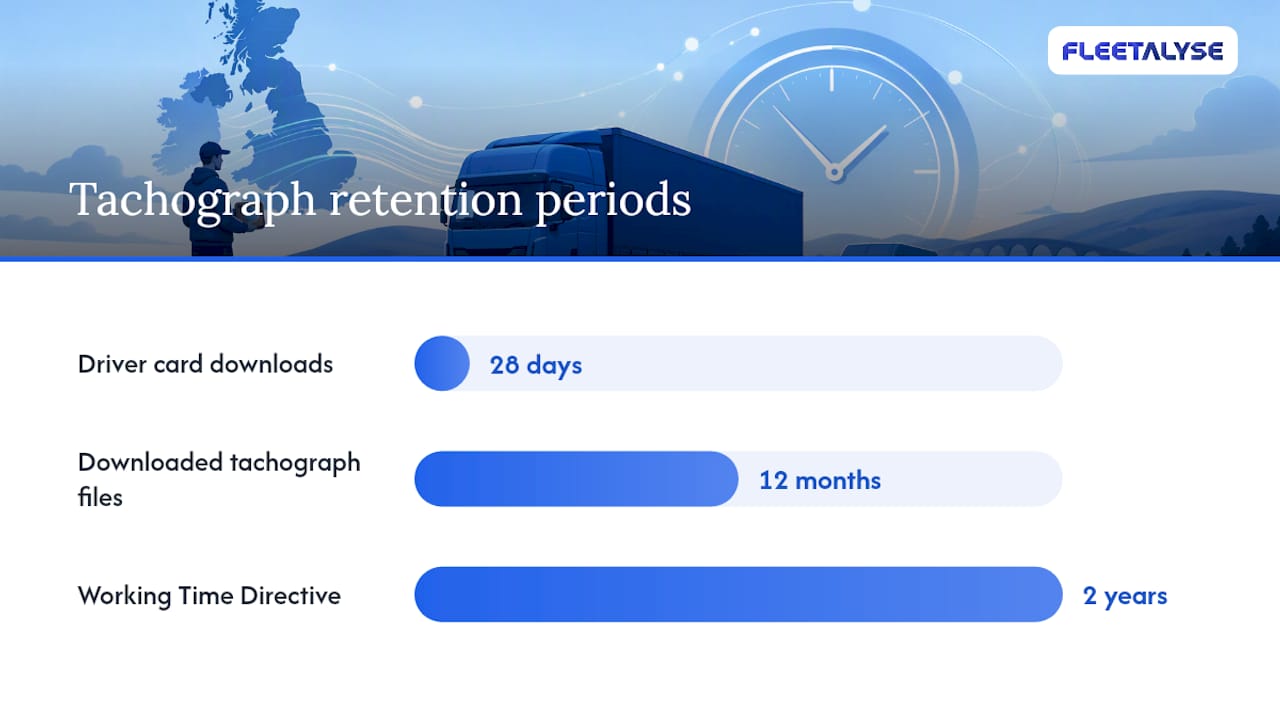
Keep downloaded tachograph data for a minimum of 12 months, download driver cards at least every 28 days, and download vehicle units at the statutory interval before the memory overwrites. Working Time Directive records need retaining for 2 years. Miss a download window and that evidence is gone for good, along with your defence at the next DVSA check.
- Driver card download: at least every 28 days
- Vehicle unit download: per statutory interval (see below)
- Downloaded tachograph files: retain 12 months minimum
- Working Time Directive / RTD records: retain 2 years
- Action now: build a download schedule and store copies you can produce on demand
Key Takeaways
Tachograph data retention in the UK requires 12 months for downloaded files, 2 years for Working Time Directive records, and downloads within 28 days for driver cards.
| Point | Details |
|---|---|
| 12-month minimum | Retain downloaded tachograph files for at least 12 months and keep them producible on demand. |
| 28-day download rule | Download driver cards at least every 28 days to prevent memory overwrite. |
| Two-year WTD records | Keep Working Time Directive and average weekly hours records for 2 years, separate from tachograph files. |
| Lock in the company card | Locking the card into the vehicle unit protects data access when vehicles change hands. |
| Automate to remove risk | Fleetalyse’s scheduled remote downloads and secure storage close the gap manual processes leave open. |
This article is general information, not a substitute for advice from a qualified lawyer. Consult a qualified legal professional about your own circumstances before acting on anything here.
Table of Contents
- Tachograph data retention UK: what to keep and for how long
- When to download: intervals, triggers and safe practice
- Who keeps what: driver, operator and roadside obligations
- Storing tachograph records so you can actually find them
- Balancing statutory retention with UK GDPR storage limits
- Where compliance breaks down and what enforcement looks like
- Automating the parts operators keep getting wrong
- Where operators actually lose the retention battle
- Automated downloads that keep your retention clock honest
- Sources
Tachograph data retention UK: what to keep and for how long
Tachograph compliance rests on three separate clocks, and confusing them is where most operators trip up. Downloaded tachograph files, whether pulled from a driver card or a vehicle unit, must be retained for at least 12 months and available to produce to DVSA on request. That means readable, indexed, and not buried on a laptop that left with a former transport manager.
Driver card memory overwrites on a rolling basis, which is why the 28-day download rule exists: leave it any longer and you risk losing days you can never recover. Vehicle units behave differently. They can physically hold close to a year’s worth of activity, but operators must never rely on that capacity. Download at the statutory interval regardless, because a fault, a swap, or a hire return can wipe access without warning.
Statistic callout: Working Time Directive records, covering average weekly hours and night work, sit on a longer clock entirely. Industry guidance puts that retention period at 2 years, double the tachograph minimum, and it’s a distinction worth putting on your compliance calendar rather than assuming one retention date covers everything.
When to download: intervals, triggers and safe practice
The legal minimums are fixed points, not targets to coast towards.
- Download driver cards at least every 28 days, without exception.
- Download vehicle units at the statutory interval, referenced in the 2025 amendment regulations, which touch on both 28 and 56-day provisions depending on context.
- Download immediately when a vehicle changes hands, transfers between depots, or comes off hire.
- Download immediately if a card is damaged, a unit faults, or a vehicle is due for sale.
- Set an internal cadence tighter than the legal floor. Weekly downloads are common practice for fleets running multiple shifts, precisely because busy vehicles chew through unit memory faster than quiet ones.
Manual card readers still have a place for small fleets, but they depend on someone remembering to plug in. Remote and automatic downloads remove that human variable entirely, which matters more as fleet size grows.
Pro Tip: Lock your company card into each vehicle unit. It protects your access to that unit’s data even when drivers rotate or vehicles move between contracts, and it’s one of the cheapest safeguards against a lost download window.
Who keeps what: driver, operator and roadside obligations
Responsibility splits cleanly between the cab and the office, and both sides need to know their part.
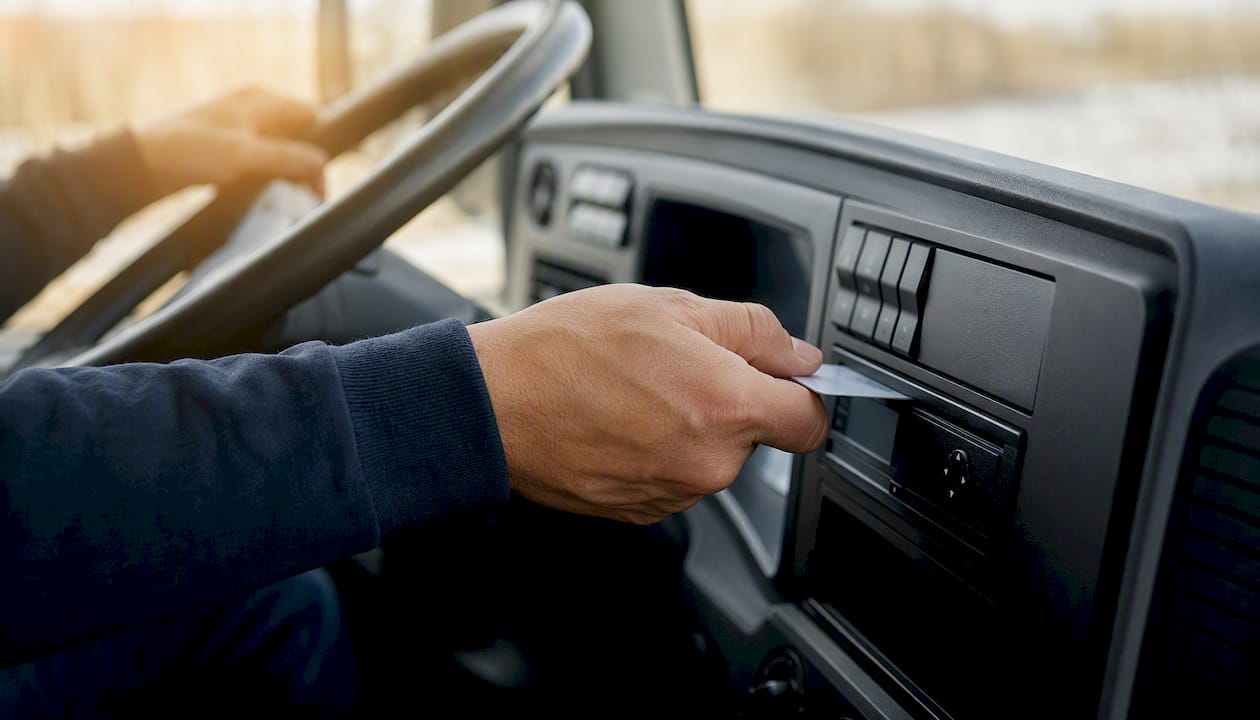
- Drivers must carry records for the current day plus the previous 28 days and produce them the moment an enforcement officer asks.
- Operators must retain 12 months of downloaded data, plus any manual records or charts, even after a driver has left the business.
- Scope covers most goods vehicles over 3.5 tonnes and passenger vehicles carrying more than nine people, with limited exemptions for certain specialist or short-distance operations.
- Inspectors expect download files, debrief records showing the data was actually reviewed, and calibration certificates for the tachograph unit itself.
Producing a download file with nobody able to explain what it shows rarely satisfies an inspector. Debrief evidence matters as much as the raw data.
Storing tachograph records so you can actually find them
A 12-month retention rule is worthless if nobody can locate the file when DVSA asks for it. Structure matters as much as duration.
- Store downloaded files in DVSA-accepted digital formats, indexed by download date and by vehicle or driver identifier, not buried in a generic folder named “downloads”.
- Back up every file, and treat backups as part of your retention period rather than an afterthought, since a corrupted primary copy with no backup is functionally a missed download.
- Keep backups accessible but move data to lower-cost “beyond use” storage once the working retention window closes, provided it stays retrievable if needed.
- If a unit genuinely cannot be downloaded, get a certificate of undownloadability from an approved repair centre and retain it for at least 12 months, exactly as you would the data itself.
Balancing statutory retention with UK GDPR storage limits
Retention rules and data protection law pull in different directions unless you plan for both. UK GDPR’s storage limitation principle says you shouldn’t hold personal data longer than necessary, while tachograph rules set a 12-month floor you’re legally obliged to meet. The two aren’t in conflict, but you do need to document why.
A simple retention policy resolves this. Cover five elements for each data category:
- The lawful basis for holding it (a legal obligation, in the case of tachograph files)
- The retention trigger (download date, driver leaving date, or contract end)
- The review cadence (annual review is typical)
- The disposal method (secure deletion or anonymisation)
- Evidence that deletion actually happened, including for backup copies
Statistic callout: The ICO’s own guidance is explicit that organisations must be able to justify retention periods on request, not just set them once and forget them. A written policy with an automated expiry trigger is the easiest way to prove that.
Where compliance breaks down and what enforcement looks like
Most tachograph failures aren’t dramatic. They’re administrative drift: a missed 28-day download, a card that never got locked into the vehicle unit, or data sitting undownloaded because nobody reviewed it after the fact.
- Missed or late downloads, often blamed on manual reader dependency
- No indexing system, so files exist but can’t be produced quickly
- Failure to lock in the company card, leaving units vulnerable when vehicles change hands
- Downloaded data that’s never actually analysed for infringements
DVSA responds with fixed penalties, and in more serious cases vehicle immobilisation, Operator Licence review by the Traffic Commissioner, or prosecution. Debrief records and evidence of driver retraining go a long way toward showing a breach was isolated rather than systemic.
Pro Tip: Keep a simple log of every download, review, and any corrective action taken. When an inspector asks “what did you do about this?”, that log is your answer.
Automating the parts operators keep getting wrong
Manual downloads fail because they depend on someone remembering, every 28 days, without exception, for every vehicle in the fleet. Automation removes that dependency.
Fleetalyse’s remote tachograph download feature pulls driver card and vehicle unit data on a scheduled basis, so the 28-day and statutory VU intervals are met without a depot visit. Analysis and debrief logging happen automatically, producing the DVSA-ready evidence trail inspectors actually want to see, not just raw files sitting unreviewed. Storage is secure and indexed by vehicle and driver, which solves the retrieval problem most operators only discover during an audit. Further detail on scheduling sits in Fleetalyse’s tachograph compliance guide.
Where operators actually lose the retention battle
Most fleets don’t fail on the big rules. They know the 12-month minimum exists. They fail on the boring middle step: someone has to physically remember to download a card on day 27, every single month, across every vehicle. That’s not a compliance problem, it’s a scheduling problem wearing compliance clothing.
If you’re short on resource, the single change that cuts audit risk fastest is removing that manual step entirely rather than tightening the paperwork around it, an approach outlined further in Fleetalyse’s small fleet guide.
— Vytautas
Automated downloads that keep your retention clock honest
Manual tachograph downloads rely on someone remembering a date, and that’s exactly where most operators lose evidence they legally need. Fleetalyse replaces that reminder system with scheduled remote downloads, so driver cards and vehicle units get pulled automatically before any overwrite risk arrives.
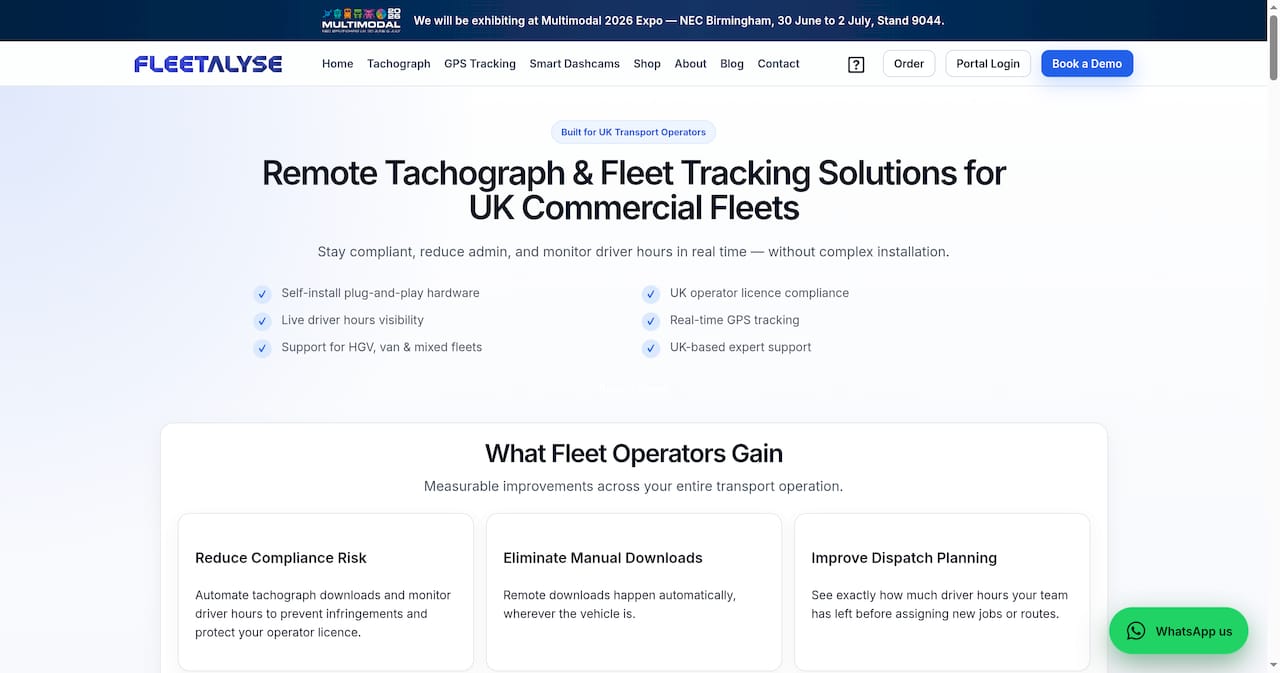
- Scheduled remote downloads for driver cards and vehicle units, timed to statutory intervals
- Secure, indexed storage that meets the 12-month production requirement without manual filing
- Automated debrief and analysis logs ready for a DVSA check, not assembled after the fact
Compatible plug-and-play hardware, including unlocked GPS trackers, installs without professional fitting. Check the driver behaviour monitoring page to see how automated compliance reporting fits your fleet, and request a demo to see your own retention schedule set up before your next download window closes.
Sources
- Gov
- The Drivers’ Hours and Tachographs (Amendment and Modification) Regulations 2025
- Tachograph Records: UK Operator’s Complete Guide