

Log book rules for UK drivers: what you must record
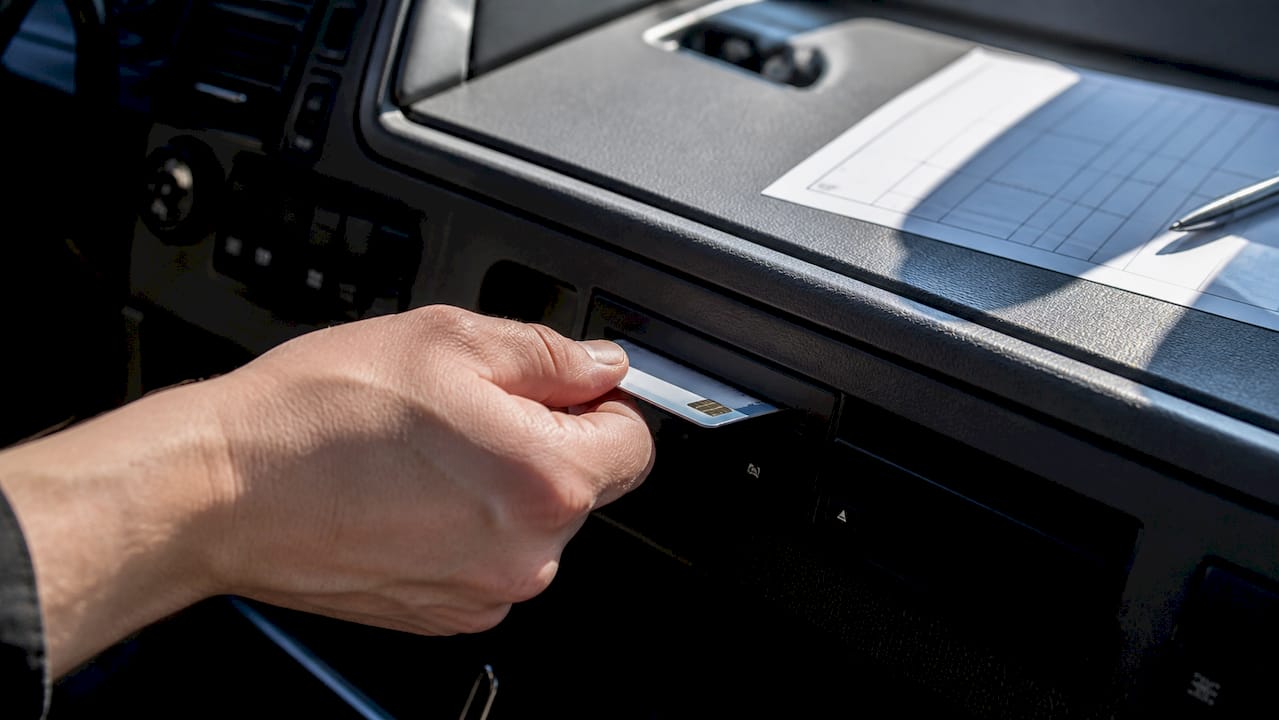
If you drive a goods vehicle or passenger-carrying vehicle commercially in the UK, you are legally required to keep accurate records of your duty time. The specific method depends on your vehicle and operation: most HGV and coach drivers use a tachograph (analogue, digital, or smart), while drivers operating under GB domestic rules who exceed four hours of driving in a day must complete a written or digital duty record. Either way, records must be retained for at least 12 months and produced to a DVSA enforcement officer on request.
Quick action checklist for drivers and operators:
- Confirm whether your vehicle and operation fall under GB domestic rules or assimilated (former EU) rules.
- Complete a daily duty record or use your tachograph for every qualifying shift.
- Retain all records for a minimum of 12 months.
- Produce records immediately when requested by a DVSA officer.
- Check GOV.UK drivers’ hours guidance for vehicle-specific requirements and any updates.
One important clarification before going further: the term “log book” is widely used in two completely different contexts. The V5C is the vehicle registration document that many drivers call a logbook. A driver’s hours logbook is an entirely separate record of your working time. Confusing the two is one of the most common mistakes in commercial transport compliance.
Key takeaways
Drivers operating goods vehicles over 3.5 tonnes MAM or passenger vehicles for hire or reward must keep accurate duty records, retain them for at least 12 months, and produce them to DVSA on request.
| Point | Details |
|---|---|
| Know your obligation | Driving over four hours per day in a vehicle requiring an Operator Licence triggers a duty record requirement under GB domestic rules. |
| Record all required fields | Every entry must include duty times, driving periods, breaks, vehicle registration, and a signed driver declaration. |
| Retain records for 12 months | Both drivers and employers must keep records for at least 12 months and produce them immediately on request. |
| Falsification carries criminal risk | Deliberate falsification can result in a Level 5 fine and up to two years’ imprisonment; never back-fill or alter records. |
| Fleetalyse automates compliance | Remote tachograph downloads and automated driver hours monitoring remove manual filing and reduce enforcement risk. |
Table of Contents
- Which drivers and vehicles must keep a driver’s hours log?
- What must a compliant log book entry contain?
- How do you record hours: tachograph, weekly record sheet, or e-log?
- How long must you keep records, and how do you produce them?
- What exemptions and special cases apply?
- What are the penalties for poor or falsified records?
- What must employers and transport managers do to prove compliance?
- Why are operators moving from paper to digital record-keeping?
- A compliance specialist’s perspective on log book rules
- Fleetalyse makes drivers’ hours compliance straightforward
- Sources
Which drivers and vehicles must keep a driver’s hours log?
Drivers’ hours rules apply to anyone driving a goods vehicle or a bus or coach commercially in the UK. The precise obligation depends on vehicle type, operation type, and whether you are working under GB domestic rules or assimilated (formerly EU) rules.
Covered categories under GB domestic rules:
- Goods vehicles with a maximum authorised mass (MAM) over 3.5 tonnes that require an Operator Licence.
- Passenger-carrying vehicles with more than eight passenger seats used for hire or reward.
- Drivers on domestic journeys who drive for more than four hours in a single day.
- Any driver operating under an Operator Licence where driving time exceeds the four-hour threshold.
Assimilated rules vs GB domestic rules
Assimilated rules (the retained EU tachograph and drivers’ hours regulations) apply to most international journeys and to domestic journeys in vehicles over 3.5 tonnes MAM where the operation is not specifically exempt. GB domestic rules apply to operations that fall outside the scope of assimilated rules, typically shorter-range domestic haulage and some passenger operations. The complete guide to GB domestic rules and tachograph requirements explains the boundary in detail.
| Recording method | When it applies |
|---|---|
| Tachograph (digital or smart) | Goods vehicles over 3.5 tonnes MAM on most domestic and all international journeys under assimilated rules |
| Weekly record sheet / duty log | Goods vehicles under GB domestic rules where a tachograph is not required but driving exceeds four hours/day |
Van drivers in vehicles under 3.5 tonnes MAM are not automatically required to keep a formal duty log for domestic, non-commercial work. The obligation kicks in when carrying goods for hire or reward or when other rule conditions are met.
Pro Tip: Check two things before assuming you are exempt: whether your vehicle requires an Operator Licence, and whether your work constitutes ‘hire or reward’. Both factors can trigger a record-keeping obligation that many drivers overlook.
What must a compliant log book entry contain?
A compliant daily record must capture enough information for an enforcement officer to reconstruct your working day. Industry guidance and GOV.UK both set out the required fields clearly.
Sample completed entry
Date: 14 May 2026. Driver: J. Smith. Base: Leeds depot. Vehicle: LK24 ABC. Duty start: 06:00. Drive start: 06:15. Break: 09:30–10:00. Drive end: 13:00. Other work (unloading): 13:00–14:30. Duty end: 14:30. Total driving: 6 hrs 45 mins. Odometer start: 84,210 km. Odometer end: 84,510 km. Signature: J. Smith.
A common point of confusion worth addressing directly: the V5C registration document is not a driver’s hours record. The V5C records keeper details, tax status, and vehicle specification. Your duty log is a separate document entirely, whether paper or digital. Mixing up the two leaves you with no valid compliance evidence at a roadside check.
How do you record hours: tachograph, weekly record sheet, or e-log?
Three methods are legally recognised for recording drivers’ hours in the UK. Which one applies to you depends on your vehicle type and the rules governing your operation.
Tachograph (analogue, digital, or smart)
Required for most goods vehicles over 3.5 tonnes MAM operating under assimilated rules. A digital or smart tachograph records driving time, speed, distance, and rest periods automatically via a driver card. Smart tachographs (mandatory in new vehicles registered from June 2019 onwards) add GNSS positioning and remote early detection capability. The record is stored on the driver card and the vehicle unit simultaneously.
Weekly record sheet
Used by drivers operating under GB domestic rules where a tachograph is not fitted or not required. You complete the sheet manually, recording each duty period, driving time, breaks, and rest. Originals must be kept and signed. Practical guides recommend completing the sheet at the end of each working day rather than reconstructing it later, since back-filled entries are a common trigger for enforcement scrutiny.
Approved electronic log systems
Digital apps and fleet management platforms that meet the required data fields are acceptable alternatives to paper weekly record sheets under GB domestic rules. They offer automatic timestamping, searchable archives, and easier production during inspections. The e-log books guide for HGVs covers what makes a digital system compliant and how to use one effectively.
Comparison at a glance:
- Tachograph: highest auditability, automatic recording, mandatory for most HGVs; requires driver card management and periodic calibration.
- Weekly record sheet: low cost, no hardware needed; higher risk of illegible entries, back-filling, and lost originals.
- Approved e-log: good auditability, automatic timestamping, easy retention; depends on reliable device and connectivity.
Pro Tip: Whether you use paper or digital, keep a backup. Lost or damaged paper records are treated the same as missing records by enforcement officers. Remote tachograph downloads and cloud-archived e-logs remove that risk entirely.
How long must you keep records, and how do you produce them?
Employers must retain drivers’ hours records for at least 12 months and be able to produce them to an enforcement officer on request. This applies to both tachograph data and written or digital duty records.
When a DVSA enforcement officer stops your vehicle or visits your operating centre, you are expected to produce records promptly and in a legible format. For tachograph data, this means the driver card and vehicle unit data. For paper records, it means the original signed sheets. Digital systems should be able to export a clear, dated report.
Do’s and don’ts during a roadside check:
- Do carry your driver card and any paper records covering the current day and the previous 28 days.
- Do provide clear, legible originals or a clean digital export when asked.
- Do cooperate fully with the officer’s request.
- Don’t obstruct the inspection or delay producing records without good reason.
- Don’t present altered, back-filled, or reconstructed records as originals.
- Don’t assume a digital system export is automatically accepted without checking it covers all required fields.
Compliance callout: Under GB domestic rules, employers must retain records for at least 12 months and be ready to show them to enforcement officers. Gaps in the archive are treated as missing records, not administrative oversights.
For vehicle-specific retention requirements and the most current guidance, always check GOV.UK drivers’ hours directly.
What exemptions and special cases apply?
Not every commercial vehicle or operation triggers a full record-keeping obligation. Several genuine exemptions exist, but each comes with precise conditions that must be met in full.
Common exemptions under GB domestic rules:
- Vehicles used for agricultural, horticultural, forestry, fishing, or stone-quarrying operations within a 100 km radius of the operating base.
- Vehicles used by emergency services (police, fire, ambulance) in the course of their duties.
- Vehicles used for postal or medical deliveries under specific conditions.
- Goods vehicles not exceeding 3.5 tonnes MAM on non-commercial, own-account operations where driving does not exceed four hours per day.
Partial and temporary exemptions
Some operations qualify for limited exemptions rather than full ones. A driver may drive for more than four hours on up to two days per week without triggering the full GB domestic record-keeping obligation, provided all other conditions of the exemption are met. On days where driving does exceed four hours, a full duty record is still required.
Van drivers under 3.5 tonnes carrying goods for hire or reward lose the domestic exemption entirely, regardless of journey distance or duration.
Pro Tip: When the exemption status of an operation is genuinely unclear, keep a voluntary duty record anyway. A voluntary record that turns out to be unnecessary costs you nothing. An absent record for an operation that was actually covered costs you a Level 4 fine and potentially your operator’s licence.
What are the penalties for poor or falsified records?
The penalties for failing to keep proper records are serious, and the consequences of deliberate falsification are significantly more so. GOV.UK enforcement guidance sets out the penalty structure clearly.
Typical enforcement outcomes:
- Failing to make or keep records under GB domestic rules: a Level 4 fine on the standard magistrates’ court scale.
- Failing to use or install a tachograph where required: a Level 5 fine.
- Serious tachograph offences (tampering, interference): Level 5 fines.
- Falsifying records with intent to deceive: Level 5 fines and up to two years’ imprisonment on indictment.
- Prohibition notices preventing the vehicle from moving until the breach is rectified.
- Vehicle immobilisation at the roadside.
Enforcement callout: Deliberate falsification of drivers’ hours records is a criminal offence. A Level 5 fine carries no upper limit in a magistrates’ court, and the custodial exposure on indictment means a single serious case can end a driver’s career and an operator’s licence.
Enforcement officers have the power to stop vehicles, inspect records on the spot, download tachograph data remotely, and refer cases to the Traffic Commissioner. Operators and transport managers can be held responsible for systemic record-keeping failures, not only individual drivers.
What must employers and transport managers do to prove compliance?
Providing a logbook and hoping drivers fill it in correctly is not enough. GOV.UK rules for employers place active duties on operators, and enforcement officers expect evidence of genuine oversight.
Employer compliance checklist:
- Train all drivers on the applicable rules before they begin driving commercially.
- Supply appropriate recording tools: driver cards, tachograph equipment, or approved digital systems.
- Verify entries regularly, checking for gaps, patterns of risk, and signs of back-filling.
- Retain all drivers’ hours records for at least 12 months.
- Monitor driver hours actively and address breaches promptly.
- Be able to produce 12 months of records to an enforcement officer at any time.
Audit frequency matters. A monthly review of records is a reasonable minimum for most operators; higher-risk operations (long-haul, night work, multi-driver vehicles) warrant more frequent checks. When reviewing records, look specifically for entries that appear to have been completed in the same pen or handwriting across multiple days, suspiciously round numbers, and missing rest periods.
Pro Tip: When an irregularity is found, document it. A signed statement from the driver, a note of the corrective action taken, and a record of any retraining creates an audit trail that demonstrates ‘reasonable steps’ to an enforcement officer. Silence on a known problem is far more damaging than a documented correction.
The UK fleet compliance guide covers the full scope of operator obligations, including how to structure internal audits and what evidence to prepare before a DVSA visit.
Why are operators moving from paper to digital record-keeping?
Digital tachograph downloads and approved e-log systems make records more auditable, reduce the most common enforcement triggers, and simplify the 12-month retention obligation considerably. Paper records get lost, become illegible, and are vulnerable to back-filling. Digital archives do not have those problems.
The practical workflow for a digital system looks like this:
Driver inserts card → tachograph or e-log records activity automatically → data is downloaded remotely to a secure archive → compliance platform generates an inspection-ready report → records are searchable and retrievable within seconds.
Benefits of digital record-keeping:
- Automatic timestamping removes the possibility of back-filled entries.
- Remote tachograph downloads mean records are archived before the driver returns to base.
- Searchable archives make 12-month retention straightforward and auditable.
- Reduced falsification risk, since the system records independently of the driver.
- Faster, cleaner production of records during DVSA inspections or Traffic Commissioner reviews.
Fleetalyse supports remote tachograph downloads and provides a secure, searchable archive of driver hours data, making the transition from paper to digital straightforward for operators of any fleet size.
Pro Tip: The DVSA’s remote early detection capability on smart tachographs means enforcement officers can identify potential breaches before stopping a vehicle. A clean, up-to-date digital archive is your first line of defence.
A compliance specialist’s perspective on log book rules
The most persistent problem in commercial transport compliance is not ignorance of the rules. Most drivers know they need to keep records. The real problem is the gap between knowing the obligation exists and building a system that actually meets it every day, without exception.
Paper-based record-keeping places the entire burden on the individual driver at the end of a long shift. That is precisely when errors, omissions, and the temptation to back-fill are highest. Operators who rely on paper and then audit monthly are, in practice, auditing historical risk rather than managing current risk. By the time a gap is found, the 28-day production window for a roadside check may already have passed.
The operators who consistently pass DVSA inspections without drama are not necessarily the ones with the most complex compliance programmes. They are the ones who have removed the manual steps from the process: automatic downloads, cloud archives, and regular automated alerts when a driver’s hours approach a limit. The record-keeping takes care of itself, and the audit trail is always current.
One practical point that is often overlooked: if your historical records are imperfect, do not wait for an enforcement visit to discover the gaps. Conduct your own internal audit now, document what you find, and put corrective measures in place. A self-identified gap with a documented correction is a far stronger position than a gap discovered by a DVSA officer.
Fleetalyse makes drivers’ hours compliance straightforward
Staying on top of drivers’ hours records manually is time-consuming and leaves too much room for error. Fleetalyse gives fleet operators a direct route to automated compliance: remote tachograph downloads that archive data before the driver reaches the yard, driver hours monitoring that flags approaching limits in real time, and a searchable record store that covers your 12-month retention obligation without manual filing.
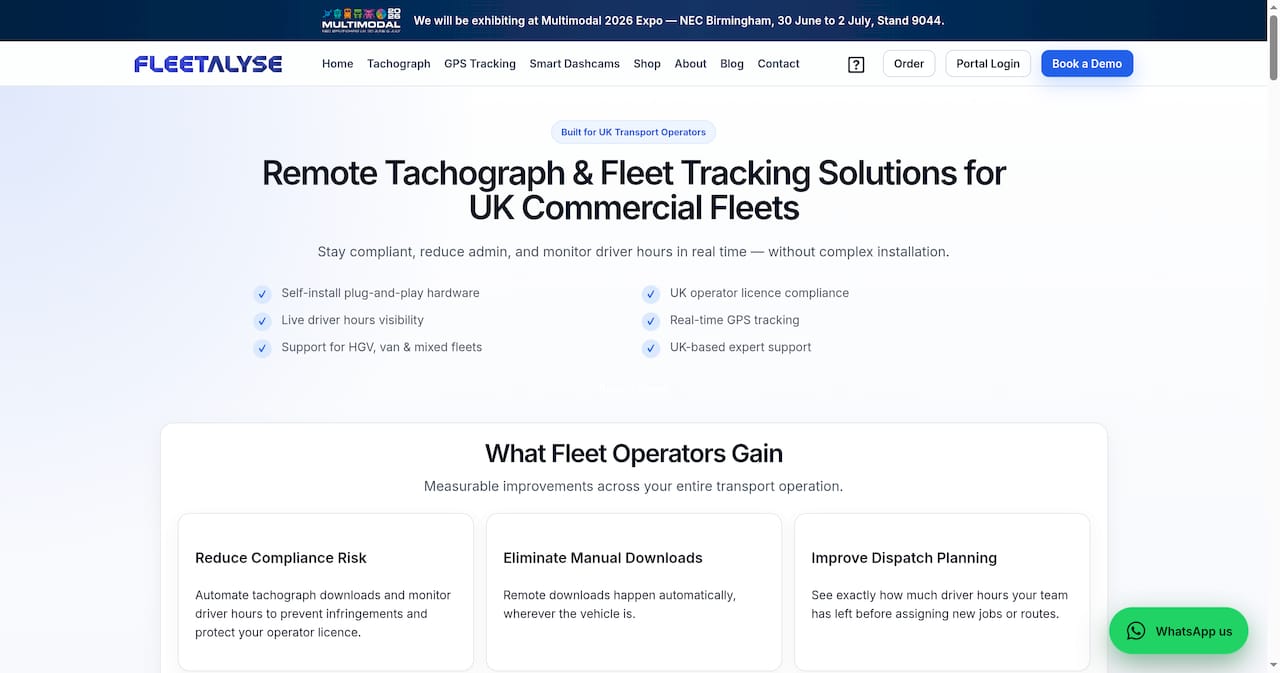
For operators managing mixed fleets of HGVs and vans, the fleet analysis platform consolidates compliance data across all vehicle types in one place, making it straightforward to produce clean records for a DVSA inspection or Traffic Commissioner review. Whether you are moving away from paper weekly record sheets or looking to tighten up your existing digital process, Fleetalyse provides the tools and UK-based support to get there. Book a demo to see how it works for your fleet.
Sources
Always verify current rules directly on GOV.UK, as guidance is updated periodically and the version on third-party sites may lag behind.
- Drivers’ hours: GB domestic rules
- Van Driver Logbooks: Do You Need One & What’s Required?
- How to Keep a Simple but Effective Driver Log
This article is general information, not a substitute for advice from a qualified lawyer. Consult a qualified legal professional about your own circumstances before acting on anything here.