
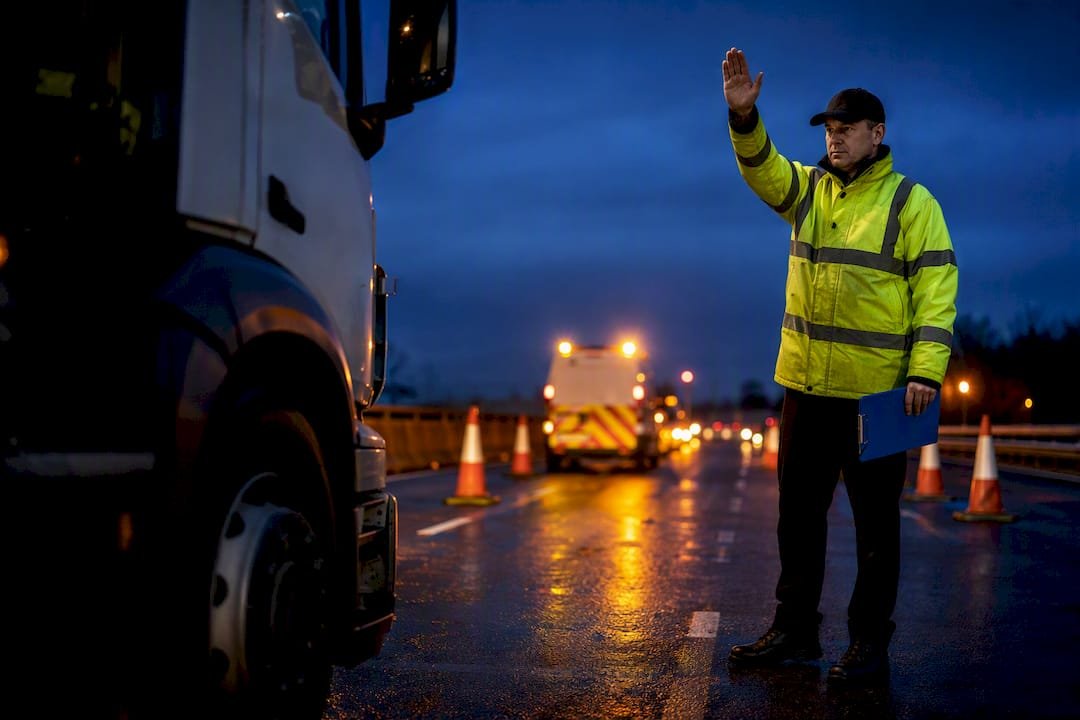
DVSA roadside checks: stop £300 fines, get audit ready for UK fleets
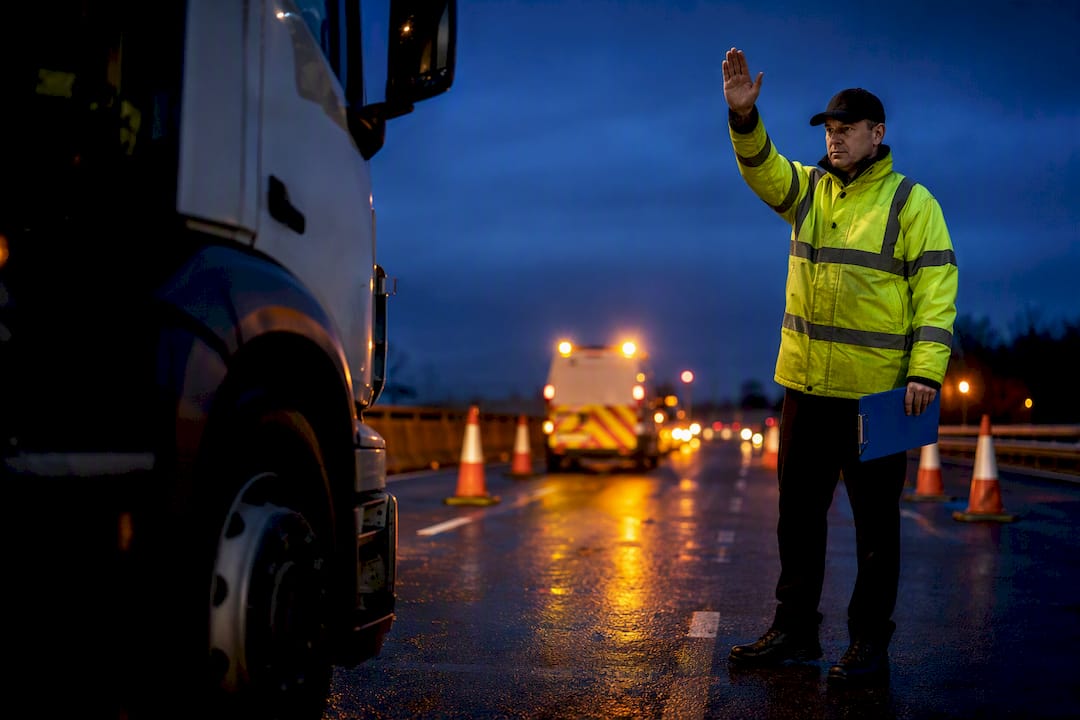
DVSA roadside checks let DVSA officers and the police stop any van, lorry, bus or coach to inspect roadworthiness, tachograph records, driver documents and load weight without prior notice. You must stop when signalled. Refusing is a criminal offence, and if the vehicle fails, a prohibition can take it off the road on the spot. Preparation is what separates a five-minute check from a five-day delay.
TL;DR:
- Ensuring all required documents such as licenses, insurance, and tachograph cards are up-to-date and easily accessible before every trip prevents delays during roadside checks.
- Regular daily walkaround and safety inspections, properly documented, are critical to maintaining compliance and avoiding prohibitions during inspections.
- Promptly repairing defects at authorized facilities, documenting repairs, and disputing incorrect prohibitions help minimize vehicle downtime and potential license consequences.
- Maintaining accurate records through automated compliance software reduces the risk of frequent stops by improving tachograph downloads and defect tracking.
- Fleets with high operator compliance scores and schemes like Earned Recognition tend to experience fewer routine roadside checks and better overall roadside performance.
Table of Contents
- What DVSA roadside checks actually cover
- What happens when you’re stopped by DVSA
- Prohibitions, fines and what they cost you
- Your legal duties as a driver or operator
- Before you set off: the practical checklist
- If you get a prohibition: how to respond
- Why some fleets get stopped more than others
- Fleet compliance priorities that actually reduce risk
- How Fleetalyse keeps your fleet audit-ready
- Sources
What DVSA roadside checks actually cover
A roadside check isn’t a quick glance at your tax disc. Officers work through a defined scope, and knowing what falls inside it helps you present the right paperwork before they even ask.
DVSA and police officers have the statutory power to stop commercial vehicles at the roadside or divert them to a dedicated testing site. Typically, they check:
- Vehicle roadworthiness: brakes, tyres, lights, steering and general bodywork condition.
- Load security and weight: whether the vehicle is within its authorised weight limit and the load is properly secured.
- Driver documentation: driving licence, Driver CPC card and vocational entitlements.
- Tachograph records: both digital and paper records covering drivers’ hours.
- Operator paperwork: operator licence details, insurance and, occasionally, maintenance records.
Deficiencies get graded by severity, drawing on the same defect categories, minor, major and dangerous, used in the HGV inspection manual that examiners apply during annual testing.
What happens when you’re stopped by DVSA
Officers usually signal a stop using marked vehicles, flashing lights, or a fixed roadside checkpoint with signage well in advance. Once signalled, you’re legally required to pull in safely and comply. This isn’t optional, and driving past a checkpoint gets logged and can result in prosecution.
DVSA officers wear high-visibility clothing and carry a warrant card. If you’re ever unsure whether someone is a genuine officer, you can ask to see identification before handing over documents, particularly at night or on an unlit stretch of road.
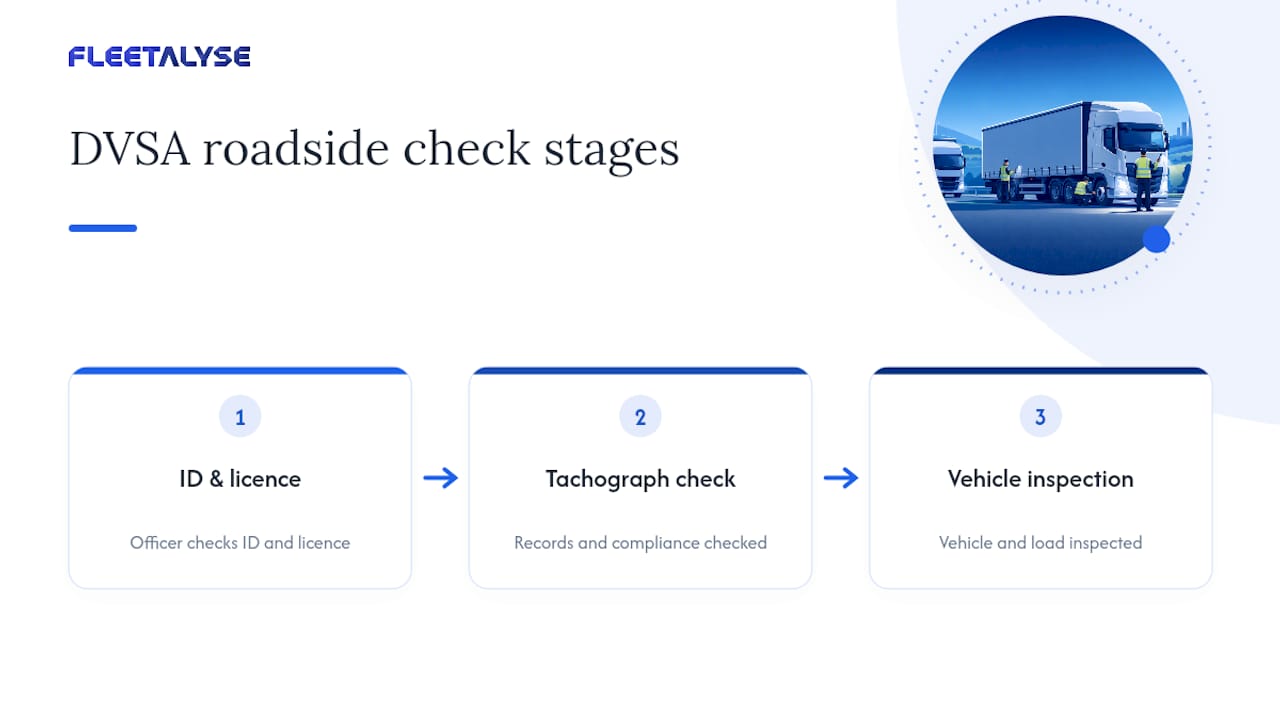
The check itself follows a rough sequence: identity and licence check first, then tachograph review, then a physical inspection of the vehicle and load. Stay with your vehicle, answer questions factually, and note the time and the officer’s name or badge number.
Pro Tip: Keep a small notebook or your phone’s notes app ready to log the stop time, location, and officer details the moment you’re waved down. It takes thirty seconds and it’s invaluable if you ever need to dispute a prohibition later.
Prohibitions, fines and what they cost you
A failed roadside check doesn’t automatically mean a fine. It means a decision about whether the vehicle can keep moving, and that decision follows a defined structure.
Roadside prohibitions fall into two broad types:
- Immediate prohibitions stop the vehicle from being used again until the defect is fixed, no grace period.
- Delayed prohibitions give you a window to repair the fault, typically 3 days for multiple safety-critical defects, and up to 10 days depending on severity and defect count.
Some prohibitions carry an S-marking, which signals the defect resulted from poor maintenance rather than wear and tear. That marking gets reported to the Traffic Commissioner and can influence your operator licence review.
Fixed penalties for roadside offences can reach up to £300, and that’s before accounting for lost vehicle time, recovery costs, or a formal report to the Traffic Commissioner.
Paperwork issued at the roadside typically includes a PG9 (the prohibition notice itself) and, once defects are cleared, a PG35EC confirming the vehicle has been reinspected and released.
Your legal duties as a driver or operator
Most prohibitions trace back to a gap in routine checks, not a sudden mechanical failure. The obligations here are specific, not aspirational.
- Daily walkaround checks: mandatory at least once every 24-hour period the vehicle is in service, and they must be documented, not just performed mentally.
- Safety inspections: first-use and intermediate inspections form part of your maintenance system, following the standards in the Guide to Maintaining Roadworthiness.
- Record retention: inspection and defect records need to be kept and available for DVSA review, not just filed and forgotten.
- Defect reporting: a working system for drivers to flag faults, with a clear audit trail from report to repair, keeps your operator licence compliance intact and your OCRS score lower.
Skipping the paperwork on a walkaround check that you did actually perform is almost as risky as skipping the check itself. DVSA can’t verify a check that exists only in your memory.
Before you set off: the practical checklist
Preparation isn’t about memorising regulations. It’s about having the right things in the cab and the right habits before the ignition turns.
Documents to carry every trip:
- Valid driving licence and Driver CPC card.
- Vehicle insurance and operator licence documentation.
- Tachograph cards (driver card, and company card where relevant).
Vehicle checks before departure:
- Lights, tyres, brakes and mirrors, all functioning and undamaged.
- Load properly secured and within the vehicle’s authorised weight.
- Tachograph unit working correctly, with no fault codes on the display.
DVSA’s own guidance on carrying out HGV walkaround checks is worth running through with new drivers until it becomes second nature rather than a box-ticking exercise.
Pro Tip: If an officer flags an advisory (non-prohibited) defect, photograph it on the spot and time-stamp your most recent tachograph download. That combination gives you a clean evidence trail if the same issue resurfaces at a later check.
If you get a prohibition: how to respond
A prohibition notice isn’t the end of the conversation. It’s the start of a process with defined steps and, usually, a defined timeline.
- Arrange reinspection: repairs need to happen at an authorised testing facility, and you’ll need evidence of the work carried out before the prohibition clears.
- Document everything: invoices, parts replaced, and technician sign-off all matter if the case escalates.
- Use the complaint route: DVSA publishes contact details for disputing a prohibition you believe was issued incorrectly, though response times vary by case complexity.
- Get legal advice early: a solicitor experienced in transport law becomes worth involving quickly once a prohibition has consequences for your operator licence, not after the Traffic Commissioner has already opened a file.
Treat any prohibition as the opening move in a wider look at your compliance systems, not an isolated bad day.
Why some fleets get stopped more than others
DVSA doesn’t select vehicles at random forever. Over time, targeting leans on intelligence, and the Operator Compliance Risk Score (OCRS) sits at the centre of it. Poor historical records, late tachograph downloads or a pattern of defects pushes a fleet up the list for more frequent stops.
Operators who maintain accurate records and join schemes like Earned Recognition tend to see fewer routine roadside interruptions, because DVSA already has confidence in their systems. Getting there is less about a single grand gesture and more about consistency: accurate walkaround logs, tachograph downloads that happen on schedule rather than in a scramble, and maintenance records that match reality.
Fleet compliance priorities that actually reduce risk
A prohibition is an incident, not a footnote. Every one deserves the same root-cause thinking you’d apply to an accident report: what failed, why the existing check missed it, and what changes stop it recurring. Weightmans’ guidance on roadside investigations makes a similar point, that a prohibition often triggers wider scrutiny of your entire maintenance system, not just the one vehicle.

Driver conduct at the stop matters more than most training budgets reflect. A driver who knows how to verify an officer’s ID and hand over the right document first, rather than fumbling through a glovebox, keeps a routine check routine.
Automation earns its place here too. Scheduled tachograph downloads and maintenance reminders close the gap between what should happen and what actually does.
— Vytautas
How Fleetalyse keeps your fleet audit-ready
Manual tachograph downloads and paper defect logs are exactly the gaps that turn a routine stop into a prolonged one. Compliance software can automate parts of compliance processes such as scheduled remote tachograph downloads, driver behaviour monitoring to flag issues early, and maintenance scheduling to keep service histories current.
That combination matters most in the moment an officer asks for records. Instead of digging through a filing cabinet, you’re pulling up audit-ready fleet data that shows exactly when the vehicle was last checked and by whom. For fleets wanting to understand driver conduct patterns before they show up at the roadside, Fleetalyse’s driver behaviour monitoring gives you that visibility ahead of time, not after a prohibition notice. For those interested in audit-ready compliance, it’s useful to explore how fleet management platforms handle different vehicle mixes.
Sources
- Roadside checks for HGV, van, bus or coach drivers
- Guide to maintaining roadworthiness
- Understanding DVSA roadside checks and investigations