

OCRS explained: what your risk score means for your fleet

The Operator Compliance Risk Score (OCRS) is the DVSA’s licence-level risk tool that decides how often your vehicles get stopped, and you can influence it. It works across a rolling three-year window, splits your performance into roadworthiness and traffic categories, and updates daily as new inspections and MOT results come in.
Three things matter immediately:
- OCRS sits on your operator licence, not on individual vehicles, so one defect-prone truck can drag down your whole fleet’s score.
- Older points lose weight over time. Year one counts in full, year two counts at 75%, year three at 50%, and then the points disappear entirely, according to DVSA’s OCRS guidance.
- A higher score means more roadside stops. A lower one means DVSA largely leaves you alone.
Everything that follows explains how the score is built and what you can do about it. For the definitive detail, GOV.UK’s OCRS system guidance remains the primary source.
Key Takeaways
OCRS is a licence-level score built from roadworthiness and traffic events, weighted over a rolling three-year period, and it directly controls how often DVSA stops your vehicles.

| Point | Details |
|---|---|
| Score sits on the licence | One vehicle’s defects or one driver’s tachograph breach affects the whole operator score. |
| Recent events weigh most | Year one events count in full, year two 75%, year three 50%, then drop off entirely. |
| Cat 1 defects cost the most | An S-marked Cat 1 defect adds 400 points, far more than minor infringements. |
| Clear events dilute risk | Clean stops and first-time MOT passes add encounters without adding points. |
| Fleetalyse supports the fix | Telematics, remote tachograph downloads and automated compliance reporting target the highest-point triggers directly. |
Table of Contents
- What is OCRS and who does DVSA use it on?
- How is OCRS calculated? Scores, weighting and bands
- What events push your OCRS up or down?
- Where OCRS data comes from and how fast it updates
- How to check your OCRS and what DVSA can show at the roadside
- How to reduce OCRS risk: a practical action plan
- How telematics and disciplined records cut OCRS risk
- A compliance professional’s view on treating OCRS as a metric
- Turning OCRS improvement into a daily routine with Fleetalyse
- Frequently asked questions
- Sources
What is OCRS and who does DVSA use it on?
OCRS is a risk-assessment score DVSA applies to operator licences across England, Scotland and Wales, and it exists for one reason: to decide which fleets get targeted for roadside checks and which get largely left to get on with the job. The scoring engine pulls from MOT results, roadside inspections, and desk-based or fleet assessments, then produces a number that tells enforcement teams how much scrutiny an operator’s vehicles warrant.
Not every operator gets a live score. New licence holders and operators with no DVSA interaction in the past three years sit in a Grey, unrated category. Operators based in Northern Ireland see a reduced version of the report, since much of the underlying data comes from Great Britain’s inspection regime.
Picture two haulage operators running similar-sized fleets. One has had three Cat 1 defects flagged in eighteen months; the other has a clean run of MOT passes. DVSA’s targeting system will stop the first operator’s vehicles far more often, purely on the strength of that data trail.
- OCRS covers operator licences in England, Scotland and Wales.
- It drives DVSA’s decision on which vehicles get flagged for roadside checks.
- New operators and those with no recent DVSA contact appear as Grey/unrated.
How is OCRS calculated? Scores, weighting and bands
Every operator licence carries three separate figures: a roadworthiness score, a traffic score, and a combined score. Each is built the same way. DVSA counts the points generated by inspections and offences, divides that by the number of encounters (inspections, stops, MOT tests) the operator has had, and arrives at a base score, as set out in DVSA’s scoring methodology.
Timing matters as much as the raw points. DVSA applies a three-year rolling weighting, so recent trouble counts far more than old trouble:
Once the weighted score is calculated, DVSA sorts operators into bands:
- Blue – Earned Recognition operators, rarely targeted.
- Green – low risk, standard inspection frequency.
- Amber – moderate risk, increased scrutiny.
- Red – high risk, frequent targeting.
- Grey – no meaningful score yet.
The technical detail behind this calculation is published in a DVSA Freedom of Information response, useful reading if you want the exact mechanics rather than the summary version.
What events push your OCRS up or down?
Roadworthiness points come from MOT failures, prohibitions, and categorised defects. GOV.UK’s published point values show how much a single incident can cost: a Category 1 defect carries 200 points, an S-marked Cat 1 defect (serious enough to remove the vehicle from service) carries 400, and full detail on how defects are classified sits in the DVSA defect categorisation guidance.

Traffic points work similarly but track driver and operational offences. A Band 5 offence, the most serious tier covering things like falsified tachograph records, adds 300 points; a minor Band 0 issue adds just 12.5. Drivers’ hours breaches, tachograph offences and overloading all sit somewhere on that scale, and persistent issues here point straight back to driver behaviour rather than vehicle condition. Reviewing your drivers’ hours compliance processes is often the fastest way to spot where traffic points are accumulating.
Not every encounter adds points. A clean roadside stop or a first-time MOT pass counts as a “clear event”, which adds to your encounter total without adding to your points, quietly diluting the weight of past problems, according to GOV.UK’s OCRS guidance.
Desk-based and fleet assessments also feed the same model, with predefined point allocations depending on whether the outcome is rated satisfactory, mostly satisfactory or unsatisfactory.
Where OCRS data comes from and how fast it updates
OCRS draws on MOT test results, roadside inspection outcomes, and desk-based or fleet assessments, all pooled into the same base score calculation. DVSA re-scores operators daily, so the figure you see today reflects the latest encounters, not a static annual snapshot, as confirmed in DVSA’s scoring guidance.
Improvement is not instant. A single clean inspection nudges the base score slightly; meaningful movement usually needs several months of clear events and the gradual decay of older, heavily weighted points from year one into year two.
When you won’t have an OCRS report
You will not see a live score if you hold a new operator licence or have had no DVSA interaction in the past three years, in which case DVSA marks you Grey. Operators running vehicles largely outside DVSA’s Great Britain data set, including many based in Northern Ireland, receive a reduced version of the report rather than a full combined score.
How to check your OCRS and what DVSA can show at the roadside
Getting your score is straightforward, and it should be part of your regular compliance routine, not something you only check after a bad inspection.
- Log in to DVSA’s online report services using your operator licence details.
- Pull your roadworthiness, traffic and combined scores from the report.
- Export or download the report as evidence for internal audits or renewal applications.
At the roadside, the rules are stricter than most operators assume:
- A driver cannot be shown the OCRS report unless they can prove they are the sole owner, the operator, or named on the operator licence.
- Enforcement staff use the score internally to decide inspection frequency, but they are not obliged to disclose it during a routine stop.
Building this check into your DVSA roadside readiness routine means nothing about your score comes as a surprise.
How to reduce OCRS risk: a practical action plan
Start with the events that carry the biggest point penalties, since preventing one Cat 1 S-marked defect does more for your score than a dozen minor fixes combined.
- Tighten your maintenance schedule so defects get caught before an MOT or roadside inspection finds them.
- Track MOT history and address recurring failure patterns on specific vehicles or routes.
- Reinforce driver training around tachograph use, since traffic points respond directly to driver behaviour.
- Keep digital records of inspections, repairs and driver hours for both audits and desk-based assessments.
- Deliberately build in clear events. Extra voluntary inspections and clean MOT retests add encounters without adding points.
Pro Tip: *Model your score improvement rather than guessing.
Fixing defect reporting processes tends to deliver the fastest visible change, since it attacks the highest-point category directly.
How telematics and disciplined records cut OCRS risk
Score improvement rarely comes from one big fix. It comes from removing the small, repeatable gaps that let defects and drivers’ hours breaches slip through unnoticed.
- Remote tachograph downloads catch drivers’ hours issues within days rather than at the next depot visit, closing the gap before it becomes a Band 5 offence.
- Scheduled maintenance alerts flag wear before it escalates into a Cat 1 defect at MOT or roadside.
- Automated defect reporting creates the audit trail DVSA’s desk-based assessments actually look for.
- Fewer roadside stops mean fewer delays, less driver downtime, and lower operational cost across the fleet.
Comparing remote downloads against manual tachograph checks shows why the manual approach struggles to catch issues at the same speed.
How OCRS relates to Earned Recognition, FORS and MPRS
DVSA’s Earned Recognition scheme sits alongside OCRS rather than replacing it. Operators who meet its data-sharing standards get marked Blue and are rarely stopped, regardless of their underlying combined score, according to DVSA’s Earned Recognition guidance.
FORS accreditation and MPRS-audited maintenance contracts do not alter OCRS directly, but strong compliance evidence from either scheme supports the desk-based and fleet assessments that feed your score, especially when aligned with proper hazard warning signs compliance.
A compliance professional’s view on treating OCRS as a metric
OCRS rewards exactly the behaviour good operators already practise: catching defects early, keeping drivers’ hours clean, and documenting everything. Where operators go wrong is treating a Red or Amber score as bad luck rather than a pattern worth investigating. It rarely is bad luck. It is usually one vehicle, one route, or one driver generating a disproportionate share of the points.
The reassuring part is that none of this is fixed. OCRS moves with your behaviour, and it moves faster than most operators expect once the right habits are in place.
Turning OCRS improvement into a daily routine with Fleetalyse
Reading about clear events and point weightings is one thing. Actually catching a Cat 1 defect before it happens, or a tachograph breach before it hits Band 5, needs data flowing constantly rather than checked once a month.
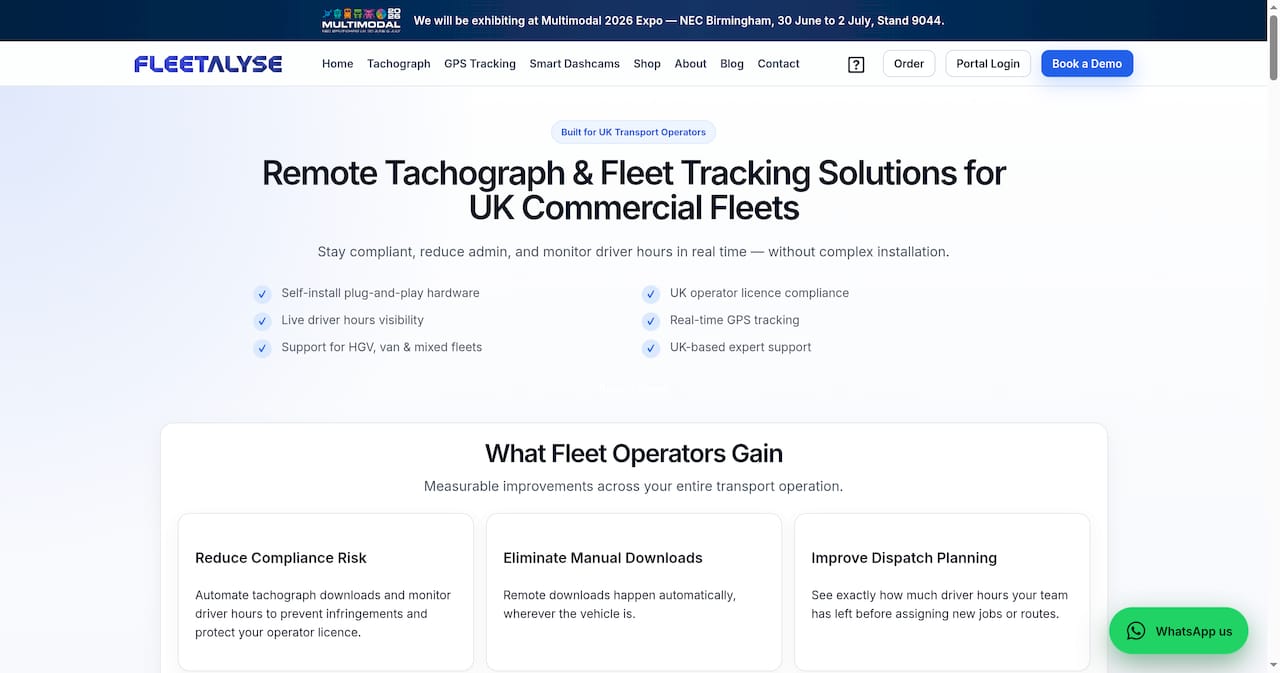
Fleetalyse’s driver behaviour monitoring flags the harsh braking, speeding and hours patterns that turn into traffic points, while remote tachograph downloads mean drivers’ hours issues surface within days, not at the next depot visit. Automated maintenance scheduling through Fleetalyse’s fleet analysis platform catches wear before it becomes a roadworthiness defect, and the compliance reporting keeps your evidence ready for any desk-based assessment. Operators running plug-and-play GPS hardware from the Fleetalyse shop get that visibility without a professional install. If your OCRS has drifted into Amber or Red territory, book a walkthrough of the platform and see exactly which triggers are costing you points.
Frequently asked questions
Is OCRS the same as my operator licence rating? No. OCRS is a risk score used for enforcement targeting; it sits alongside your operator licence but is a separate, continuously updated figure rather than a formal licence grade.
Can I see my competitor’s OCRS score? No. Only the operator, licence holder, or someone named on the licence can view a given OCRS report through DVSA online report services.
Does one bad inspection ruin my score permanently? No. A single event loses weight over three years and disappears entirely after that, particularly if you generate clear events in the meantime.
Is a Grey score bad? Not necessarily. Grey simply means DVSA has no meaningful recent data, common for new operator licences or fleets with no inspections in three years.
Does joining FORS or Earned Recognition remove the need to manage OCRS? No. Earned Recognition can move you to Blue and reduce targeting, but the underlying roadworthiness and traffic discipline that keeps your OCRS low is the same discipline both schemes require anyway.
This article is general information, not a substitute for advice from a qualified lawyer. Consult a qualified legal professional about your own circumstances before acting on anything here.
Sources
- Gov