
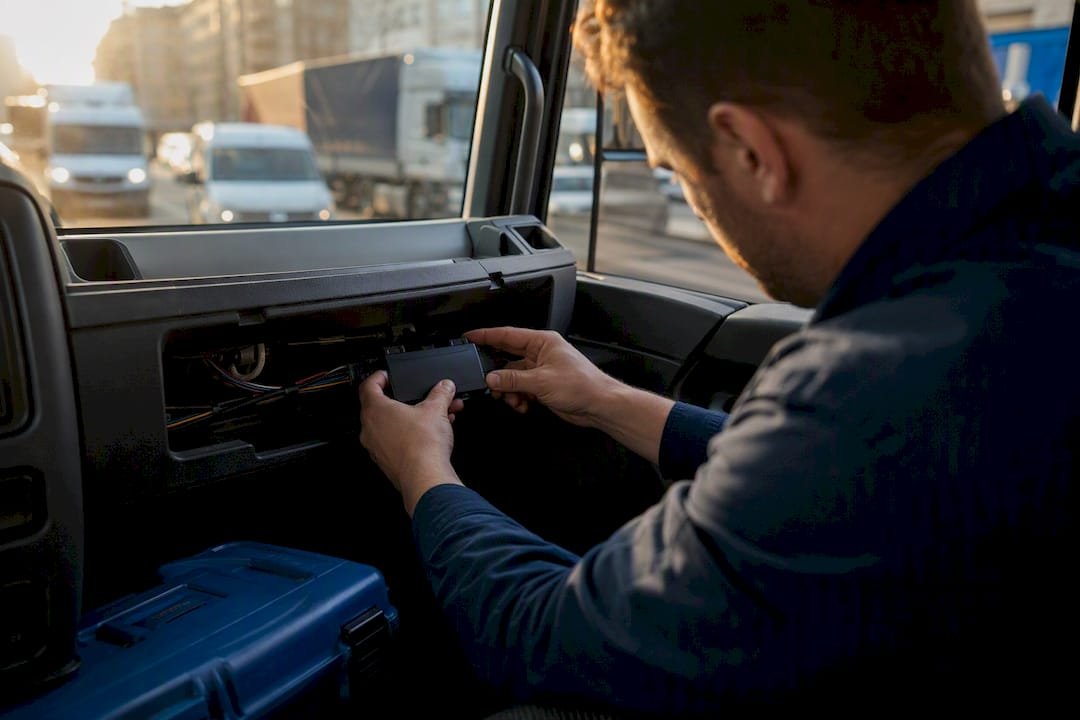
FORS membership: what it means for your fleet
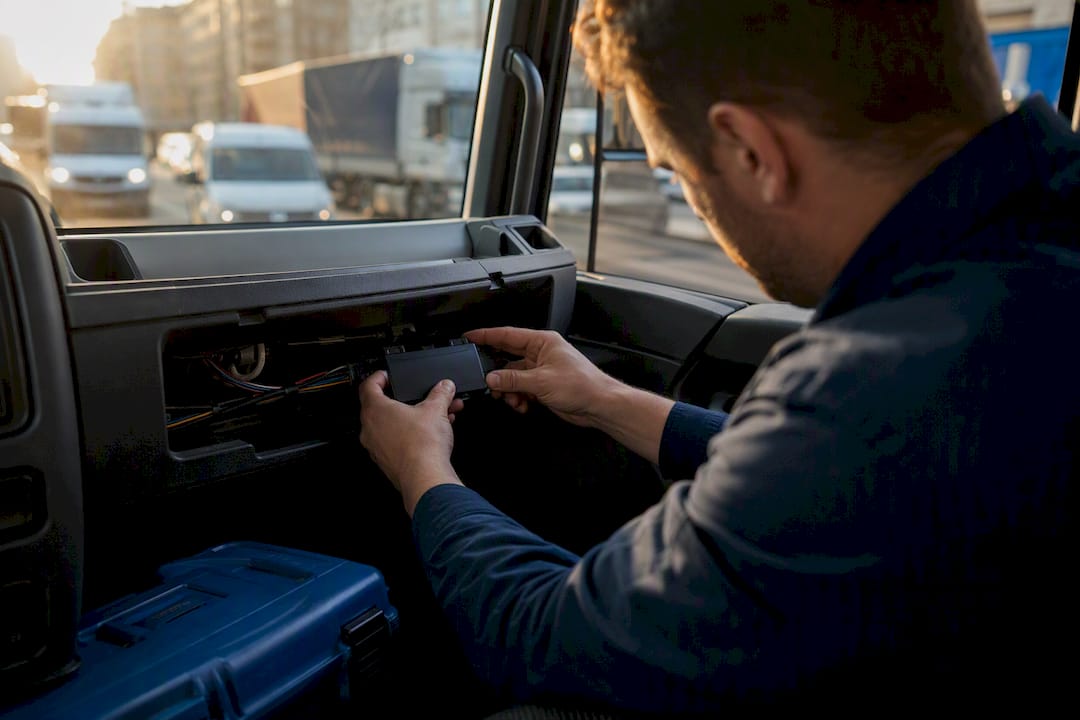
FORS membership is a voluntary accreditation that proves your fleet meets recognised standards for safety, fuel efficiency and environmental performance. It works on a three-tier ladder, Bronze, Silver and Gold, with each level demanding more evidence of good practice than the last. Members have reported mpg gains of up to 14% and get access to exclusive discounts through FORS Offers.
- Bronze is the entry point and prerequisite for everything above it
- Silver and Gold demand progressively deeper operational evidence
- Accreditation often unlocks supply-chain contracts that require it as a condition of tender
Key Takeaways
FORS membership rewards fleets that treat compliance as an ongoing discipline, since consistent evidence across operating centres wins both audits and contracts.
| Point | Details |
|---|---|
| Bronze comes first | You cannot apply for Silver or Gold without holding Bronze accreditation. |
| Watch the 90-day rule | Book your initial Bronze audit within 90 days of registering to avoid reinstatement procedures. |
| Fuel and insurance savings are real | Members have reported mpg gains of up to 14% and insurance savings of up to 10%. |
| Fees have two parts | An annual subscription by fleet size, plus an audit fee per operating centre. |
| Automate the evidence trail | Fleetalyse’s telematics and tachograph downloads build FORS-ready reports continuously, reducing manual audit prep. |
Table of Contents
- What is FORS membership and who is it for?
- What do Bronze, Silver and Gold actually require?
- How much does membership actually save you?
- What does FORS membership cost, and what deadlines matter?
- How do you apply, and what happens during the audit?
- How does training and toolkit support work with FORS?
- How Fleetalyse helps you gather FORS evidence
- Which fleets get the most from FORS, and where should you focus?
- Start automating your FORS evidence collection
- Where to check the official FORS requirements
- Sources
What is FORS membership and who is it for?
FORS, the Fleet Operator Recognition Scheme, exists to raise standards across three areas: road safety, fuel and operational efficiency, and environmental protection. It was built for commercial fleet operators, whatever they run, HGVs, vans, trailers, or a mixed operation spanning all three.
You don’t need a fleet of any particular size to join. Sole operators and large logistics firms sit on the same register, judged against the same FORS Standard v7 criteria.
Most operators join for reasons that go well beyond compliance box-ticking:
- Client contracts, particularly with local authorities and major developers, increasingly list FORS as a tender requirement
- The accreditation gives a structured framework for improving driver safety and reducing risk
- It creates a clear route to lower fuel spend and better vehicle utilisation, backed by measurable reporting
Joining is straightforward on paper. Meeting the standard consistently, across every operating centre, is where the real work happens.
What do Bronze, Silver and Gold actually require?
The FORS Standard v7 sets out distinct evidence requirements at each tier, and Bronze must come first. You cannot skip straight to Silver.
- Bronze: covers management responsibility, driver licence checks and training records, vehicle maintenance and roadworthiness, and basic operational policies covering things like reversing and vulnerable road user awareness. Auditors want to see systems in place, not just paperwork drafted for the occasion.
- Silver: builds on Bronze with tighter operational controls. You’ll need to demonstrate ongoing fuel and incident reporting, structured driver assessment, and evidence that policies are actually followed across every site, not just written down at head office.
- Gold: the top tier expects proof of continuous improvement over time, case study evidence of measurable gains, and fleet modernisation, cleaner vehicles, better technology, safer specification, that goes beyond minimum compliance.
A fleet running three depots often finds Bronze achievable within weeks once documentation is organised. Silver and Gold take longer, because reporting has to be consistent and dated across every site, not assembled retrospectively. The jump from Bronze to Silver is usually where operators discover gaps in how consistently policy translates into daily practice.
How much does membership actually save you?
FORS members reported fuel economy improvements of up to 14%, with some also reporting insurance savings of up to 10%.
Those numbers come from case studies published by FORS itself, so treat them as achievable outcomes rather than guarantees. Safety improvements tend to arrive first: structured driver training and vehicle checks reduce collisions and near-misses, which is precisely the work-related road risk the scheme was designed to tackle.
The commercial side matters just as much:
- FORS Offers gives members discounts through Associates and Affinity Partners, covering everything from fuel cards to insurance
- Accreditation frequently appears as a pre-qualification requirement on tenders, particularly in construction logistics and local authority contracts
- Fleet data tools help identify where fuel is actually being wasted, rather than relying on driver estimates or fuel card totals alone
Insurers and clients respond to evidence, not intentions. A fleet that can produce dated, structured reports tends to win both cheaper premiums and more contracts.
What does FORS membership cost, and what deadlines matter?
The fee structure has two parts: an annual subscription scaled to fleet size, plus a separate audit fee based on how many operating centres you run. If subscription fees go unpaid, your account can be moved to Dormant status, which effectively suspends your accreditation until it’s resolved.
- Annual subscription: charged per fleet, scaled by size
- Audit fee: charged per operating centre, separate from the subscription
- Unpaid subscription: risks Dormant status and loss of active accreditation
The deadline that catches operators out most often is the 90-day rule. You must request your initial Bronze audit within 90 calendar days of registering, or you may need to go through reinstatement procedures to get back on track.
Pro Tip: Book your Bronze audit the same week you register. Waiting until documentation feels “perfect” is the single most common way operators drift past the 90-day window.
Bronze accreditation typically arrives within a few weeks of a clean audit. Silver and Gold take considerably longer, because the evidence has to be consistent over time, not compiled retrospectively for a single audit date.
How do you apply, and what happens during the audit?
Registration starts online, where you’ll receive a FORS ID that tracks your application through to accreditation. From there, the process follows a predictable sequence.
- Register on the FORS website and receive your FORS ID
- Gather evidence: driver licence checks, training records, vehicle maintenance schedules, tyre management logs, and written operational policies
- Book your Bronze audit within the 90-day window
- Attend the audit, where an auditor reviews documentation and asks operational questions
- Address any findings and receive accreditation, or a defined action plan if gaps are identified
Auditors commonly check that company registration details match Companies House records, and that tyre management and driver training are applied consistently across every operating centre. Inconsistent record-keeping between sites is one of the most frequent fail points.
Pro Tip: Cross-check your operating centre addresses against Companies House before the audit. Mismatches here are an easy, avoidable reason to fail on a technicality.

Reapproval cycles run on a set schedule under the FORS Standard, so accreditation isn’t a one-off event. It’s a commitment to keep evidence current.
How does training and toolkit support work with FORS?
FORS runs both classroom and e-learning programmes, building towards a recognised Practitioner status for transport managers who complete a set number of workshops. Member satisfaction with this training and support has consistently been reported as high.
- FORS Fleet Tools help with fuel, maintenance and incident data reporting, feeding directly into Silver and Gold evidence requirements
- Alignment with CLOCS and WRRR means one accreditation can satisfy overlapping client requirements, cutting duplicated compliance work
- Telematics-based automated data collection materially reduces the administrative burden of maintaining evidence between audits
For operators bidding on construction logistics work, CLOCS alignment specifically isn’t optional in any meaningful sense. It’s frequently the difference between qualifying for a tender and being excluded before you’ve even priced the job.
How Fleetalyse helps you gather FORS evidence
Audit preparation lives or dies on paperwork consistency, and that’s exactly where telematics automation earns its keep. Remote tachograph downloads, GPS tracking and driver behaviour monitoring replace manual log collection with dated, structured records auditors recognise immediately.
- Automated fuel and mileage reports map directly onto the mpg and incident evidence FORS Silver and Gold ask for
- Driver behaviour data builds the training and safety trail Bronze auditors check first
- Continuous data capture between audits means reapproval doesn’t mean starting your evidence file from scratch
Which fleets get the most from FORS, and where should you focus?
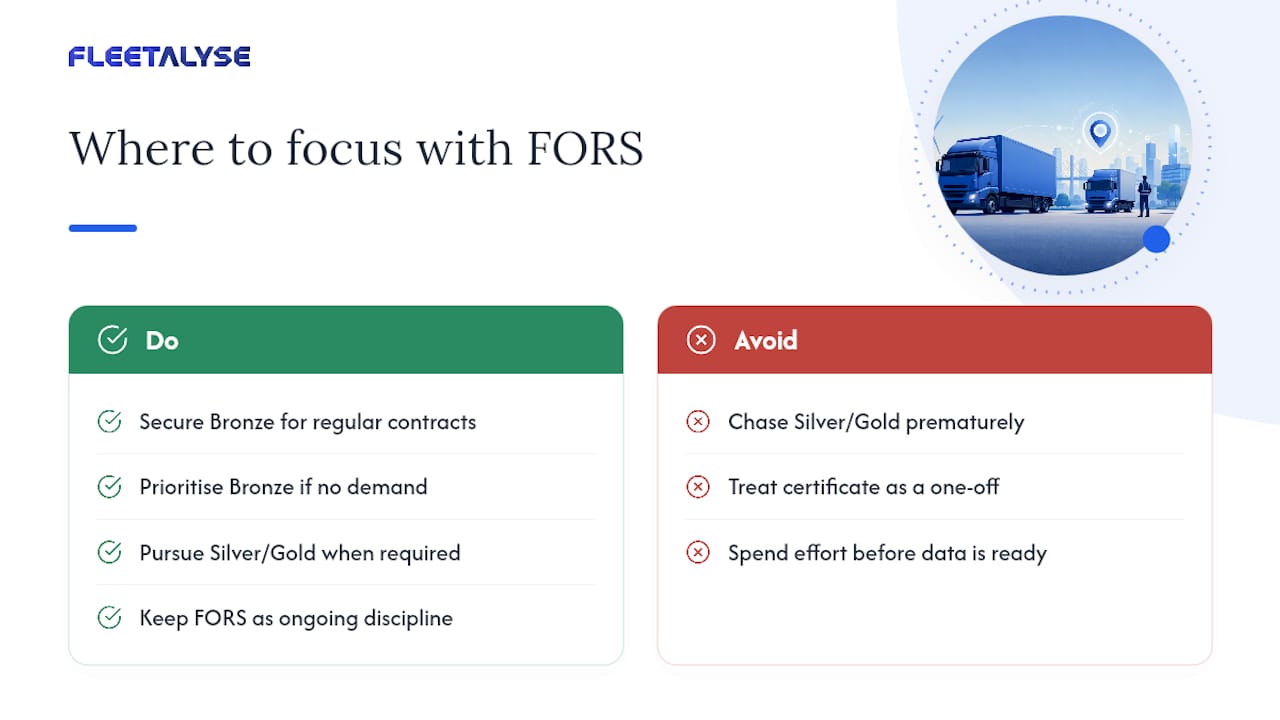
Fleets running regular contracts with local authorities or construction clients see the fastest return, because Bronze often becomes a condition of doing business rather than a nice-to-have. For smaller operators without that pressure, Bronze alone can be entirely sufficient, and chasing Silver or Gold before you need it wastes effort better spent elsewhere.
Push for Silver or Gold once you’re bidding for work that specifically demands it, or once your safety and efficiency data is already strong enough to make the extra evidence straightforward to produce. Treat FORS as an ongoing discipline, not a certificate you file away.
Start automating your FORS evidence collection
Chasing down driver hours, fuel logs and incident reports manually is the single biggest reason Bronze audits slip past the 90-day window. Fleetalyse cuts that admin down by pulling tachograph, GPS and driver behaviour data automatically, so the evidence auditors ask for is already sitting in your reports rather than scattered across spreadsheets and glovebox paperwork.
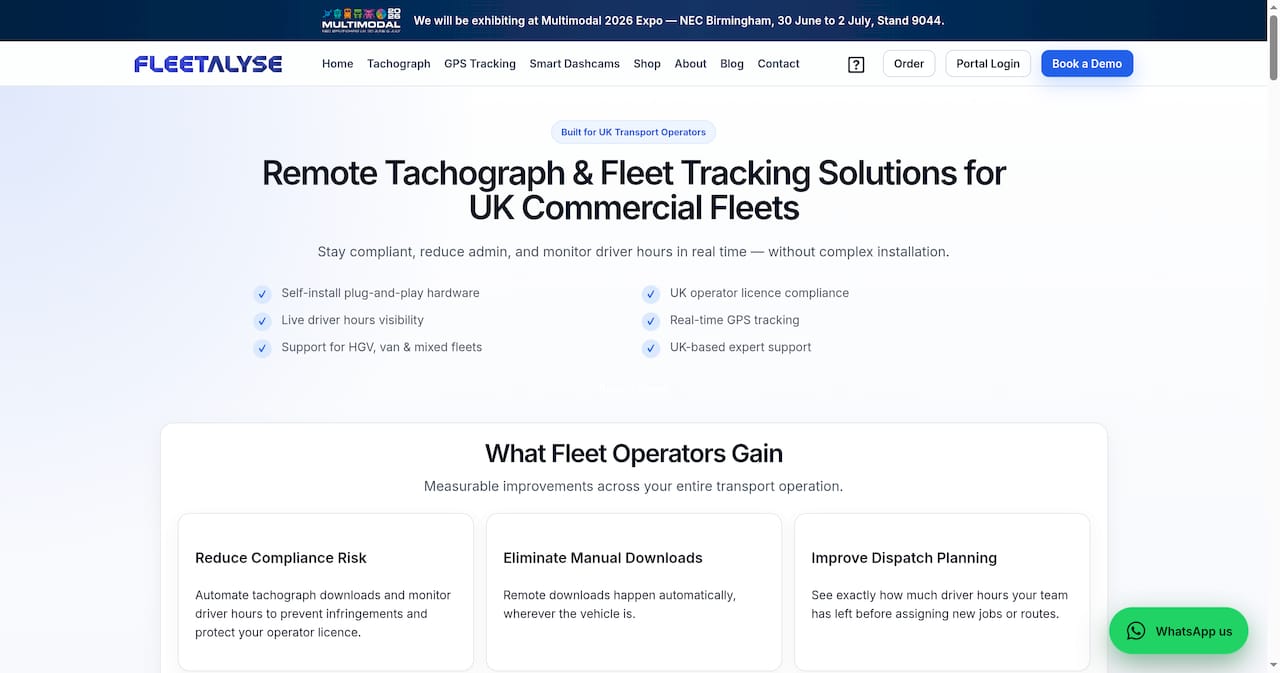
A simple workflow works well for most operators: connect your vehicles, let the platform log fuel, mileage and driver behaviour continuously, then export the reports straight into your Bronze or Silver audit file when the date arrives. That’s evidence collection handled in the background, not assembled in a panic the week before your auditor visits. Take a look at driver behaviour monitoring to see how the data maps onto FORS requirements for your fleet.
Where to check the official FORS requirements
For exact current fees and requirements, go directly to the primary sources:
- FORS official site for registration and general guidance
- FORS Standard v7 for Bronze, Silver and Gold requirements
- FORS accreditation guide for the audit process and 90-day rule
- FORS terms and conditions for fee structure and payment terms
Sources
- Press release: FORS breaks its personal best with record Gold and Silver members
- FORS terms and conditions v7.1 (May 2025)
- FORS Standard v7 (June 2024)
- FORS accreditation guide v3 (Jul 2024)