
A driver returns late, the transport office is busy, and the vehicle unit or driver card download is pushed to tomorrow. That familiar pattern is why the debate around remote downloads vs manual checks matters. It is not simply about choosing a faster way to move files. It is about whether your compliance process gives you enough time to identify risks, act on them and show that your operation is under control.
For UK operators, tachograph records, driver hours and working time are ongoing management responsibilities. A manual process can meet the requirement when it is tightly organised and consistently followed. But as fleets grow, vehicles work away from base and office teams take on more competing tasks, manual downloads can create avoidable gaps in visibility.
Remote downloads vs manual checks: the operational difference
Manual checking usually means bringing a vehicle unit or driver card to a designated point, using a download tool and then saving, reviewing and filing the data. In a small, local operation where every driver returns to the yard regularly, this can appear straightforward. The challenge is that every stage depends on somebody being available, following the process correctly and dealing with exceptions.
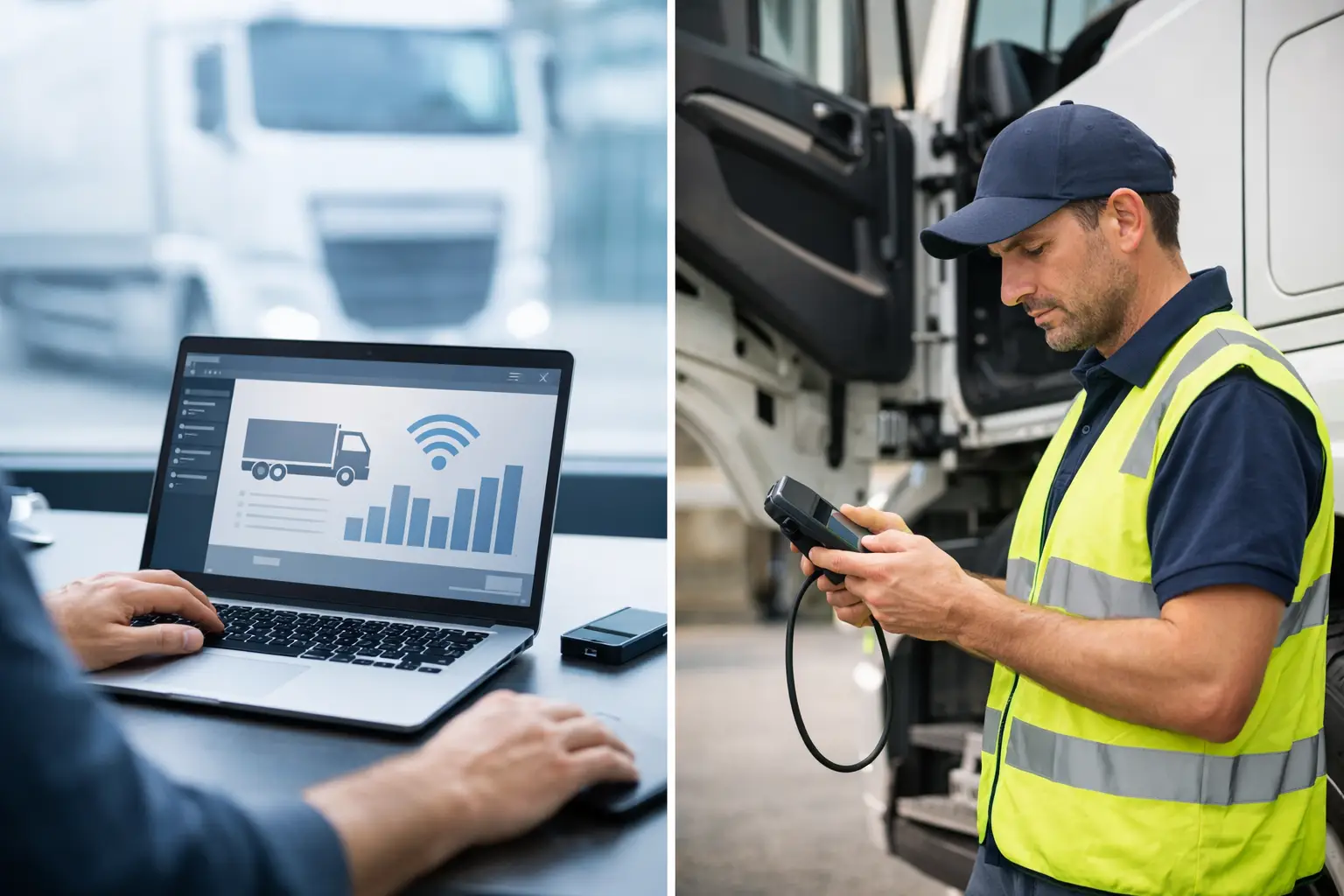
Remote tachograph downloads automate the collection of data from compatible vehicle units and driver cards while vehicles are on the road or parked away from base. Files are sent into a central platform according to the schedule you set, ready for review without waiting for the lorry, van or driver to return.
The practical difference is timing. A manual download tells you what was available when the vehicle came back. A remote process gives the compliance team a more consistent flow of records, reducing the chance that an overdue download only becomes visible when a deadline is close or has already passed.
This does not remove the need for proper compliance management. Downloaded data still needs reviewing, infringements still need investigating, and drivers still need clear guidance. It does, however, remove a repeated administrative dependency that can make those jobs harder.
Where manual checks create pressure
Manual checks are not inherently poor practice. Many well-run fleets have used them for years. The risk comes from relying on a process that is vulnerable to normal operational disruption: a vehicle is diverted, a driver is on holiday, a card reader is unavailable, or the person responsible is covering another role.
Those issues can have a direct impact on the quality of your compliance records. The most common pressure points include missed download dates, files saved in inconsistent locations, delays between an infringement occurring and being reviewed, and uncertainty over whether every driver and vehicle has been checked.
For a transport manager, the real cost is often not the few minutes spent downloading a card. It is the accumulated admin around chasing drivers, maintaining a download diary, checking missing files and reconstructing what happened when a record is incomplete. Spreadsheets can help, but they also create another process to maintain.
Manual methods become more difficult where vehicles regularly work from customer sites, operate on long-distance routes or are based across several depots. The more exceptions your team has to manage, the more likely it is that a routine task becomes a compliance concern.
What remote downloads change day to day
Remote downloads replace the need to wait for physical access to the tachograph unit or driver card in most routine cases. Rather than planning work around a vehicle’s return, the office can work from a central download schedule and see whether data has been received as expected.
That gives compliance managers a clearer view of outstanding actions. If a driver card has not downloaded, it can be identified and addressed before it becomes an overdue record. If data highlights possible drivers’ hours issues, the team can investigate while the details are still current, rather than weeks later when recollections and supporting information are less clear.
There is also a planning benefit. Remote data collection reduces interruptions for drivers and depot staff, particularly at peak times. Vehicles do not need to queue for a download at the end of a shift, and the office does not need to build its day around who has returned to base.
When remote tachograph downloads sit alongside live driver-hours information, GPS tracking and vehicle reporting, the value extends beyond file collection. A planner can see where an asset is, understand the driver’s available time and make a more informed decision about the next job. That is more useful than treating compliance as a separate back-office task.
Faster visibility does not mean automatic compliance
It is worth being precise here. Remote downloads can make records easier to obtain and monitor, but they cannot correct poor scheduling, missing driver training or weak management follow-up. A system may flag a potential infringement, but a competent person still needs to assess the circumstances, speak to the driver where necessary and record appropriate action.
The strongest approach combines automation with ownership. Set clear download schedules, assign responsibility for reviewing exceptions, keep evidence of follow-up and make driver-hours discussions part of normal operational management. Technology should make that discipline easier to sustain, not be treated as a substitute for it.
Cost should be measured beyond the subscription
A manual process can look cheaper because the hardware and software costs are limited. That comparison can be misleading if it ignores office time, missed deadlines, travel to access vehicles and the impact of weak visibility on an operator licence.
Consider a fleet with 25 vehicles and a mixture of day drivers and trampers. If a member of the team spends only a few minutes per driver or vehicle each week downloading, checking and chasing records, the annual admin total soon becomes significant. Add one missed download, a lost file or a late response to an issue, and the apparent saving narrows further.
Remote services also need a realistic assessment. There may be hardware, installation or subscription costs, and not every older vehicle or operating arrangement will be equally straightforward. Operators should check compatibility, understand what is included, and confirm how driver card downloads are managed. Transparent pricing matters because compliance tools are part of the operating cost, not an occasional purchase.
For many fleets, the commercial case is strongest when remote downloads are part of a wider platform. Combining tachograph compliance with vehicle and trailer tracking, smart dashcam footage, driver behaviour data, maintenance reminders and utilisation reporting avoids paying for disconnected systems and moving information between them manually.
When manual checks may still be suitable
A very small fleet with vehicles back at the same yard every night, a named compliance administrator and a proven routine may find manual downloading workable. It can also remain a sensible fallback process if a vehicle has a connectivity issue or a remote download has not completed as expected.
The question is not whether manual checks can work. It is whether they remain dependable as the fleet, workload and compliance exposure increase. If your team is regularly chasing records, relying on memory, or discovering issues after the fact, the process is no longer providing the control it should.
A staged rollout can be sensible for mixed fleets. Start with vehicles that work furthest from base, drivers with the most complex schedules or the depot where admin pressure is highest. This lets the team refine responsibilities and see where the biggest time savings occur before extending the approach across the operation.
Choosing the right control model
When assessing remote downloads, ask practical questions. Can you see which driver cards and vehicle units are due or overdue? Are records stored centrally and available for review? Can the platform highlight driver-hours issues early enough to act? Will planners, compliance staff and managers be working from the same information?
Also consider implementation. A system that requires long installation periods or complicated daily routines can create resistance before it delivers value. Fleet operators need tools that fit around working vehicles, not projects that keep them off the road. Plug-and-play hardware, clear monthly costs and a single operational view can make adoption far more straightforward.
Fleetalyse is designed around that reality, bringing remote tachograph downloads and live fleet data into one platform so transport teams can reduce admin without losing oversight.
The best compliance process is rarely the one with the most steps. It is the one that makes the right action visible early, assigns it to the right person and leaves a clear record that it was dealt with. If manual checks are making that harder, moving the routine work remote gives your team more time for the decisions that protect the licence and keep vehicles productive.