
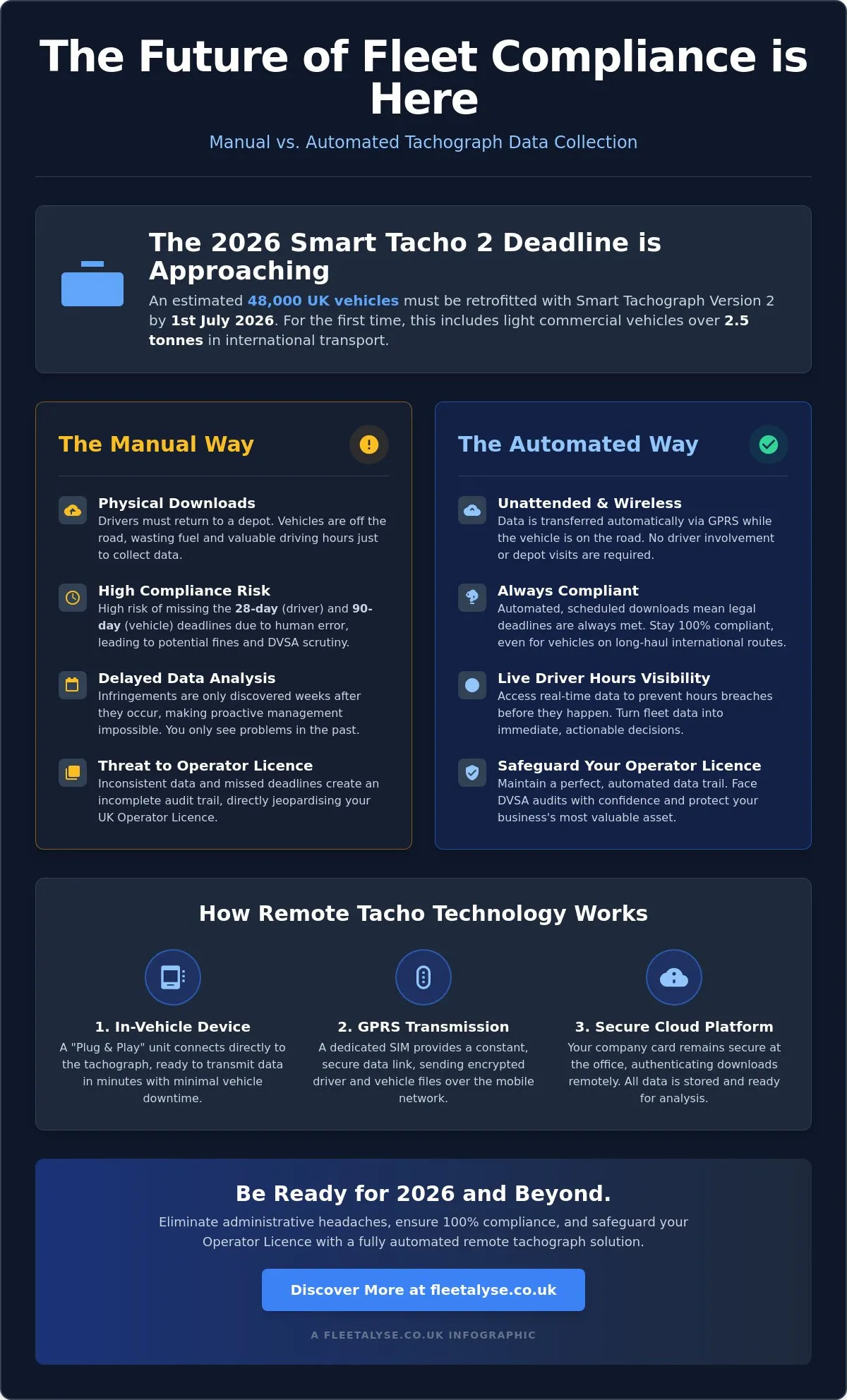
Did you know that an estimated 48,000 UK vehicles must be retrofitted with Smart Tachograph Version 2 technology by the 1st of July 2026? This regulatory shift brings light commercial vehicles over 2.5 tonnes into the compliance net for the first time. You're likely feeling the constant pressure of the 28-day and 90-day legal deadlines. Chasing drivers for manual downloads whilst they're mid-route is a massive administrative headache that risks your UK Operator Licence. Implementing a remote tacho system removes this burden entirely.
We understand that your time is better spent on real transport operations rather than chasing paperwork. This guide shows you how to automate your entire data flow and remain audit-ready without the manual effort. We'll break down the 2026 Smart Tacho 2 requirements, explain how the DVSA uses remote data transmission to check compliance, and show you how to reduce office time by turning fleet data into decisions.
Key Takeaways
- Understand how to automate your compliance workflow by moving from manual 'office visits' to unattended, seamless data collection for both driver cards and vehicle units.
- Discover how remote tacho technology provides live visibility into driver hours, helping you avoid legal breaches whilst your fleet is on the road.
- Compare the true operational costs of manual data collection against the efficiency of secure, real-time encrypted file transfers.
- Learn how to safeguard your UK Operator Licence and streamline DVSA audits by maintaining a 100% compliant, automated data trail.
- Identify the essential features of a "Plug & Play" solution built for real transport operations rather than just basic tracking.
What is Remote Tacho and Why is it Essential for UK Fleets?
Remote tachograph download is the automated, wireless transfer of driver card and vehicle unit (VU) data via GPRS. It marks a total shift away from the traditional model of manual "office visits." In the past, managers had to wait for a driver to return to the depot to physically download data. Today, that process happens in the background. A remote tacho system ensures data flows directly to the office whilst the vehicle is still on the road. It's built for real transport operations where time is the most valuable asset.
Manual data collection has become a significant bottleneck for modern haulage. It wastes fuel. It consumes driver hours. It creates administrative gaps that lead to compliance failures. A robust remote system relies on three core components to eliminate these issues:
- An in-vehicle device: Usually a "Plug & Play" unit connected to the tachograph.
- A GPRS SIM: This provides the constant data link required for transmission.
- A secure cloud platform: Where files are encrypted and stored for analysis.
The foundational technology for this is the Digital tachograph, which has evolved from simple recording to a sophisticated data hub that supports these seamless integrations.
The Legal Framework: 28 and 90-Day Deadlines
UK law is clear on data retention. Driver card data must be downloaded every 28 days. Vehicle unit data must be captured every 90 days. Missing these windows isn't just a minor oversight; it's a direct threat to your UK Operator Licence. The DVSA uses these records to assess your fleet's safety and compliance. Remote systems eliminate the risk of human error by scheduling these downloads automatically. Even amongst long-haul routes or international journeys, the data is captured on time, every time. This keeps your business audit-ready and protected from heavy fines.
Smart Tachographs vs. Standard Digital Units
The regulatory landscape is changing fast. Older Generation 1 units provided basic digital recording, but the industry has moved to Generation 2 (Smart) tachographs. As of July 1, 2026, all vehicles over 2.5 tonnes involved in international transport or cabotage must be fitted with a Smart Tachograph Version 2. This is a significant drop from the previous 3.5-tonne threshold. An estimated 48,000 UK vehicles will be affected by this 2026 deadline. Choosing a future-proof remote tacho solution now ensures you're ready for these tighter enforcement standards. For more information on how to prepare, visit Fleetalyse for expert advice on UK commercial fleet compliance.
How Remote Tachograph Technology Operates in Real-Time
Modern fleet management relies on automation to remove human error. The "Plug & Play" reality of remote tacho technology means hardware can be installed in minutes. These devices connect directly to either the front or rear port of the tachograph unit. Once active, they transmit encrypted files whilst the vehicle is in motion. This ensures data is captured without the driver ever needing to stop or return to the depot. It's a system built for real transport operations where every minute on the road counts.
One of the most significant advantages is how the system handles the company card. Traditionally, the company card had to be physically inserted into the vehicle unit to authorise a download. With a remote system, your company card stays securely in a card reader back at the office. It acts as a digital key. The software uses this centralised card to "unlock" the vehicle unit from hundreds of miles away. This allows for seamless, unattended data collection across your entire fleet, regardless of where your vehicles are located in the UK or Europe.
Automated scheduling puts you in total control of your data flow. You can set the frequency for driver card downloads to occur daily or weekly. This ensures you always stay within the official DVSA tachograph regulations. By the time a transport manager starts their day, the latest files are already processed and ready for analysis.
Hardware Installation: Hardwired vs. Plug-In
Choosing the right installation method depends on your specific fleet needs. Plug-in devices are ideal for quick deployment or temporary vehicles. They connect to the front interface and are ready to go immediately. Hardwired installations are the gold standard for permanent HGV fleets. These connect to the rear of the unit, keeping the cab tidy and reducing the risk of accidental disconnection. Both methods ensure minimal vehicle downtime. If you're looking to upgrade your fleet, you can explore our transparent pricing models for hardware and subscriptions.
Data Security and Encryption
Security is paramount when handling sensitive driver information. Data is protected amongst the entire transmission path from the vehicle to the server using high-level encryption. This process complies with both GDPR and UK data protection standards. Every download event creates a secure digital audit trail. This provides total transparency if you're ever asked to prove your compliance history during a DVSA inspection. You aren't just collecting data; you're protecting your business reputation.
Manual vs. Remote: Why UK Operators are Making the Switch
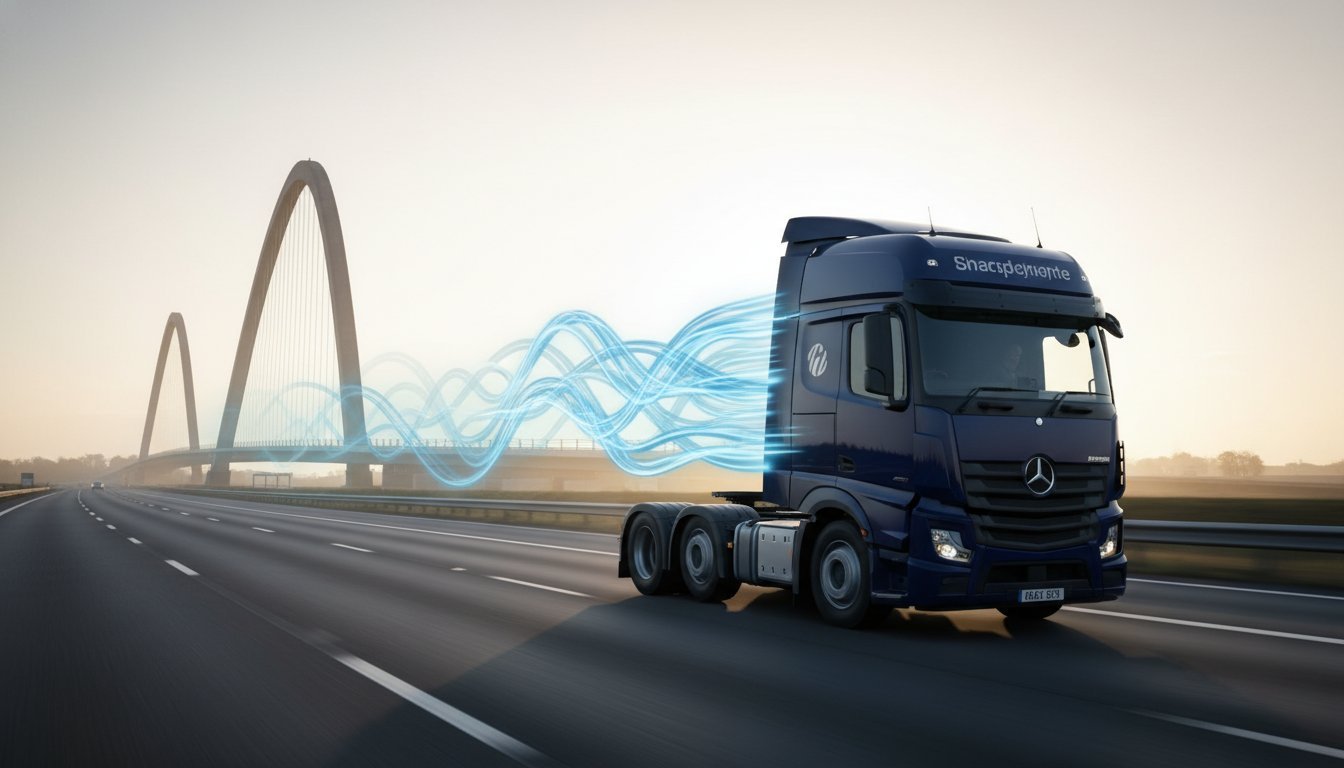
Switching from manual downloads to an automated system is a fundamental shift in operational efficiency. It's the difference between reactive firefighting and proactive management. Manual downloads require physical access to the vehicle and the driver card. This creates "dead mileage" where a vehicle travels simply to meet a compliance requirement. Implementing a remote tacho solution removes these physical constraints entirely. It allows your fleet to stay on the road, earning revenue, whilst the data takes care of itself.
Scalability is another critical factor. A single transport manager using a manual system often reaches their limit at 15 vehicles. Chasing cards and VUs becomes a full-time job. With an automated remote tacho system, that same manager can comfortably oversee 50 or more vehicles. The software handles the scheduling, leaving the manager free to focus on logistics and driver welfare. This efficiency is essential for fleets looking to grow without ballooning their office costs.
- Error Reduction: Automated flows eliminate the risk of corrupted files or lost USB sticks.
- Data Integrity: Files are sent directly to your analysis platform, ensuring a clean audit trail.
- Driver Satisfaction: Drivers no longer need to spend their breaks or finish their shifts at a download terminal.
The Hidden Costs of Manual Compliance
Manual compliance is expensive. When you calculate the fuel used for dead mileage and the hourly rate of a driver waiting for a download, the costs mount up quickly. Administrative overhead in manual tacho management is the non-productive time spent by office staff tracking download deadlines, chasing drivers, and physically handling hardware to ensure legal compliance. By automating this process, you reclaim those hours. You turn a manual chore into a background process that runs 24/7 without intervention.
Gaining Real-Time Operational Insights
The real power of remote technology lies in visibility. Waiting for a manual card upload means you're always looking at the past. You might discover an infringement days after it happened. Live Driver Hours change the game. You can see exactly how much driving time is left on a card whilst the vehicle is mid-route. This allows for better shift planning and prevents accidental over-working. When you integrate this with GPS fleet tracking, you get a "total transparency" view of your entire operation. You know where your assets are and exactly how much work they can legally perform. This is how you build a resilient, high-performing transport business.
Compliance and the DVSA: Staying Audit-Ready
Your UK Operator Licence is the most valuable asset your business owns. Protecting it requires more than just basic record-keeping; it demands a robust, fail-safe system for data management. A remote tacho solution acts as the foundation of this compliance strategy. It shifts your operation from a reactive state, where you're constantly catching up on old data, to a proactive one. The DVSA expects operators to have total control over their data. Automated systems ensure that every driver card and vehicle unit is downloaded within the legal windows, leaving no gaps for inspectors to find.
High-performing fleets often aim for the DVSA "Earned Recognition" status. This voluntary scheme proves you have a track record of compliance. To qualify, you must share performance data with the DVSA regularly. Manual systems make this nearly impossible to manage. By using remote tacho technology, you can automate the reporting process. This transparency reduces the likelihood of your vehicles being stopped at the roadside, which keeps your drivers moving and your delivery schedules intact.
Preparing for a DVSA visit becomes a stress-free process when your records are digital and organised. Instead of searching through filing cabinets for missing printouts, you can provide an instant, timestamped audit trail. This level of professionalism reassures enforcement officers that your transport operation is managed with precision. You can secure your fleet compliance today by switching to an automated download model.
Seamless Analysis Software Integration
Collecting data is only half the battle. For that data to be useful, your remote download tool must "talk" directly to your analysis software. Fleetalyse integrates naturally with leading UK analysis platforms including Tachomaster, TruTac, and Optac3. This connection automates the entire flow. Data moves from the vehicle to the analysis server, and then directly into a manager’s report. You don't need to manually upload files or move data between systems. It’s a closed-loop process that saves hours of administrative work every week.
Proactive Infringement Management
Compliance isn't just about avoiding fines; it's about safety. Proactive management means identifying patterns in driver behaviour before they result in a serious incident. If a driver consistently pushes their breaks to the limit, you'll see it in real-time through Live Driver Hours. This allows you to provide immediate feedback whilst they're still on the road. Building this culture of compliance protects the public and prevents the heavy financial penalties associated with repeat infringements. It shows the DVSA that you're an active, responsible operator who values safety above all else.
Choosing a Partner Built for Real Transport Operations
Built for Real Transport Operations — Not Just Tracking. This distinction is vital for UK commercial fleets. Many global software providers offer generic GPS tools that lack the technical depth required for heavy haulage compliance. A UK-based specialist understands the specific pressures of British roads and the nuances of DVSA enforcement. We don't just provide a map; we provide a compliance engine. Choosing a partner that focuses on the rigours of the domestic industry ensures your hardware is future-proofed for the July 2026 Smart Tachograph 2 deadline.
Total Transparency. Clear Pricing. These aren't just buzzwords. They're the foundation of a fair partnership. Many operators find themselves trapped in complex, long-term contracts with hidden hardware fees and escalating monthly rates. We believe in a straightforward approach. You should know exactly what you're paying for from day one. By removing the administrative headache of manual data collection, a remote tacho system should save you money, not add to your overheads with surprise costs.
Moving beyond basic tracking means turning raw data into actionable decisions. A dedicated transport partner helps you organise your remote tacho flow so that you can see driver availability at a glance. This allows you to plan routes with confidence, knowing your drivers are safe and compliant. It's about building a resilient operation that values the driver's time and the manager's sanity.
The Fleetalyse Difference: Transparency and Expertise
The "fee-free lease" model for hardware is a tangible manifestation of our commitment to fairness. It removes the heavy upfront cost of equipping a fleet, allowing you to scale your operation without a massive capital outlay. Having UK-based support is also critical. If a device requires troubleshooting, you need to speak with someone who understands the technical requirements of a UK HGV. We focus on providing insights rather than just raw numbers. This means you get clear reports that highlight what needs your attention, rather than a mountain of data you don't have time to read.
Ready to Take Control of Your Fleet Compliance?
Automating your data flow is the single most effective way to protect your UK Operator Licence. You eliminate the risk of missing the 28-day or 90-day deadlines. You gain live visibility into driver hours. You reduce office time and fuel costs. The shift to digital automation is no longer a luxury; it's a necessity for modern logistics. We invite you to have a no-obligation discussion about your specific fleet needs. Learn more about our Remote Tachograph Download solutions at Fleetalyse and discover how we can help you turn fleet data into better business decisions.
Ready to Future-Proof Your Fleet Compliance?
The transition to automated data collection is a strategic necessity for UK operators. By removing the administrative burden of manual downloads, you reclaim hours of office time and eliminate the risk of missing the 28-day or 90-day legal deadlines. With the July 1, 2026, deadline for Smart Tachograph 2 approaching for vehicles over 2.5 tonnes, now is the moment to secure your operation. It's about moving beyond simple tracking to a system designed for the rigours of real-world logistics.
Implementing a remote tacho solution provides the live visibility required to plan shifts without risking infringements. You gain a partner built for real transport operations, prioritising DVSA compliance focused hardware and total transparency. Stop chasing driver cards and start turning your fleet data into decisions with our fee-free lease model and clear, upfront pricing. It's time to protect your UK Operator Licence with confidence and ease.
Book a Transparent Pricing Consultation with Fleetalyse
Take control of your compliance today and build a more resilient, high-performing haulage business that stays ahead of the curve.
Frequently Asked Questions
Is remote tachograph download legal in the UK?
Yes, remote tachograph downloading is completely legal and aligns with the UK-EU Trade and Cooperation Agreement. The DVSA accepts digital files as a valid record of compliance for both driver and vehicle data. This technology helps you stay within the law by ensuring you never miss the 28-day or 90-day deadlines. It provides a secure, digital audit trail that is often more reliable than manual downloads.
Do I still need a company card if I use remote downloads?
You still need a company card, but it remains securely in your office card reader rather than in the vehicle. The card acts as a digital key that authorises the remote connection to the vehicle unit. You don't need to send the card out to drivers or have it physically present in the cab. This centralised approach allows one card to manage an entire fleet of vehicles simultaneously.
How often does a remote tacho download happen?
You can schedule your remote tacho downloads to occur as often as your operation requires. Most operators choose daily or weekly downloads for driver cards to maintain live visibility into hours. Vehicle unit downloads are typically scheduled every 30 days. This frequency is much higher than the legal minimum, ensuring your data is always current and ready for any potential inspection.
Can I use remote downloads for older vehicles with Gen 1 tachos?
Remote downloading is generally compatible with digital tachographs manufactured after 2011. Older Generation 1 units may lack the necessary remote capabilities in their hardware. If your fleet includes vehicles registered before this date, you should check the specific model of the head unit. Most modern HGVs and vans are fully compatible with "Plug & Play" remote hardware designed for real transport operations.
Does remote tacho download work whilst the vehicle is turned off?
Yes, the system can download data whilst the ignition is off. The hardware is designed to "wake up" the tachograph unit to perform the transfer without draining the vehicle battery. This is a core feature of unattended downloads. It allows data collection to happen overnight or during driver rest periods, ensuring zero downtime for your transport operations during the working day.
What happens if a vehicle is in an area with poor GPRS signal?
The device securely stores the data and retries the transmission as soon as a stable GPRS signal is found. No data is lost during this process. The system uses encrypted local storage to hold the files until they can be safely uploaded to the cloud. This ensures continuity even amongst vehicles operating in remote areas of the UK or across international borders.
Do I need to change my existing tachograph analysis software?
You don't usually need to change your analysis software. Most remote tacho systems are built to integrate with existing UK platforms like Tachomaster, TruTac, or Optac3. The digital files are transferred in a standard .ddd format that all major analysis tools can read. This means you can keep your current reporting workflow whilst automating the data collection part.
How much does remote tachograph download cost per vehicle?
Pricing varies by provider, but typical monthly subscriptions start from approximately £9.95 to £19.95 per vehicle. Some providers, like FleetDVS, charge a one-time device fee of £175.00. Others, such as TDi Software, offer entry-level subscriptions starting at £15 per month. Always look for transparent pricing models that avoid hidden hardware fees or complex, long-term leasing contracts that don't suit your business needs.
Frequently asked questions
The Legal Framework: 28 and 90-Day Deadlines
UK law is clear on data retention. Driver card data must be downloaded every 28 days. Vehicle unit data must be captured every 90 days. Missing these windows isn't just a minor oversight; it's a direct threat to your UK Operator Licence. The DVSA uses these records to assess your fleet's safety and compliance. Remote systems eliminate the risk of human error by scheduling these downloads automatically. Even amongst long-haul routes or international journeys, the data is captured on time, every time. This keeps your business audit-ready and protected from heavy fines.
Smart Tachographs vs. Standard Digital Units
The regulatory landscape is changing fast. Older Generation 1 units provided basic digital recording, but the industry has moved to Generation 2 (Smart) tachographs. As of July 1, 2026, all vehicles over 2.5 tonnes involved in international transport or cabotage must be fitted with a Smart Tachograph Version 2. This is a significant drop from the previous 3.5-tonne threshold. An estimated 48,000 UK vehicles will be affected by this 2026 deadline. Choosing a future-proof remote tacho solution now ensures you're ready for these tighter enforcement standards. For more information on how to prepare, visit Fleetalyse for expert advice on UK commercial fleet compliance. Modern fleet management relies on automation to remove human error. The "Plug & Play" reality of remote tacho technology means hardware can be installed in minutes. These devices connect directly to either the front or rear port of the tachograph unit. Once active, they transmit encrypted files whilst the vehicle is in motion. This ensures data is captured without the driver ever needing to stop or return to the depot. It's a system built for real transport operations where every minute on the road counts. One of the most significant advantages is how the system handles the company card. Traditionally, the company card had to be physically inserted into the vehicle unit to authorise a download. With a remote system, your company card stays securely in a card reader back at the office. It acts as a digital key. The software uses this centralised card to "unlock" the vehicle unit from hundreds of miles away. This allows for seamless, unattended data collection across your entire fleet, regardless of where your vehicles are located in the UK or Europe. Automated scheduling puts you in total control of your data flow. You can set the frequency for driver card downloads to occur daily or weekly. This ensures you always stay within the official DVSA tachograph regulations. By the time a transport manager starts their day, the latest files are already processed and ready for analysis.
Hardware Installation: Hardwired vs. Plug-In
Choosing the right installation method depends on your specific fleet needs. Plug-in devices are ideal for quick deployment or temporary vehicles. They connect to the front interface and are ready to go immediately. Hardwired installations are the gold standard for permanent HGV fleets. These connect to the rear of the unit, keeping the cab tidy and reducing the risk of accidental disconnection. Both methods ensure minimal vehicle downtime. If you're looking to upgrade your fleet, you can explore our transparent pricing models for hardware and subscriptions.
Data Security and Encryption
Security is paramount when handling sensitive driver information. Data is protected amongst the entire transmission path from the vehicle to the server using high-level encryption. This process complies with both GDPR and UK data protection standards. Every download event creates a secure digital audit trail. This provides total transparency if you're ever asked to prove your compliance history during a DVSA inspection. You aren't just collecting data; you're protecting your business reputation. Switching from manual downloads to an automated system is a fundamental shift in operational efficiency. It's the difference between reactive firefighting and proactive management. Manual downloads require physical access to the vehicle and the driver card. This creates "dead mileage" where a vehicle travels simply to meet a compliance requirement. Implementing a remote tacho solution removes these physical constraints entirely. It allows your fleet to stay on the road, earning revenue, whilst the data takes care of itself. Scalability is another critical factor. A single transport manager using a manual system often reaches their limit at 15 vehicles. Chasing cards and VUs becomes a full-time job. With an automated remote tacho system, that same manager can comfortably oversee 50 or more vehicles. The software handles the scheduling, leaving the manager free to focus on logistics and driver welfare. This efficiency is essential for fleets looking to grow without ballooning their office costs.
The Hidden Costs of Manual Compliance
Manual compliance is expensive. When you calculate the fuel used for dead mileage and the hourly rate of a driver waiting for a download, the costs mount up quickly. Administrative overhead in manual tacho management is the non-productive time spent by office staff tracking download deadlines, chasing drivers, and physically handling hardware to ensure legal compliance. By automating this process, you reclaim those hours. You turn a manual chore into a background process that runs 24/7 without intervention.
Gaining Real-Time Operational Insights
The real power of remote technology lies in visibility. Waiting for a manual card upload means you're always looking at the past. You might discover an infringement days after it happened. Live Driver Hours change the game. You can see exactly how much driving time is left on a card whilst the vehicle is mid-route. This allows for better shift planning and prevents accidental over-working. When you integrate this with GPS fleet tracking, you get a "total transparency" view of your entire operation. You know where your assets are and exactly how much work they can legally perform. This is how you build a resilient, high-performing transport business. Your UK Operator Licence is the most valuable asset your business owns. Protecting it requires more than just basic record-keeping; it demands a robust, fail-safe system for data management. A remote tacho solution acts as the foundation of this compliance strategy. It shifts your operation from a reactive state, where you're constantly catching up on old data, to a proactive one. The DVSA expects operators to have total control over their data. Automated systems ensure that every driver card and vehicle unit is downloaded within the legal windows, leaving no gaps for inspectors to find. High-performing fleets often aim for the DVSA "Earned Recognition" status. This voluntary scheme proves you have a track record of compliance. To qualify, you must share performance data with the DVSA regularly. Manual systems make this nearly impossible to manage. By using remote tacho technology, you can automate the reporting process. This transparency reduces the likelihood of your vehicles being stopped at the roadside, which keeps your drivers moving and your delivery schedules intact. Preparing for a DVSA visit becomes a stress-free process when your records are digital and organised. Instead of searching through filing cabinets for missing printouts, you can provide an instant, timestamped audit trail. This level of professionalism reassures enforcement officers that your transport operation is managed with precision. You can secure your fleet compliance today by switching to an automated download model.
Seamless Analysis Software Integration
Collecting data is only half the battle. For that data to be useful, your remote download tool must "talk" directly to your analysis software. Fleetalyse integrates naturally with leading UK analysis platforms including Tachomaster, TruTac, and Optac3. This connection automates the entire flow. Data moves from the vehicle to the analysis server, and then directly into a manager’s report. You don't need to manually upload files or move data between systems. It’s a closed-loop process that saves hours of administrative work every week.
Proactive Infringement Management
Compliance isn't just about avoiding fines; it's about safety. Proactive management means identifying patterns in driver behaviour before they result in a serious incident. If a driver consistently pushes their breaks to the limit, you'll see it in real-time through Live Driver Hours. This allows you to provide immediate feedback whilst they're still on the road. Building this culture of compliance protects the public and prevents the heavy financial penalties associated with repeat infringements. It shows the DVSA that you're an active, responsible operator who values safety above all else. Built for Real Transport Operations — Not Just Tracking. This distinction is vital for UK commercial fleets. Many global software providers offer generic GPS tools that lack the technical depth required for heavy haulage compliance. A UK-based specialist understands the specific pressures of British roads and the nuances of DVSA enforcement. We don't just provide a map; we provide a compliance engine. Choosing a partner that focuses on the rigours of the domestic industry ensures your hardware is future-proofed for the July 2026 Smart Tachograph 2 deadline. Total Transparency. Clear Pricing. These aren't just buzzwords. They're the foundation of a fair partnership. Many operators find themselves trapped in complex, long-term contracts with hidden hardware fees and escalating monthly rates. We believe in a straightforward approach. You should know exactly what you're paying for from day one. By removing the administrative headache of manual data collection, a remote tacho system should save you money, not add to your overheads with surprise costs. Moving beyond basic tracking means turning raw data into actionable decisions. A dedicated transport partner helps you organise your remote tacho flow so that you can see driver availability at a glance. This allows you to plan routes with confidence, knowing your drivers are safe and compliant. It's about building a resilient operation that values the driver's time and the manager's sanity.
The Fleetalyse Difference: Transparency and Expertise
The "fee-free lease" model for hardware is a tangible manifestation of our commitment to fairness. It removes the heavy upfront cost of equipping a fleet, allowing you to scale your operation without a massive capital outlay. Having UK-based support is also critical. If a device requires troubleshooting, you need to speak with someone who understands the technical requirements of a UK HGV. We focus on providing insights rather than just raw numbers. This means you get clear reports that highlight what needs your attention, rather than a mountain of data you don't have time to read.
Ready to Take Control of Your Fleet Compliance?
Automating your data flow is the single most effective way to protect your UK Operator Licence. You eliminate the risk of missing the 28-day or 90-day deadlines. You gain live visibility into driver hours. You reduce office time and fuel costs. The shift to digital automation is no longer a luxury; it's a necessity for modern logistics. We invite you to have a no-obligation discussion about your specific fleet needs. Learn more about our Remote Tachograph Download solutions at Fleetalyse and discover how we can help you turn fleet data into better business decisions. The transition to automated data collection is a strategic necessity for UK operators. By removing the administrative burden of manual downloads, you reclaim hours of office time and eliminate the risk of missing the 28-day or 90-day legal deadlines. With the July 1, 2026, deadline for Smart Tachograph 2 approaching for vehicles over 2.5 tonnes, now is the moment to secure your operation. It's about moving beyond simple tracking to a system designed for the rigours of real-world logistics. Implementing a remote tacho solution provides the live visibility required to plan shifts without risking infringements. You gain a partner built for real transport operations, prioritising DVSA compliance focused hardware and total transparency. Stop chasing driver cards and start turning your fleet data into decisions with our fee-free lease model and clear, upfront pricing. It's time to protect your UK Operator Licence with confidence and ease. Book a Transparent Pricing Consultation with Fleetalyse Take control of your compliance today and build a more resilient, high-performing haulage business that stays ahead of the curve.
Is remote tachograph download legal in the UK?
Yes, remote tachograph downloading is completely legal and aligns with the UK-EU Trade and Cooperation Agreement. The DVSA accepts digital files as a valid record of compliance for both driver and vehicle data. This technology helps you stay within the law by ensuring you never miss the 28-day or 90-day deadlines. It provides a secure, digital audit trail that is often more reliable than manual downloads.
Do I still need a company card if I use remote downloads?
You still need a company card, but it remains securely in your office card reader rather than in the vehicle. The card acts as a digital key that authorises the remote connection to the vehicle unit. You don't need to send the card out to drivers or have it physically present in the cab. This centralised approach allows one card to manage an entire fleet of vehicles simultaneously.
How often does a remote tacho download happen?
You can schedule your remote tacho downloads to occur as often as your operation requires. Most operators choose daily or weekly downloads for driver cards to maintain live visibility into hours. Vehicle unit downloads are typically scheduled every 30 days. This frequency is much higher than the legal minimum, ensuring your data is always current and ready for any potential inspection.
Can I use remote downloads for older vehicles with Gen 1 tachos?
Remote downloading is generally compatible with digital tachographs manufactured after 2011. Older Generation 1 units may lack the necessary remote capabilities in their hardware. If your fleet includes vehicles registered before this date, you should check the specific model of the head unit. Most modern HGVs and vans are fully compatible with "Plug & Play" remote hardware designed for real transport operations.
Does remote tacho download work whilst the vehicle is turned off?
Yes, the system can download data whilst the ignition is off. The hardware is designed to "wake up" the tachograph unit to perform the transfer without draining the vehicle battery. This is a core feature of unattended downloads. It allows data collection to happen overnight or during driver rest periods, ensuring zero downtime for your transport operations during the working day.
What happens if a vehicle is in an area with poor GPRS signal?
The device securely stores the data and retries the transmission as soon as a stable GPRS signal is found. No data is lost during this process. The system uses encrypted local storage to hold the files until they can be safely uploaded to the cloud. This ensures continuity even amongst vehicles operating in remote areas of the UK or across international borders.
Do I need to change my existing tachograph analysis software?
You don't usually need to change your analysis software. Most remote tacho systems are built to integrate with existing UK platforms like Tachomaster, TruTac, or Optac3. The digital files are transferred in a standard .ddd format that all major analysis tools can read. This means you can keep your current reporting workflow whilst automating the data collection part.
How much does remote tachograph download cost per vehicle?
Pricing varies by provider, but typical monthly subscriptions start from approximately £9.95 to £19.95 per vehicle. Some providers, like FleetDVS, charge a one-time device fee of £175.00. Others, such as TDi Software, offer entry-level subscriptions starting at £15 per month. Always look for transparent pricing models that avoid hidden hardware fees or complex, long-term leasing contracts that don't suit your business needs.