
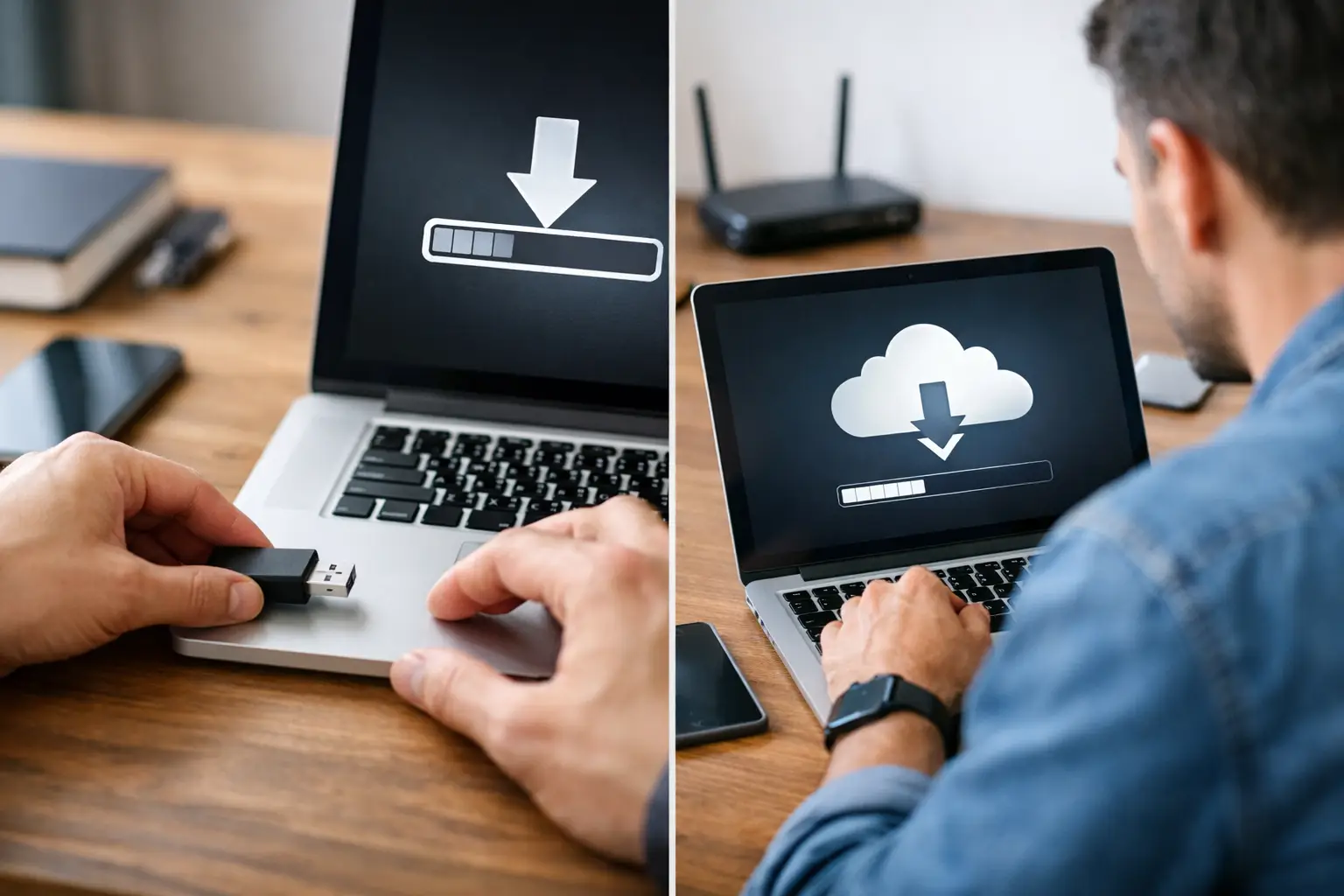
A missed driver card download rarely feels like a major problem at the time. Then the audit trail is incomplete, the transport office is chasing vehicles, and someone is trying to work out whether the issue is a one-off or the start of a wider compliance gap. That is where the real difference in manual downloads vs remote downloads shows up - not in theory, but in how much control you actually have day to day.
For UK fleet operators, tachograph data is not just another admin task. It sits close to operator licence protection, driver hours oversight and the practical running of the transport office. Choosing between manual and remote downloads affects how often data is collected, how much staff time is lost, and how quickly problems are spotted before they become infringements, missed downloads or awkward conversations with the Traffic Commissioner.
Manual downloads vs remote downloads: what changes in practice?
On paper, both methods achieve the same basic outcome. You collect tachograph data from driver cards and vehicle units, store it and use it for compliance checks. The difference is in how reliably that happens and how much effort sits behind it.
Manual downloads depend on process discipline. A driver card has to be physically downloaded at the right interval. Vehicle unit data also has to be retrieved on schedule. That means planning access to vehicles, co-ordinating drivers, using download devices correctly and making sure files are stored in the right place. If your operation runs from a single depot with predictable vehicle returns, that may sound manageable. In a busy fleet, it often becomes fragile very quickly.
Remote downloads remove the need to physically bring the vehicle or card to the office for routine data collection. Instead, files are pulled automatically through an approved system and stored centrally. The gain is not simply convenience. It is consistency. When downloads happen on schedule without someone having to remember, chase or interrupt operations, compliance becomes easier to control.
Why manual downloads create hidden pressure
Manual processes tend to look cheaper at first because the hardware cost appears lower and there is no monthly software line to compare. What gets missed is the labour behind the process.
Someone has to monitor due dates, contact drivers, arrange vehicle access, complete downloads, file the data and follow up when something is missing. If a lorry is away from base for days at a time or a driver changes vehicles regularly, the admin grows fast. It is not unusual for transport teams to rely on spreadsheets, diary reminders and last-minute chasing just to stay on top of the schedule.
That approach can work for a while, especially in very small fleets with stable routes. But the margin for error is narrow. Staff holidays, driver absence, depot delays and vehicle movements all interfere with the routine. Once a few downloads are late, the office is no longer managing compliance proactively. It is recovering from gaps.
There is also a visibility issue. Manual downloads give you data when you collect it, not necessarily when you need it. If a driver hours concern appears between download dates, you may not see it soon enough to prevent knock-on problems with planning, rest periods or infringement management.
Where remote downloads make the biggest difference
Remote downloads are most valuable when fleets need compliance control without constantly pulling vehicles back to base. That matters for national haulage, multi-depot fleets, mobile engineers, mixed HGV and van operations, and any business where drivers are not working to a neat office-centred routine.
The obvious benefit is time back for the transport team. Instead of spending hours collecting data, staff can focus on reviewing exceptions, dealing with genuine issues and planning work more effectively. The less obvious benefit is that compliance data becomes part of daily fleet management rather than a separate monthly chore.
When remote downloads sit within a wider platform, the value increases again. Driver hours, vehicle location, utilisation and maintenance prompts start to support each other. You are not just gathering files to satisfy a requirement. You are using current information to make better operational decisions.
That is especially useful where dispatch and compliance overlap. A planner can make a better call when they can see live hours and vehicle status, rather than discovering limits after the shift has already been built.
Cost is not just the subscription
The cost question comes up quickly in any discussion about manual downloads vs remote downloads, and rightly so. Operators want clear value, not another system charge.
Manual downloads may look less expensive because the direct software spend is lower. But that comparison is incomplete if it ignores office time, missed productivity, travel to vehicles, compliance fire-fighting and the risk of failed processes. A cheaper method on paper can become the more expensive option once the fleet grows or the operation becomes less predictable.
Remote downloads usually involve an ongoing subscription and installed equipment, but they can reduce the total operational cost of compliance. That is particularly true where one system also covers tracking, driver behaviour, reporting and reminders. Replacing separate tools and manual processes often matters more than comparing one line item against another.
This is where operators should be practical rather than ideological. If you run a handful of vehicles that return to the same yard every evening and your admin load is genuinely low, manual downloads may remain viable. If your fleet is moving constantly, your team is stretched, or you are relying on spreadsheets to hold the process together, remote downloads usually pay for themselves in control and time.
Compliance risk is where the trade-off becomes clear
The real issue is not whether manual downloads are possible. They are. The issue is whether they are dependable enough for the way your fleet actually works.
Remote systems reduce the number of points where people have to remember, chase or physically intervene. That lowers the chance of missed deadlines and missing files. It also creates a cleaner audit trail, which matters when you need to demonstrate proper management control.
Manual systems leave more room for inconsistency. A reader is misplaced, a vehicle is off site, a driver is unavailable, or a file is saved incorrectly. None of those issues are unusual. The problem is that they stack up. Compliance weakness often comes from ordinary disruption rather than major failure.
For transport managers, this is not just about avoiding penalties. It is about being able to show that the business has a repeatable, controlled process. That matters for internal accountability as much as external scrutiny.
Manual downloads vs remote downloads for growing fleets
Growth tends to expose weak processes. What felt manageable at ten vehicles starts to creak at twenty. By the time a fleet reaches thirty or forty assets across multiple drivers, depots or trailer movements, manual compliance admin can become a job in itself.
Remote downloads scale far more effectively because the process does not rely on one person physically touching each vehicle and card on schedule. It is a better fit for operators who want to expand without adding admin headcount every time the fleet increases.
It also helps standardise control across different sites. A depot manager in one location and a compliance lead in another can work from the same data set rather than exchanging files, emails and updates. That consistency is difficult to achieve when each site is handling downloads manually in its own way.
The best choice depends on how your operation behaves
There is no value in pretending one answer suits every fleet. Some smaller operators can manage manual downloads well, particularly when vehicles return to base reliably and one experienced person owns the process end to end. If that process is stable, documented and low risk, changing systems may not be urgent.
But many fleets have already outgrown manual downloads without fully admitting it. If drivers are hard to pin down, if download deadlines are tracked on spreadsheets, if the office spends too much time chasing data, or if compliance and fleet visibility sit in different systems, the process is already costing more than it appears.
That is why many operators move beyond a simple manual-versus-remote decision and look at the wider operating model. A platform such as Fleetalyse is not just about pulling tachograph files remotely. It is about reducing admin, improving visibility and giving transport teams one place to manage compliance and day-to-day fleet control.
The right system should make the job calmer, not more complicated. It should help you spot problems sooner, keep records in order and give planners and compliance staff the same version of the truth.
If your current process depends on people remembering every step at exactly the right time, it is worth asking a blunt question: is that really a system, or just hard work holding the gaps together? For most growing fleets, the answer tells you which side of the manual downloads vs remote downloads decision you are already on.