
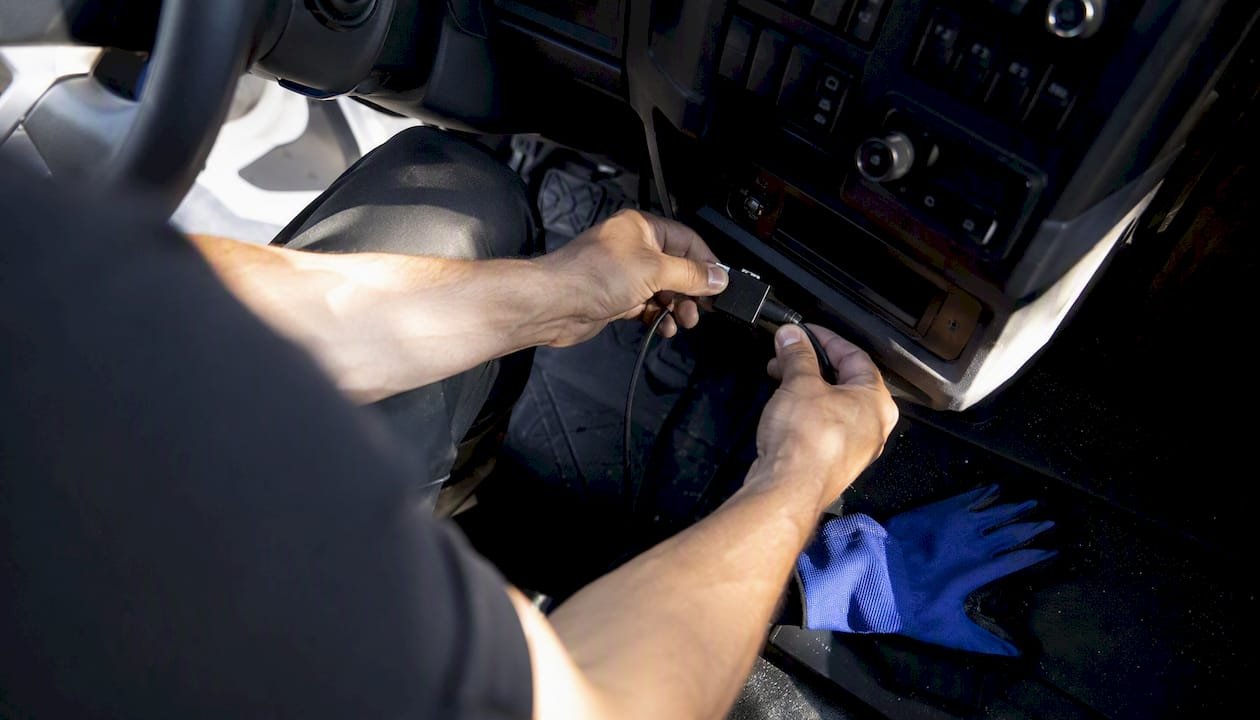
A driver management system for fleets that must prove safety and compliance
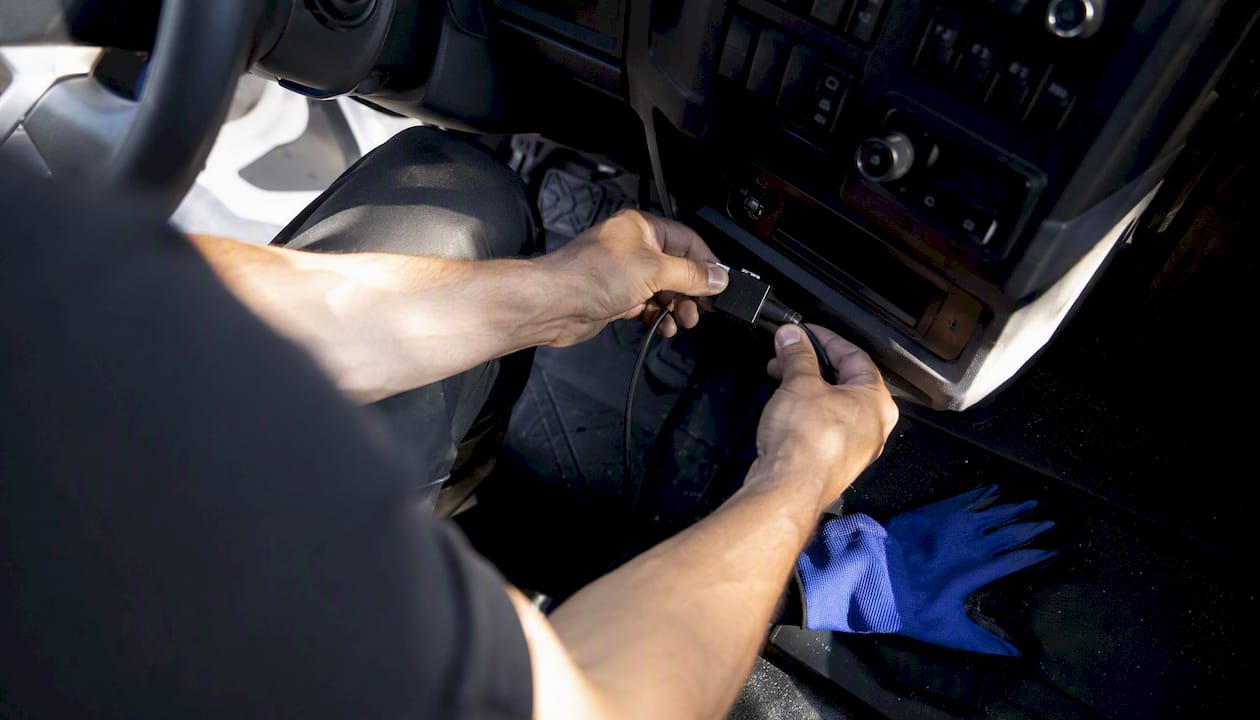
A driver management system (DMS) combines telematics, driver records and compliance software into one platform that tracks driver behaviour, hours and documentation. Get it right and you should see three outcomes: fewer collisions and lower risk exposure, simplified operator-licence compliance, and less admin time spent chasing paperwork. Before you shortlist anything, start with the core features below.
Key Takeaways
A driver management system reduces collisions, simplifies operator-licence compliance and cuts admin time by combining telematics, driver records and automated compliance alerts in one platform.
| Point | Details |
|---|---|
| Match features to risk | Prioritise tachograph and hours tools for HGVs, behaviour scoring for high-mileage vans. |
| Pilot before full rollout | Run a pilot of several weeks on representative vehicles before committing fleet-wide. |
| Check data ownership | Confirm hosting, encryption and export rights before signing any vendor contract. |
| Verify UK-based support | Local support and DVSA-specific expertise matter more than a longer feature list. |
| Fleetalyse for compliance-first fleets | Offers remote tachograph downloads, GPS tracking and driver behaviour monitoring built around UK regulatory requirements. |
Table of Contents
- What features make up a driver management system?
- What safety, compliance and cost benefits should you expect?
- How does a driver management system actually work?
- How do you choose the right driver management system?
- What does a realistic rollout timeline look like?
- What are the regulatory obligations behind driver management?
- Which fleet types gain the most from a driver management system?
- Get set up with Fleetalyse’s driver management tools
- Frequently asked questions
- Sources
What features make up a driver management system?
A driver management system is only as strong as the components it brings together. Most credible platforms combine the following:
- Telematics and GPS tracking — location, speed and route data captured from an in-vehicle unit.
- Driver behaviour monitoring — harsh braking, cornering and acceleration events scored against a risk profile.
- Driver profiles and document management — licences, medical certificates and training records in one place.
- Tachograph and driver-hours integration — automated downloads that flag infringements before they become a DVSA problem.
- Dashcams — event-triggered footage for incident investigation and insurance claims.
- Inspections and e-signatures — digital walkaround checks that replace paper defect sheets.
- Scheduling and messaging — shift allocation and two-way driver communication.
- Analytics and reporting — dashboards that turn raw events into decisions.
Each module solves a distinct problem. Behaviour monitoring, for instance, catches the driving style that leads to claims months before an incident happens; document management catches the expired licence before a driver gets behind the wheel.
Pro Tip: A small courier fleet rarely needs the full tachograph suite an HGV operator relies on. Match feature depth to your risk profile first, then to your fleet size. Buying for HGV compliance requirements when you run vans is money spent on features you’ll never open.
What safety, compliance and cost benefits should you expect?
The measurable gains tend to cluster around four areas:
- Fewer collisions through earlier identification of risky driving patterns.
- Simplified operator-licence compliance via automated hours monitoring and audit trails.
- Lower operating costs from reduced fuel waste and fewer avoidable claims.
- Better utilisation and punctuality through live visibility of vehicle location and driver status.
These aren’t universal guarantees. Outcomes vary by fleet size, existing driving standards and how consistently management acts on the data. G2 reviewers of fleet platforms consistently rank driver performance tracking and mobile tools among the features that matter most once a system is actually in use, not just at the sales demo. Analytics-focused platforms see similar feedback: G2 users cite reporting depth as a decisive factor when comparing systems. Safety managers tend to prioritise behaviour scoring, compliance officers focus on the audit trail, and operations teams want the punctuality data. A good DMS serves all three without forcing a compromise.
How does a driver management system actually work?
Data moves through a fairly consistent chain, whatever platform you use:
- In-vehicle sensors and the tachograph head unit capture speed, location, driving events and hours data.
- A plug-and-play telematics unit transmits that data over a mobile network.
- The cloud platform processes it into dashboards, alerts and historical reports.
- Managers and compliance staff act on flagged exceptions rather than trawling raw data.
The platform rarely works alone. Common integrations include your transport management system, payroll (for hours-based pay calculations), maintenance scheduling, remote tachograph downloads, and dashcam platforms that attach footage to specific driving events. McLeod Software’s driver management tools illustrate this well, pairing real-time dispatch coordination with a driver mobile app so drivers stay connected without a phone call for every update.
Pro Tip: Ask any vendor exactly where your data is hosted, who can access it, and what encryption standard protects it in transit. Role-based access matters more than most buyers realise. A dispatcher shouldn’t see the same compliance data as your Transport Manager.
How do you choose the right driver management system?
Work through a structured checklist rather than a feature wish list. Cover:
- Core functionality — does it match your actual fleet type (HGV, van, mixed, temperature-controlled)?
- Integrations — will it talk to your existing TMS, payroll and maintenance systems?
- Data access and export — can you extract your own records without a support ticket?
- Mobile driver tools — does the driver-facing app cover inspections, mileage and document uploads? Apps like Fleetio Go demonstrate the standard for mobile driver functionality most buyers now expect.
- Hardware options — plug-and-play units or professional fitting?
- Support and deployment model — UK-based support, or an overseas call centre reading from a script?
At the demo stage, push vendors on specifics: how do they handle licence checks, who owns the tachograph data, what’s the retention period, what SLA backs their support, and is that support genuinely UK-based? Capterra’s product listings for fleet platforms show centralised driver records and licence monitoring are now baseline expectations, not premium add-ons.
Pricing usually breaks down into three parts: the subscription fee (often per vehicle or per driver), hardware costs for GPS units and dashcams, and any implementation or onboarding fee. Our fleet compliance software features checklist walks through this in more depth if you’re building a formal tender.
What does a realistic rollout timeline look like?
Expect four phases rather than a single switch-on date:
- Discovery — mapping your fleet, drivers and existing systems (1-2 weeks).
- Pilot — a representative subset of vehicles running the system in parallel with existing processes (4-8 weeks).
- Wider rollout — full fleet deployment once the pilot proves out.
- Optimisation — refining alerts, thresholds and reports once real data accumulates.
For the pilot, choose vehicles and drivers that reflect your actual operation, not just the newest trucks. Set clear success metrics before you start and recruit a driver champion who can answer peer questions honestly.
The most common pitfalls are predictable: underestimating how long driver training actually takes, accepting poor-quality telematics installation because it was cheaper, and rolling out fleet-wide without managing the change with drivers directly. Driver Schedule’s own guidance on scheduling automation makes a similar point: consistent policy enforcement and recurring training drive sustained improvement far more than the software alone.

What are the regulatory obligations behind driver management?
Three areas sit at the centre of UK compliance: driver hours rules, operator licence responsibilities, and tachograph record-keeping obligations. None of these are optional, and DVSA enforcement doesn’t distinguish between a genuine oversight and negligence.
A capable DMS supports this directly:
- Automated licence and entitlement checks flag expired documents before a driver is dispatched, echoing the approach DriverHub takes to licence and medical-card verification.
- Document expiry alerts remove the manual tracking spreadsheet.
- Auditable records give you a defensible history if DVSA ever asks questions.
Pro Tip: Always confirm current rules directly against official DVSA and GOV.UK guidance rather than a vendor’s marketing page. If a compliance query is genuinely ambiguous, escalate to a transport lawyer or your Traffic Commissioner’s office rather than guessing. Our HGV driver compliance software guide covers operator-licence risk in more detail.
Which fleet types gain the most from a driver management system?
- HGV long-haul — automated tachograph compliance and hours monitoring.
- Last-mile delivery — punctuality data and route adherence.
- Temperature-controlled fleets — combined vehicle and cargo condition visibility.
- Multi-drop distribution — driver scheduling and real-time messaging.
- Mixed fleets — a single platform instead of separate tools per vehicle type.
Smaller operators needn’t adopt everything at once. Phased adoption, starting with tracking and hours monitoring before layering in behaviour scoring, keeps costs proportionate to fleet size.
Why safety and compliance should lead your selection decision
Every deployment Fleetalyse has supported confirms the same pattern: fleets that select for safety and compliance first, then layer efficiency features on top, get far more durable results than those chasing cost savings alone.
Get set up with Fleetalyse’s driver management tools
Fleetalyse brings remote tachograph downloads, GPS tracking, driver behaviour monitoring and automated compliance reporting into one platform built specifically around DVSA and Operator Licence requirements, not adapted from a generic logistics tool. That focus is the real difference: you’re not paying for features built for a different regulatory market and hoping they translate.
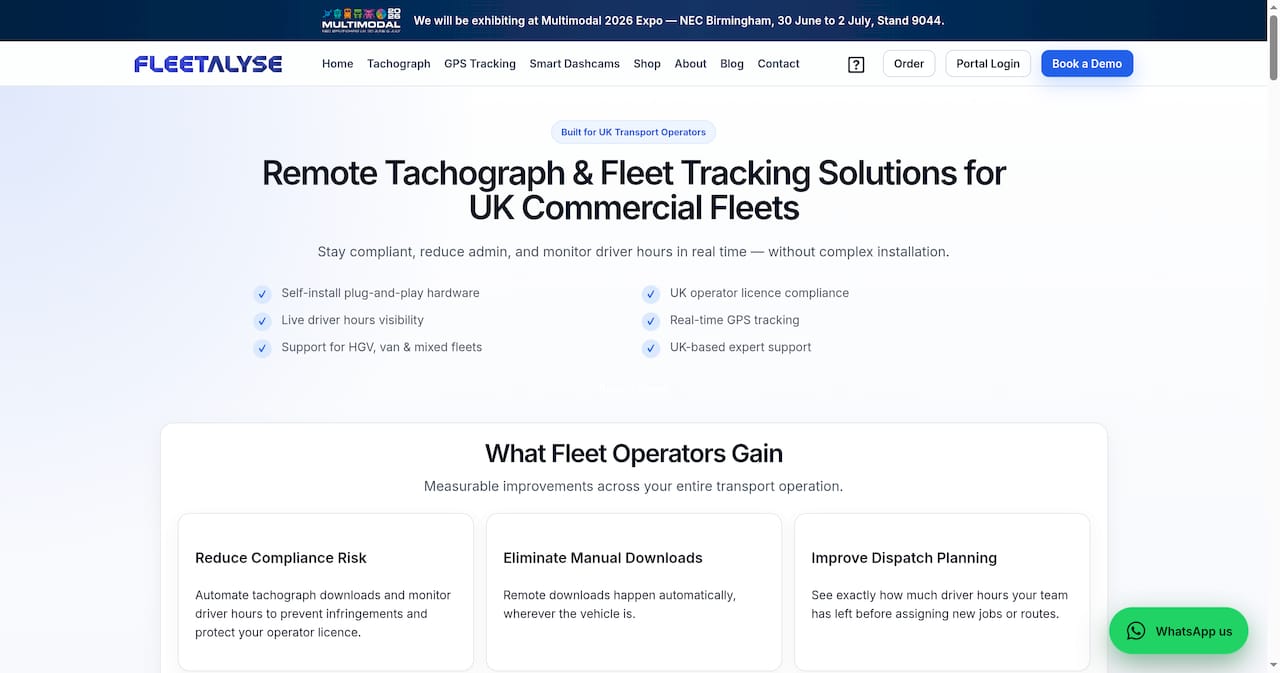
If driver risk is your immediate concern, start with driver behaviour monitoring to see how event scoring and coaching data work in practice. Running vans or trailers that need plug-and-play hardware without a professional fitter? Browse the unlocked GPS tracker range and get a device shipped without committing to a long contract first. Book a demo with our UK-based team and we’ll walk through your fleet’s specific compliance gaps before you commit to anything.
Frequently asked questions
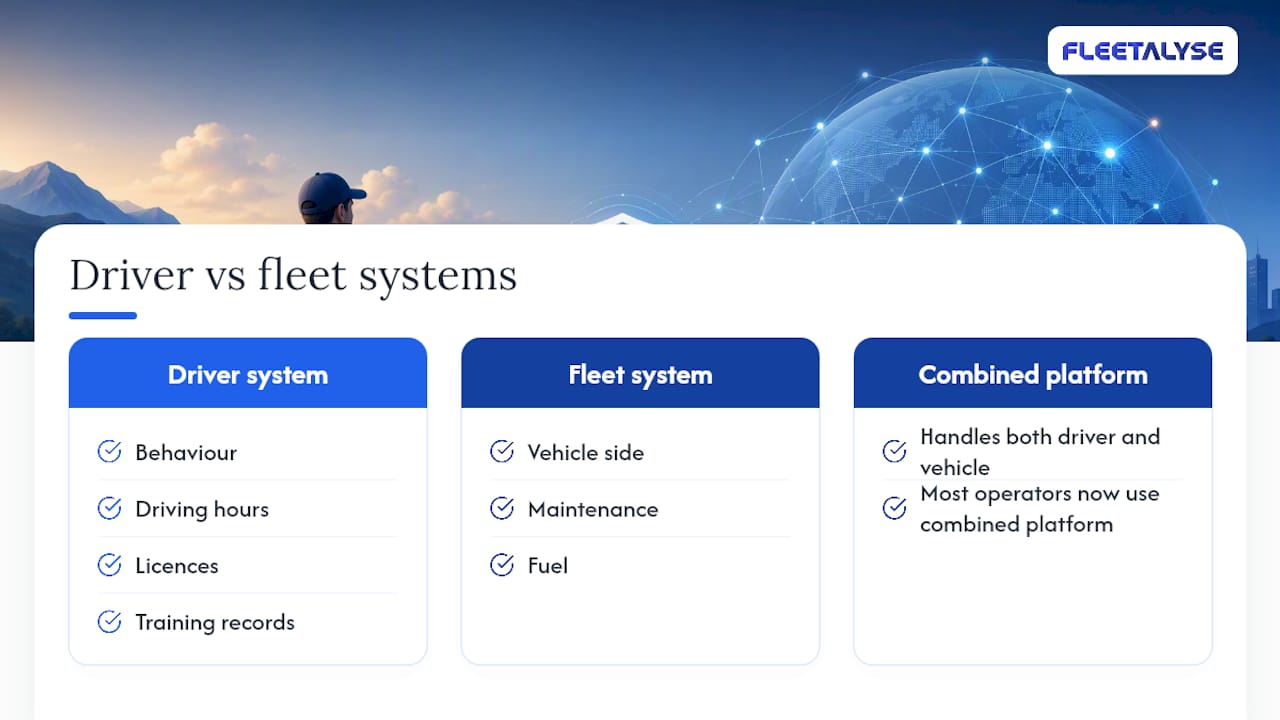
What is the difference between a driver management system and a fleet management system? A driver management system focuses specifically on the person behind the wheel: behaviour, hours, licences and training. Fleet management systems cover the vehicle side too, including maintenance and fuel. Most operators now use a combined platform that handles both.
Do small fleets need a full driver management system? Not immediately. A small operation can start with GPS tracking and hours monitoring, then add behaviour scoring and dashcams as the fleet grows or risk exposure increases.
How long does implementation typically take? Expect a pilot phase of four to eight weeks on a representative subset of vehicles, followed by wider rollout once success metrics are confirmed.
Does a driver management system replace manual tachograph checks? It automates the download and flags infringements, but responsibility for acting on those flags still sits with your Transport Manager. The system supports compliance; it doesn’t remove the legal obligation.