
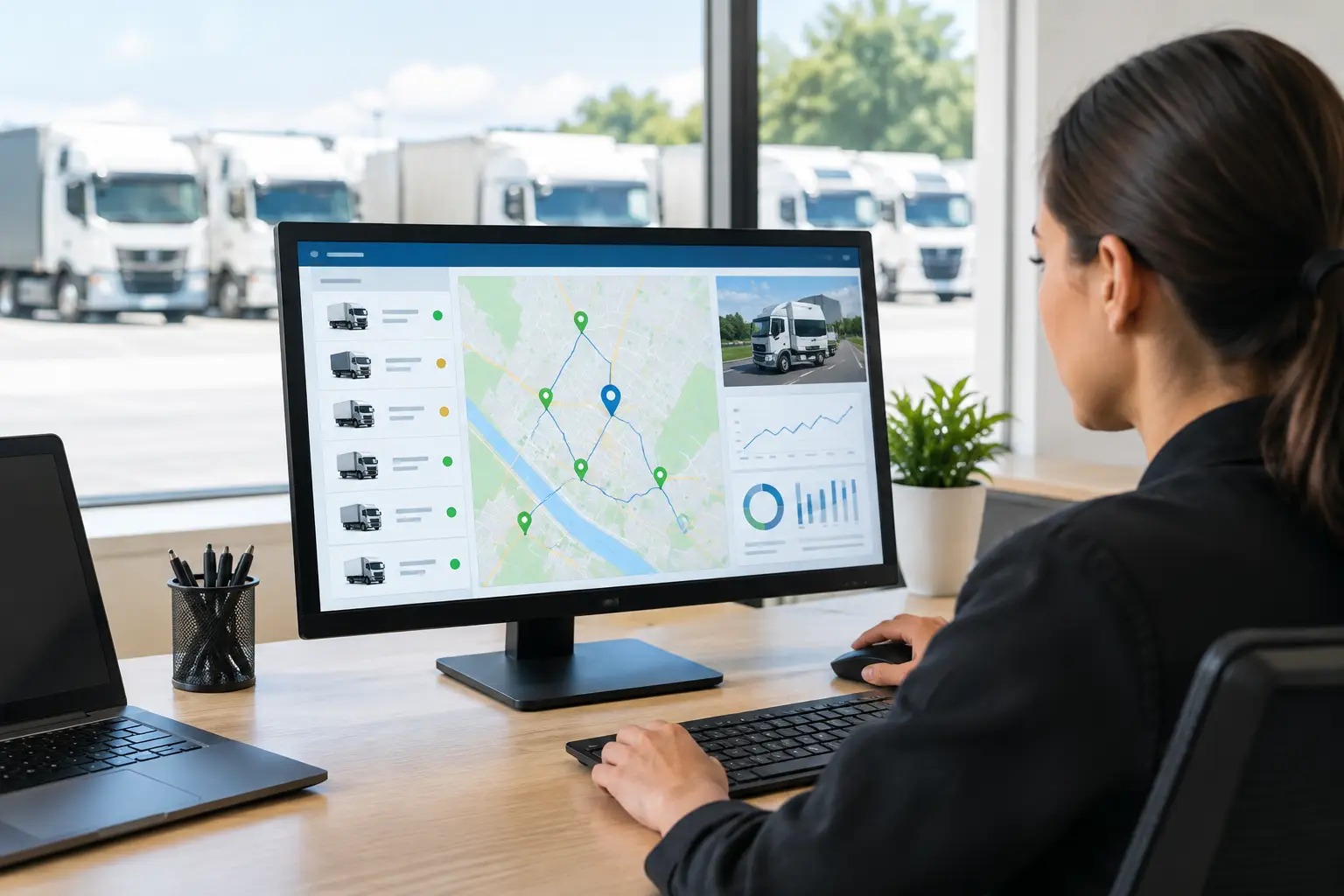
A transport office can lose hours each week to work that adds little value: chasing drivers for tachograph cards, downloading vehicle units, updating spreadsheets, checking who is due a break, and responding to calls asking where a vehicle or trailer is. Can telematics reduce admin? For UK fleet operators, it can - but only when the system brings the right operational and compliance data together rather than creating another dashboard to manage.
The objective is not to remove the transport manager from the process. It is to replace repetitive collection, rekeying and chasing with timely information that is ready to act on. That gives the team more time for exceptions, planning and the decisions that protect service levels and the operator licence.
Where fleet administration builds up
Admin rarely sits in one place. It builds across the working day and across different people. A planner may be checking vehicle locations, a compliance manager may be reviewing driver hours, and an administrator may be updating maintenance dates from a spreadsheet. If each task relies on separate systems, paper records or calls to drivers, the effort quickly multiplies.
Tachograph compliance is a clear example. Manual downloads mean arranging access to vehicles and driver cards, saving files correctly, confirming downloads have happened on time and reviewing data afterwards. When a driver is working away from base or a vehicle is on a long route, a straightforward task can become a chain of reminders.
The same is true of utilisation, fuel and maintenance reporting. The information may exist, but if someone has to extract it from several sources before it becomes useful, reporting is still a manual job. Operators often end up maintaining parallel records simply because they do not trust that one source tells the full story.
How telematics reduces admin in practice
Telematics is most effective when it captures data once and makes it useful across the operation. Live GPS tracking can support dispatch decisions, driver behaviour data can inform coaching, and vehicle data can flag issues before they become a workshop disruption. For regulated fleets, tachograph information and driver hours status should sit alongside that operational view.
Remote downloads remove routine chasing
Remote tachograph downloads are one of the most direct ways to cut administration. Instead of bringing vehicles back to base or relying on a driver to hand over a card, data can be collected remotely to a schedule. The compliance team can see whether downloads have completed and focus on missed or failed downloads rather than checking every vehicle manually.
That does not remove the need for proper review and record keeping. It does, however, reduce the time spent coordinating the basic transfer of files. For fleets with multiple depots, travelling drivers or vehicles operating across the UK, this is often where the saving is felt first.
Live driver hours make planning quicker
Dispatch teams need more than a historical report. Before allocating a late collection or an additional run, they need to know whether the driver has available working time and what breaks or rests are approaching.
Live driver hours monitoring gives planners a clearer picture before they make the decision. It can reduce calls to drivers, prevent avoidable plan changes and help the team identify potential issues earlier in the shift. The benefit is not simply faster planning. It is a better audit trail for decisions that affect compliance.
There is a practical limit: live hours information supports planning but should not be treated as a substitute for management judgement. Drivers may have manual entries, unforeseen delays or other factors that require confirmation. The point is to give the planner a reliable starting position instead of asking them to work from assumptions.
One record reduces spreadsheet duplication
Spreadsheets have a role in many transport businesses, particularly for bespoke analysis. The problem begins when a spreadsheet becomes the main system for tracking vehicle status, maintenance dates, driver issues and compliance actions. It depends on someone entering accurate data every day, and it is difficult to know which version is current.
An integrated telematics platform can provide a shared operational record. Vehicle positions, trailer movements, mileage, driving events, driver hours and scheduled reminders can be viewed from the same place. This reduces duplicate entry and makes it easier for different teams to work from consistent information.
For example, a transport manager can review a maintenance reminder against actual vehicle use rather than relying only on a diary date. A planner can check whether an underused vehicle is nearby before arranging a subcontractor. A compliance manager can investigate an exception without first finding the relevant file in a separate system.
Automated alerts turn checks into exceptions
The biggest administrative gain is often not a report. It is an alert that prevents someone having to check a long list of normal activity.
Mileage-based maintenance reminders, geofence alerts, overdue tachograph downloads and driver-hours exceptions can bring attention to work that needs action. Instead of opening several reports to find a problem, the team can work through a defined set of exceptions.
Alerts need sensible configuration. Too many notifications simply move the workload into an inbox, and broad thresholds can create false alarms. Start with the events that carry genuine operational or compliance risk, agree who owns each action, then refine settings as the team learns what is useful.
The wider impact on compliance and control
Reducing admin is valuable, but the larger benefit is control. An operator licence depends on effective systems, evidence and timely action. If critical information is late, fragmented or difficult to retrieve, even a conscientious team can miss an emerging issue.
Connected data makes routine oversight easier to demonstrate. Remote download records show that data has been collected. Driver-hours reporting helps identify potential infringements for review. Vehicle and trailer tracking provides visibility when assets are away from base. Maintenance reminders support a more disciplined approach to planned work.
This is particularly useful in mixed fleets. Vans, HGVs and trailers do not all carry the same regulatory requirements, but they still need to be planned, located and maintained. A single platform avoids forcing the office to swap between a basic tracking system for vans, a separate tachograph process for HGVs and a paper-based trailer register.
Fuel and driver behaviour information can also reduce the administration around cost control. Excessive idling, harsh events and unnecessary mileage are easier to identify when reports are based on captured data rather than subjective feedback. Managers can have a more focused conversation with the driver and record the outcome without spending hours building the case first.
What telematics will not fix on its own
Telematics will not correct poor processes simply by being installed. If responsibilities are unclear, alerts are ignored or drivers have not been shown why a system is being used, the platform can add frustration rather than remove it.
Data quality matters too. Driver identification must be accurate, vehicle records need to be kept current and compliance procedures still need clear ownership. A system can highlight a missed download or an approaching rest, but someone must decide and document the appropriate action.
Implementation should therefore begin with the pressure points. Identify the tasks that consume the most time, whether that is remote downloads, daily location calls, weekly reporting or maintenance tracking. Then agree the workflow that will replace them. The best result is usually a simpler process, not a digital version of every old spreadsheet.
Hardware and commercial terms also matter. Complex installations can delay rollout and create unnecessary cost, especially across dispersed fleets. Plug-and-play devices, clear monthly pricing and a platform designed for UK operator requirements make it easier to introduce telematics without turning the project itself into another administrative burden.
Fleetalyse brings vehicle tracking, smart dashcams, tachograph compliance, driver-hours visibility and reporting into one platform, helping operators manage the everyday work without stitching together disconnected systems.
Start by measuring the work you want to remove
Before choosing features, track how much time the team spends on recurring fleet administration over a typical week. Include manual downloads, calls for vehicle updates, report preparation, spreadsheet updates and maintenance checks. That creates a realistic baseline and makes it easier to assess whether the system is delivering a return.
Then set practical measures: fewer overdue downloads, less time spent preparing weekly reports, fewer calls to locate assets and faster action on driver-hours exceptions. These measures connect telematics to the work that matters to a transport operation, rather than judging it by how many maps or reports the platform can produce.
The useful question is not whether telematics can generate more data. It is whether your team can finish the day with fewer routine checks, clearer evidence and more time to run the fleet properly.