
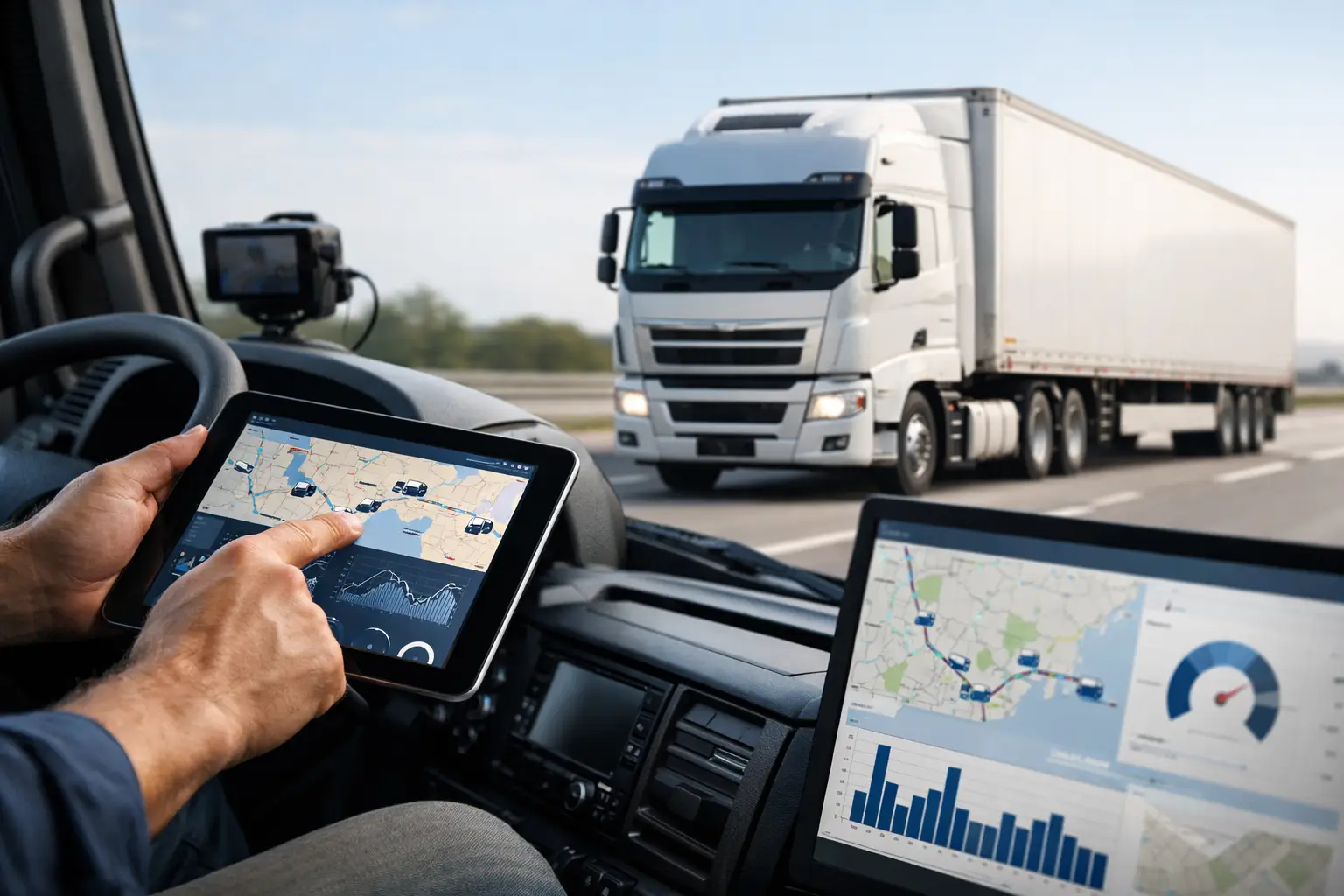
A missed driver card download, an unexpected vehicle defect or a lorry sitting idle at the wrong depot can quickly become more than a minor operational irritation. It creates extra calls, spreadsheet work and avoidable compliance risk. Telematics for haulage gives transport teams a clearer, live view of what is happening across vehicles, drivers and trailers, so decisions can be made before small issues disrupt the day.
For UK operators, the value is not simply knowing where a vehicle is. The real benefit comes from bringing location, tachograph information, driver behaviour, maintenance status and utilisation into one practical operating picture. That means less chasing information and more control over the work that protects an operator licence and keeps loads moving.
What telematics for haulage should do
Basic tracking can show a dot on a map. That is useful for customer updates and dispatch, but it only solves one part of the transport manager's job. A haulage operation needs to understand whether a driver has enough available time for the next job, whether a vehicle is being used efficiently, and whether looming maintenance or compliance tasks have been dealt with.
A suitable system should turn raw vehicle data into information that is useful at depot level. Live vehicle and trailer tracking helps planners allocate work based on the actual position of assets, not an assumption made earlier in the day. Geofences can confirm arrivals and departures from customer sites, depots and yards without relying on drivers to make a call at every stop.
Remote tachograph downloads and live driver hours monitoring bring the compliance position closer to real time. Instead of waiting for a manual download cycle to reveal missing data or potential infringements, transport teams can spot issues earlier and take action while there is still time to adjust a plan.
This matters because haulage is rarely static. Delays at a customer site, traffic diversions, last-minute collections and vehicle swaps all affect the day's plan. Telematics gives dispatchers evidence to work from when those changes happen.
The operational problems it solves
The strongest case for telematics is usually found in the repetitive jobs that consume time every week. A fleet may have tracking from one supplier, tachograph downloads from another and maintenance dates held in a spreadsheet. Each system may work in isolation, but the team still has to join the information together manually.
An integrated platform reduces that fragmentation. A transport manager can review driver hours, vehicle locations, mileage and upcoming service requirements from the same place. The result is not that every decision becomes automatic. It is that the person responsible has the facts available quickly enough to make a sound decision.
Better dispatch decisions
Dispatch planning based on a planned route or a driver’s reported location can fall apart quickly. Live tracking shows where the vehicle actually is, whether it is moving, stationary or delayed, and which trailer is attached where trailer tracking is in use.
That visibility supports more accurate ETAs and reduces unnecessary calls to drivers. It can also prevent an avoidable mistake, such as assigning a collection to a vehicle that is already committed elsewhere or has insufficient driving time remaining.
There is a trade-off. Live data is only valuable if planners use it to improve decisions rather than to monitor every movement without purpose. Set clear processes around exceptions: late arrivals, unauthorised stops, extended idling, route deviations and jobs at risk. This keeps attention on the situations where action is needed.
Stronger tachograph compliance control
Manual tachograph downloading is easy to postpone during busy periods. Cards get missed, vehicles are away from base and files may sit in different folders before someone reviews them. That creates unnecessary exposure when an operator needs to demonstrate control over drivers’ hours and working time records.
Remote downloads remove much of that handling. Driver card and vehicle unit files can be collected on a planned schedule, while live driver hours data gives managers a clearer view of available driving, breaks and rest requirements during the working day.
Live hours should support, not replace, professional judgement. A driver’s actual duties, unexpected delays and the rules that apply to a particular journey still need to be considered. However, seeing potential issues before allocating the next task is much safer than discovering them after the shift has ended.
Lower fuel waste and better driving standards
Fuel is one of the largest controllable costs in a haulage fleet. Telematics can identify behaviours linked to unnecessary consumption, including excessive idling, harsh acceleration, speeding and poor route adherence. It can also show whether a vehicle is spending too much time stationary with the engine running.
The purpose should be coaching, not simply producing league tables. A driver behaviour score can highlight patterns, but it does not always explain them. A harsh braking event may result from traffic conditions, a poorly designed site entrance or another road user. Reviewing trends alongside route type, load profile and driver feedback leads to fairer conversations and better outcomes.
Smart dashcam footage can add useful context where safety events occur. Used proportionately, it helps managers investigate incidents, support drivers when they are not at fault and identify training needs based on real events rather than assumptions.
More useful vehicles and trailers
A lorry that is available but underused costs money. So does a trailer that cannot be located when a planner needs it. Tracking utilisation across vehicles and trailers helps operators understand whether assets are earning their keep, sitting idle or being moved inefficiently between sites.
This is especially valuable for mixed fleets. Vans, HGVs, plant and trailers do not all have the same operating pattern, but the same questions apply: where is the asset, who is using it, how much is it being used and what is due next?
Over time, utilisation reporting can inform larger decisions about fleet size, replacement cycles and depot allocation. It may show that the business needs another asset in one area, or that it can avoid adding one by planning existing capacity more effectively.
Choosing a system that works in the real world
The right platform depends on fleet size, vehicle type and the level of compliance responsibility within the business. A local operator with a small number of lorries may prioritise simple installation, remote downloads and clear alerts. A larger multi-depot fleet may need detailed reporting, trailer visibility and controls that support several managers and dispatch teams.
Avoid choosing solely on the size of the tracking feature list. Ask how the system handles day-to-day tasks. Can the team see driver hours without opening separate software? Are tachograph files downloaded remotely and stored in an organised way? Can maintenance reminders be linked to mileage, time and vehicle status? Is pricing clear, including hardware, data and contract terms?
Installation matters too. Complex fitting programmes can take vehicles off the road and delay rollout. Plug-and-play hardware is often a practical option for operators that need faster deployment with less disruption, provided it delivers the required data quality and is appropriate for the vehicle type.
Fleetalyse is built around this joined-up operational view, combining telematics, vehicle and trailer tracking, smart dashcam capability and tachograph compliance tools in one platform for UK commercial fleets.
Turning data into routine control
Telematics delivers the best return when it becomes part of the working rhythm of the transport office. The morning check might focus on driver availability, vehicles due for maintenance, unresolved defects and jobs at risk. During the day, dispatchers can use live status to manage exceptions. At the end of the week, managers can review utilisation, fuel-related behaviour and compliance trends.
Keep reporting focused. A report that produces ten pages of figures but no action is not helping anyone. Start with a small set of measures that match the operation’s priorities: missed downloads, driving time availability, idling, on-time arrival performance, defect completion and vehicle use. Once the team has confidence in those measures, expand where needed.
Driver communication is equally important. Explain what the system records, why the business uses it and how the information will be handled. When drivers can see that telematics helps prevent unrealistic job allocations, provides evidence after incidents and supports fair coaching, it is more likely to be accepted as a working tool rather than surveillance.
The goal is straightforward: fewer blind spots. When your team can see the compliance position, the location of each asset and the pressures building across the day, haulage management becomes less reactive. Start with the recurring problem that causes the most admin or risk, then use the data to build a more controlled operation around it.