
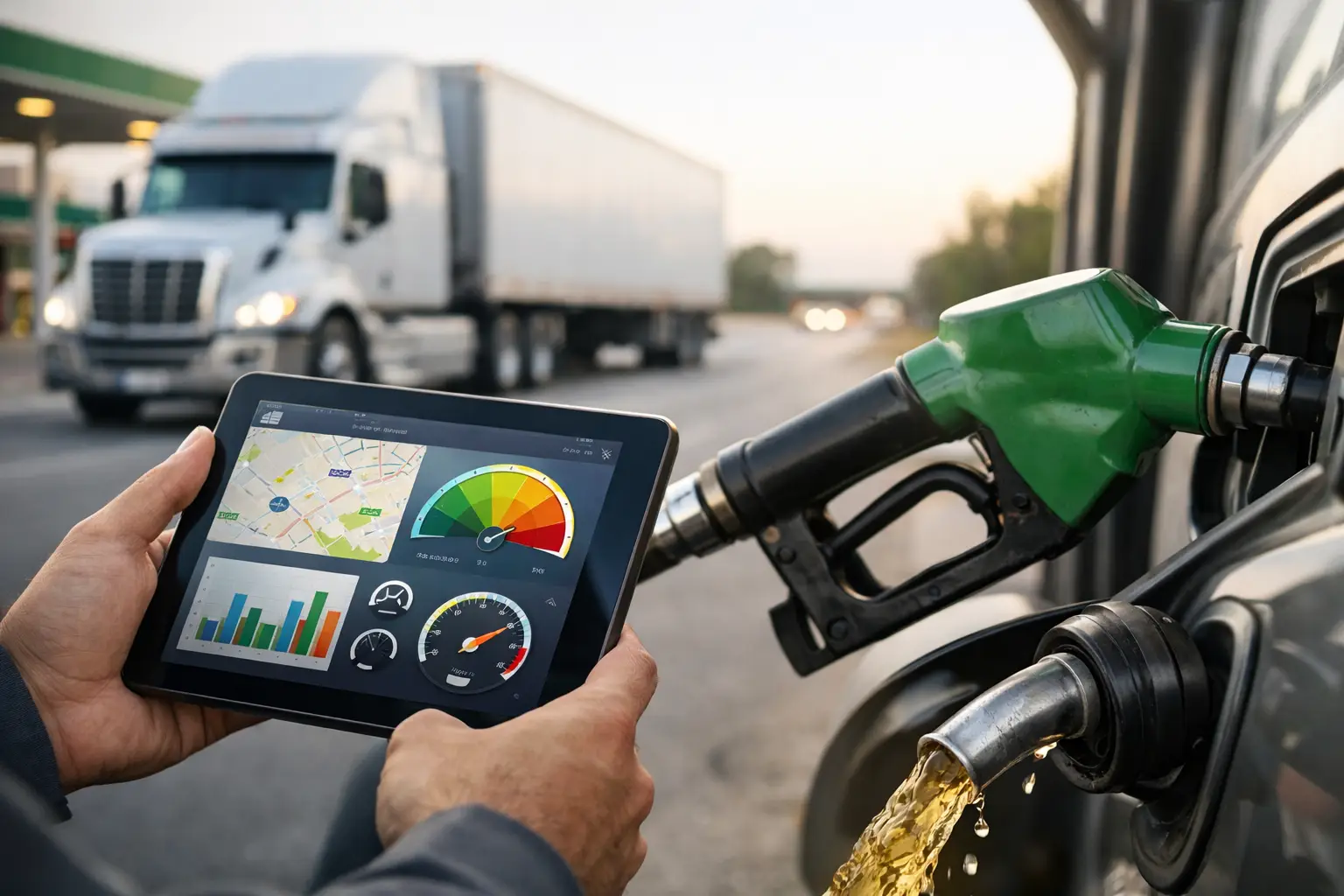
Fuel spend rarely creeps up because of one dramatic problem. More often, it leaks away through daily habits - engines left idling in yards, avoidable detours, harsh acceleration in traffic, poorly planned allocations, and vehicles running half-used. That is why the question can telematics reduce fuel waste matters so much for UK fleet operators. The short answer is yes, but only when the data is tied to clear action across drivers, planners and fleet managers.
Can telematics reduce fuel waste in real operations?
Telematics can reduce fuel waste because it shows where waste is happening at vehicle, driver and route level. Without that visibility, transport teams tend to rely on fuel card totals, driver feedback and end-of-month reports. Those figures tell you what has been spent, but not why it was spent.
A telematics platform changes that by connecting location data, vehicle activity and driver behaviour into one view. You can see how long a vehicle is idling, whether certain routes create repeated delays, which drivers brake and accelerate aggressively, and whether some assets are doing work that could be handled more efficiently elsewhere in the fleet. That matters because fuel waste is usually operational, not just mechanical.
The important point is that telematics does not reduce fuel use by itself. The savings come from what your team changes after the data highlights the problem. If no one acts on idling alerts, route exceptions or driver behaviour reports, the technology becomes another dashboard that gets checked occasionally and ignored the rest of the time.
Where fuel waste usually starts
For most fleets, the biggest sources of waste are not hard to recognise once they are measured properly. Idling is a common example. A few minutes here and there at customer sites, depots or roadside stops can add up quickly across a mixed fleet. In winter, some drivers may leave engines running for comfort. In urban delivery work, repeated stop-start activity can make the problem worse.
Driving style is another major factor. Harsh acceleration, heavy braking and speeding all increase fuel consumption. They also tend to go hand in hand with higher wear on tyres and brakes, so the cost is not limited to diesel. If you are managing HGVs, vans and trailers across multiple depots, these habits can be difficult to spot without automated reporting.
Then there is planning. Poor route choice, congestion exposure, unnecessary mileage and weak vehicle allocation all contribute to wasted fuel. A vehicle sent from the wrong depot, or a van dispatched for work better suited to another asset, may still complete the job, but not at the lowest cost. Telematics helps by showing what is happening on the road and how well each asset is being used.
The telematics data that actually helps
Not every telematics metric deserves equal attention. If the aim is lower fuel waste, transport managers should focus on the measures that point to operational change.
Idling time is one of the clearest. If a vehicle spends long periods stationary with the engine running, there is an immediate opportunity to cut waste. Looking at idling by vehicle, depot, route or driver can reveal whether the issue is behavioural or process-led. For example, a driver may idle because they are waiting at a site with poor turnaround times. In that case, the fix is not only driver coaching. It may also be a customer service or scheduling issue.
Driver behaviour data is equally useful when it is handled properly. Harsh acceleration, speeding and heavy braking should not be used simply to blame drivers. They should be used to identify patterns, compare routes, and support coaching that is fair and specific. Some routes naturally produce more braking events than others. The data needs context.
Vehicle utilisation matters too. If some assets are overworked while others sit underused, the result can be inefficient scheduling and unnecessary mileage. Better visibility helps planners match the right vehicle to the right task and avoid fuel-heavy movements that add no real value.
Why routing alone is not the full answer
It is tempting to think fuel waste is mainly a routing problem. Better route planning does help, particularly for multi-drop operations and time-sensitive work, but it is only one part of the picture.
A technically shorter route is not always the most efficient one. Road type, traffic patterns, delivery windows, low emission zones, vehicle size restrictions and customer waiting times all affect fuel performance. Telematics helps because it shows what happened in practice, not what looked best on paper.
This is especially useful for mixed fleets. A route that suits a small van may be poor for an HGV, and a vehicle allocated purely on availability may create avoidable fuel cost. Historical journey data can help planners challenge assumptions and build more realistic dispatch decisions.
Driver behaviour and fuel waste
Most transport managers already know driving style affects fuel use. The challenge is proving it consistently and addressing it without creating friction.
Telematics gives you a fairer basis for those conversations. Instead of general reminders to drive more efficiently, you can show trends over time. One driver may have excessive idling on early starts. Another may be using too much throttle on motorway joins. A third may be performing well on fuel but losing time through route deviation. That level of detail allows coaching to be practical rather than vague.
It also helps avoid a common mistake - treating every driver the same. Some need support, some need accountability, and some can be used as internal benchmarks. The best results usually come when fuel efficiency is part of a wider performance discussion that includes safety, maintenance impact and schedule adherence.
Fuel reporting is useful, but live visibility is better
Monthly fuel reports can show that costs have risen, but they rarely help you correct the problem quickly. By the time the report lands, the waste has already happened.
Live telematics visibility gives operators a chance to intervene sooner. If a vehicle is idling heavily, running off route or spending too long at a location, the issue can be reviewed while it is still operationally relevant. That matters for dispatch teams as much as fleet managers. Better decisions on the day often have more impact than better analysis at month end.
This is where integrated platforms are stronger than disconnected tools. If tracking, driver behaviour and compliance data all sit in different systems, it becomes harder to see the full picture. A transport team should not have to patch together spreadsheets to understand why fuel use is rising.
The limits of telematics
Telematics is not a cure-all. If fuel waste is being driven by poor vehicle maintenance, incorrect tyre pressures, unsuitable vehicles for the work, or long-standing customer delays, the data will only expose the issue. It will not solve it on its own.
There is also a risk of chasing the wrong target. Cutting idling sounds sensible, but some idling is operationally necessary. Driver league tables can be useful, but if they are too simplistic they can damage trust and encourage gaming. The aim should be better control, not surveillance for its own sake.
It also depends on implementation. If devices are hard to install, reports are inconsistent, or teams do not know which measures matter, the platform may create more admin instead of less. For operators already managing tachograph compliance, maintenance deadlines and day-to-day planning pressure, any system has to support the job rather than complicate it.
What good results look like
When telematics is used well, fuel savings usually come from a combination of smaller improvements rather than one dramatic change. Idling falls. Driver habits improve. Routing becomes more realistic. Asset allocation gets tighter. Unnecessary mileage is identified earlier. Those gains compound across a fleet.
For UK operators, the wider benefit is control. Lower fuel waste is valuable in its own right, but so is having one reliable view of vehicle activity, driver performance and fleet utilisation. That makes it easier to plan work, challenge avoidable cost and respond quickly when performance starts slipping.
A platform built for everyday transport operations will usually outperform a generic tracking tool here. If telematics sits alongside compliance, live vehicle visibility and reporting that dispatch and transport teams can actually use, it becomes part of how the fleet is run rather than an extra layer of software. That is the difference between collecting data and improving margins.
Fleet operators do not need more reports for the sake of it. They need clear evidence of where fuel is being wasted and a practical way to act on it. Telematics can provide that, and when it is implemented properly, the savings tend to show up not just at the pump but across planning, maintenance and day-to-day operational discipline.
If fuel spend feels unpredictable, that is usually a sign the operation needs better visibility rather than more guesswork.