
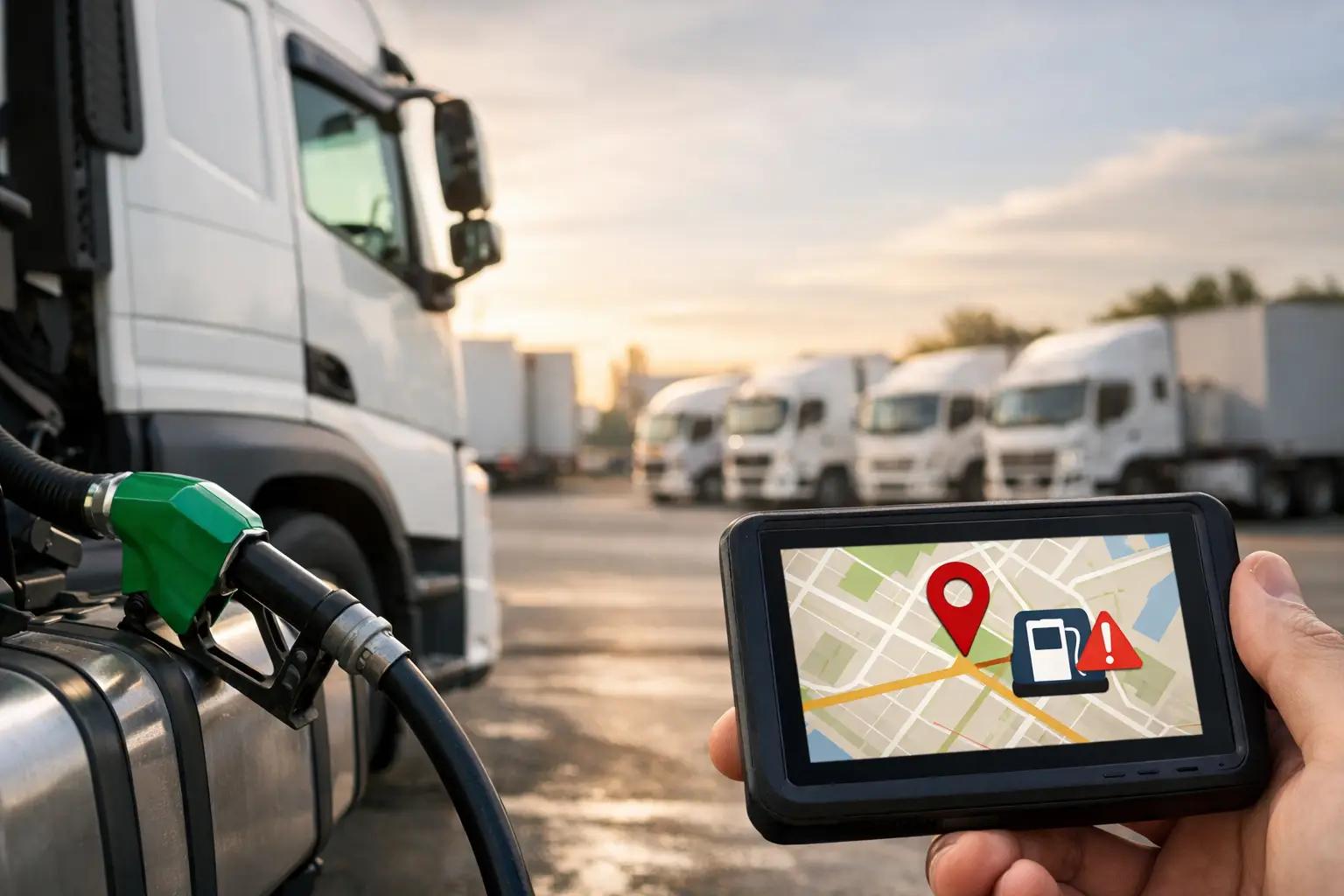
A fuel tank can lose 80 litres overnight and still leave a transport manager with more questions than answers. Was it theft, an unrecorded refuel, a faulty sender or simply a vehicle parked on uneven ground? Fuel theft detection telematics gives fleet teams the evidence to investigate quickly, rather than relying on a driver’s estimate or a month-end fuel report.
For UK operators, fuel is not just a significant operating cost. Unexplained fuel losses disrupt route planning, create difficult conversations with drivers and can hide wider control issues across depots, parking locations and subcontracted work. The right telematics data will not stop every incident, but it will make abnormal fuel activity visible while there is still time to act.
What fuel theft detection telematics should show
Fuel theft detection works by combining vehicle location, ignition status, journey activity and fuel-level information. The platform looks for a significant fall in fuel level when the vehicle is stationary, its ignition is off or there is no legitimate reason for fuel consumption.
A useful alert needs context. A lorry parked at an authorised depot may show a small fluctuation in tank level as fuel temperature changes or the vehicle settles after loading. That is not the same as a rapid drop of 100 litres at 02:15 in an unsecured lay-by. The latter should be visible alongside the vehicle’s exact location, stop duration and status.
At a practical level, transport managers should expect to see when the loss occurred, the estimated volume involved, where the vehicle was parked and whether the engine was running. This turns a vague report of missing fuel into an operational record that can be checked against fuel-card transactions, driver duties and site access information.
Fuel data is useful, but it is not always perfect
No fuel monitoring method should be treated as automatic proof of theft. Standard vehicle fuel-level data can be affected by tank shape, vehicle angle, sensor accuracy and normal movement of fuel in the tank. This is particularly relevant for vehicles operating on uneven sites or making frequent deliveries.
That does not make the data ineffective. It means alerts need sensible rules and a clear investigation process. A platform configured to flag a large, sustained drop while stationary is far more valuable than one that sends an alert for every minor change. The aim is to reduce false alarms without overlooking genuine losses.
Where fuel losses are a repeated concern, operators may need more precise tank monitoring or additional physical measures. Locking fuel caps, secure parking arrangements and depot CCTV still have a role. Telematics provides the time, location and pattern behind the event, allowing those measures to be targeted where they will make a difference.
How to set up fuel theft alerts that teams will use
The best alert is one that leads to a consistent action. If notifications are too sensitive, depot teams soon ignore them. If thresholds are too high, a theft may only be discovered after a substantial loss. The right setting depends on tank capacity, normal fuel use, vehicle type and operating environment.
Start by reviewing a few weeks of normal fuel behaviour. Look at overnight parking, depot idling, trunking work and vehicles that operate on construction or rural sites. A 20-litre change may be significant for a van but irrelevant for an articulated unit with a large tank. Set thresholds by vehicle group where possible, rather than applying one rule across a mixed fleet.
Alerts should also be tied to operating conditions. A significant fuel-level fall with the ignition off is usually more relevant than one during a journey. It can also be useful to prioritise out-of-hours activity, unauthorised stops and known high-risk parking locations.
Give one named person or role responsibility for checking serious alerts. They should compare the event with the driver’s schedule, fuel purchase records and the planned route, then record the outcome. That discipline matters. Without it, a useful telematics feature becomes another notification in an already busy inbox.
Investigate a suspected loss with evidence, not assumptions
When an alert is raised, the first step is to protect the facts. Check the route replay and vehicle position around the reported time. Confirm whether the ignition was on, whether the vehicle moved, how long it was stopped and whether a refuel was recorded nearby.
Speak with the driver promptly and professionally. There may be a straightforward explanation, such as a fuel transaction that has not yet appeared in the reporting feed, maintenance work or a fuel-level fluctuation after parking on a slope. Starting with evidence avoids unfair accusations and supports a better working relationship with drivers.
If the loss remains unexplained, keep a simple incident record containing the date, location, estimated volume, relevant telematics screenshots and the actions taken. Repeated incidents at the same location can justify a change to parking policy. Repeated incidents on one vehicle may point to a physical vulnerability, a calibration issue or a pattern requiring closer investigation.
This approach also gives owners and senior managers a clearer picture of exposure. One isolated event may be unfortunate. Regular small losses across several vehicles can have a far greater impact on margin than a single headline incident.
Use fuel data to find waste as well as theft
The same visibility used to identify theft can highlight avoidable fuel spend. Excessive idling, long diversions, inefficient route choices and persistent out-of-hours vehicle use all affect fuel consumption. These issues are not fuel theft, but they deserve the same level of attention because they increase cost and reduce control.
Fuel reporting is most useful when it is considered alongside driver behaviour and vehicle activity. A vehicle with high consumption may be travelling further than planned, spending too long stationary with the engine running or carrying out work that has not been captured in the schedule. Looking at one metric in isolation rarely tells the whole story.
For mixed fleets, compare like with like. A refrigerated vehicle, a tipper working on site and a long-distance tractor unit will not have the same fuel profile. Grouping vehicles by job type and operating conditions makes exceptions easier to identify and prevents misleading comparisons.
Fleetalyse brings tracking, driver activity, fuel reporting and compliance information into one operational platform, helping transport teams check fuel events against the work the vehicle was actually carrying out. That reduces the time spent moving between spreadsheets, tracker portals and manual records.
Build fuel security into everyday fleet control
Telematics is strongest when it supports a wider operating routine. Review overnight parking locations, brief drivers on reporting suspected siphoning, check that fuel-cap security is suitable for the vehicles in service and make sure alert ownership is clear across transport and depot teams.
It is also worth reviewing what happens after an incident. If a vehicle is repeatedly parked in an exposed location because of delivery schedules or driver-hours constraints, the answer may be better planning rather than another warning message. Live vehicle visibility and driver-hours information can help dispatch teams direct drivers towards safer, suitable stopping points before the end of a shift.
There is a trade-off between alert sensitivity and workload. More alerts may catch smaller anomalies, but they create more checks. Fewer alerts save time, but risk missing early signs of a problem. Review thresholds after the first month and adjust them using real fleet data, not assumptions.
Fuel theft is rarely solved by one device or one policy. The practical advantage of telematics is that it replaces uncertainty with a reliable timeline of what happened, where it happened and what the vehicle was doing. Used consistently, that gives your team a better basis for protecting fuel spend, supporting drivers fairly and tightening control across the fleet.