
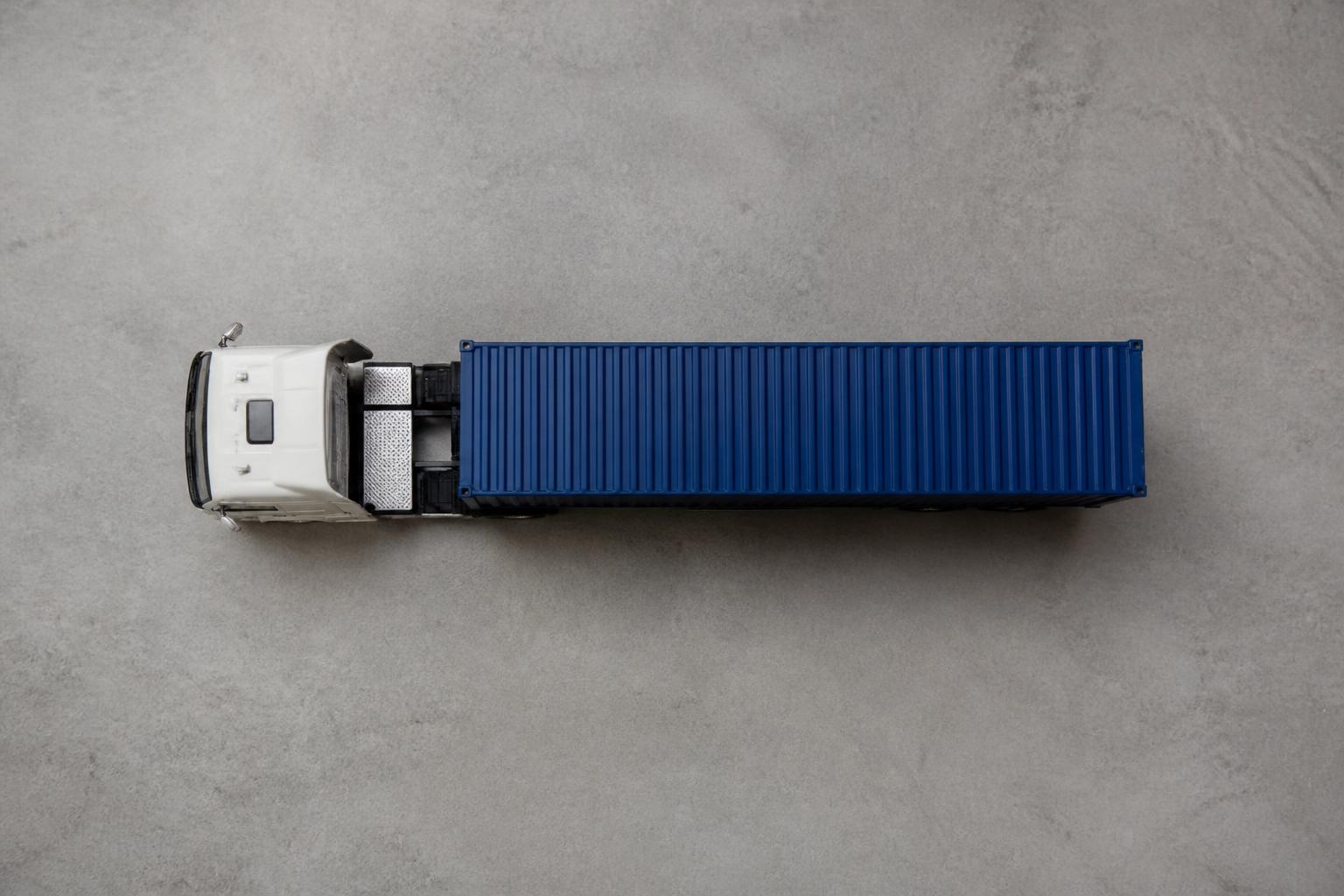
When timing matters, UK container work is won or lost before the vehicle reaches the gate. The pressure is rarely just the road move itself. It is the booking slot, the release reference, the port or rail terminal queue, the driver’s remaining time, the trailer position, and whether delivery can actually receive the box when it arrives. In practical terms, container haulage in the UK is a chain of handovers, and each handover can add cost if the plan is weak or the information arrives late.
For operators, that means good execution depends on visibility. We need to know where the unit is, what the driver can legally do next, whether a trailer is available, and what happened at each stage if a customer queries waiting time or a failed delivery. That is exactly where joined-up fleet systems help. At Fleetalyse, we work with operators who want live operational control without jumping between separate apps, spreadsheets and phone calls.
What container haulage means in UK operations
In UK terms, container haulage usually means moving a shipping container by road between a port, inland rail terminal, container depot, warehouse, factory, distribution site or another nominated delivery point. Most jobs involve standard ISO containers, commonly 20ft, 40ft and 45ft units, carried on skeletal trailers by an HGV tractor unit.
The basic job flow sounds simple, but the detail matters.
A typical import move starts with container availability. The shipping line or its appointed agent confirms release, the customs position must allow movement, and the collection needs a valid booking or vehicle reference where the port or terminal requires one. The transport office then allocates the job, checks the collection point, confirms the container number, validates the size and weight, and ensures the right trailer type is in the right place.
The driver travels to the port or rail terminal, checks in, waits if necessary, collects the unit, and exits once the handover is complete. From there, the vehicle runs to the delivery point, where the container is either tipped live, grounded for later unloading if the site has the right lifting equipment, or left subject to agreed arrangements. On export work, the sequence is reversed. We collect from the shipper or packing site, move to the port or terminal, and hand the box over before the cut-off.
That is the practical shape of container haulage in the UK. It is not just linehaul. It is gate management, paperwork, timing control and exception handling.
UK operations also have some features that readers outside the sector sometimes underestimate. Port work often depends on strict booking systems and access windows. Rail terminal work can be just as time-sensitive. A vehicle can be physically close to the job and still be operationally late if the slot has gone or if the release is not in order. On top of that, UK road conditions, urban restrictions, motorway incidents and customer site limitations all affect whether the planned day is realistic.
The paperwork and reference trail also matters. Drivers and traffic teams need the right booking details, container number, collection reference, delivery address, contact names, and any site instructions such as PPE, opening hours, vehicle routing or whether the container doors must face a certain way on arrival. Missing one small item can turn a routine movement into chargeable waiting time.
This is why operators increasingly want one place to view vehicle status, trailer position, driver activity and event history. If the transport desk can see where the assigned unit is, whether the trailer has already been dropped, and whether the driver is nearing a break or shift limit, decisions become faster and more accurate.
Where delays and extra cost usually appear
The most common cost pressure in container work is not dramatic failure. It is accumulated friction.
Port access is an obvious one. Even where a booking system is in place, arrival does not always mean immediate turnround. Queues, lane congestion, system issues, document mismatches and security checks can all extend dwell time. Rail terminals can create similar delays, especially when a collection misses its intended window and has to be reworked around later traffic.
Waiting time at customer sites is another routine problem. A delivery point may not have a bay free, may be short-staffed, or may not be ready to unload. If the consignee expected a different arrival time, the vehicle can end up parked and unproductive while the driver’s available time continues to reduce.
Traffic is the most visible issue, but not always the biggest. Motorway incidents, diversions, bridge strikes, local restrictions and urban congestion all affect ETA. In container work, the knock-on effect is often more costly than the delay itself. A late first job can cause a missed second collection, a lost terminal slot, or a failed return to depot.
Failed collections create avoidable waste. Common causes include the container not being released, the box not being available in the stack, customs not cleared, wrong reference details, or the vehicle arriving outside the permitted window. In each case, the truck has still travelled, the driver has still spent time, and the trailer is still tied up.
Handover delays between subcontractors, depots, ports and customer sites also add cost because nobody sees the whole picture in real time. One team believes the container is moving. Another assumes it has already arrived. The truth sits in a chain of calls and messages that nobody can audit properly afterwards.
This is where event visibility matters. We regularly see operators benefit from having a clear movement history rather than relying on memory. Live GPS positions, arrival and departure times, and route replay make it easier to prove when a vehicle reached the gate, how long it waited, and when it left. That supports customer conversations and internal reviews alike.
There is also a compliance angle. If a vehicle is delayed at the port for reasons outside the operator’s control, the office still needs to know what that means for the rest of the day. Can the driver still complete the delivery and return legally? Is a trailer swap needed? Does another vehicle need to take the next booking? Without current information, those decisions get made too late.
How planning works around driver hours and vehicle use
Container planning is constrained by legal time first, then by physical assets.
For UK operators, driver hours are central to every realistic plan. Whether the work is domestic port traffic or longer-distance inland distribution, the traffic office has to build jobs around driving time, other work, breaks, daily duty length and weekly limits. The UK broadly follows retained drivers’ hours rules that align with the long-established EU framework for most in-scope HGV work, but operators still need to manage the detail correctly in day-to-day domestic operations rather than assuming a generic EU answer covers every case.
In practice, that means dispatch cannot look only at distance. A run that appears achievable on mileage can fail once we account for gate queues, loading delays, statutory breaks, and the time needed to reach a safe stopping point. Container work is especially exposed because waiting time is common and often unpredictable.
Trailer use is the second major constraint. A tractor unit might be available, but if the right skeletal trailer is in the wrong place, the job still does not move. Operators have to know which trailers are loaded, empty, parked at customer sites, under repair, or committed to later bookings. If a trailer has been dropped for tipping, the office needs visibility of when it is likely to be free again.
Daily utilisation is where margin is protected. The aim is not simply to keep vehicles moving, but to keep them moving on workable sequences. A strong plan links import collections, deliveries, empty returns, export loading and repositioning in a way that avoids dead mileage and protects legal time. A weak plan creates part-used shifts, unnecessary trailer shunts and expensive recovery work later in the day.
This is why live Tachograph visibility has become so important in transport offices. If we can see remaining drive time and activity status remotely, we can make better decisions before a problem becomes a missed booking. It is also why route timing should be based on actual operating conditions, not optimistic assumptions. Port jobs are not standard pallet work. The gate process alone can change the day.
For mixed fleets, the planning challenge is even broader. Some operators run container work alongside general haulage, vans, plant or other assets. In that environment, one transport manager may be balancing multiple job types at once. A single view of vehicles, trailers and compliance status reduces the chance of allocating work to the wrong resource or overcommitting a driver.
Operators looking to tighten this process usually start with better operational visibility, then build reporting from there. Our practical fleet and transport workflow options are designed for exactly that kind of day-to-day control.
What fleet visibility matters most for container work
Not all visibility tools deliver the same value in container operations. The most useful ones are the tools that help the desk make decisions during the shift, not just analyse problems afterwards.
Live GPS tracking is the foundation. It shows where the vehicle is, whether it is moving, and whether it has reached the collection or delivery point. For container fleets, geofences and timestamped arrival and departure events are particularly useful because they create a reliable record of site activity. If a customer disputes waiting time, we need more than a guess.
Trailer tracking is often just as important as tractor tracking. In container work, the trailer is not a passive asset. It is part of the job chain. If a skeletal trailer is left at a customer site, in a depot, or at a port-related location, the office needs to know exactly where it is and how long it has been there. Trailer visibility helps reduce wasted calls, unnecessary yard checks and poor asset utilisation.
Remote Tachograph downloads and activity visibility support both compliance and planning. The compliance benefit is obvious, but the operational benefit is often just as valuable. Dispatchers who can see current activity and remaining legal time are in a better position to reassign work or intervene early. That matters when a driver is held at a terminal longer than expected.
Smart dashcams add a different type of evidence. In container work, incidents can happen in queues, at gates, in customer yards and on urban approaches. Camera footage helps with claims, driver protection and event review. It also gives transport managers a better picture of what actually happened when a job did not go to plan. For fleets reviewing options, our connected camera systems for commercial vehicles are often part of the conversation alongside tracking and compliance tools.
Reporting is where operational visibility becomes management control. A good reporting setup should show utilisation, idle time, site dwell, route history, exceptions and recurring delay points. It should also be easy enough to use that the team actually relies on it. We see the most value when operators can combine live views with historical analysis instead of extracting data from multiple systems and rebuilding it in spreadsheets. Our guide to comparing haulage reporting tools without extra admin covers that issue in more detail.
At Fleetalyse, we also see demand for practical hardware choices. Some fleets want Fleetalyse-ready trackers for a straightforward rollout. Others want unlocked Teltonika devices, trailer units, or a more tailored installation plan across tractors, trailers and mixed assets. Depending on the setup, operators may also want IoT SIMs, CAN data capture, and mapping based on OpenStreetMap.
For day-to-day use, the key point is simple. Visibility has to help the transport desk answer operational questions quickly. Where is the unit. Has it reached the terminal. How long has it been waiting. Which trailer is free. What can that driver still legally do today. If the system cannot answer those questions clearly, it is not doing enough for container work.
How operators can run container haulage with fewer separate systems
Container operations suffer when information is fragmented. One system shows the vehicle. Another holds the camera footage. Another stores Tachograph data. Trailer locations sit somewhere else, and reports are built manually after the event. The result is slower dispatch, slower customer updates, and more time spent reconciling what happened.
A joined-up platform removes a lot of that friction. When tracking, compliance visibility, camera events and reporting sit together, the transport office can work from one operational picture. That does not eliminate delays at ports or customer sites, but it does make the response faster and more controlled.
In practical terms, that means a dispatcher can open one screen and check the live vehicle location, the trailer position, the driver’s current activity, and the recent event history before deciding what to do next. If a collection is at risk, the office can re-sequence work earlier. If a customer disputes a charge, the movement record is easier to evidence. If a safety incident is reported, camera footage is closer to hand.
This is where Fleet insight becomes useful in real operations. The value is not in collecting more data for its own sake. It is in turning that data into something the traffic office can use during the day. For many fleets, the real gain comes from reducing the number of separate logins, manual checks and duplicated updates.
That also matters for growing operators. An owner-driver may begin with one tracked unit and a simple reporting need. A larger fleet may need tractors, trailers, vans and plant on the same platform, with access for different users through a Customer Portal, plus controls around Tracker login, downloads and reporting. Some businesses want self-serve purchasing through the Shop, with payment handled through Stripe and clear VAT treatment. Others need a managed rollout under Fleeta Limited T/A Fleetalyse, with hardware, installation planning and support aligned to the way the fleet actually operates.
The point is not to force every operator into the same model. It is to give transport teams a practical way to run container haulage in the UK with fewer moving parts behind the scenes.
When timing matters, better visibility is not an optional extra. It is part of the operating model. Container work will always involve queues, handovers and exceptions. What separates a controlled day from an expensive one is how quickly the office can see the problem, understand its effect on legal time and vehicle use, and act on it with confidence. That is the gap we help fleets close.
What is container haulage in the UK?
It is the movement of shipping containers by road between ports, rail terminals, depots, warehouses and customer sites. Jobs often depend on booked collection times, available trailers and tight delivery windows.
Why is container haulage harder to schedule than general haulage?
Port access rules, queueing, collection slots, traffic and unloading delays can all affect the plan. Operators also need to keep jobs within driver hours and make best use of tractor units and trailers.
What vehicles are used for container haulage?
Most UK container work uses HGV tractor units with skeletal trailers designed to carry shipping containers. Fleet setup depends on lane type, port work, customer sites and whether trailers are owned or shared.
How does GPS tracking help container haulage operators?
GPS tracking gives live vehicle location, arrival visibility and a clearer view of delays. It helps traffic teams respond faster when a collection slot, delivery window or trailer handover is at risk.
Why does Tachograph visibility matter in container work?
Tachograph visibility helps planners see available driving time before assigning work. That matters when port delays or traffic eat into the day and a job may no longer fit within legal driver hours.