
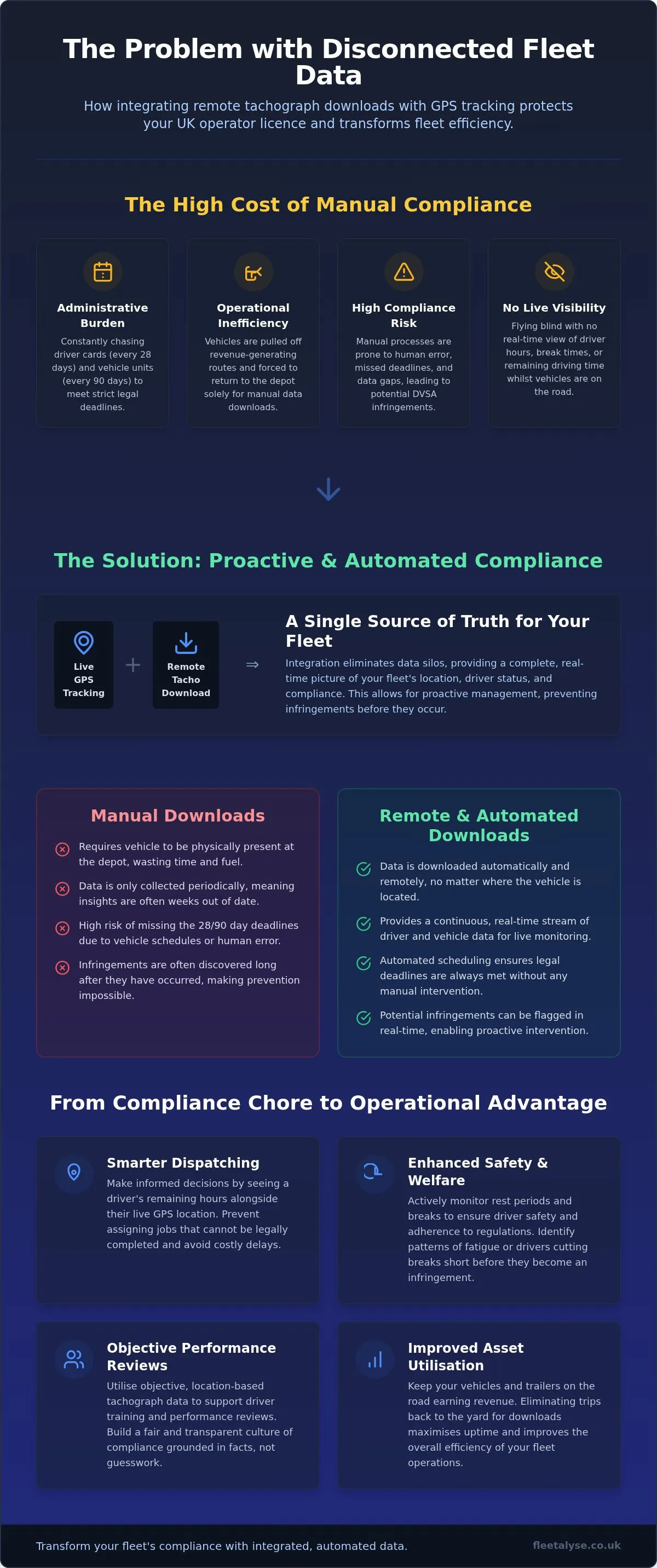
Managing a UK fleet with disconnected systems is no longer just an administrative burden; it's a direct risk to your operator licence. You likely understand the frustration of chasing driver cards and vehicle units every 28 or 90 days to meet legal deadlines. It's a manual process prone to error, and whilst your vehicles are on the road, you're often flying blind regarding live driver hours and rest periods. This lack of visibility doesn't just create stress; it increases the cost of your daily operations.
Discover how integrating remote tachograph download with GPS tracking transforms compliance from a reactive chore into a proactive operational advantage. This guide explains how combining real-time tracking with automated downloads streamlines your workflow and protects your business. We'll examine the shift toward a single source of truth for fleet data, ensuring you have real-time visibility of driver rest periods and automated compliance records that are always audit-ready. You'll learn how to eliminate manual errors and gain total control over your fleet's regulatory requirements.
Key Takeaways
- Learn how integrating remote tachograph download with GPS tracking eliminates data silos and protects your UK operator licence from avoidable infringements.
- Gain real-time visibility into live driver hours to prevent over-driving and ensure rest periods are strictly managed whilst vehicles are on the road.
- Reduce administrative overheads and improve driver morale by replacing time-consuming manual downloads with automated, remote data collection.
- Stay ahead of regulatory changes, including the Smart Tachograph 2 mandate for goods vehicles over 2.5 tonnes undertaking international journeys.
- Identify the practical steps for assessing hardware compatibility and choosing a specialist partner to streamline your fleet's compliance data.
The Evolution of Fleet Compliance: Why Integration Matters
The UK transport landscape in 2026 demands a shift from reactive record-keeping to proactive asset management. For years, regional operators have struggled with data silos. One system tracks vehicle location whilst another handles compliance records. This fragmentation creates dangerous blind spots. If you cannot see how a driver’s remaining hours align with their current GPS position, you are vulnerable to DVSA infringements. Protecting your operator licence requires a unified approach. By integrating remote tachograph download with GPS tracking, you bridge the gap between where your vehicles are and what your drivers are legally allowed to do.
The Hidden Costs of Manual Data Collection
Manual data retrieval is a drain on your resources. It isn't just about the time spent physically connecting to a vehicle. It's the administrative labour required to chase driver cards and monitor the calendar. You must meet strict legal deadlines: at least every 28 days for driver cards and every 90 days for vehicle units. Missing these dates puts your licence at risk. There is also the literal cost of fuel and vehicle wear. Bringing an HGV or trailer back to the yard specifically for a download is inefficient. It takes your assets off the road and reduces your earning potential. Deadlines don't wait. Automated systems ensure they are never missed.
Meeting DVSA Standards with Automated Systems
Automation removes the variable of human error from your compliance strategy. Understanding What is a Tachograph? and its legal necessity is the baseline; managing that data effectively is what separates successful operators from those facing public inquiries. Integrating remote tachograph download with GPS tracking ensures you are always audit-ready. The system performs the work in the background, regardless of where the vehicle is located. This establishes a robust "continuous monitoring" process. It allows you to identify potential infringements before they happen. For operators seeking a pragmatic partner, Fleetalyse offers the tools needed to maintain high standards without flashy, unnecessary extras. This straightforward approach keeps your data clean and your fleet moving.
Operational Synergy: Combining GPS Location with Live Driver Hours
True operational efficiency isn't found in a spreadsheet; it's found on the map. By integrating remote tachograph download with GPS tracking, you stop viewing data in isolation. You see the whole picture. For instance, knowing a vehicle is stuck in traffic is useful, but knowing that same driver has only 15 minutes of legal driving time remaining is critical. This level of insight allows transport managers to make informed dispatch decisions. You can identify the nearest suitable rest stop based on the driver's current location and remaining hours, preventing costly infringements before they occur. It's about proactive management rather than reactive panic.
Real-Time Visibility into Driver Behaviour
Visibility shouldn't end when the driver leaves the yard. Integrated systems allow you to monitor rest periods and breaks whilst the vehicle is in transit. This isn't about micromanagement; it's about adhering to UK tachograph download regulations and ensuring safety. You can identify patterns of behaviour that might lead to systemic issues before they result in a DVSA investigation.
- Identify drivers cutting breaks short before it becomes a recorded infringement.
- Monitor 'Other Work' versus 'Rest' modes in real-time to ensure accuracy.
- Support driver training and performance reviews with objective, location-based data.
Addressing these issues early prevents the DVSA from identifying them during an audit. Using data to support performance reviews makes the process objective and fair for everyone involved. It builds a culture of compliance grounded in facts rather than guesswork.
Enhanced Asset Security and Utilisation
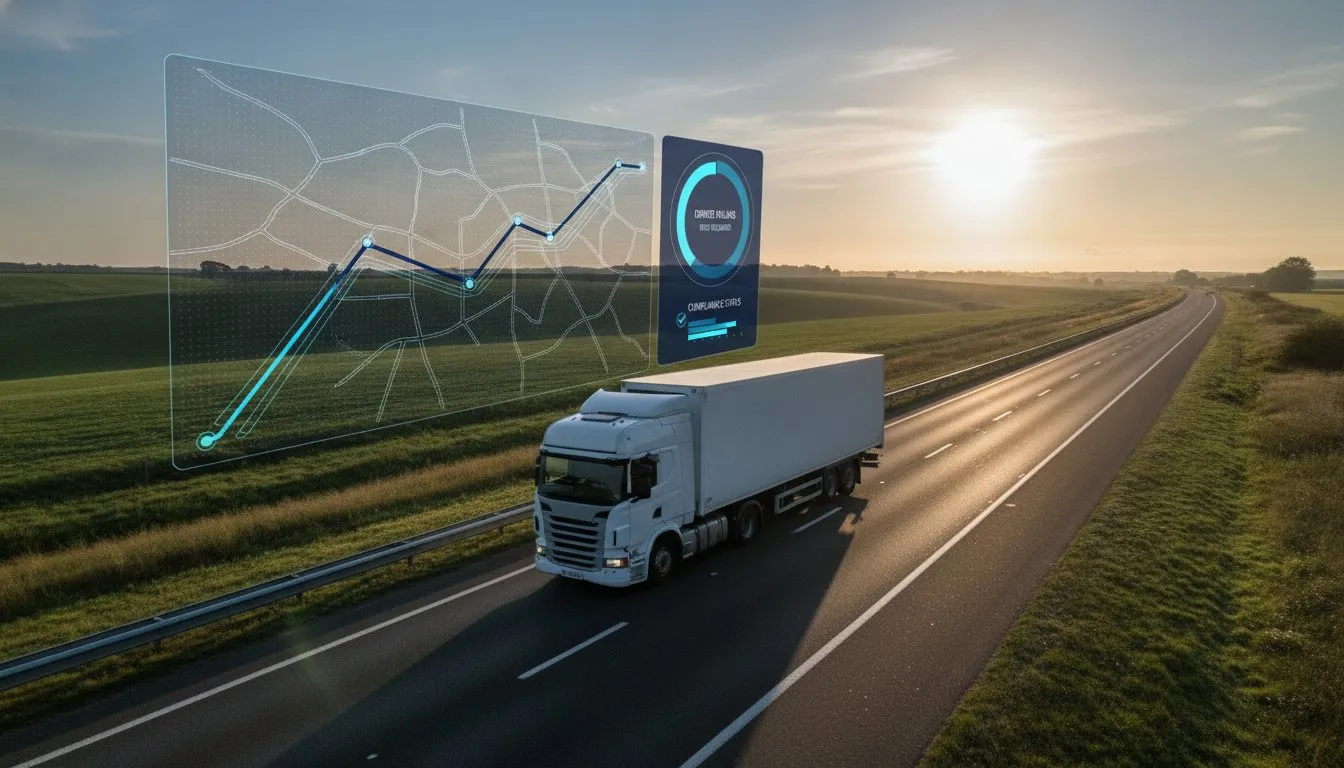
Combining location data with driver activity provides total visibility over HGVs and trailers. Geofencing alerts notify you the moment a vehicle enters or leaves a depot, providing an automated log of arrivals and departures. This synergy optimises route planning. By integrating remote tachograph download with GPS tracking, you can match live traffic data with legal driving limits to ensure deliveries are realistic and safe. If a delay occurs, you'll know immediately if the driver can legally complete the route or if a swap is required. For operators looking to simplify this process, you can view our integrated tracking solutions to see how they fit your fleet. This pragmatic approach to asset tracking ensures you aren't just moving goods, but managing your business with precision.
Manual vs. Remote Tachograph Download: A Comparison
Manual downloading is a legacy process that often creates operational bottlenecks. It relies on physical proximity and human intervention. Drivers must return to base; managers must find the time to perform the download. This creates a reactive environment where deadlines are chased rather than managed. In contrast, integrating remote tachograph download with GPS tracking moves the entire process to the background. This shift isn't just about convenience; it's about reliability. Hardware connectivity through a remote unit is consistently more stable than manual card reading, which often suffers from faulty cables or neglected schedules.
Time and Labour Savings
Industry insights highlight the benefits of remote downloading in terms of sheer hours recovered. For a typical fleet manager, manual downloads can consume several hours per week when factoring in vehicle retrieval and data filing. Removing this task allows you to focus on core operations like route optimisation and customer service. It also has a significant impact on driver morale. Drivers don't want to spend their Friday evening or a rest day returning to a depot just for a data sync. For a 10-vehicle fleet, the ROI of remote downloads is achieved by recovering approximately 15 administrative hours per month and eliminating unnecessary vehicle mileage.
Data Accuracy and Compliance Security
Manual systems are vulnerable to the 'lost data' scenario. If a driver card is damaged or a manager forgets to download a vehicle unit (VU) before it overwrites, you face a compliance gap. Integrating remote tachograph download with GPS tracking ensures a 100% completion rate across your entire fleet. Data is captured automatically at set intervals and stored in encrypted, cloud-based environments. This setup provides peace of mind, knowing your records are safe from physical damage or local server failures.
For UK transport firms, the total cost of ownership (TCO) for remote systems is often lower than manual methods when you account for the hidden costs of fines, fuel, and administrative labour. Fleetalyse provides the pragmatic tools needed to automate these tasks without the complexity of generic, global platforms. By prioritising functional utility, you ensure your compliance data is accurate, secure, and always ready for inspection.
Implementing Integrated Telematics: A Step-by-Step Approach
Implementation begins with a technical audit of your fleet. You must check your current hardware against the latest standards. For vehicles over 2.5 tonnes undertaking international hire and reward journeys into the EU, a second-generation smart tachograph (G2V2) has been mandatory since 1 July 2026. If you're integrating remote tachograph download with GPS tracking, your hardware must support these encrypted data streams. Choosing a partner who understands these UK and EU regulatory nuances is vital. A generic provider might miss specific data retention requirements for international journeys, which now stand at 56 days.
Choosing the Right Hardware and Software
Decide between plug-and-play and hardwired trackers based on your fleet's security and reliability needs. Hardwired units are typically more stable for long-term HGV use. They offer a consistent connection for remote downloads whilst the vehicle is in transit. You must ensure your tachograph analysis software communicates seamlessly with your GPS platform. If these systems don't "talk" to each other, you lose the benefits of a single source of truth. Scalability is another factor. Your system should handle five vehicles today and fifty next year without requiring a complete hardware overhaul. Look for modular software that grows alongside your business.
Configuring Alerts and Reporting
The real value of an integrated system lies in its ability to act as an early warning system. Configure automated alerts for impending download deadlines to remove the need for manual calendar checks. You can also customise reports to highlight specific driver infringements or vehicle utilisation rates. This data allows you to manage by exception rather than reviewing every single log. Organising different access levels for your management team ensures that transport managers see compliance data whilst dispatchers focus on GPS location. To get started with a setup tailored for UK hauliers, explore our integrated telematics hardware.
Minimising Installation Downtime
Installation shouldn't paralyse your operations. Plan your setup to coincide with scheduled maintenance or rest days. Research from Q2 2026 indicates that installation costs for G2V2 tachographs in vans were 40-60% higher for those who didn't book early due to workshop capacity constraints. Avoid these premiums by scheduling your integration well in advance. Training your staff is the final step. A short, practical session on the integrated dashboard ensures everyone understands how to monitor live driver hours. Efficient implementation turns a technical upgrade into a long-term operational asset that protects your licence.
The Fleetalyse Difference: Pragmatic Compliance for UK Hauliers
Fleetalyse operates as a pragmatic expert partner for UK hauliers. We don't offer flashy, unnecessary features that clutter your workflow. Instead, we focus on functional utility. Our platform is built for the rigours of real-world application, providing a straightforward voice in an industry often clouded by technical jargon. By emphasising operational clarity and openness regarding data management, we reassure operators that their compliance is handled with precision. We aren't a distant, global software provider; we are localized specialists who understand the UK's unique transport landscape.
Specialised UK Market Expertise
The UK's Operator Licence regime requires a specific level of industry insight. We understand that a "one size fits all" global solution often fails to address the nuances of domestic regulations. Our support team speaks the language of British transport managers, focusing on the practicalities of DVSA audit readiness. We provide continuous updates to reflect changes in UK road transport laws, such as the 56-day data retention requirements for international journeys. This localized signature reinforces our commitment to the domestic industry. You aren't just another account; you're a partner in a specialized market that demands absolute regulatory adherence.
Seamless Tachograph Analysis Integration
Efficiency is the benchmark of a successful transport business. Integrating remote tachograph download with GPS tracking through our platform bridges the gap between vehicle location and compliance software. This creates a single 'source of truth' for all your fleet data. Amongst our UK clients, this integration has transformed compliance from a reactive chore into a streamlined, automated process. It removes the friction of managing multiple disconnected systems. Our platform supports the full lifecycle of your business, from initial asset tracking for new HGVs to complex tachograph analysis for established fleets.
We prioritise your time and resources. Our straightforward approach prevents you from feeling overwhelmed by data. Instead, we provide a steady stream of information that builds toward frictionless decision-making. Discover how Fleetalyse can organise your fleet compliance today and protect your operator licence with a system designed specifically for the UK market. We value transparency in everything we do, ensuring you have the clarity needed to manage your fleet with quiet confidence and reliability.
Future-Proof Your Fleet with Integrated Compliance
Managing a UK fleet in 2026 requires more than just meeting the bare minimum of legal requirements. It's about operational resilience. By integrating remote tachograph download with GPS tracking, you eliminate the risk of missing 28-day and 90-day deadlines whilst gaining total visibility over your assets. You no longer have to chase driver cards or pull vehicles off the road for data retrieval. Instead, you have a single, reliable source of truth that keeps your business audit-ready at all times. This proactive approach doesn't just save time; it protects your operator licence from systemic infringements that often go unnoticed in manual systems.
Fleetalyse is your pragmatic partner in this transition. We provide UK-based technical support, automated DVSA-compliant reporting, and real-time live driver hours visibility. Our system is built for the rigours of the British transport industry, ensuring your data is secure and your operations are efficient. Take control of your compliance data and stop reacting to problems after they occur. Streamline your fleet compliance with Fleetalyse today. We are here to help you build a safer, more efficient, and more profitable fleet for the long term.
Frequently Asked Questions
Can I integrate remote tachograph downloads with my existing GPS trackers?
Integration depends on your current hardware's technical specifications. Most standard GPS trackers cannot handle the complex data streams required for tachograph units without a specific CAN-bus connection. By integrating remote tachograph download with GPS tracking through a dedicated unit, you ensure the hardware can communicate with the vehicle's digital tachograph. If your current system is closed or outdated, upgrading to a unified platform is often the most cost-effective way to ensure full compliance.
How often does the remote tachograph download happen automatically?
You can schedule downloads to happen daily, weekly, or at any interval that suits your operational needs. Whilst the legal minimum is every 28 days for driver cards and 90 days for vehicle units, most UK operators prefer weekly downloads. This proactive approach ensures you identify infringements early and keeps your records audit-ready. Automated scheduling removes the risk of human error and ensures you never miss a deadline, regardless of where the vehicle is located.
Is remote tachograph downloading legal under DVSA regulations?
Remote downloading is entirely legal and encouraged by the DVSA as a method for maintaining robust compliance records. The process must maintain the digital signature of the original data to ensure its authenticity. Using a specialist provider ensures that the data retrieved is identical to a manual download. This method provides a clear, unalterable trail of driver activity, which is essential for protecting your operator licence during a fleet inspection or a formal public inquiry.
What happens if a vehicle is in a remote area with poor GPS signal?
The system uses internal memory to buffer data if the cellular connection is lost in a remote area. Whilst GPS signal is needed for location tracking, the actual tachograph download relies on the mobile network. If the vehicle enters a dead zone, the hardware stores the information locally. Once the vehicle returns to an area with signal, the system automatically resumes the upload. This ensures that no data is lost and your compliance records remain complete.
Do I still need to manually download driver cards if I have remote vehicle downloads?
You don't need to manually read cards if the driver card is inserted in the vehicle unit during a scheduled remote download. The system retrieves both the vehicle unit data and the driver card data simultaneously over the air. This eliminates the need for drivers to return to the depot just to put their card into a reader. It is a significant benefit for long-distance hauliers who may not see their drivers for several weeks.
How much time can a fleet manager save by integrating these systems?
Fleet managers typically save several hours of administrative labour every week by removing manual data collection tasks. For a 10-vehicle fleet, this can equate to roughly 15 hours per month. Integrating remote tachograph download with GPS tracking automates the retrieval, filing, and basic analysis of driver hours. This allows you to focus on high-value tasks like route planning and customer service, rather than chasing drivers for their cards or checking calendars for deadlines.
Is the data stored securely during the remote download process?
Data is protected using industry-standard encryption during the entire transmission process. When the information travels from the vehicle to the server, it is secured against unauthorised access. Once stored, the data is held in secure, cloud-based environments with regular backups. This is far more secure than keeping physical files or storing data on a single local office computer, which is vulnerable to hardware failure, theft, or accidental deletion by staff.
Frequently asked questions
Can I integrate remote tachograph downloads with my existing GPS trackers?
Integration depends on your current hardware's technical specifications. Most standard GPS trackers cannot handle the complex data streams required for tachograph units without a specific CAN-bus connection. By integrating remote tachograph download with GPS tracking through a dedicated unit, you ensure the hardware can communicate with the vehicle's digital tachograph. If your current system is closed or outdated, upgrading to a unified platform is often the most cost-effective way to ensure full compliance.
How often does the remote tachograph download happen automatically?
You can schedule downloads to happen daily, weekly, or at any interval that suits your operational needs. Whilst the legal minimum is every 28 days for driver cards and 90 days for vehicle units, most UK operators prefer weekly downloads. This proactive approach ensures you identify infringements early and keeps your records audit-ready. Automated scheduling removes the risk of human error and ensures you never miss a deadline, regardless of where the vehicle is located.
Is remote tachograph downloading legal under DVSA regulations?
Remote downloading is entirely legal and encouraged by the DVSA as a method for maintaining robust compliance records. The process must maintain the digital signature of the original data to ensure its authenticity. Using a specialist provider ensures that the data retrieved is identical to a manual download. This method provides a clear, unalterable trail of driver activity, which is essential for protecting your operator licence during a fleet inspection or a formal public inquiry.
What happens if a vehicle is in a remote area with poor GPS signal?
The system uses internal memory to buffer data if the cellular connection is lost in a remote area. Whilst GPS signal is needed for location tracking, the actual tachograph download relies on the mobile network. If the vehicle enters a dead zone, the hardware stores the information locally. Once the vehicle returns to an area with signal, the system automatically resumes the upload. This ensures that no data is lost and your compliance records remain complete.
Do I still need to manually download driver cards if I have remote vehicle downloads?
You don't need to manually read cards if the driver card is inserted in the vehicle unit during a scheduled remote download. The system retrieves both the vehicle unit data and the driver card data simultaneously over the air. This eliminates the need for drivers to return to the depot just to put their card into a reader. It is a significant benefit for long-distance hauliers who may not see their drivers for several weeks.
How much time can a fleet manager save by integrating these systems?
Fleet managers typically save several hours of administrative labour every week by removing manual data collection tasks. For a 10-vehicle fleet, this can equate to roughly 15 hours per month. Integrating remote tachograph download with GPS tracking automates the retrieval, filing, and basic analysis of driver hours. This allows you to focus on high-value tasks like route planning and customer service, rather than chasing drivers for their cards or checking calendars for deadlines.
Is the data stored securely during the remote download process?
Data is protected using industry-standard encryption during the entire transmission process. When the information travels from the vehicle to the server, it is secured against unauthorised access. Once stored, the data is held in secure, cloud-based environments with regular backups. This is far more secure than keeping physical files or storing data on a single local office computer, which is vulnerable to hardware failure, theft, or accidental deletion by staff.