
Your Operator Licence is the most valuable asset your business owns, yet it often hangs by the thread of a manual spreadsheet or a missed 28-day driver card deadline. Chasing drivers for downloads whilst managing 90-day vehicle unit uploads creates a constant risk of data gaps and DVSA fines. Implementing a robust tachograph analysis software integration is no longer a luxury for national fleets; it's a necessity for any UK operator wanting to eliminate manual errors and stop the administrative bleed.
We understand the frustration of juggling remote data collection with the need for instant, accurate reporting. It's a high-stakes balancing act that consumes hours of management time every single week. This guide explains how to automate your entire compliance workflow to protect your licence and your bottom line. You'll learn how to bridge the gap between live vehicle data and audit-ready reports, ensuring you have total visibility of driver hours without the manual data handling that leads to costly mistakes.
Key Takeaways
- Automate your compliance workflow to eliminate manual data handling and the risk of missing critical 28-day driver card download deadlines.
- Discover how tachograph analysis software integration creates a seamless link between your vehicle units and reporting software for instant, audit-ready data.
- Understand the technical workflow required to demonstrate "continuous and effective management" to the DVSA and protect your Operator Licence.
- Use Live Driver Hours to transform compliance data into a real-time planning tool, improving fleet utilisation and reducing driver-manager friction.
- Identify the essential compatibility requirements for a unified ecosystem that supports all major vehicle manufacturers whilst providing reliable UK-based support.
Understanding Tachograph Analysis Software Integration
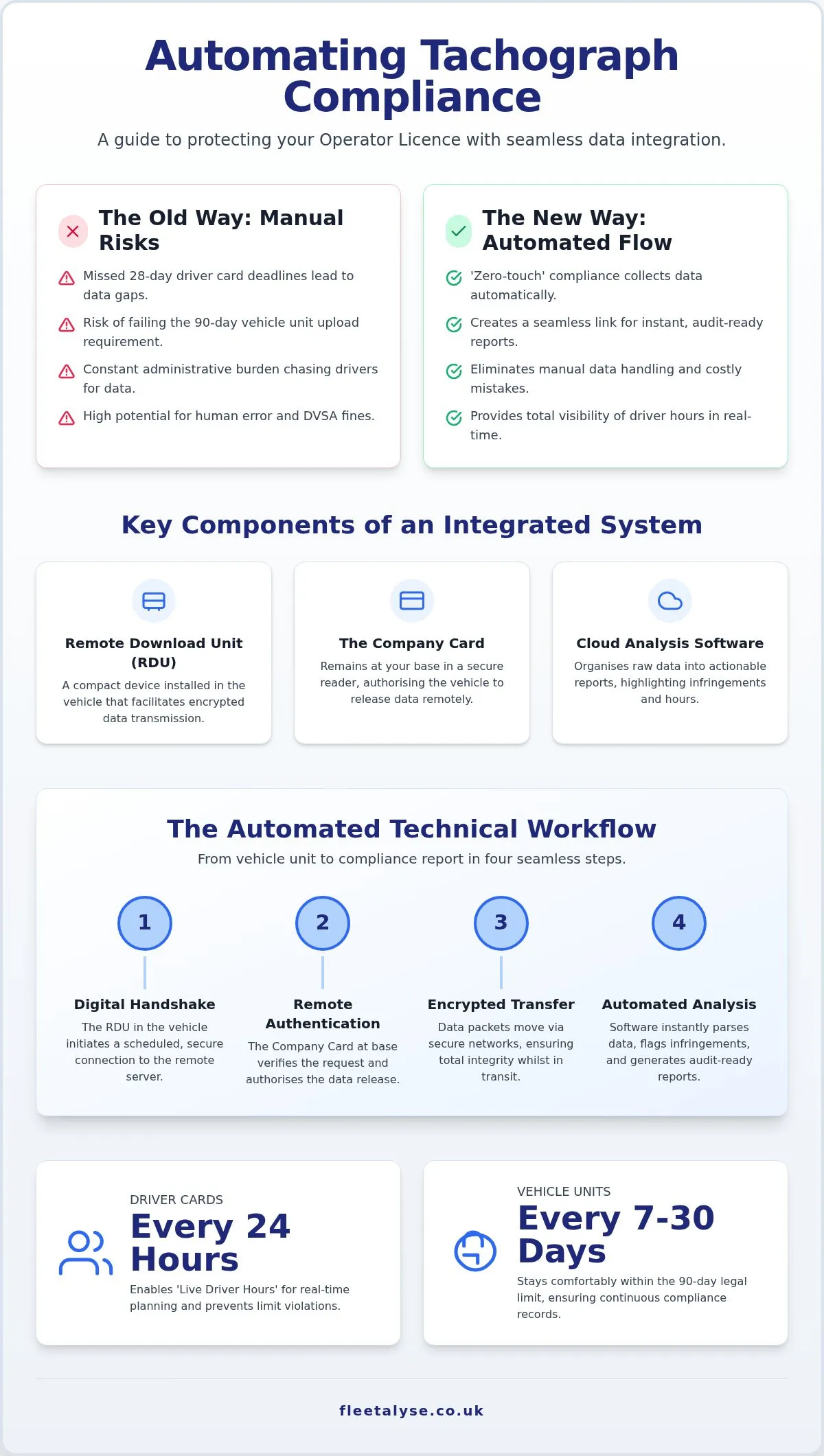
Tachograph analysis software integration is the digital bridge between your vehicle's hardware and your compliance reporting suite. It replaces the outdated, manual processes that have hindered the transport industry for years. By creating an automated link, you ensure that data flows without human intervention. To understand the foundation of this technology, it helps to review What is a Tachograph? and how it has evolved from paper discs to the Smart Tachograph 2 units required for modern international transport.
This integration removes the logistical headache of manual file uploads. You no longer need drivers to visit the office to use a card reader or rely on workshop staff to plug in USB sticks. Instead, data is pushed directly from the vehicle unit to your analysis platform via secure 4G or GPRS networks. This process ensures your records are always current. It provides a real-time view of fleet compliance that was previously impossible with manual systems.
The Evolution of Data Collection
Manual downloads are a primary cause of compliance failure. When you rely on physical collection, you risk missing the 28-day driver card deadline or the 90-day vehicle unit requirement. These gaps often lead to missing mileage and DVSA infringements. Modern UK transport operators are shifting toward "zero-touch" compliance. This approach handles data collection whilst the driver is on the road, anywhere in the country. It doesn't matter if the vehicle is in a remote layby or a motorway service station; the tachograph analysis software integration ensures the transfer happens in the background without driver input.
Key Components of an Integrated System
A functional system depends on three specific parts working in harmony:
- The Remote Download Unit (RDU): A compact device installed behind the tachograph head that facilitates encrypted data transmission.
- Cloud-based Analysis Software: The platform where raw data is organised into actionable reports, showing you infringements and remaining hours.
- The Company Card: This card stays at your base in a secure reader rack, authorising the vehicle unit to release data remotely.
This setup means your management team can access records without ever touching the vehicle hardware. For operators looking to streamline this process, Fleetalyse provides the hardware and software links needed to make this transition seamless and reliable. It is a set-and-forget solution that prioritises your time and your Operator Licence security.
The Technical Workflow: From Vehicle Unit to Compliance Report
The technical process of tachograph analysis software integration starts with a scheduled digital "handshake". This connection links the vehicle unit (VU) to a remote server via the Remote Download Unit (RDU) installed in the cab. Authentication is the first priority. Your company card stays securely in a card-reader centre rather than inside the lorry or in a manager's desk. This card authorises the data release remotely. Once verified, encrypted data packets move through secure Access Point Names (APNs). This ensures total data integrity. It protects your business from data breaches whilst the information is in transit.
As soon as the software receives these packets, it begins parsing the raw files. It automatically identifies infringements based on DVSA standards for drivers' hours. The system flags rest-period violations, driving time excesses, and missing mileage immediately. This automated analysis replaces hours of manual checking and spreadsheet entry. You get clear, audit-ready reports that highlight exactly where your drivers need additional training or support. It's a pragmatic approach to fleet management that removes the guesswork from compliance.
Automated Scheduling and Frequency
Driver cards are typically downloaded every 24 hours. This frequency provides "Live Driver Hours" visibility, which is essential for daily transport planning and ensuring drivers don't exceed their limits. Vehicle units are scheduled for download every 7 to 30 days. This keeps your fleet well within the 90-day legal limit for VU data. Automated scheduling ensures your records are always current. It prevents the stressful "Friday afternoon scramble" to collect data before drivers head home, significantly reducing friction between drivers and office staff. You no longer need to chase drivers for their cards at the end of a long shift.
Data Encryption and DVSA Security
Compliance data must be legally admissible to protect your business. A robust tachograph analysis software integration maintains original digital signatures during every transfer. This is vital for proving authenticity during DVSA roadside checks or full office audits. If a vehicle enters a remote area with a weak signal, the hardware caches the data packets locally. It waits for a stable connection to resume the upload, so no information is ever lost. Secure cloud storage then archives these records for at least two years. This meets the UK’s strict statutory record-keeping requirements and ensures you are always ready for a surprise inspection.
Stop worrying about technical handshakes and start managing by exception. You can set up your automated compliance workflow and secure your Operator Licence today.
Maintaining DVSA Standards and Operator Licence Integrity
Your Operator Licence (O-Licence) is the most critical asset your business holds. To keep it, you must prove "continuous and effective management" of your transport operations at all times. A manual system is prone to gaps, but tachograph analysis software integration provides a permanent, automated audit trail. This technology shows the DVSA that you are monitoring driver behaviour in real-time. It moves your business away from a reactive approach and toward a model of total transparency. This proactive stance is exactly what Traffic Commissioners look for during a desk-based assessment or a full site visit.
The Consequences of Non-Compliance
The stakes for failing to manage tachograph data are incredibly high. Missing a download deadline or losing data can lead to formal warnings, substantial fines, or even a Public Inquiry. The DVSA issues over 20,000 fixed penalty notices for tachograph-related offences annually. A specific area of heavy scrutiny is "missing mileage" reports. These gaps often suggest unauthorised vehicle use or drivers pulling their cards to hide driving hours. An integrated system identifies these discrepancies immediately. Investing in remote tachograph download hardware is the most effective insurance for your O-Licence. It guarantees that data is collected and filed correctly, regardless of where your vehicles are located in the UK.
Generating Audit-Ready Reports
Being audit-ready means having the right answers before the questions are asked. Integrated software enables you to generate driver infringement letters and vehicle download histories instantly. This allows for prompt infringement debriefing. When you can show a signed debrief dated shortly after an offence, you prove to the DVSA that you take compliance seriously. It demonstrates that you have a robust system for correcting driver behaviour and preventing repeat violations.
These systems also track Working Time Directive (WTD) compliance alongside standard driving hours. This dual monitoring ensures your drivers are safe and your business stays within the law. For fleets aiming for "Earned Recognition" status, this level of data quality is mandatory. It allows you to share high-level compliance performance with the authorities, which can reduce the frequency of roadside stops. Whether you are preparing for a scheduled audit or a surprise inspection, the ability to produce clean, accurate reports at a moment's notice is your strongest defence.
Strategic Advantages: Live Driver Hours and Fleet Utilisation
Live Driver Hours visibility changes the way a transport office functions. Instead of compliance being a historical check, it becomes a real-time planning asset. A dispatcher can see exactly how much driving time remains for every driver in the fleet without picking up the phone. This transparency removes the friction of constant calls to the cab. It allows for more accurate job allocation and more realistic delivery windows. When you combine this with GPS fleet tracking, you gain a 360-degree view of your entire operation. You know where your vehicles are and exactly how long they can stay on the road.
A robust tachograph analysis software integration is the engine behind this operational efficiency. It moves the compliance department from the back office to the front line of the business. You aren't just filing data for a potential audit; you are using it to drive daily profit. This real-time visibility transforms your compliance software into a powerful dispatching tool that balances driver safety with customer demand.
Proactive Infringement Prevention
Integrated systems allow you to spot a potential violation before it occurs. By monitoring live rest periods and cumulative driving times, you can intervene early if a driver is nearing a limit. This data-led coaching improves driver behaviour over time. It creates a culture of transparency where drivers understand that the system is there to protect their vocational licence. Reducing the frequency of infringements naturally lowers the risk of roadside prohibitions and fines. It’s a pragmatic way to manage staff without the need for aggressive oversight or manual record-checking.
Reducing Operational Downtime
The most immediate financial saving comes from the elimination of "dead miles". Vehicles no longer need to return to a central depot specifically for data extraction. This is a game-changer for large UK hauliers with multi-site operations. You can centralise all data in one cloud dashboard, regardless of where the HGVs or trailers are located. This setup provides several key benefits:
- Maximise vehicle utilisation by keeping assets on the road for longer between services.
- Centralise compliance management to a single head office location, reducing administrative overhead.
- Improve the accuracy of trailer tracking and asset management through unified reporting.
- Eliminate the logistical burden of coordinating physical downloads across different regional hubs.
Stop relying on driver reports and start using live data. You can implement Live Driver Hours for your fleet today and start planning with total confidence.
Implementing a Unified Compliance Ecosystem
Success in transport management depends on the reliability of your tools. You need a system that offers total compatibility across your entire fleet. Whether you operate DAF, Scania, or Volvo units, your tachograph analysis software integration must be seamless. A fragmented system where different vehicles require different workarounds is a recipe for data gaps. You should prioritise a solution that scales with your business. It must work as effectively for a single van as it does for a 100-vehicle HGV operation. This unified approach ensures that compliance stays in the background, allowing you to focus on moving freight.
A robust tachograph analysis software integration is the foundation of a modern transport office. A truly integrated ecosystem goes beyond just driver cards. It should encompass your entire fleet, including trailer tracking and asset management. By centralising these functions, you reduce administrative overhead and eliminate the need for multiple software subscriptions. You gain a single point of truth for your entire operation. This level of clarity is vital for national UK hauliers who need to maintain high standards across multiple sites and vehicle types.
Integration Checklist for Fleet Managers
Selecting the right partner requires a critical look at the technical details. Use this checklist to evaluate potential providers:
- Smart Tachograph Compliance: Does the hardware support the latest Smart Tachograph 2 regulations for international travel?
- Cloud Accessibility: Is the software cloud-based, allowing your team to access audit-ready reports from any location or device?
- Roaming Costs: Are there hidden data roaming charges for vehicles travelling into Europe, or is the pricing truly transparent?
- Support Standards: Does the provider offer UK-based technical support with experts who understand DVSA requirements?
The Fleetalyse Difference
Fleetalyse is not just another global software provider. We are a localised specialist built for the rigours of the UK transport sector. Our team provides pragmatic, expert advice grounded in real-world application. We prioritise functional utility over flashy, unnecessary features. You get transparent pricing and a straightforward implementation process that delivers an immediate operational ROI. We understand the daily struggles of the UK operator. Our goal is to help you stay compliant, efficient, and always audit-ready. Stop chasing data and start managing your fleet with quiet confidence. You can get started with your integrated compliance system today and secure your business's future.
Secure Your Fleet's Future with Automated Compliance
Your Operator Licence is the foundation of your business. Safeguarding it requires more than just reactive checks; it demands a proactive system that works whilst your vehicles are on the road. Implementing a robust tachograph analysis software integration transforms compliance from a manual burden into a silent, automated background process. You gain real-time visibility of live driver hours and ensure that every 28-day driver card deadline is met without fail.
Fleetalyse provides the expertise of UK-based compliance specialists to ensure seamless integration with leading analysis platforms. We focus on practical utility that saves you time and protects your assets from DVSA scrutiny. It's time to eliminate the risk of data gaps and the stress of manual uploads. Automate your fleet compliance and get an instant quote today. Secure your operations and move forward with total confidence in your fleet's integrity.
Frequently Asked Questions
How often does integrated software download driver card data?
Most integrated systems download driver card data every 24 hours. This frequency provides the "Live Driver Hours" visibility needed for effective daily planning. Whilst the legal DVSA limit for driver card downloads is 28 days, daily automated transfers eliminate the risk of missing this critical deadline. It ensures your compliance dashboard is always current, allowing you to identify and debrief infringements immediately rather than weeks after they occur.
Can I integrate remote downloads with my existing analysis software?
Yes, tachograph analysis software integration is built to be compatible with most leading UK analysis platforms. The system pushes raw data files directly to your chosen provider via secure API or FTP connections. This means you can keep your existing reporting suite whilst benefiting from automated, remote data collection. It removes the need for manual uploads and ensures your current analysis software is always populated with the latest fleet data.
Is remote tachograph downloading legal under DVSA standards?
Remote tachograph downloading is fully legal and is a recognised method for meeting DVSA compliance standards. The technology maintains the original digital signatures of the files, ensuring the data is authentic and legally admissible. Automating your downloads demonstrates "continuous and effective management" of your transport operation. This proactive approach is highly valued by Traffic Commissioners and can help protect your Operator Licence during a formal office audit or inspection.
Will the system work with older digital tachograph units?
Most digital tachograph units manufactured after 2011 are compatible with remote download technology. Specifically, v1.3 units and later support the necessary protocols for a remote handshake. If you operate much older vehicles, you might need to upgrade the tachograph head to enable this functionality. Modern Smart Tachograph 2 units are fully compatible, ensuring your fleet meets the latest UK and international standards for hire and reward transport.
Do I still need to keep my company card in a card reader?
Yes, a company card is required to authorise every remote download. However, you don't need to physically manage this in your office. Most integrated systems use a card-hosting centre where your card is kept in a secure, networked rack. This allows the server to perform the necessary security handshake with the vehicle unit 24/7. It removes the administrative burden of manually inserting cards for every download request.
What happens if the vehicle has no 4G signal in a rural area?
If a vehicle enters a rural area with no signal, the Remote Download Unit caches the data locally. The hardware stores the encrypted packets and waits for a stable connection to return. Once the vehicle enters a 4G or GPRS coverage zone, the transfer resumes automatically from where it stopped. This ensures total data integrity and prevents any gaps in your records, even when operating in the most remote UK locations.
Does the system download data whilst the engine is switched off?
Yes, the system can download data whilst the engine is switched off and the driver is away. The Remote Download Unit remains active and draws a minimal amount of power from the vehicle's battery to complete scheduled transfers. This allows you to collect data overnight or during weekend layovers. Your compliance reports will be fully updated and ready for review before your transport office opens the following morning.
How much does tachograph analysis software integration cost per month?
The cost of tachograph analysis software integration is typically structured as a monthly subscription per vehicle. This transparent model ensures you only pay for the assets you are actively monitoring. Prices vary depending on your fleet size and whether you require additional features like trailer tracking. By automating your downloads, you often save more in administrative wages and avoided DVSA fines than the monthly service costs. Request a quote for your specific fleet.
Frequently asked questions
How often does integrated software download driver card data?
Most integrated systems download driver card data every 24 hours. This frequency provides the "Live Driver Hours" visibility needed for effective daily planning. Whilst the legal DVSA limit for driver card downloads is 28 days, daily automated transfers eliminate the risk of missing this critical deadline. It ensures your compliance dashboard is always current, allowing you to identify and debrief infringements immediately rather than weeks after they occur.
Can I integrate remote downloads with my existing analysis software?
Yes, tachograph analysis software integration is built to be compatible with most leading UK analysis platforms. The system pushes raw data files directly to your chosen provider via secure API or FTP connections. This means you can keep your existing reporting suite whilst benefiting from automated, remote data collection. It removes the need for manual uploads and ensures your current analysis software is always populated with the latest fleet data.
Is remote tachograph downloading legal under DVSA standards?
Remote tachograph downloading is fully legal and is a recognised method for meeting DVSA compliance standards. The technology maintains the original digital signatures of the files, ensuring the data is authentic and legally admissible. Automating your downloads demonstrates "continuous and effective management" of your transport operation. This proactive approach is highly valued by Traffic Commissioners and can help protect your Operator Licence during a formal office audit or inspection.
Will the system work with older digital tachograph units?
Most digital tachograph units manufactured after 2011 are compatible with remote download technology. Specifically, v1.3 units and later support the necessary protocols for a remote handshake. If you operate much older vehicles, you might need to upgrade the tachograph head to enable this functionality. Modern Smart Tachograph 2 units are fully compatible, ensuring your fleet meets the latest UK and international standards for hire and reward transport.
Do I still need to keep my company card in a card reader?
Yes, a company card is required to authorise every remote download. However, you don't need to physically manage this in your office. Most integrated systems use a card-hosting centre where your card is kept in a secure, networked rack. This allows the server to perform the necessary security handshake with the vehicle unit 24/7. It removes the administrative burden of manually inserting cards for every download request.
What happens if the vehicle has no 4G signal in a rural area?
If a vehicle enters a rural area with no signal, the Remote Download Unit caches the data locally. The hardware stores the encrypted packets and waits for a stable connection to return. Once the vehicle enters a 4G or GPRS coverage zone, the transfer resumes automatically from where it stopped. This ensures total data integrity and prevents any gaps in your records, even when operating in the most remote UK locations.
Does the system download data whilst the engine is switched off?
Yes, the system can download data whilst the engine is switched off and the driver is away. The Remote Download Unit remains active and draws a minimal amount of power from the vehicle's battery to complete scheduled transfers. This allows you to collect data overnight or during weekend layovers. Your compliance reports will be fully updated and ready for review before your transport office opens the following morning.
How much does tachograph analysis software integration cost per month?
The cost of tachograph analysis software integration is typically structured as a monthly subscription per vehicle. This transparent model ensures you only pay for the assets you are actively monitoring. Prices vary depending on your fleet size and whether you require additional features like trailer tracking. By automating your downloads, you often save more in administrative wages and avoided DVSA fines than the monthly service costs. Request a quote for your specific fleet.