
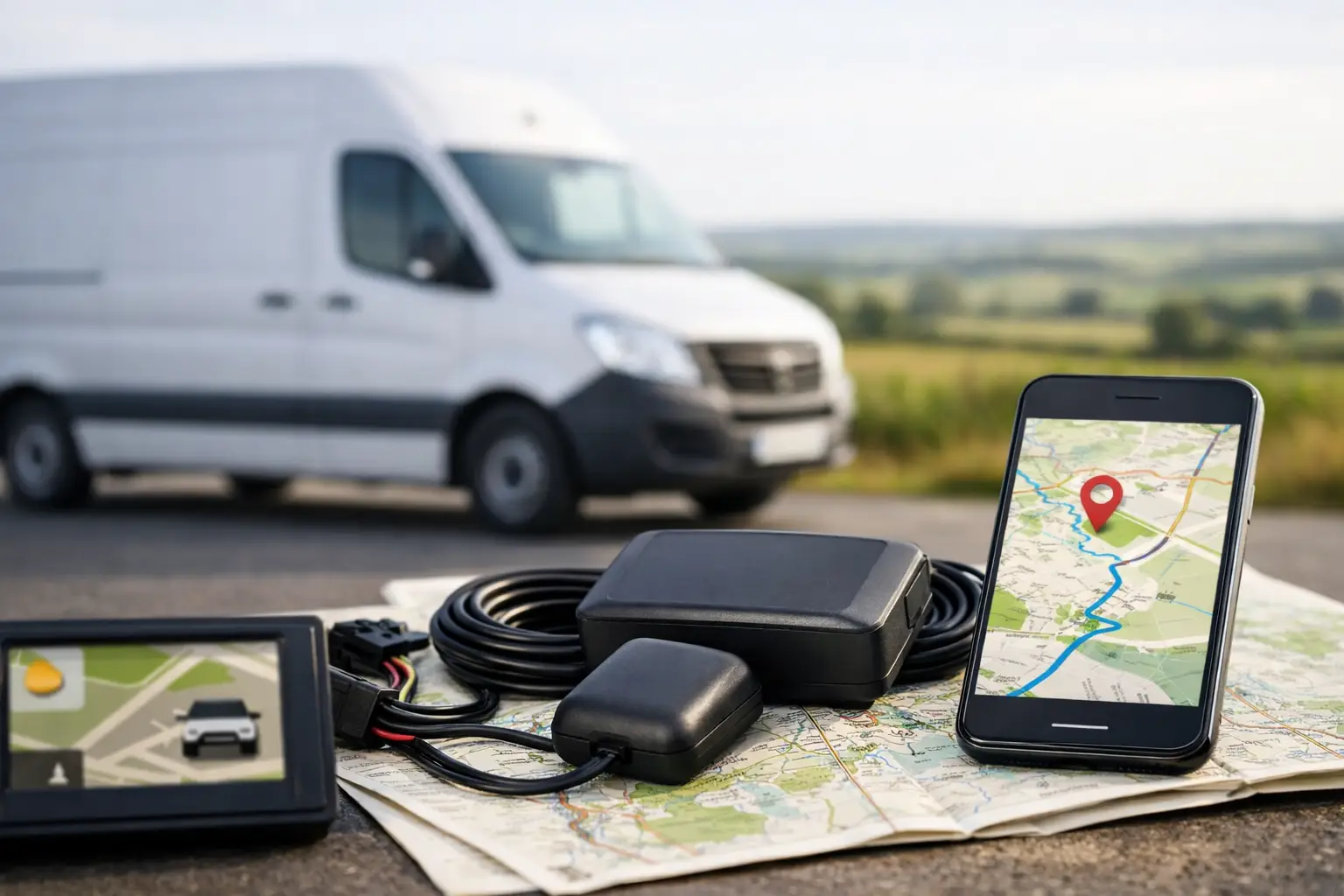
A van goes off route, a customer rings asking for an ETA, and your planner is checking three different systems plus a spreadsheet to work out what is actually happening. That is usually the point when businesses start looking for the best GPS trackers for vans - not because tracking is new, but because poor visibility creates delays, wasted admin and avoidable risk.
For a UK commercial operator, the right tracker is rarely just about dots on a map. It affects dispatch speed, driver accountability, vehicle utilisation, theft recovery, maintenance planning and, in some cases, wider compliance processes. A sole trader with two service vans needs something different from a transport business running a mixed fleet under operator licence obligations. So rather than pretend there is one winner for everyone, it is better to look at which type of system fits the job.
What makes the best GPS trackers for vans?
The strongest van tracking systems do three things well. They give accurate live location data, they make that data easy to use in day-to-day operations, and they do it without adding more admin than they remove.
That sounds obvious, but many products fall short in practice. Some consumer-style trackers are fine for theft alerts, yet offer little for dispatch or reporting. Some fleet platforms have plenty of features, but hide the useful ones behind complex installation, messy contracts or multiple add-ons. For most commercial fleets, the best option sits somewhere between basic location tracking and a wider telematics platform that supports planning, safety and maintenance.
It also depends on how your vans are used. Multi-drop fleets tend to care about route history, stop times and utilisation. Service and engineering fleets usually want accurate arrival data and a clearer view of time on site. Higher-risk fleets may put more weight on theft alerts, immobilisation options or covert fitting. If the vans sit within a wider HGV or mixed fleet operation, integration with compliance and driver management becomes more valuable than tracking alone.
8 best GPS trackers for vans to consider
1. Full fleet telematics platforms
If your vans are revenue-generating assets rather than private vehicles, this is usually the strongest option. A proper telematics platform gives live tracking, route replay, utilisation reporting, geofencing, maintenance prompts and driver behaviour visibility in one place. That matters because transport teams do not just want to know where a van is - they want to know whether it is being used well, whether it is likely to need attention soon, and whether the job can still be completed on time.
This category is often the best fit for operators running multiple vans, mixed fleets or time-critical delivery and service work. It costs more than a basic tracker, but the return tends to come from better planning and lower admin rather than the tracking function alone.
2. Plug-and-play OBD trackers
For businesses that need quick deployment, OBD devices are attractive. They plug into the vehicle port, are simple to move between vehicles and avoid downtime for fitting. For temporary fleets, short-notice expansion or operators who want a low-friction start, they can be very practical.
The trade-off is that they are not always the best long-term answer. Because they are easier to remove, they may be less suitable where tamper resistance or covert installation matters. Some also offer lighter data sets than hard-wired units. Still, for straightforward van visibility without workshop time, they have a clear place.
3. Hard-wired vehicle trackers
Hard-wired trackers are a better fit where reliability and permanence matter. They are commonly chosen by fleets that want stable live tracking, ignition status, stronger tamper resistance and a neater installation. If the vans are core operational assets, this route often gives more dependable long-term performance.
It does mean an installation step, and that can be a barrier for businesses that need immediate rollout. But when you are managing several vans every day, a properly fitted device is usually easier to live with than a removable tracker that goes missing or gets unplugged.
4. Battery-powered asset and backup trackers
Battery units are not always the main tracker for a working van, but they can still be useful. Some fleets use them as a secondary theft-recovery measure, while others use them for trailers, plant or occasional-use assets where wired power is less practical.
For vans, the main limitation is reporting frequency. To preserve battery life, updates are often less frequent than wired devices. That makes them less useful for live dispatch decisions, even if they are perfectly adequate for security-focused use.
5. Insurance-approved security trackers
If theft risk is the main concern, insurance-led products deserve attention. These systems often focus on stolen vehicle recovery, tamper alerts and monitoring support rather than day-to-day fleet reporting. They can be the right choice for high-value vans, specialist conversions or fleets operating in theft-prone areas.
The limitation is obvious. Security trackers are not necessarily operational tools. A transport manager may still need separate systems for utilisation, driver oversight and planning. If security is the first priority, they work well. If operational control is the goal, they may not go far enough on their own.
6. Camera-led tracking systems
Some van operators now prefer tracking tied to smart dashcams. This can make sense where accident management, driver coaching and disputed incidents are frequent issues. In those cases, location data alongside footage gives a much clearer operational picture than tracking alone.
This category tends to suit courier, urban delivery and service fleets where incident rates, congestion and customer disputes create regular cost. The compromise is price and complexity. If your main requirement is simply to locate vehicles and review routes, a camera-led setup may be more than you need.
7. App-based trackers for very small fleets
Mobile app tracking can work for very small operators, especially at startup stage. It is cheap, quick to deploy and often enough for basic visibility. For owner-drivers or firms with one or two vans, that may be all that is needed initially.
But there are obvious limits. It relies on drivers carrying phones, keeping them charged and leaving location permissions active. It is also a weak foundation for maintenance oversight, theft protection or reliable fleet reporting. Fine for a stopgap, not ideal for a growing operation.
8. Integrated compliance and tracking platforms
For operators with vans alongside lorries, trailers or regulated fleet activity, integrated platforms deserve serious consideration. These systems combine GPS tracking with wider fleet controls such as driver management, maintenance workflows, reporting and, where relevant, tachograph and driver hours tools.
This is where generic tracking often falls short. A transport office does not benefit from another disconnected dashboard. It benefits from one system that helps dispatch, supports oversight and reduces manual admin. That is why many growing fleets move away from standalone trackers and towards a broader operating platform.
How to choose the right van tracker for your operation
The best buying decision usually starts with one question: what problem are you actually trying to solve? If it is theft recovery, buy for security first. If it is wasted planner time and poor visibility, buy for operational control. If it is a combination of dispatch, compliance and utilisation, look beyond basic tracking.
It is also worth checking how the system is deployed. A cheap monthly price can look attractive until you add installation costs, long contract terms or charges for reports and alerts that should have been standard. Equally, a more complete platform may appear more expensive at first glance but replace several manual tasks and separate subscriptions.
Usability matters more than feature count. A transport manager needs to glance at the screen and know which van is nearest, who has stopped too long, which vehicles are underused and which jobs are at risk. If the system cannot do that clearly, the specification sheet does not matter much.
Common mistakes when comparing the best GPS trackers for vans
The biggest mistake is treating all trackers as if they do the same job. They do not. Some are security tools, some are visibility tools and some are full operational systems. Comparing them on price alone usually leads to buying something too limited, then replacing it later.
Another mistake is ignoring reporting and support. Live maps are useful, but historical route data, idle time, utilisation trends and maintenance prompts are often where the financial value sits. Good support matters too, especially if you are rolling tracking out across a working fleet and need it live quickly.
Finally, think about where the business is heading. A tracker that works for three vans may not suit fifteen. If growth is likely, it makes sense to choose a system that can expand into broader telematics without forcing another changeover six months later.
For many UK operators, the best answer is not the cheapest box in the van. It is the system that gives your office fewer blind spots, your planners faster decisions and your business more control over vehicles that need to earn every day.