
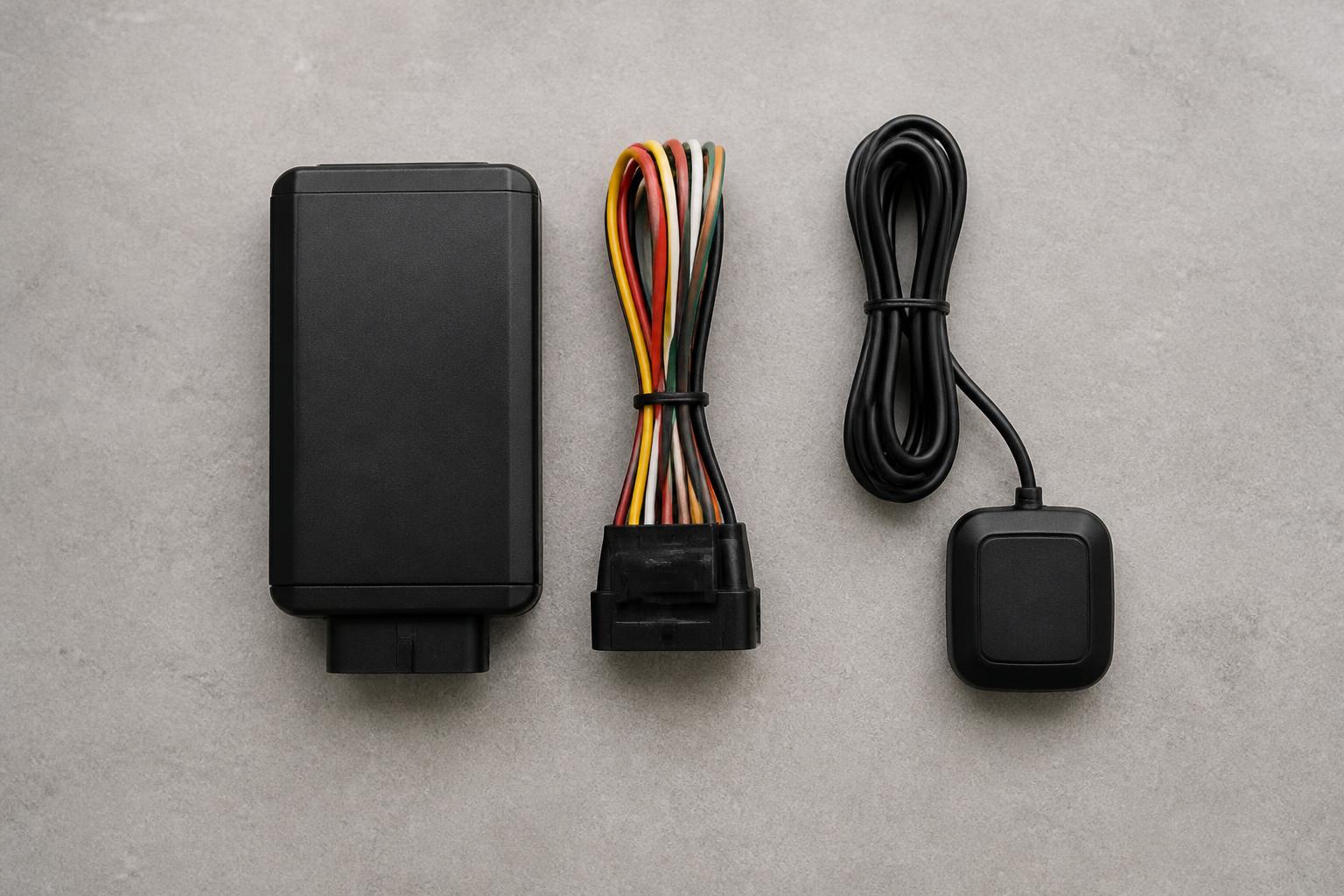
Choosing a GPS tracker for fleet operations is less about finding a device with a dot on a map, and more about choosing equipment that matches how your vehicles actually work. The right setup should give you dependable visibility, fit the vehicle type, support compliance and avoid adding another disconnected system for the office to manage.
For most UK operators, the best gps trackers are the ones that keep working through long shifts, poor signal areas, trailer changes, driver swaps and busy depot routines. That means looking past headline features and focusing on installation method, data quality, support, and how the tracker fits into the wider platform your team will use every day.
What makes a GPS tracker right for a commercial fleet?
A commercial fleet tracker has to do more than report location. In practice, it needs to answer operational questions quickly.
Can we see where the vehicle is now? Can we check where it stopped? Can we verify arrival and departure times? Can we spot unauthorised use? Can we match vehicle movement with Tachograph activity, driver hours, and job planning? If the answer to those questions depends on exporting data into spreadsheets or logging into separate systems, the tracker is only solving part of the problem.
For UK operators, the right tracker usually comes down to five practical criteria.
First, reliability. A tracker that drops offline regularly creates more admin than visibility. Commercial vehicles spend time in yards, under loading bays, in rural areas and on long motorway runs. The hardware needs stable power where wired, sensible fallback behaviour when coverage changes, and properly managed IoT SIMs so connectivity is not the weak point.
Second, update quality. Some devices only provide basic location pings at wide intervals. That may be enough for low value assets, but it is often not enough for vans doing multi drop work or an HGV fleet where timing, route history and stop analysis matter. A fleet operation needs a clear journey trail, not just occasional dots.
Third, operational fit. A courier van, a temperature controlled rigid, a bulk haulage unit and a plant trailer do not all need the same hardware. The right choice depends on ignition use, battery availability, vehicle changes, environmental exposure and whether the asset is self powered.
Fourth, compliance visibility. In the UK, transport operators often need vehicle tracking to sit alongside Tachograph records, driver hours checks and safety workflows. That is especially true for HGV fleets. A tracker on its own may show movement, but if it cannot sit within the same workflow as compliance and incident review, the office still ends up chasing information in multiple places.
Fifth, usability. The data has to be easy to interpret by a traffic office, transport manager or owner operator who is making live decisions. At Fleetalyse, we focus on Fleet insight rather than raw data volume. A useful system should make it obvious what has happened, what needs attention and what can wait.
This is why many buyers stop comparing devices in isolation and start comparing how the tracking solution works in day to day transport operations. If you are weighing up hardware options, our guide on how unlocked hardware gives fleets more control explains why long term flexibility matters.
Which tracker type suits vans, HGV, trailers and mixed fleets?
There is no single tracker type that suits every fleet. The best choice depends on the vehicle class, how often it moves, who drives it and how permanent the installation needs to be.
Hard wired trackers are usually the strongest option for vans and HGV units in regular service. They draw power from the vehicle, can support more frequent updates, and are less likely to be removed or forgotten. For fleets that need dependable live GPS, ignition status, route history and possible integration with CAN data, a hard wired unit is normally the practical standard. It suits leased vans, company owned trucks and vehicles that are on the road most days.
Plug in trackers can work well for lighter commercial vehicles where fast deployment matters more than a fully hidden installation. They are often considered for vans, short term vehicles or businesses that want quick rollout without workshop downtime. The trade off is that a plug in device is easier to remove, easier to damage and usually less suitable where you want a tamper resistant fitment.
Battery powered trackers are often the right answer for trailers, plant, containers and low use assets. They are especially useful where there is no dependable power source, or where the asset sits still for long periods and only needs movement alerts and periodic location updates. For a trailer fleet, battery life, weather resistance and mount security matter more than high frequency journey data. If the trailer is coupled and uncoupled regularly, the tracker also needs to stay useful without relying on a towing unit.
Asset trackers sit in a category of their own. These are not always about minute by minute vehicle telematics. They are often there to answer simpler but still valuable questions such as whether a trailer has moved, whether a generator has left site, or where a high value asset was last seen. For many mixed fleets, that lighter level of tracking is entirely appropriate for non powered equipment.
Mixed fleets need a more deliberate approach. It is common to use hard wired devices in powered vehicles, battery units for trailers and assets, and then bring them into one platform. That avoids over specifying one part of the fleet and under serving another. At Fleetalyse, we support this kind of operational mix rather than forcing one hardware type onto every use case.
Installation environment also matters. A van doing urban delivery work has different vibration, access and tamper risks from an HGV tractor unit on trunking work. A refrigerated trailer has different constraints again. The right hardware choice is partly about electronics, but just as much about where the unit sits, who can reach it and what conditions it will face.
If you are planning a rollout across several vehicle types, it is usually better to start with the workflow and choose hardware around it. Our fleet tracking and compliance solutions for different vehicle types show how that works in practice.
What data should you expect from a tracker?
Not all GPS tracking data is equal. Some systems provide little more than a location point, a timestamp and a speed reading. That may be enough for simple asset recovery, but fleet operations usually need more context.
At minimum, a commercial tracking setup should provide live location, ignition based trip detection, full journey history, stop locations and replay. Those basics help with customer queries, route checks, payroll verification and vehicle utilisation.
Beyond that, useful fleet data often includes geofence alerts, unauthorised movement alerts, battery or power loss alerts, and event notifications when a vehicle enters or leaves a depot, customer site or operating area. These are the practical features that reduce phone calls and manual checking.
For transport operations, richer data becomes more valuable when it is tied to decisions. Driver behaviour indicators, where available, can help identify harsh braking, acceleration, idling and speeding patterns. This is not just about league tables. It helps with fuel use, wear and tear, coaching and incident review.
Some fleets also need CAN data. That can open up a much wider view of vehicle operation, depending on the make, model and available signals. It may include odometer, fuel level, engine parameters and other vehicle status information. The important point is not to assume every vehicle will return the same data set. CAN data availability varies by vehicle and integration method, so it should be checked during specification rather than assumed from a brochure line.
For HGV operations, tracking becomes much more useful when it sits beside Tachograph information. A map point alone does not explain whether a delay came from traffic, loading time, a break requirement or available driver hours. When GPS and Tachograph data are visible in one workflow, the transport office can make better calls without cross checking separate systems.
That same principle applies to camera footage. A location trail is helpful after an incident, but it becomes much more useful when linked to Smart dashcams, so the office can review what happened around the same event window. We see the strongest operational gains when tracking, camera footage and compliance records support each other rather than sitting in separate logins.
Map presentation matters too. A platform should make route and stop data easy to read. Fleetalyse uses OpenStreetMap within the wider workflow so users can review movement clearly without overcomplicating the view.
In short, expect more than pings. Expect data that helps answer operational questions, supports customer service, reduces manual checking and gives the office confidence in what actually happened.
How do installation, support and hardware choice affect long-term cost?
The cheapest tracker on day one is often not the cheapest option over the life of the fleet. Long term cost is shaped by installation time, replacement rates, support overhead, downtime and whether the hardware leaves you locked into one supply route.
Hard wired installation costs more upfront than sending out a plug in device, but it often reduces loss, tampering and support calls. For a vehicle that is in service every day, that can be the more economical route over time. A poor install, on the other hand, causes recurring problems. Hidden placement, correct power connection and proper testing matter.
Battery devices create a different cost profile. They avoid wiring work, but they introduce battery management and replacement planning. That is not a problem if the update schedule and usage pattern are matched properly. It becomes a problem when a fleet expects high frequency tracking from a unit designed for low power asset visibility.
Hardware flexibility also matters. Many operators now prefer unlocked Teltonika devices rather than proprietary units tied too tightly to one provider. That gives more control over replacement, rollout planning and future changes. We support both Fleetalyse-ready trackers and unlocked Teltonika hardware because some fleets want a simple ready to go option, while others want more control over device selection and deployment.
Support can change cost just as much as hardware. If a rollout means vehicles off road, unclear installer instructions, or repeated back and forth to get devices live, the internal admin cost grows quickly. The same applies when replacing failed units or moving trackers between vehicles. A smooth process for provisioning, fitting, testing and onboarding is worth more than a low headline device price.
That is one reason we built practical account tools around deployment. Through the Customer Portal, customers can manage services, and the Tracker login gives direct access to day to day visibility once units are live. Commercial buying also needs clear billing and ordering processes. Where online purchases apply, Stripe supports payment handling, and UK businesses will rightly want VAT treatment shown clearly in the normal way.
For larger or mixed fleets, rollout planning should cover more than just hardware stock. It should include install sequencing, vehicle availability, expected data outputs, alert setup and who in the business needs access from day one. The more complex the operation, the more important that planning becomes.
If you are comparing options, it helps to look at the full picture rather than device price alone. Our range of tracking hardware and rollout options is built around that practical approach.
Why platform fit matters more than the tracker on its own
A tracker is only one part of a working fleet system. If your team still has one login for GPS, another for Tachograph downloads, another for camera footage and a spreadsheet for reporting, the hardware has not solved the main operational problem.
Platform fit matters because transport offices work by workflow, not by device category. A planner wants to know where the vehicle is, whether the driver can complete the job legally, whether there has been an incident, and what the route history shows. They do not want to assemble that answer from four separate products.
That is where a joined up platform becomes more valuable than any single tracker specification. At Fleetalyse, we bring together live GPS, remote Tachograph downloads, Smart dashcams and fleet reporting in one environment, so the office can work from one operational picture. For HGV fleets, that means location and compliance are not treated as separate conversations. For van and mixed fleets, it means tracking can still sit alongside safety and reporting without extra admin.
This is also where buying decisions become clearer. If two trackers both provide solid location data, the better choice is often the one that fits the wider system you need to run. Can it support the vehicle classes in your fleet? Can it scale from vans to trailers? Can it work with camera and compliance requirements? Can the office use it without jumping between screens all day?
UK operators should also keep the local operating context in mind. Tachograph rules, driver hours controls and operator compliance obligations are well established in the UK, even where some details differ from EU practice after Brexit. A tracking setup for a UK HGV fleet should support those real workflows, not just generic vehicle monitoring.
For fleets buying now, the strongest outcome usually comes from selecting the platform first, then the hardware that fits it. That avoids ending up with a tracker that works technically but creates a disconnected process operationally.
Fleetalyse is built for that joined up use. Whether you need Fleetalyse-ready trackers for a straightforward start, unlocked Teltonika hardware for more control, or a tailored rollout across vans, HGV units, trailers and assets, the aim is the same. Give the transport office clear visibility, reduce system juggling and make day to day fleet management easier through one practical workflow.
Fleeta Limited T/A Fleetalyse supports UK operators who want tracking to do more than place a vehicle on a map. The right choice is the one that fits the fleet you run, the compliance picture you manage and the decisions your team has to make every day.
What is the best GPS tracker for a small fleet?
For a small fleet, the best option is usually the one that gives reliable live tracking, clear journey history and simple reporting without adding extra admin. If you also manage compliance, choose a system that can sit alongside Tachograph and driver hours workflows.
Are plug-in GPS trackers suitable for commercial vehicles?
They can suit some light commercial use, but hard-wired units are usually better for regular fleet operations. They are harder to remove, more consistent for power and generally better suited to long-term vehicle tracking.
Do HGV fleets need more than basic location tracking?
Yes. HGV operators often need more than a map view, including route history, alerts, compliance visibility and links to Tachograph or driver hours processes. Basic tracking can leave gaps in daily transport management.
Is battery-powered tracking good for trailers and assets?
Often yes. Battery-powered units are commonly used where there is no permanent vehicle power, such as trailers or mobile assets. The right choice depends on reporting frequency, asset movement and how often the unit can be serviced.
Can I use unlocked Teltonika hardware with Fleetalyse?
Yes. Buyers can choose Fleetalyse-ready trackers or buy unlocked Teltonika hardware and plan a setup that suits their fleet. The key check is whether the hardware, installation and reporting needs match the operation.