
With an estimated £70 to £100 million of equipment stolen annually in the UK, the threat to your fleet is constant. Recovery rates for unregistered assets sit at a staggering 5 per cent. It's a reality that keeps regional operators awake at night. You've likely felt the frustration of rising insurance premiums. Perhaps you're struggling with the lack of visibility provided by a standard GPS tracker for plant machinery. Tracking engine hours and maintenance schedules manually is a drain on your resources.
Professional-grade tracking is the most effective way to regain control. We focus on practical tools built for the rigours of real-world application. This guide explains how to protect your high-value assets and streamline site operations through reliable monitoring. You'll learn how to secure real-time location visibility and trigger automated maintenance alerts based on actual usage. We also detail how these systems help reduce insurance costs while ensuring your fleet remains compliant with modern safety standards.
Key Takeaways
- Understand the current UK plant theft landscape and how professional tracking significantly reduces insurance premiums and recovery times.
- Identify the essential hardware specifications, such as IP69K ratings, needed to ensure your tracking devices survive the harshest UK site conditions.
- Distinguish between basic recovery-only systems and a high-performance GPS tracker for plant machinery that offers real-time operational visibility.
- Follow a structured five-step audit process to categorise your assets by risk and select the most appropriate power source for each unit.
- Learn how to leverage asset data to simplify maintenance scheduling and uphold rigorous Operator Licence standards across your entire fleet.
Protecting Your Assets: Why a GPS Tracker for Plant Machinery is Essential
A professional GPS tracker for plant machinery is more than a simple security beacon. It's a sophisticated system combining ruggedised hardware with cloud-based software to provide real-time asset management. The Technology Behind Machinery Tracking has advanced significantly; it now offers precise coordinates even in remote areas where mobile signals are traditionally weak. This constant stream of data allows you to move beyond reactive security and toward a proactive management model. It's about knowing exactly where your high-value assets are at any given second, regardless of how many sites you're currently managing.
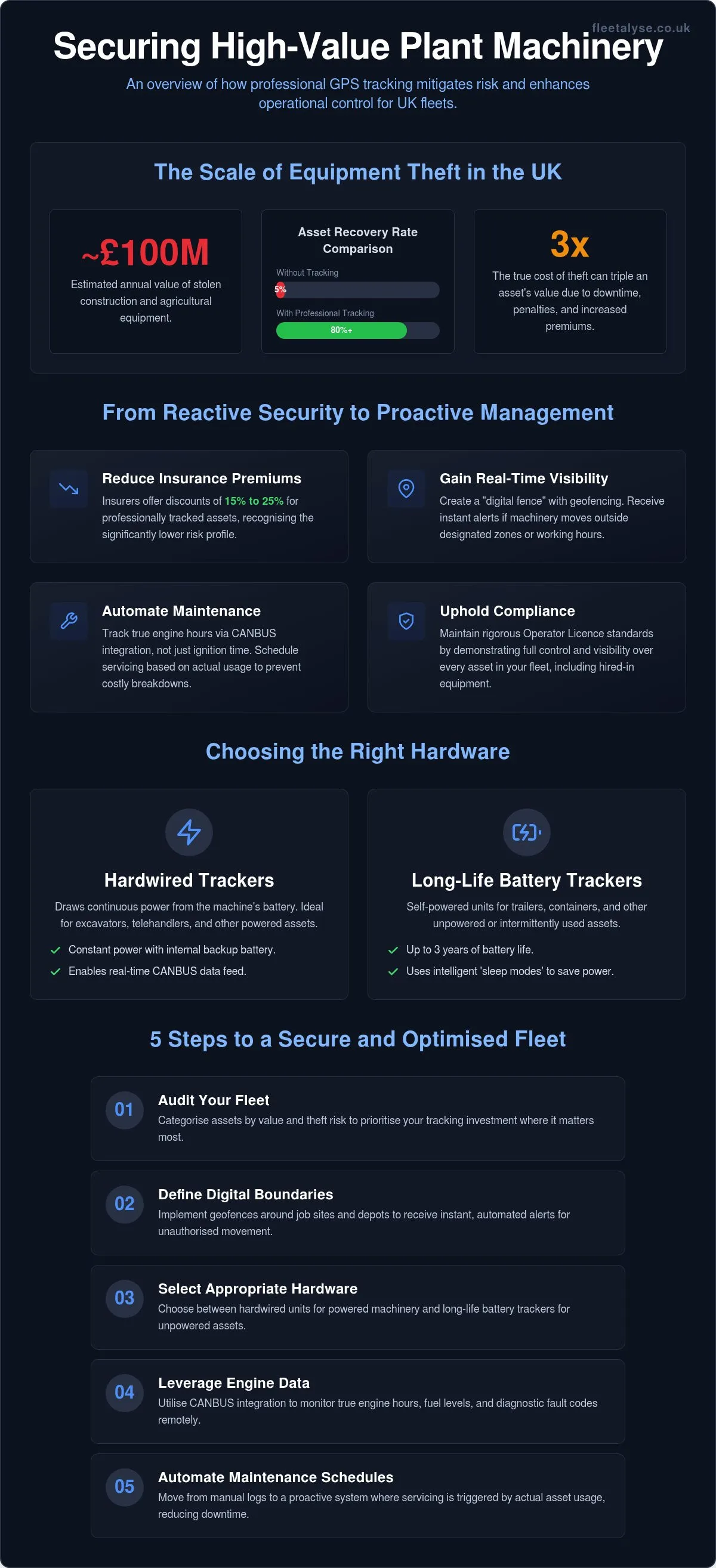
Theft is a persistent threat for UK operators. With equipment theft costing the industry up to £100 million annually, the financial risk is undeniable. Implementing a tracking strategy creates a "digital fence" through geofencing technology. You define the boundaries of your site. If a machine moves outside these coordinates out of hours, you receive an instant alert. This rapid response is why insurers often provide premium discounts of 15 per cent to 25 per cent for tracked assets. It shifts the odds in your favour, moving recovery rates from a dismal 5 per cent for unregistered gear to over 80 per cent for equipment fitted with telematics.
The Real Cost of Machinery Theft
The price of a stolen excavator isn't just the replacement cost. Downtime is the hidden profit killer. Whilst you wait for insurance claims to process and new machinery to arrive, your project stalls. Labour costs continue to mount whilst productivity ceases. This delay often leads to missed deadlines and contractual penalties. Your business reputation is also on the line. Clients expect reliability; a site that can't secure its own equipment looks unprofessional. When you factor in the inevitable rise in insurance premiums following a claim, the true cost of theft can be triple the original value of the asset.
Who Needs Machinery Tracking?
Every sector involving heavy equipment requires robust monitoring. This includes construction, agriculture, plant hire, and civil engineering. Small regional operators often find a GPS tracker for plant machinery even more critical than national fleets do. A single theft can bankrupt a small firm, whereas larger companies might absorb the loss. Fleetalyse provides the operational visibility needed to manage these risks effectively. Tracking is also vital for hired-in equipment. You remain responsible for the asset whilst it's in your care, and sub-contractor plant often presents a compliance blind spot. Professional tracking ensures you maintain your Operator Licence standards by proving you have full control over every asset on your books.
The Technology Behind Machinery Tracking: From GPS to CANBUS
Plant sites are often located in remote areas with limited cellular coverage. A modern GPS tracker for plant machinery uses multi-network roaming SIMs and high-gain antennas to maintain a connection. This ensures location data remains accurate even in deep valleys or rural infrastructure projects. For more complex site requirements, specialists such as Virtuser can provide the dedicated IoT and private LTE networks needed to support these high-performance systems. Beyond location, advanced units integrate with the machine's CANBUS system. This provides a direct feed of data from the engine's control unit. You can monitor actual engine hours, fuel levels, and diagnostic fault codes from your office. It's a level of detail that transforms a simple security device into a management tool. By tracking "true" engine hours rather than just ignition time, you can schedule maintenance based on actual wear and tear.
Protecting Your Assets requires this technological depth to combat sophisticated theft rings that target high-value machinery. Law enforcement often struggles to recover equipment without live data, making these technical features your first line of defence.
Choosing the right power source depends on the asset. Hardwired trackers are the standard for excavators and telehandlers. They draw power directly from the machine's battery and often include a small internal backup to ensure the unit stays live if the main battery is disconnected. For unpowered assets like trailers or generators, long-life battery units are more practical. These devices can remain in the field for up to three years on a single charge. They use intelligent "sleep modes" to preserve energy. The unit only wakes up to report its position when it detects movement or at set intervals. This ensures you don't lose visibility of assets that sit idle for long periods.
Ruggedised Hardware for Harsh Environments
Construction sites are brutal on electronics. Your hardware must carry an IP67 or IP69K rating. These certifications prove the device is completely dust-tight and can withstand high-pressure, high-temperature jet washes during routine cleaning. Durability is only half the battle. Professional installation of a GPS tracker for plant machinery focuses on covert placement. If a thief can't find the unit, they can't disable it. Our systems include anti-tamper alerts that trigger immediately if the power is cut or the device is moved. This provides the early warning needed to prevent a total loss. If you're ready to secure your equipment with industry-standard hardware, you can view our tracking options today.
Insurance Approved vs Operational Trackers: A Comparison
Selecting a GPS tracker for plant machinery requires a clear understanding of your primary goal: satisfying the insurer or managing the fleet. These objectives aren't always identical. Insurance-approved systems are designed for recovery after a theft has occurred. Operational systems are built to improve site productivity before anything goes wrong. Understanding the distinction ensures you don't invest in hardware that leaves you data-poor. Many managers mistakenly assume an insurance-approved unit will provide the live operational insights they need for daily scheduling.
Understanding Thatcham S5 and S7
In the UK, Thatcham Research sets the benchmark for security hardware. An S7 category tracker provides basic location and recovery capabilities. It is the minimum standard most insurers accept for high-value plant. S5 is more advanced; it requires proactive driver identification, usually via a separate tag. If the machine moves without the tag present, the 24/7 monitoring centre is alerted instantly. This human element is crucial. A monitoring centre liaises directly with the police to secure a recovery. Insurers often mandate these classifications for assets valued over a specific threshold to mitigate their risk.
The Benefits of Operational Tracking Data
Whilst S5 and S7 units satisfy the underwriters, they often lack the granular data needed to Optimise Plant Management. Operational trackers provide live visibility into how your machinery is actually being used. This data allows for better dispatching and improved asset utilisation across multiple sites. If you can see that a 20-tonne excavator is idling for 40 per cent of its shift, you can identify training needs or site bottlenecks. Monitoring fuel levels and engine health through CANBUS integration prevents unexpected breakdowns. It moves your maintenance strategy from reactive repairs to scheduled servicing based on actual hours worked. This reduces the total cost of ownership over the machine's lifespan.
To determine which system fits your risk profile, consider this decision checklist:
- Insurance Mandate: Check if your underwriter has specified a Thatcham S5 or S7 requirement in your policy.
- Data Depth: Decide if you need to monitor fuel consumption, idle time, or engine fault codes for site efficiency.
- Asset Value: Evaluate if the machine is high-risk enough to require the support of a 24/7 monitoring centre.
- Site Efficiency: Determine if live visibility would help you reduce fuel waste and lower your fleet's carbon footprint.
A hybrid approach is often the most effective solution for professional fleets. It combines the recovery speed of an insurance-approved unit with the business intelligence of an operational tracking platform. This ensures you're protected against theft whilst gaining the tools to run a more profitable operation.
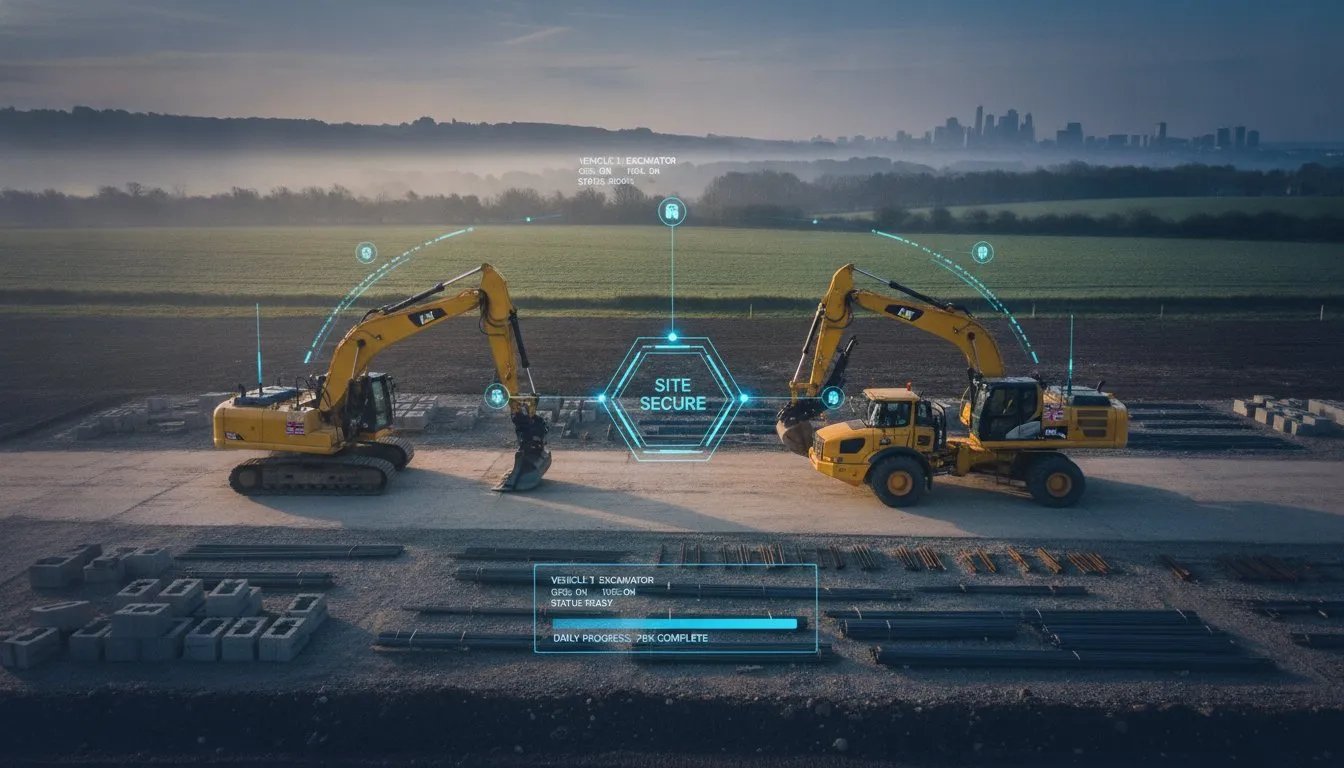
Implementing a Tracking Strategy: 5 Steps to Securing Your Fleet
Securing a diverse fleet requires a structured approach. It starts with a comprehensive asset audit. You must categorise your machinery by its replacement value and specific theft risk. High-value excavators on remote sites require different hardware than smaller, unpowered attachments kept in a secure depot. Once you've identified these needs, select your hardware. A GPS tracker for plant machinery should be chosen based on the machine's power availability. Hardwired units suit heavy plant with constant power, whilst battery-powered devices are better for trailers or static containers.
Organise professional installation to ensure the units are placed covertly. If a thief can easily spot the tracker, its value drops significantly. Expert fitters know the best hiding spots within the chassis that don't interfere with signal strength. Professional fitting also protects your manufacturer warranty, which is vital for new equipment. Finally, integrate this data into your central management platform. Having a single source of truth for your vans, trailers, and plant machinery reduces administrative overhead. In the same way that SafeKeep helps individuals organise their most important personal documents in one secure hub, a unified tracking platform ensures that your compliance team has a clear view of every asset under your Operator Licence.
Geofencing creates a virtual boundary around your site or depot. It's your primary defence against out-of-hours theft. Set up time-based alerts to notify site managers if an asset moves during the weekend or middle of the night. While geofencing monitors assets, managing personnel access is also critical; a digital system like MyGatePass can help you oversee visitor and facility entry points. Instant push notifications are essential here. A delay of even ten minutes can be the difference between a successful recovery and a total loss. You should also create "keep-out" zones for areas where machinery shouldn't be operated, such as sensitive environmental spots or near public footpaths.
Your team needs to know how to use the data effectively. Site foremen should use the tracking dashboard to monitor asset distribution across different projects. This prevents over-hiring or leaving expensive gear idle when it's needed elsewhere. Historical reporting is also invaluable for project costing and site audits. It provides an objective record of machine activity for client billing, which eliminates disputes over hours worked. Training ensures that the system becomes a tool for growth rather than just a security measure.
This structured implementation ensures your technology investment delivers both security and operational gains. Secure your assets with a professional GPS tracker for plant machinery by ordering your tracking hardware today.
Beyond Security: Using Fleetalyse to Optimise Plant Management
Operational efficiency is the primary driver for long-term return on investment. Whilst theft recovery provides peace of mind, the daily utility of a GPS tracker for plant machinery lies in the data it generates. Fleetalyse acts as a pragmatic partner by bridging the gap between site security and fleet compliance. We don't just provide location points. We provide a structured framework for managing your entire mobile inventory. This integration is essential for maintaining rigorous Operator Licence standards. It proves to regulators that you have full control over your equipment, from heavy excavators to the vans that transport your crews.
Transparency is a core value of our platform. By centralising data for HGVs, vans, and plant machinery, you eliminate the fragmented reporting that often plagues regional operators. You gain a single source of truth. This visibility allows you to identify underutilised assets and reallocate them where they are needed most. It's about making your resources work harder for you. Every minute of idle time identified is a direct saving on fuel and engine wear. To further enhance this data-driven approach, companies like Footfall Australia offer specialised solutions for monitoring site occupancy and visitor traffic, providing a complete overview of site activity.
Unified Fleet and Asset Visibility
Managing multiple sites often leads to equipment "ghosting." This occurs when assets sit idle because their location isn't tracked centrally. Our Fleetalyse GPS Fleet Tracking solutions provide a comprehensive overview of every mobile asset on a single live map. This level of visibility simplifies dispatching. You can see which machine is closest to a new job site instantly. It reduces the need for unnecessary equipment hire, saving thousands in rental fees over a project's duration. Knowing exactly where your trailers and plant are removes the guesswork from site logistics.
Maintenance and Compliance Scheduling
Manual logbooks for service intervals are prone to error and lead to missed maintenance. Automated engine hour reports replace these outdated systems. By using a GPS tracker for plant machinery to monitor actual usage, you can schedule servicing with precision. This ensures every piece of equipment is safe and compliant for site work. Rigorous maintenance schedules extend the longevity of your investment. They reduce the risk of catastrophic engine failure and lower long-term repair costs. Proactive management keeps your fleet on-site and earning, rather than stuck in the workshop awaiting parts for a preventable fault. Beyond maintenance, if you are planning to expand your operations, you can explore Forklift Sales and Advisory Services to find the right lifting machinery for your business.
Secure Your Assets and Streamline Site Logistics
Securing your fleet is a matter of business survival. You've seen how a professional GPS tracker for plant machinery transforms reactive security into proactive asset management. By integrating CANBUS data and automated engine hour reporting, you move beyond simple theft recovery. You gain the practical tools required to lower insurance premiums and uphold rigorous Operator Licence standards across every site you manage.
Fleetalyse provides pragmatic solutions for regional operators who need reliability without unnecessary complexity. We offer comprehensive asset and fleet tracking backed by expert UK-based support. This ensures your high-value equipment remains visible, compliant, and productive regardless of the site conditions. You now have the roadmap to audit your fleet, select ruggedised hardware, and set effective geofences.
Moving from manual logbooks to real-time digital visibility is the most effective way to protect your margins. It's time to eliminate the uncertainty of remote operations. Optimise your plant security and operations with Fleetalyse today. Protecting your investment has never been more straightforward.
Frequently Asked Questions
Do I need a different tracker for an excavator versus a generator?
You generally need different hardware configurations based on power availability. An excavator usually suits a hardwired GPS tracker for plant machinery that monitors engine hours via the ignition. For a generator, a battery-powered unit is often better if the asset sits idle for long periods. Choosing the right device ensures you get accurate data without draining the machine's battery or losing signal during transport.
Will installing a GPS tracker on my plant machinery void the manufacturer warranty?
Professional installation won't void your manufacturer warranty. We use non-invasive fitting techniques that don't interfere with the machine's original wiring or electronic control units. It's vital to use an experienced installer who understands the specific circuitry of heavy plant. This approach protects your investment whilst providing the security and operational visibility you need to manage your fleet effectively across various UK construction sites.
How long does the battery last on a non-powered asset tracker?
Battery life for unpowered asset trackers can last up to three years depending on the reporting frequency. Most units use intelligent sleep modes to conserve energy. They only wake up to send a location ping at set intervals or if they detect unauthorised movement. If you require more frequent updates, the battery life will decrease. These long-life units are ideal for trailers, containers, and static plant.
Can I track my machinery in areas with poor mobile phone signal?
You can track machinery in remote areas by using multi-network roaming SIMs. These devices don't rely on a single provider; they automatically switch to the strongest available signal across all UK networks. If a machine enters a complete dead zone, the tracker stores the GPS coordinates in its internal memory. Once the asset moves back into coverage, it uploads all stored data to your dashboard automatically.
Is it possible to remotely immobilise machinery if it is stolen?
Remote immobilisation is possible with specific hardwired trackers. This feature allows you to send a command via the software to disable the starter motor. For safety reasons, this only prevents the machine from being restarted rather than cutting the engine whilst it's in motion. It's a powerful tool for theft recovery. However, it requires professional installation to ensure it integrates safely with the machine's existing electrical system.
What is the difference between a Thatcham S7 and a standard GPS tracker?
A Thatcham S7 unit is an insurance-certified device that includes 24/7 monitoring by a secure centre. If the asset is moved without authorisation, the centre is alerted and coordinates with the police for recovery. A standard GPS tracker for plant machinery provides location data and operational insights but doesn't always have the accredited monitoring required by some insurers. S7 focuses on recovery, whilst standard trackers provide more data.
How much does a GPS tracker for plant machinery typically cost per month?
Monthly costs vary depending on the level of data you require. Basic location tracking is the most affordable option. If you need advanced telematics, such as CANBUS integration for fuel monitoring and engine diagnostics, the subscription fee is typically higher. Most providers offer tiered plans. This allows you to choose a service level that matches the value of your asset and the complexity of your operational needs.
Can I move a tracker from one machine to another if I sell an asset?
You can move your tracking hardware between assets. If you sell a machine, a professional technician can decommission the unit and reinstall it into your new equipment. This flexibility protects your initial hardware investment. You'll simply need to update the asset details on your tracking dashboard to ensure your reports reflect the correct machine. It's a straightforward process that ensures continuous visibility across your changing fleet.
Frequently asked questions
Who Needs Machinery Tracking?
Every sector involving heavy equipment requires robust monitoring. This includes construction, agriculture, plant hire, and civil engineering. Small regional operators often find a GPS tracker for plant machinery even more critical than national fleets do. A single theft can bankrupt a small firm, whereas larger companies might absorb the loss. Fleetalyse provides the operational visibility needed to manage these risks effectively. Tracking is also vital for hired-in equipment. You remain responsible for the asset whilst it's in your care, and sub-contractor plant often presents a compliance blind spot. Professional tracking ensures you maintain your Operator Licence standards by proving you have full control over every asset on your books. Plant sites are often located in remote areas with limited cellular coverage. A modern GPS tracker for plant machinery uses multi-network roaming SIMs and high-gain antennas to maintain a connection. This ensures location data remains accurate even in deep valleys or rural infrastructure projects. Beyond location, advanced units integrate with the machine's CANBUS system. This provides a direct feed of data from the engine's control unit. You can monitor actual engine hours, fuel levels, and diagnostic fault codes from your office. It's a level of detail that transforms a simple security device into a management tool. By tracking "true" engine hours rather than just ignition time, you can schedule maintenance based on actual wear and tear. Protecting Your Assets requires this technological depth to combat sophisticated theft rings that target high-value machinery. Law enforcement often struggles to recover equipment without live data, making these technical features your first line of defence.
Do I need a different tracker for an excavator versus a generator?
You generally need different hardware configurations based on power availability. An excavator usually suits a hardwired GPS tracker for plant machinery that monitors engine hours via the ignition. For a generator, a battery-powered unit is often better if the asset sits idle for long periods. Choosing the right device ensures you get accurate data without draining the machine's battery or losing signal during transport.
Will installing a GPS tracker on my plant machinery void the manufacturer warranty?
Professional installation won't void your manufacturer warranty. We use non-invasive fitting techniques that don't interfere with the machine's original wiring or electronic control units. It's vital to use an experienced installer who understands the specific circuitry of heavy plant. This approach protects your investment whilst providing the security and operational visibility you need to manage your fleet effectively across various UK construction sites.
How long does the battery last on a non-powered asset tracker?
Battery life for unpowered asset trackers can last up to three years depending on the reporting frequency. Most units use intelligent sleep modes to conserve energy. They only wake up to send a location ping at set intervals or if they detect unauthorised movement. If you require more frequent updates, the battery life will decrease. These long-life units are ideal for trailers, containers, and static plant.
Can I track my machinery in areas with poor mobile phone signal?
You can track machinery in remote areas by using multi-network roaming SIMs. These devices don't rely on a single provider; they automatically switch to the strongest available signal across all UK networks. If a machine enters a complete dead zone, the tracker stores the GPS coordinates in its internal memory. Once the asset moves back into coverage, it uploads all stored data to your dashboard automatically.
Is it possible to remotely immobilise machinery if it is stolen?
Remote immobilisation is possible with specific hardwired trackers. This feature allows you to send a command via the software to disable the starter motor. For safety reasons, this only prevents the machine from being restarted rather than cutting the engine whilst it's in motion. It's a powerful tool for theft recovery. However, it requires professional installation to ensure it integrates safely with the machine's existing electrical system.
What is the difference between a Thatcham S7 and a standard GPS tracker?
A Thatcham S7 unit is an insurance-certified device that includes 24/7 monitoring by a secure centre. If the asset is moved without authorisation, the centre is alerted and coordinates with the police for recovery. A standard GPS tracker for plant machinery provides location data and operational insights but doesn't always have the accredited monitoring required by some insurers. S7 focuses on recovery, whilst standard trackers provide more data.
How much does a GPS tracker for plant machinery typically cost per month?
Monthly costs vary depending on the level of data you require. Basic location tracking is the most affordable option. If you need advanced telematics, such as CANBUS integration for fuel monitoring and engine diagnostics, the subscription fee is typically higher. Most providers offer tiered plans. This allows you to choose a service level that matches the value of your asset and the complexity of your operational needs.
Can I move a tracker from one machine to another if I sell an asset?
You can move your tracking hardware between assets. If you sell a machine, a professional technician can decommission the unit and reinstall it into your new equipment. This flexibility protects your initial hardware investment. You'll simply need to update the asset details on your tracking dashboard to ensure your reports reflect the correct machine. It's a straightforward process that ensures continuous visibility across your changing fleet.