
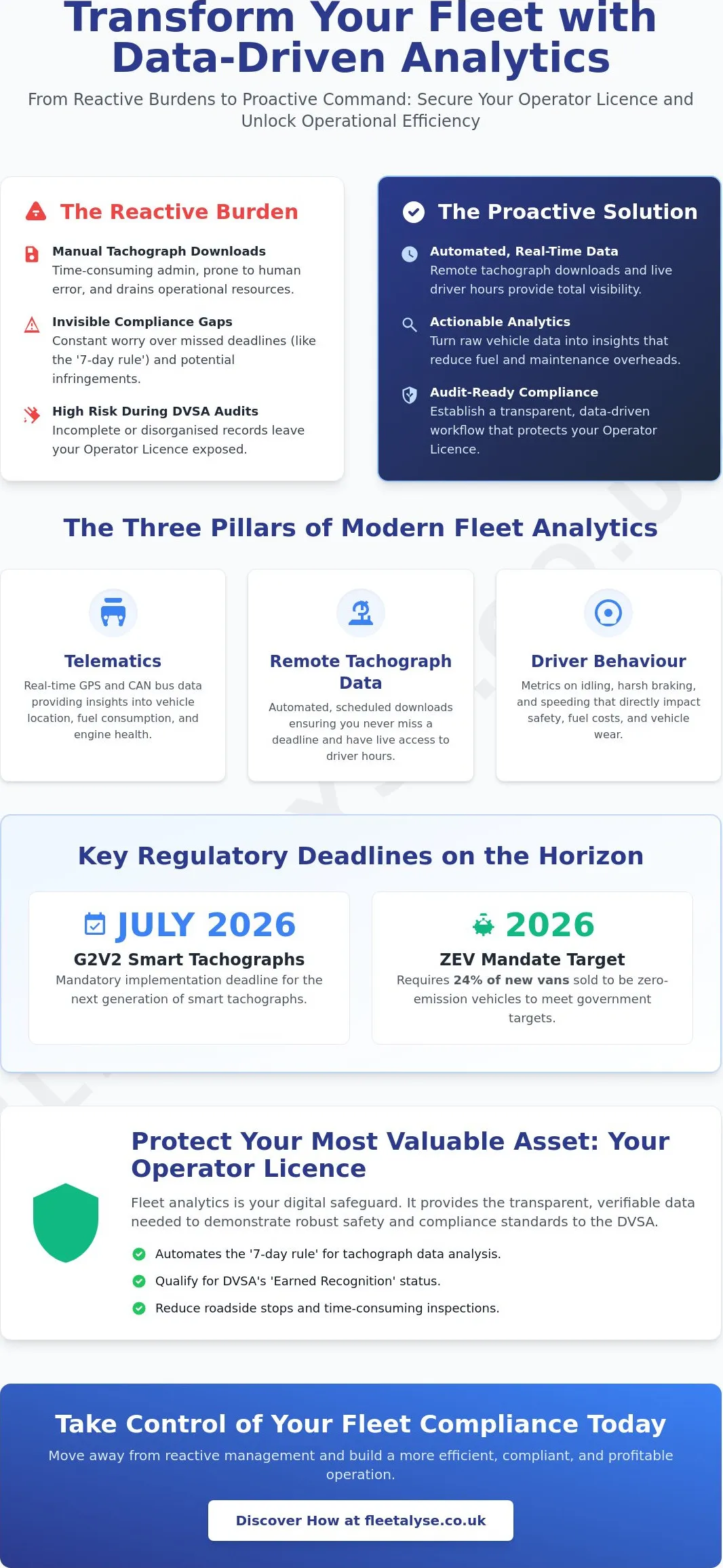
Will your fleet meet the July 2026 deadline for G2V2 smart tachographs, or will manual admin leave you exposed during a DVSA audit? Managing a regional operation often feels like chasing a moving target. You're likely tired of the administrative burden of manual tachograph downloads and the constant worry of an invisible compliance gap. It's a common frustration amongst operators who want to focus on growth rather than paperwork.
This guide demonstrates how fleet analytics transforms raw vehicle data into a strategic asset. By moving away from reactive management, you can automate your compliance reporting and significantly reduce fuel and maintenance costs. We'll explore the impact of the 2026 ZEV mandate targets, which require 24% of new vans to be zero-emission, and show you how live driver hours and remote downloads provide total visibility. You'll learn how to secure your Operator Licence standards whilst cutting the operational waste that erodes your margins.
Key Takeaways
- Shift from reactive troubleshooting to proactive management by using fleet analytics to turn raw vehicle data into actionable compliance safeguards.
- Eliminate the administrative burden of manual card downloads through automated remote tachograph technology and real-time data transmission.
- Discover why mastering compliance metrics is the essential first step before attempting to reduce fuel and maintenance overheads.
- Learn how to audit your current data gaps and select hardware that integrates directly with your existing tachograph analysis tools.
- Establish a transparent, data-driven workflow that provides peace of mind during DVSA audits and protects your Operator Licence.
What is Fleet Analytics for UK Transport Operators?
In the context of UK road transport, fleet analytics is the systematic process of collecting, organising, and interpreting data from vehicle assets to improve operational performance. It moves beyond simply knowing where a vehicle is. It's about understanding why it's there, how it's being driven, and whether it remains compliant with the latest DVSA standards. By 2026, the industry has shifted. Reactive management, where you fix problems after they occur, is no longer sustainable. Proactive management is the new baseline for survival.
Effective fleet analytics relies on three core pillars:
- Telematics: Real-time GPS and CAN bus data providing insights into fuel consumption and vehicle health.
- Remote Tachograph Data: Automated downloads that ensure you never miss a deadline or the '7-day rule'.
- Driver Behaviour: Metrics on idling, harsh braking, and speeding that impact both safety and costs.
This data-driven approach is the foundation of Fleet management in the modern era. It allows operators to qualify for the DVSA's 'Earned Recognition' status. By sharing performance data, you prove you're a safe operator. This reduces the likelihood of roadside stops and time-consuming inspections.
The Evolution from GPS Tracking to Predictive Analytics
Simple GPS tracking tells you where your van is. That's no longer enough. Modern logistics requires predictive insights. AI now identifies potential maintenance issues before a breakdown happens on the M6. We've moved from asking "where is the van" to "how efficient is the route". This shift saves time. It saves fuel. Most importantly, it keeps your fleet moving without unexpected downtime.
Connecting Analytics to Your Operator Licence
Your Operator Licence is your most valuable asset. Analytics protects it by flagging driver infringements the moment they happen. Fleet analytics automates the '7-day rule' by ensuring tachograph data is analysed and reported within the mandatory timeframe without manual intervention. This level of transparency doesn't just satisfy the DVSA. It also helps lower insurance premiums by proving your commitment to rigorous safety standards. If you want a more robust way to manage these risks, visit Fleetalyse to see how we simplify the process.
How Fleet Data is Captured and Organised
Effective fleet analytics depends on a structured data pipeline. It isn't enough to simply gather data. You must capture it accurately, transmit it securely, and process it into a format that a transport manager can actually use. This process starts at the hardware layer. GPS trackers provide location data, whilst CAN bus interfaces tap into the vehicle's internal brain to monitor fuel consumption and engine health. For HGV operators, remote download tools are the most critical component, as they pull data directly from the tachograph head without requiring the vehicle to return to the depot.
Once captured, the transmission layer moves this information. Data flows via encrypted cellular networks to a secure cloud environment. This ensures that sensitive information remains protected from interception. The processing layer then takes over. It converts raw binary code into the readable reports you see on your dashboard. This transformation is what allows you to spot a trend in idling or a recurring driver infringement before it becomes a liability. Given the sensitivity of location and driver behaviour data, GDPR compliance is a core requirement. Protecting driver privacy whilst maintaining operational oversight is a delicate balance that modern systems must maintain. Reviewing official compliance statistics highlights how often technical failures lead to avoidable fines, reinforcing the need for reliable data capture.
Remote Tachograph Downloads: The Foundation of Compliance
Manual card downloads are a drain on resources. Automated remote downloading removes the need for driver intervention entirely. These systems pull data on a set schedule, ensuring your records are always up to date for analysis. For dispatchers, the primary benefit is live driver hours visibility. You can see exactly how much driving time remains on a shift, which prevents accidental over-runs and simplifies route planning. To implement this in your own fleet, explore Fleetalyse remote tachograph solutions for a practical, hands-off approach.
Trailer and Asset Tracking: Beyond the Prime Mover
Your trailers and plant equipment are high-value assets that often lack their own power source. Trailer tracking solves the problem of "lost" assets in large third-party yards or remote sites. You can choose between battery-powered units for long-term unpowered standby or line-powered units that charge whilst the trailer is coupled. Integrating this data into your main fleet analytics dashboard gives you a complete view of your entire inventory. If you are ready to stop searching for missing equipment and start optimising your asset utilisation, you can get started with a tailored tracking setup today.
Compliance Analytics vs. Operational Performance
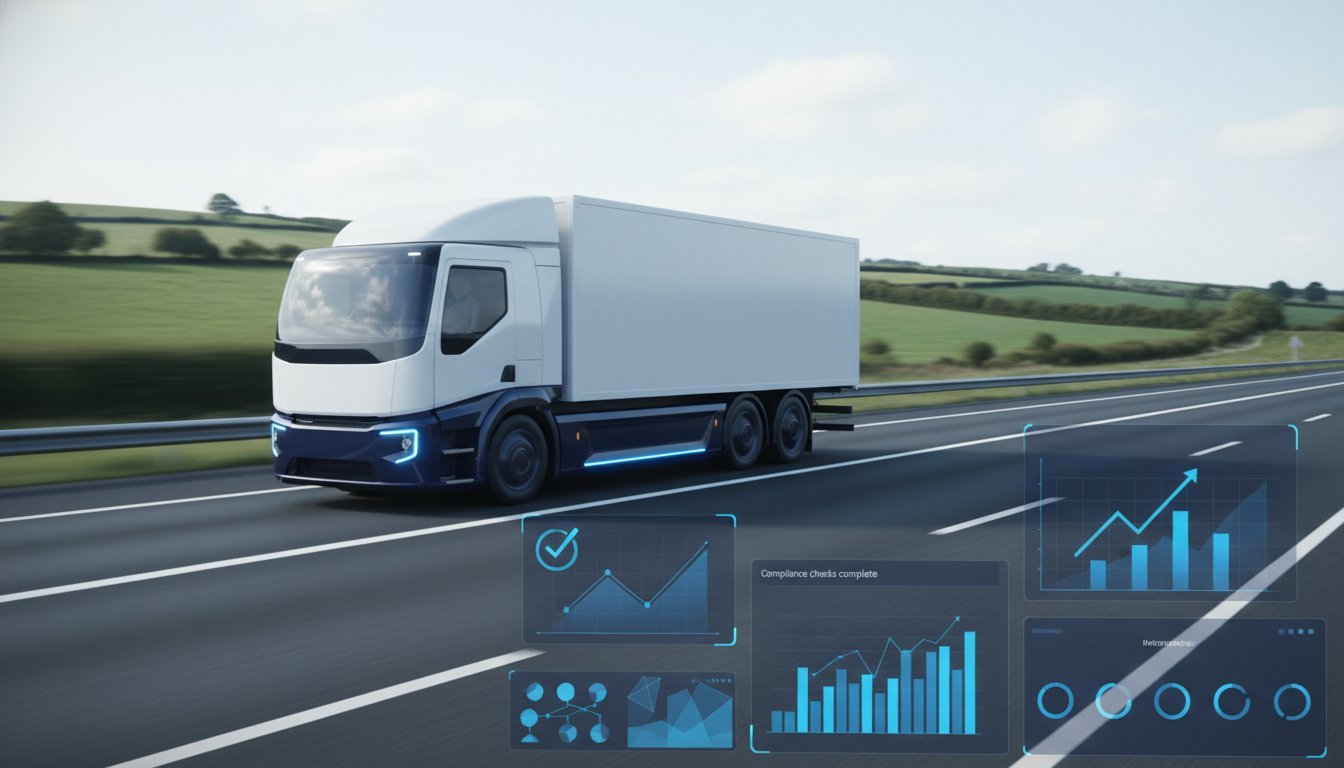
You cannot achieve true operational efficiency without first mastering compliance. It is a common mistake to chase fuel savings whilst ignoring tachograph infringements. A single DVSA prohibition or a public inquiry can wipe out a year's worth of diesel optimisations. In the 2026 regulatory environment, fleet analytics acts as the bridge between staying legal and staying profitable. It provides the data necessary to move beyond simple survival and into a state of continuous improvement.
To maintain a competitive edge, every UK transport manager should track these five metrics daily:
- Missing Mileage: Identifying gaps between GPS movement and tachograph records.
- Infringement Frequency: Tracking driver rest and working time directive (WTD) breaches.
- Idling Duration: Pinpointing wasted fuel that yields zero operational value.
- Vehicle Utilisation: Ensuring trailers and vans aren't sitting idle in the yard.
- Driver Behaviour Scores: Benchmarking safety and efficiency across the workforce.
Mastering these data points allows you to implement a data-driven fleet strategy that balances legal requirements with commercial goals. High-performing operators use fleet analytics to identify which routes are genuinely profitable and which are being drained by congestion or poor driver choices. The cost of non-compliance is too high to ignore. Fines and reputational damage are significant, but the loss of your Operator Licence is the ultimate risk.
The Compliance Dashboard: DVSA Standards
A robust compliance dashboard flags missing mileage and unauthorised vehicle use instantly. It monitors driver rest periods and ensures adherence to the Working Time Directive. By using infringement rates as a Key Performance Indicator (KPI), you can target your driver training programmes where they are needed most. This proactive approach prevents small errors from becoming systemic failures during a DVSA audit.
The Performance Dashboard: Profitability and Fuel
Performance analytics focus on the bottom line. Analysing idling time directly reveals where you are burning money without moving freight. When you compare driver behaviour scores to fuel consumption, the correlation becomes undeniable. Harsh braking data predicts tyre wear and tear, allowing you to schedule maintenance before a blowout occurs. This level of detail transforms your fleet from a cost centre into a streamlined, data-led operation; furthermore, managing your essential supplies with Fleetmaxx Solutions can help you secure better rates on bulk fuel and lubricants to further enhance profitability.
Implementing a Data-Driven Fleet Strategy
Transitioning to a data-led operation requires a structured approach. It isn't about gathering every possible byte of information. It's about closing the gaps that lead to non-compliance and wasted revenue. To build a robust fleet analytics strategy, follow these five practical steps:
- Step 1: Audit your data gaps. Determine if you are still relying on manual tachograph downloads. Check if your vehicles are ready for the July 2026 G2V2 smart tachograph mandate. This is the most common point of failure in UK fleets.
- Step 2: Check integration. Choose hardware that integrates seamlessly with your existing tachograph analysis software. Avoid proprietary systems that lock your data away.
- Step 3: Set benchmarks. Use your initial data to establish a baseline for driver behaviour and fuel consumption. Be realistic. Aim for incremental gains.
- Step 4: Train your team. Ensure your transport managers know how to interpret reports. Data is only valuable if it triggers an operational change.
- Step 5: Review ROI monthly. Track the reduction in administrative hours and fuel spend. This proves the financial viability of your investment.
A successful strategy relies on high-quality hardware and reliable transmission. If you're ready to automate your compliance, you can order your setup here to begin the transition.
Avoiding the 'Data Overload' Trap
Less is often more. When you first introduce fleet analytics, don't try to monitor every single data point. Focus on exceptions. You only need to see the outliers, such as a driver who has exceeded their hours or a vehicle with a low battery. Set up automated alerts for critical events like tachograph failures. This allows your team to manage by exception rather than drowning in spreadsheets whilst trying to find a needle in a haystack.
Choosing a Partner, Not Just a Provider
Generic software providers often lack an understanding of the UK's regional infrastructure. Look for a partner that offers UK-based support and understands local regulations. Transparency is the most important factor. Many providers hide costs behind re-installation fees or data overage charges. A pragmatic partner provides clear, upfront pricing. Ensure the platform can scale as you grow. Whether you have five vans or fifty HGVs, the system should remain simple and efficient amongst the complexities of modern logistics.
Why Fleetalyse is the Pragmatic Choice for Fleet Analytics
Fleetalyse isn't a distant, global software provider. We are a localised specialist built for the rigours of real-world UK haulage. Our fleet analytics platform is designed specifically for regional operators who need reliable tools rather than theoretical data. We understand the practical challenges of managing a domestic fleet. Our suite of services, including GPS Fleet Tracking and Live Driver Hours, provides the visibility you need to run a lean, compliant operation. We value your time. We prioritise functional utility over flashy, unnecessary features that complicate your daily workflow.
Total transparency is a core pillar of our business. We provide straightforward pricing and clear operational benefits from the start. You won't find hidden data fees or complex contractual clauses here. Our focus remains on making DVSA audits a stress-free process for your team. By integrating Remote Tachograph Download and Tachograph Analysis Integration into one seamless dashboard, we ensure your records are always audit-ready. This pragmatic approach protects your Operator Licence and reduces the administrative burden that often holds regional businesses back.
Specialised in the UK Market
We understand the specific challenges of domestic infrastructure and regional transport networks. Whether you are managing Van Tracking for local deliveries or Trailer Tracking for national trunking, our platform scales to fit your needs. We prioritise functional utility. Our hardware is built for the British climate and the heavy-duty use typical of UK logistics. We don't just provide software; we act as a reliable ally for the local industry. This commitment to the domestic market ensures our solutions remain relevant to the evolving regulatory landscape in 2026.
Next Steps for Your Fleet
Moving from manual systems to automated analytics is a logical progression for any modern operator. The Fleetalyse way is efficient and highly reliable. We help you transition away from the risks of manual card downloads and towards a future of live, actionable insights. It's time to stop guessing and start measuring. Automation is the only way to guarantee compliance whilst reducing operational overheads. If you are ready to secure your fleet's future, organise a consultation for your fleet's analytics needs today and see the difference that pragmatic expertise makes.
Secure Your Fleet's Operational Future
The UK transport industry is moving towards a digital-first regulatory environment. Between the G2V2 smart tachograph mandate and shifting ZEV targets, manual administration is no longer a viable strategy. Adopting fleet analytics allows you to move beyond reactive troubleshooting. You gain live visibility into driver hours and eliminate the compliance gaps that put your Operator Licence at risk. This isn't just about data collection. It's about protecting your business from avoidable fines and operational waste.
Fleetalyse was founded in 2020 to support regional hauliers with pragmatic, local expertise. We are specialists in UK Operator Licence compliance. Our tools provide automated remote tacho downloads for zero-admin compliance. We focus on functional utility and transparent pricing; this ensures you have the insights needed to stay competitive without hidden costs. It's time to streamline your workflow and focus on growth.
See our published pricing for your fleet analytics and compliance needs
Take the first step towards a more efficient, audit-ready operation today. Your fleet's future depends on the data you master now.
Frequently Asked Questions
What is the difference between fleet tracking and fleet analytics?
Fleet tracking shows you where your vehicle is in real-time. Fleet analytics takes that location data and combines it with engine health, fuel usage, and driver behaviour to provide actionable insights. It moves beyond simple dots on a map to show you how to reduce idling or improve route efficiency. It's the difference between seeing a van is delayed and knowing that a specific driver's habits are causing increased fuel spend.
How does fleet analytics help with DVSA compliance?
Analytics systems automate the collection of tachograph data, ensuring you never miss the mandatory 28-day driver card or 90-day vehicle unit download deadlines. By flagging infringements such as rest period breaches or missing mileage instantly, you can address issues through driver training before they appear in a DVSA audit. This proactive approach is essential for maintaining your Operator Compliance Risk Score (OCRS) and protecting your licence.
Can fleet analytics software reduce my insurance premiums?
Many UK insurers offer lower premiums to operators who can provide transparent data on driver safety standards. By using fleet analytics to monitor and reduce incidents of harsh braking or speeding, you demonstrate a lower risk profile. Some providers may require specific tracking hardware to be fitted as a condition of the policy; it's always best to check with your broker first to see which data points they value most.
Is fleet analytics only for large HGV fleets, or can van operators benefit too?
Van operators benefit just as much as HGV fleets, especially with the 2026 G2V2 smart tachograph mandates for vans over 2.5 tonnes on international routes. Whether you manage five vans or fifty HGVs, tracking idling time and fuel consumption directly impacts your bottom line. Asset tracking also prevents the loss of expensive equipment, making it a practical choice for regional businesses of all sizes that value resource management.
How much time can I save by using remote tachograph download analytics?
Remote tachograph downloads eliminate the need for drivers to return to the depot just to have their cards read manually. This can save several hours of administrative work per vehicle every month. It also removes the risk of human error in data collection. You no longer need to chase drivers for their cards; the system pulls the data automatically whilst the vehicle is on the road, allowing your team to focus on dispatch.
What hardware is required to start tracking fleet analytics?
You typically need a GPS tracking unit and a remote tachograph download device fitted to each vehicle. For deeper insights, CAN bus interfaces connect directly to the vehicle's engine management system to read fuel and diagnostic data. These units are small and can be professionally installed with minimal downtime. Trailer and asset tracking usually require separate battery or line-powered units to monitor unpowered equipment effectively.
How do I ensure my fleet data is GDPR compliant?
We ensure data security through end-to-end encryption and strict access controls. Under GDPR, driver behaviour and location history are considered personal data, so you must have a clear policy on how this information is used. Our platform helps you manage this by allowing you to set permissions so only authorised staff can view sensitive records. This protects both the business and the driver's privacy whilst maintaining necessary operational oversight.
Can I integrate fleet analytics with my existing tachograph analysis software?
Yes, our systems are built to integrate with most major tachograph analysis platforms used in the UK. This means you don't have to change your existing analysis workflow to benefit from automated data collection. The remote download tool sends files directly to your analysis provider in the required .DDD format. This creates a seamless link between raw data capture and your final compliance reports without the need for manual exports.
Frequently asked questions
The Evolution from GPS Tracking to Predictive Analytics
Simple GPS tracking tells you where your van is. That's no longer enough. Modern logistics requires predictive insights. AI now identifies potential maintenance issues before a breakdown happens on the M6. We've moved from asking "where is the van" to "how efficient is the route". This shift saves time. It saves fuel. Most importantly, it keeps your fleet moving without unexpected downtime.
Connecting Analytics to Your Operator Licence
Your Operator Licence is your most valuable asset. Analytics protects it by flagging driver infringements the moment they happen. Fleet analytics automates the '7-day rule' by ensuring tachograph data is analysed and reported within the mandatory timeframe without manual intervention. This level of transparency doesn't just satisfy the DVSA. It also helps lower insurance premiums by proving your commitment to rigorous safety standards. If you want a more robust way to manage these risks, visit Fleetalyse to see how we simplify the process. Effective fleet analytics depends on a structured data pipeline. It isn't enough to simply gather data. You must capture it accurately, transmit it securely, and process it into a format that a transport manager can actually use. This process starts at the hardware layer. GPS trackers provide location data, whilst CAN bus interfaces tap into the vehicle's internal brain to monitor fuel consumption and engine health. For HGV operators, remote download tools are the most critical component, as they pull data directly from the tachograph head without requiring the vehicle to return to the depot. Once captured, the transmission layer moves this information. Data flows via encrypted cellular networks to a secure cloud environment. This ensures that sensitive information remains protected from interception. The processing layer then takes over. It converts raw binary code into the readable reports you see on your dashboard. This transformation is what allows you to spot a trend in idling or a recurring driver infringement before it becomes a liability. Given the sensitivity of location and driver behaviour data, GDPR compliance is a core requirement. Protecting driver privacy whilst maintaining operational oversight is a delicate balance that modern systems must maintain. Reviewing official compliance statistics highlights how often technical failures lead to avoidable fines, reinforcing the need for reliable data capture.
Remote Tachograph Downloads: The Foundation of Compliance
Manual card downloads are a drain on resources. Automated remote downloading removes the need for driver intervention entirely. These systems pull data on a set schedule, ensuring your records are always up to date for analysis. For dispatchers, the primary benefit is live driver hours visibility. You can see exactly how much driving time remains on a shift, which prevents accidental over-runs and simplifies route planning. To implement this in your own fleet, explore Fleetalyse remote tachograph solutions for a practical, hands-off approach.
Trailer and Asset Tracking: Beyond the Prime Mover
Your trailers and plant equipment are high-value assets that often lack their own power source. Trailer tracking solves the problem of "lost" assets in large third-party yards or remote sites. You can choose between battery-powered units for long-term unpowered standby or line-powered units that charge whilst the trailer is coupled. Integrating this data into your main fleet analytics dashboard gives you a complete view of your entire inventory. If you are ready to stop searching for missing equipment and start optimising your asset utilisation, you can get started with a tailored tracking setup today. You cannot achieve true operational efficiency without first mastering compliance. It is a common mistake to chase fuel savings whilst ignoring tachograph infringements. A single DVSA prohibition or a public inquiry can wipe out a year's worth of diesel optimisations. In the 2026 regulatory environment, fleet analytics acts as the bridge between staying legal and staying profitable. It provides the data necessary to move beyond simple survival and into a state of continuous improvement. To maintain a competitive edge, every UK transport manager should track these five metrics daily: Mastering these data points allows you to implement a data-driven fleet strategy that balances legal requirements with commercial goals. High-performing operators use fleet analytics to identify which routes are genuinely profitable and which are being drained by congestion or poor driver choices. The cost of non-compliance is too high to ignore. Fines and reputational damage are significant, but the loss of your Operator Licence is the ultimate risk.
The Compliance Dashboard: DVSA Standards
A robust compliance dashboard flags missing mileage and unauthorised vehicle use instantly. It monitors driver rest periods and ensures adherence to the Working Time Directive. By using infringement rates as a Key Performance Indicator (KPI), you can target your driver training programmes where they are needed most. This proactive approach prevents small errors from becoming systemic failures during a DVSA audit.
The Performance Dashboard: Profitability and Fuel
Performance analytics focus on the bottom line. Analysing idling time directly reveals where you are burning money without moving freight. When you compare driver behaviour scores to fuel consumption, the correlation becomes undeniable. Harsh braking data predicts tyre wear and tear, allowing you to schedule maintenance before a blowout occurs. This level of detail transforms your fleet from a cost centre into a streamlined, data-led operation. Transitioning to a data-led operation requires a structured approach. It isn't about gathering every possible byte of information. It's about closing the gaps that lead to non-compliance and wasted revenue. To build a robust fleet analytics strategy, follow these five practical steps: A successful strategy relies on high-quality hardware and reliable transmission. If you're ready to automate your compliance, you can order your setup here to begin the transition.
Avoiding the 'Data Overload' Trap
Less is often more. When you first introduce fleet analytics, don't try to monitor every single data point. Focus on exceptions. You only need to see the outliers, such as a driver who has exceeded their hours or a vehicle with a low battery. Set up automated alerts for critical events like tachograph failures. This allows your team to manage by exception rather than drowning in spreadsheets whilst trying to find a needle in a haystack.
Choosing a Partner, Not Just a Provider
Generic software providers often lack an understanding of the UK's regional infrastructure. Look for a partner that offers UK-based support and understands local regulations. Transparency is the most important factor. Many providers hide costs behind re-installation fees or data overage charges. A pragmatic partner provides clear, upfront pricing. Ensure the platform can scale as you grow. Whether you have five vans or fifty HGVs, the system should remain simple and efficient amongst the complexities of modern logistics. Fleetalyse isn't a distant, global software provider. We are a localised specialist built for the rigours of real-world UK haulage. Our fleet analytics platform is designed specifically for regional operators who need reliable tools rather than theoretical data. We understand the practical challenges of managing a domestic fleet. Our suite of services, including GPS Fleet Tracking and Live Driver Hours, provides the visibility you need to run a lean, compliant operation. We value your time. We prioritise functional utility over flashy, unnecessary features that complicate your daily workflow. Total transparency is a core pillar of our business. We provide straightforward pricing and clear operational benefits from the start. You won't find hidden data fees or complex contractual clauses here. Our focus remains on making DVSA audits a stress-free process for your team. By integrating Remote Tachograph Download and Tachograph Analysis Integration into one seamless dashboard, we ensure your records are always audit-ready. This pragmatic approach protects your Operator Licence and reduces the administrative burden that often holds regional businesses back.
Specialised in the UK Market
We understand the specific challenges of domestic infrastructure and regional transport networks. Whether you are managing Van Tracking for local deliveries or Trailer Tracking for national trunking, our platform scales to fit your needs. We prioritise functional utility. Our hardware is built for the British climate and the heavy-duty use typical of UK logistics. We don't just provide software; we act as a reliable ally for the local industry. This commitment to the domestic market ensures our solutions remain relevant to the evolving regulatory landscape in 2026.
Next Steps for Your Fleet
Moving from manual systems to automated analytics is a logical progression for any modern operator. The Fleetalyse way is efficient and highly reliable. We help you transition away from the risks of manual card downloads and towards a future of live, actionable insights. It's time to stop guessing and start measuring. Automation is the only way to guarantee compliance whilst reducing operational overheads. If you are ready to secure your fleet's future, organise a consultation for your fleet's analytics needs today and see the difference that pragmatic expertise makes. The UK transport industry is moving towards a digital-first regulatory environment. Between the G2V2 smart tachograph mandate and shifting ZEV targets, manual administration is no longer a viable strategy. Adopting fleet analytics allows you to move beyond reactive troubleshooting. You gain live visibility into driver hours and eliminate the compliance gaps that put your Operator Licence at risk. This isn't just about data collection. It's about protecting your business from avoidable fines and operational waste. Fleetalyse was founded in 2020 to support regional hauliers with pragmatic, local expertise. We are specialists in UK Operator Licence compliance. Our tools provide automated remote tacho downloads for zero-admin compliance. We focus on functional utility and transparent pricing; this ensures you have the insights needed to stay competitive without hidden costs. It's time to streamline your workflow and focus on growth. See our published pricing for your fleet analytics and compliance needs Take the first step towards a more efficient, audit-ready operation today. Your fleet's future depends on the data you master now.
What is the difference between fleet tracking and fleet analytics?
Fleet tracking shows you where your vehicle is in real-time. Fleet analytics takes that location data and combines it with engine health, fuel usage, and driver behaviour to provide actionable insights. It moves beyond simple dots on a map to show you how to reduce idling or improve route efficiency. It's the difference between seeing a van is delayed and knowing that a specific driver's habits are causing increased fuel spend.
How does fleet analytics help with DVSA compliance?
Analytics systems automate the collection of tachograph data, ensuring you never miss the mandatory 28-day driver card or 90-day vehicle unit download deadlines. By flagging infringements such as rest period breaches or missing mileage instantly, you can address issues through driver training before they appear in a DVSA audit. This proactive approach is essential for maintaining your Operator Compliance Risk Score (OCRS) and protecting your licence.
Can fleet analytics software reduce my insurance premiums?
Many UK insurers offer lower premiums to operators who can provide transparent data on driver safety standards. By using fleet analytics to monitor and reduce incidents of harsh braking or speeding, you demonstrate a lower risk profile. Some providers may require specific tracking hardware to be fitted as a condition of the policy; it's always best to check with your broker first to see which data points they value most.
Is fleet analytics only for large HGV fleets, or can van operators benefit too?
Van operators benefit just as much as HGV fleets, especially with the 2026 G2V2 smart tachograph mandates for vans over 2.5 tonnes on international routes. Whether you manage five vans or fifty HGVs, tracking idling time and fuel consumption directly impacts your bottom line. Asset tracking also prevents the loss of expensive equipment, making it a practical choice for regional businesses of all sizes that value resource management.
How much time can I save by using remote tachograph download analytics?
Remote tachograph downloads eliminate the need for drivers to return to the depot just to have their cards read manually. This can save several hours of administrative work per vehicle every month. It also removes the risk of human error in data collection. You no longer need to chase drivers for their cards; the system pulls the data automatically whilst the vehicle is on the road, allowing your team to focus on dispatch.
What hardware is required to start tracking fleet analytics?
You typically need a GPS tracking unit and a remote tachograph download device fitted to each vehicle. For deeper insights, CAN bus interfaces connect directly to the vehicle's engine management system to read fuel and diagnostic data. These units are small and can be professionally installed with minimal downtime. Trailer and asset tracking usually require separate battery or line-powered units to monitor unpowered equipment effectively.
How do I ensure my fleet data is GDPR compliant?
We ensure data security through end-to-end encryption and strict access controls. Under GDPR, driver behaviour and location history are considered personal data, so you must have a clear policy on how this information is used. Our platform helps you manage this by allowing you to set permissions so only authorised staff can view sensitive records. This protects both the business and the driver's privacy whilst maintaining necessary operational oversight.
Can I integrate fleet analytics with my existing tachograph analysis software?
Yes, our systems are built to integrate with most major tachograph analysis platforms used in the UK. This means you don't have to change your existing analysis workflow to benefit from automated data collection. The remote download tool sends files directly to your analysis provider in the required .DDD format. This creates a seamless link between raw data capture and your final compliance reports without the need for manual exports.