
With diesel prices reaching 181.97 pence per litre in August 2026, your fleet's margin for error has effectively vanished. Operating a profitable transport business now requires more than just keeping wheels turning; it demands absolute visibility over every mile and minute. If you're currently juggling fragmented data from separate trackers, fuel cards, and tacho systems, you know the frustration of a disjointed operation. Most operators share this anxiety regarding DVSA audits and the struggle to justify new technology investments to the board whilst costs continue to climb.
This fleet efficiency reporting guide for managers provides the roadmap to consolidate those data streams into a single source of truth. We'll show you how to master your reporting to cut costs, ensure total "O" Licence compliance, and transform raw telematics into actionable management decisions. You'll learn how to reduce administrative overhead through automation while improving driver behaviour and fuel economy. From navigating the new Smart Tachograph 2 requirements for LCVs to integrating live driver hours, we cover the essential metrics that turn regulatory necessity into a genuine competitive advantage for your business.
Key Takeaways
- Eliminate data silos by integrating trackers, fuel cards, and tacho systems into a single source of truth for your operation.
- Use this fleet efficiency reporting guide for managers to identify the specific KPIs that satisfy both board-level financial requirements and daily transport management needs.
- Reduce administrative overhead and ensure "O" Licence compliance by automating remote tachograph downloads to eliminate manual collection errors.
- Optimise fuel economy and safety by implementing exception reporting that highlights critical driver behaviours like excessive idling and harsh braking.
- Transform raw telematics into actionable decisions by focusing on asset utilisation rates and vehicle uptime to maximise fleet productivity.
Why Fleet Efficiency Reporting Often Fails (and How to Fix It)
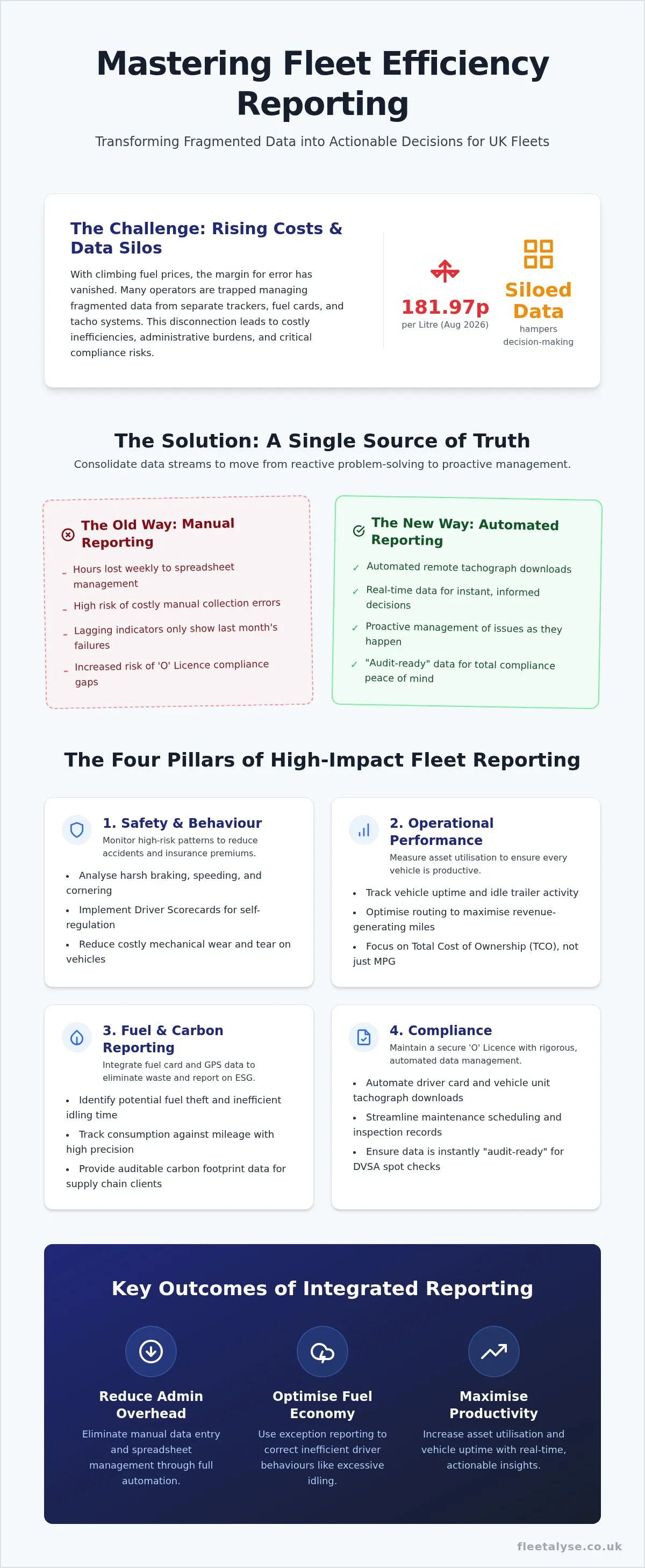
Efficient fleet reporting is the synthesis of cost, behaviour, and compliance data. It's the backbone of a profitable transport business. However, many managers fall into the "Data Silo" trap. This happens when fuel cards, GPS trackers, and tacho systems operate on separate platforms. These disconnected systems hinder quick decision-making. High-quality fleet management requires these streams to merge into a single view. Without integration, you spend your time hunting for data instead of using it.
The administrative cost of manual reporting is significant. Transport managers often lose hours every week to spreadsheet management and manual tacho collection. This isn't just a waste of talent; it's a financial drain. With diesel prices averaging 181.97 pence per litre in August 2026, even small inefficiencies in fuel reporting can devastate your bottom line. As we move through 2026, UK transport standards demand more frequent, automated data intervals to maintain "O" Licence safety ratings. Relying on manual processes increases the risk of compliance gaps and missed deadlines.
Defining Efficiency in the Modern UK Fleet
Modern efficiency looks past simple MPG. Managers must focus on Total Cost of Ownership (TCO) to understand true profitability. This includes tracking maintenance cycles alongside fuel spend and driver behaviour. For operators of HGVs and trailers, asset utilisation is the primary KPI. This fleet efficiency reporting guide for managers argues that "audit-ready" data is the true measure of managerial success. If you can't present accurate records instantly during a spot check, your reporting system isn't working. True efficiency means having the data ready before the DVSA asks for it.
Identifying Your Data Fragmentation Gaps
Start by auditing your current reporting sources. Check your trackers, fuel cards, and manual tacho logs for consistency. Most fleets rely on lagging indicators that only show last month's failures. This delay prevents you from fixing issues as they happen. Real-time reporting serves as the essential antidote to operational blind spots. By integrating these streams through a partner like Fleetalyse, you move from reactive firefighting to proactive management. Eliminating these gaps ensures you have a single source of truth for every vehicle and driver in your fleet.
The Four Pillars of High-Impact Fleet Reporting
Success in transport management isn't about collecting data; it's about categorising it into actionable pillars. Each pillar supports a different aspect of your business health. While international benchmarks such as the Federal Fleet Report highlight broad governmental trends, UK operators require specific, localised data to protect their margins. This fleet efficiency reporting guide for managers breaks down these pillars into safety, performance, fuel, and compliance.
Safety and behaviour reports monitor harsh braking, speeding, and cornering. These are direct indicators of accident risk and mechanical wear. Operational performance measures vehicle uptime and asset utilisation. If your trailers are stationary or your vans are taking inefficient routes, your revenue drops. Fuel reporting tracks consumption against mileage to highlight waste. Finally, compliance reporting acts as the non-negotiable foundation. It ensures your "O" Licence remains secure through rigorous tachograph analysis and maintenance scheduling.
Monitoring Driver Behaviour and Safety
Telematics allow you to identify high-risk driving patterns amongst your staff before they result in a costly incident. There's a proven correlation between detailed driver behaviour reports and reduced insurance premiums. Insurers value fleets that actively manage risk with data rather than guesswork. Implementing a "Driver Scorecard" encourages self-regulation and healthy competition. It turns safety into a measurable performance metric that drivers can track and improve themselves, reducing the need for constant managerial intervention.
Fuel Management and Carbon Reporting
Integrating fuel card data with GPS tracking helps you spot fuel theft or inefficient routing immediately. This transparency is also vital for ESG (Environmental, Social, and Governance) reporting. Clients now frequently demand carbon footprint data as part of their own supply chain audits. Eliminating unnecessary idling is the fastest way to see a return. Industry data suggests that idling reports can help managers identify waste and save a fleet up to 10% in total fuel costs. If your current system lacks this level of depth, you can start improving your fleet visibility today by choosing a platform built for the rigours of UK compliance.
Digital vs. Manual: Streamlining Tachograph and Compliance Data
Manual tachograph collection is a relic of an inefficient past. It creates a massive administrative burden that drains your team's resources. Drivers often have to return to the depot specifically for data retrieval. Managers then spend hours manually downloading cards. This process is a productivity killer. It keeps your staff tied to desks instead of focusing on Fleet Management & Optimization. By digitising this workflow, you eliminate the risk of missing legal deadlines. Digital systems provide a clean, audit-ready data stream. This transition is essential for any modern fleet efficiency reporting guide for managers.
The Benefits of Remote Tachograph Downloads
Remote downloads remove the physical barriers to data. Vehicles don't need to return to the centre just for collection. This keeps your HGVs, trailers, and vans on the road where they're most productive. From July 1, 2026, light commercial vehicles (LCVs) between 2.5 and 3.5 tonnes used for international transport must use Smart Tachograph 2. Remote downloads make managing this new influx of data manageable. Automation ensures you never miss a driver or vehicle card download window. It provides the operational clarity needed to manage a regional fleet without hidden complexities.
Live Driver Hours: Real-Time Compliance Reporting
Live driver hours tracking is the ultimate tool for proactive management. It allows you to plan routes based on actual remaining driving time. This prevents infringements before they happen. It's a significant shift from reactive reporting to live oversight. You can discover how Fleetalyse automates your compliance monitoring to see these gains in action. Automating the infringement reporting process also slashes your administrative overhead. It removes the need for manual cross-referencing between GPS trackers and tacho logs. This fleet efficiency reporting guide for managers emphasises how integration protects your "O" Licence whilst improving daily productivity. Integrating tacho analysis directly into your management reporting suite provides a single source of truth. You no longer have to guess which driver is available for a last-minute load. The data is there, live and accurate.
Building Your Monthly Report: KPIs That Actually Drive Decisions
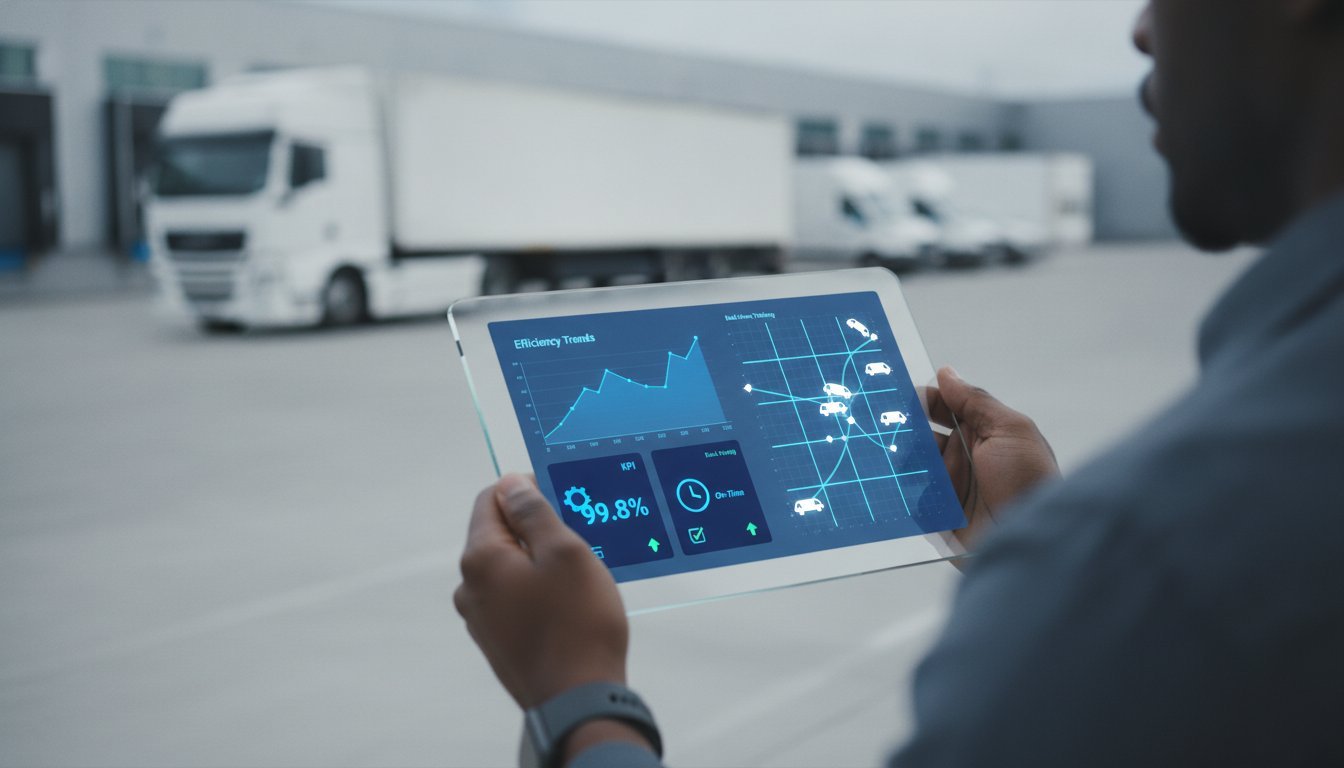
Effective reporting separates critical signals from background noise. A standard monthly report often fails because it tries to be everything to everyone. This fleet efficiency reporting guide for managers recommends a bifurcated approach. You must tailor data for the board whilst maintaining a granular view for daily operations. Visualising this data through dashboards is far more effective than presenting dense, static tables. It allows stakeholders to spot trends instantly. Establishing internal benchmarks is also vital. Compare your fleet's current performance against its own historical data and wider UK industry standards to measure true progress.
Adopting an "Exception Reporting" model is the most efficient way to manage a regional fleet. Instead of reviewing every clean tachograph record or on-time delivery, your report should highlight the outliers. Focus on the drivers who consistently idle or the vehicles with recurring defects. This approach saves time and directs your limited resources where they can make the most impact. It moves your management style from constant supervision to targeted intervention.
Reporting for the Board: ROI and Risk
Directors care about financial stability and legal exposure. Your board-level reports should focus on Total Cost of Ownership (TCO) and compliance risk mitigation. Show how investments in telematics lead to insurance premium reductions. Use hard data to justify vehicle replacement cycles. If an asset costs more to maintain than it generates in revenue, the data provides an undeniable case for procurement changes. Presenting a clear business case for technology becomes simple when you can demonstrate a direct link between automated reporting and reduced administrative spend.
Operational Reporting: Daily Gains
At the transport manager level, the focus shifts to daily execution. Track the completion rates of walkaround inspections and defect reporting to ensure your maintenance schedule remains proactive. Monitor "Time on Site" and delivery window accuracy for your trailers and vans. These metrics reveal where your operation is losing money through idle assets or inefficient routing. Identifying under-utilised assets allows you to redeploy them or sell them to improve cash flow. To start generating these high-impact insights for your business, you can order your integrated reporting tools here today. This level of detail ensures your team stays focused on the daily gains that lead to long-term operational success.
Automating Your Reporting with Fleetalyse: From Data to Compliance
Fleetalyse provides the technical foundation to move from fragmented data to a single source of truth. We integrate GPS Fleet Tracking, Live Driver Hours, and Tachograph Analysis Integration into one dashboard. This eliminates the need to jump between different platforms for trailers, vans, and HGVs. Our platform is built specifically for the UK market. We understand regional regulations and the pressure of maintaining a high safety rating. This fleet efficiency reporting guide for managers highlights how integration removes hidden complexities. We don't offer flashy, unnecessary features. We provide the functional utility you need to stay profitable whilst remaining compliant.
Adopting this automated approach can reduce your administrative overhead by up to 40%. This frees your transport manager to focus on operational growth instead of manual data entry. By synthesising cost, behaviour, and compliance data, you create a reporting structure that actually works. You'll no longer struggle with lagging indicators. Instead, you'll have live visibility into every asset and driver. This level of transparency is essential for modern fleet management, especially with diesel prices averaging 181.97 pence per litre in August 2026.
Seamless Tachograph Analysis Integration
We bridge the gap between raw tacho data and audit-ready compliance reports. Our system processes remote downloads automatically. This ensures you're always prepared for a DVSA check, including the new Smart Tachograph 2 requirements for LCVs effective from July 1, 2026. We value transparency. Our pricing and contractual terms are straightforward, manifesting our commitment to fairness. One regional haulier we worked with recently eliminated their manual tacho admin entirely. They shifted from a paper-heavy process to a digital-first operation. This change saved them hours of weekly labour and removed the risk of human error in their records.
Get Started with Fleetalyse
Setting up your automated dashboard is a simple, structured process. We handle the onboarding for HGVs, vans, and trailers to ensure a frictionless transition. Our team ensures your hardware is correctly configured for Live Driver Hours and Remote Tachograph Download. This preparation guarantees you're ready for the next DVSA inspection or internal audit. This fleet efficiency reporting guide for managers is just the start. You can Secure your Fleetalyse solution today to begin transforming your raw telematics into actionable decisions. Don't let data fragmentation hold your business back. Take the first step toward a more efficient, compliant, and transparent transport operation.
Transforming Data into Operational Advantage
Mastering your data is no longer a luxury. It's a requirement for survival in the 2026 transport landscape. This fleet efficiency reporting guide for managers has outlined the path from fragmented spreadsheets to a unified digital view. By focusing on the four pillars of safety, performance, fuel, and compliance, you protect your "O" Licence whilst driving down costs. Automation acts as the catalyst for this change. It removes the burden of manual tacho collection and provides real-time visibility for HGVs and trailers. Success requires facts; not intuition.
Fleetalyse acts as your pragmatic expert partner. We are specialists in UK transport compliance. Our system offers automated remote tachograph downloads to ensure you remain audit-ready at all times. Reliable data allows you to make decisions based on hard evidence. It's time to eliminate the hidden administrative complexities that hinder your regional growth. Transitioning to integrated reporting ensures your business remains resilient against rising fuel prices and evolving DVSA regulations.
Streamline your fleet reporting and secure your compliance today. You now have the roadmap to turn raw telematics into a genuine competitive edge for your operation. Build a more transparent and efficient future for your fleet starting today.
Frequently Asked Questions
What are the most important KPIs for fleet efficiency reporting?
The most critical KPIs focus on Total Cost of Ownership (TCO) and asset utilisation. Track your vehicle uptime alongside fuel consumption and driver behaviour scores to get a complete view. This fleet efficiency reporting guide for managers suggests prioritising audit-ready data and compliance rates to ensure your operation remains legal whilst staying profitable. Focus on metrics that reveal the true cost per mile for every vehicle in your fleet.
How does remote tachograph download improve fleet efficiency?
Remote tachograph downloads improve efficiency by removing the need for vehicles to return to the depot for data collection. It automates a process that otherwise takes hours of manual labour every week. This ensures you never miss a legal download window, keeping your HGVs and trailers on the road where they generate revenue. Automation reduces administrative spend and eliminates the risk of human error in your records.
Can automated reporting help me pass a DVSA audit?
Automated reporting provides a clear, digital audit trail that is essential for passing DVSA inspections. It eliminates human error in record-keeping and ensures all driver infringements are captured and addressed immediately. Having a single source of truth for your compliance data proves to the DVSA that you are a proactive and responsible operator. It allows you to present accurate records instantly during any spot check.
How often should I generate fleet efficiency reports for my board?
Generate high-level reports for your board on a monthly basis. These should focus on long-term trends like ROI on technology investments and risk mitigation. Operational reports should be reviewed weekly or daily to catch immediate issues like excessive idling or maintenance defects before they impact your bottom line. Tailoring the frequency ensures stakeholders see the data most relevant to their specific roles and decision-making needs.
What is the difference between tracking and telematics in reporting?
GPS tracking simply shows where your vehicles are at any given time. Telematics provides deeper insights by pulling data directly from the vehicle engine and tachograph. This includes engine idling, harsh braking, and live driver hours. Telematics is the foundation of any comprehensive fleet efficiency reporting guide for managers. It turns simple location data into a sophisticated tool for managing driver behaviour and vehicle health.
How can I use reporting to reduce fuel costs amongst my drivers?
Use reporting to identify and eliminate excessive engine idling amongst your drivers. With diesel at 181.97 pence per litre in August 2026, reducing idle time can save your fleet up to 10% in fuel costs. Monitoring harsh acceleration and braking also improves fuel economy by encouraging smoother, more efficient driving patterns. Exception reporting allows you to focus training only on the drivers who consistently fall below your efficiency benchmarks.
Is live driver hours tracking necessary for small fleets?
Live driver hours tracking is essential for fleets of all sizes. Even with a few vehicles, a single hours-of-service infringement can lead to heavy fines and damage your safety rating. Real-time visibility allows you to plan routes accurately based on a driver actual remaining time, preventing compliance gaps before they occur. It removes the guesswork from scheduling and ensures you always know which driver is legally available for a job.
How do I integrate fuel card data into my fleet reports?
Integrate fuel card data by linking transaction records directly to your GPS tracking mileage. This allows you to calculate accurate MPG for every vehicle in your fleet. It also helps you spot fuel theft or unauthorised usage by cross-referencing fuel purchases with the vehicle known location at the time of the transaction. This integration provides a transparent view of your largest variable cost and highlights where routing could be improved.
Frequently asked questions
What are the most important KPIs for fleet efficiency reporting?
The most critical KPIs focus on Total Cost of Ownership (TCO) and asset utilisation. Track your vehicle uptime alongside fuel consumption and driver behaviour scores to get a complete view. This fleet efficiency reporting guide for managers suggests prioritising audit-ready data and compliance rates to ensure your operation remains legal whilst staying profitable. Focus on metrics that reveal the true cost per mile for every vehicle in your fleet.
How does remote tachograph download improve fleet efficiency?
Remote tachograph downloads improve efficiency by removing the need for vehicles to return to the depot for data collection. It automates a process that otherwise takes hours of manual labour every week. This ensures you never miss a legal download window, keeping your HGVs and trailers on the road where they generate revenue. Automation reduces administrative spend and eliminates the risk of human error in your records.
Can automated reporting help me pass a DVSA audit?
Automated reporting provides a clear, digital audit trail that is essential for passing DVSA inspections. It eliminates human error in record-keeping and ensures all driver infringements are captured and addressed immediately. Having a single source of truth for your compliance data proves to the DVSA that you are a proactive and responsible operator. It allows you to present accurate records instantly during any spot check.
How often should I generate fleet efficiency reports for my board?
Generate high-level reports for your board on a monthly basis. These should focus on long-term trends like ROI on technology investments and risk mitigation. Operational reports should be reviewed weekly or daily to catch immediate issues like excessive idling or maintenance defects before they impact your bottom line. Tailoring the frequency ensures stakeholders see the data most relevant to their specific roles and decision-making needs.
What is the difference between tracking and telematics in reporting?
GPS tracking simply shows where your vehicles are at any given time. Telematics provides deeper insights by pulling data directly from the vehicle engine and tachograph. This includes engine idling, harsh braking, and live driver hours. Telematics is the foundation of any comprehensive fleet efficiency reporting guide for managers. It turns simple location data into a sophisticated tool for managing driver behaviour and vehicle health.
How can I use reporting to reduce fuel costs amongst my drivers?
Use reporting to identify and eliminate excessive engine idling amongst your drivers. With diesel at 181.97 pence per litre in August 2026, reducing idle time can save your fleet up to 10% in fuel costs. Monitoring harsh acceleration and braking also improves fuel economy by encouraging smoother, more efficient driving patterns. Exception reporting allows you to focus training only on the drivers who consistently fall below your efficiency benchmarks.
Is live driver hours tracking necessary for small fleets?
Live driver hours tracking is essential for fleets of all sizes. Even with a few vehicles, a single hours-of-service infringement can lead to heavy fines and damage your safety rating. Real-time visibility allows you to plan routes accurately based on a driver actual remaining time, preventing compliance gaps before they occur. It removes the guesswork from scheduling and ensures you always know which driver is legally available for a job.
How do I integrate fuel card data into my fleet reports?
Integrate fuel card data by linking transaction records directly to your GPS tracking mileage. This allows you to calculate accurate MPG for every vehicle in your fleet. It also helps you spot fuel theft or unauthorised usage by cross-referencing fuel purchases with the vehicle known location at the time of the transaction. This integration provides a transparent view of your largest variable cost and highlights where routing could be improved.