
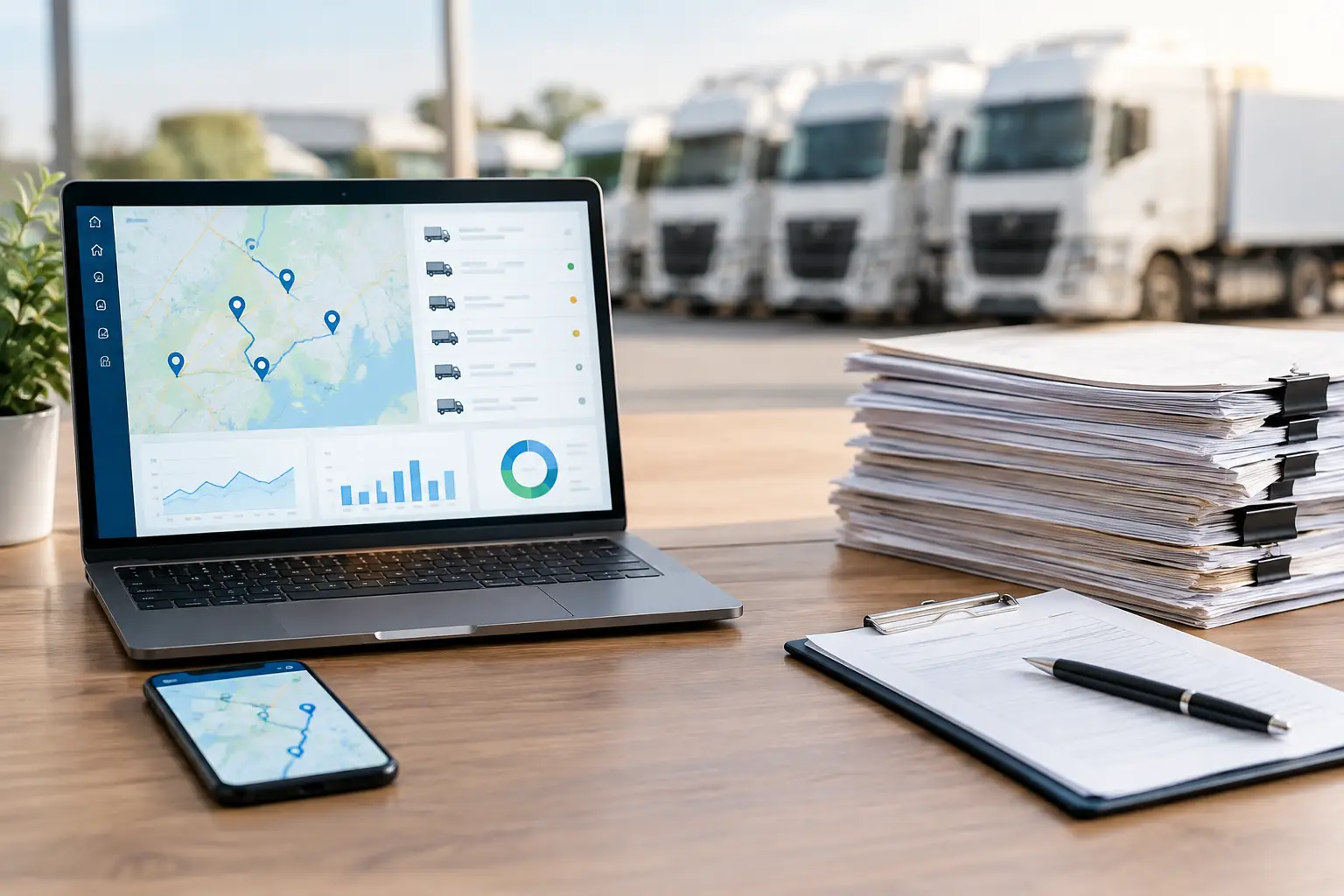
A missing mileage sheet, an overdue safety check buried in a folder, or a driver card download completed a day late can create far more work than the original task. For UK operators, fleet software versus paper records is not simply a choice between digital and traditional administration. It is a decision about how quickly the business can see risk, act on it and evidence control when required.
Paper records can still have a place in transport operations, particularly for site checks, defect reporting and contingency procedures. But when records sit across folders, spreadsheets, cab paperwork and separate tracking portals, transport managers spend too much time chasing information that should already be available.
Fleet software versus paper records: the operational difference
Paper processes record what somebody has written down or filed. Fleet software can show what is happening across the fleet now, while automatically building a reliable record of what happened previously. That difference matters when vehicles, trailers, drivers and jobs are moving between depots, customers and shifts.
A paper tachograph process, for example, often relies on someone remembering download dates, collecting driver cards, connecting equipment and saving files in the correct location. A digital platform can remotely download tachograph data, flag approaching deadlines and present driver hours in one place. The task moves from repetitive collection to exception management.
The same applies to vehicle visibility. A printed route sheet might show where a driver was expected to be. Live GPS tracking shows where the vehicle is, whether it has stopped unexpectedly and whether it is likely to reach the next job on time. For a dispatch planner managing last-minute changes, this is a practical advantage rather than a technical extra.
Where paper records still work
Paper is familiar, inexpensive to start and easy to use for a simple, one-off task. A driver can complete a walkaround form on paper without needing a device, signal or login. Smaller fleets with few vehicles, short routes and stable staffing may feel that their existing process is manageable.
The limitation appears as operations grow or become more complex. One form may be clear in a driver folder, but it is much less useful when a manager needs to answer a wider question: which vehicles have unresolved defects, which safety checks are due next week, and which drivers need attention for repeated behaviour events?
Paper also depends heavily on consistent human handling. Forms must be completed clearly, returned promptly, reviewed by the right person and stored where they can be found. A process can look compliant on paper while issues remain unseen until an audit, roadside stop or vehicle failure exposes the gap.
Digital systems are not a substitute for good management. Drivers still need clear instructions, and managers still need to act on alerts. The benefit is that the system makes omissions, deadlines and patterns easier to identify before they become a bigger operational problem.
Compliance needs proof, not just paperwork
For operators working under an O-licence, compliance is not an occasional administrative exercise. It requires ongoing control of drivers' hours, tachograph data, vehicle maintenance and defect management. Records must be accessible, organised and defensible.
With paper files, proving control often means pulling documents from several locations and manually checking dates. If a driver has worked across vehicles or depots, the review becomes slower again. Spreadsheets can improve visibility, but they introduce their own risks: duplicate versions, incorrect formulas, missed updates and limited audit trails.
A fleet platform can consolidate remote tachograph downloads, driver card data, live driver hours and maintenance reminders. Instead of relying on a calendar prompt or a manager's memory, the team can work from a shared view of upcoming obligations and exceptions. This helps reduce the risk of missed downloads and makes it easier to demonstrate that issues were identified and managed.
That does not mean every paper record should disappear overnight. Original documents and specific processes may still need to be retained according to your own procedures and legal requirements. The value of software is in reducing the manual handling around those records and making the operational picture easier to evidence.
Better decisions while vehicles are on the road
Paper records are retrospective by nature. By the time a form reaches the office, the vehicle may have completed its route, missed a delivery slot or returned to the depot. This is a poor fit for the daily decisions transport teams have to make.
Live tracking gives dispatch teams a clearer basis for allocating work. They can see vehicle location, journey progress and available assets rather than calling drivers individually or working from an out-of-date planning board. Trailer tracking adds further control where unaccompanied trailers are regularly moved, parked at customer sites or shared between depots.
Fuel and utilisation reporting also changes the quality of the conversation. Rather than assuming a vehicle is underused because it appears to spend time in the yard, managers can review actual activity. Rather than relying only on fuel receipts, they can investigate excessive idling, route inefficiency or driving behaviour that may be contributing to higher costs.
There is a trade-off. Live data creates more information, and an overloaded manager can still miss what matters. The right system should prioritise practical exceptions: a vehicle that is not where it should be, a driver nearing an hours limit, a maintenance date approaching, or repeated harsh braking that needs a discussion. More data is only useful when it supports a timely decision.
The hidden cost of manual administration
Paper looks cheap because the form itself costs very little. The real cost is the time spent printing, collecting, checking, filing, rekeying and searching for information. Add the cost of a missed maintenance action, a late tachograph download or a planner unable to locate a vehicle, and the gap widens quickly.
Manual reporting also makes consistency difficult. Two depots may use different versions of the same spreadsheet. One supervisor may record a defect as resolved while another keeps it open. When data is entered after the fact, errors become harder to trace and correct.
Fleet software gives teams one operational record rather than a collection of individual records. It can reduce routine administration, but it should also make responsibilities clearer. Drivers know what is expected, planners can see fleet status, and compliance managers can focus on genuine exceptions instead of checking whether every form has made its way back to the office.
Implementation should not create a new problem
Some operators delay a move away from paper because they expect a costly, disruptive installation and weeks of training. That concern is understandable, especially where vehicles cannot be off the road for long and teams already have established routines.
The practical question is whether the technology fits the operation. A platform designed for commercial fleets should support HGVs, vans, trailers and mixed assets, while bringing telematics and compliance together rather than forcing staff to move between separate systems. Plug-and-play hardware and clear monthly pricing can make the change easier to plan.
Start with the areas causing the most friction. For one operator, that may be remote tachograph downloads and driver hours monitoring. For another, it may be locating trailers, reducing unauthorised vehicle use or receiving maintenance reminders before a planned vehicle inspection is missed. A phased rollout often gives teams time to build confidence without trying to replace every process on day one.
Fleetalyse brings these functions into a single platform, helping operators replace fragmented records with a clearer view of vehicles, drivers and compliance activity.
Choosing the right approach for your fleet
The best choice depends on fleet size, operating model and the risk carried by the business. A small local operation may continue to use some paper checks effectively, provided it has disciplined review and storage procedures. A multi-vehicle fleet running varied shifts, customer schedules and O-licence obligations will usually benefit more from connected, live information.
Ask how long it takes to answer a straightforward question: Is every driver within hours rules? Which vehicles need attention this month? Where is the nearest suitable vehicle for a new job? If the answer involves several phone calls, a search through folders or a spreadsheet that may not be current, paper is no longer supporting control.
The strongest fleet processes keep the driver experience simple while giving the office the information to act early. When the next defect, download deadline or dispatch change appears, the useful question is not whether the record exists somewhere. It is whether the right person can see it in time to do something about it.