
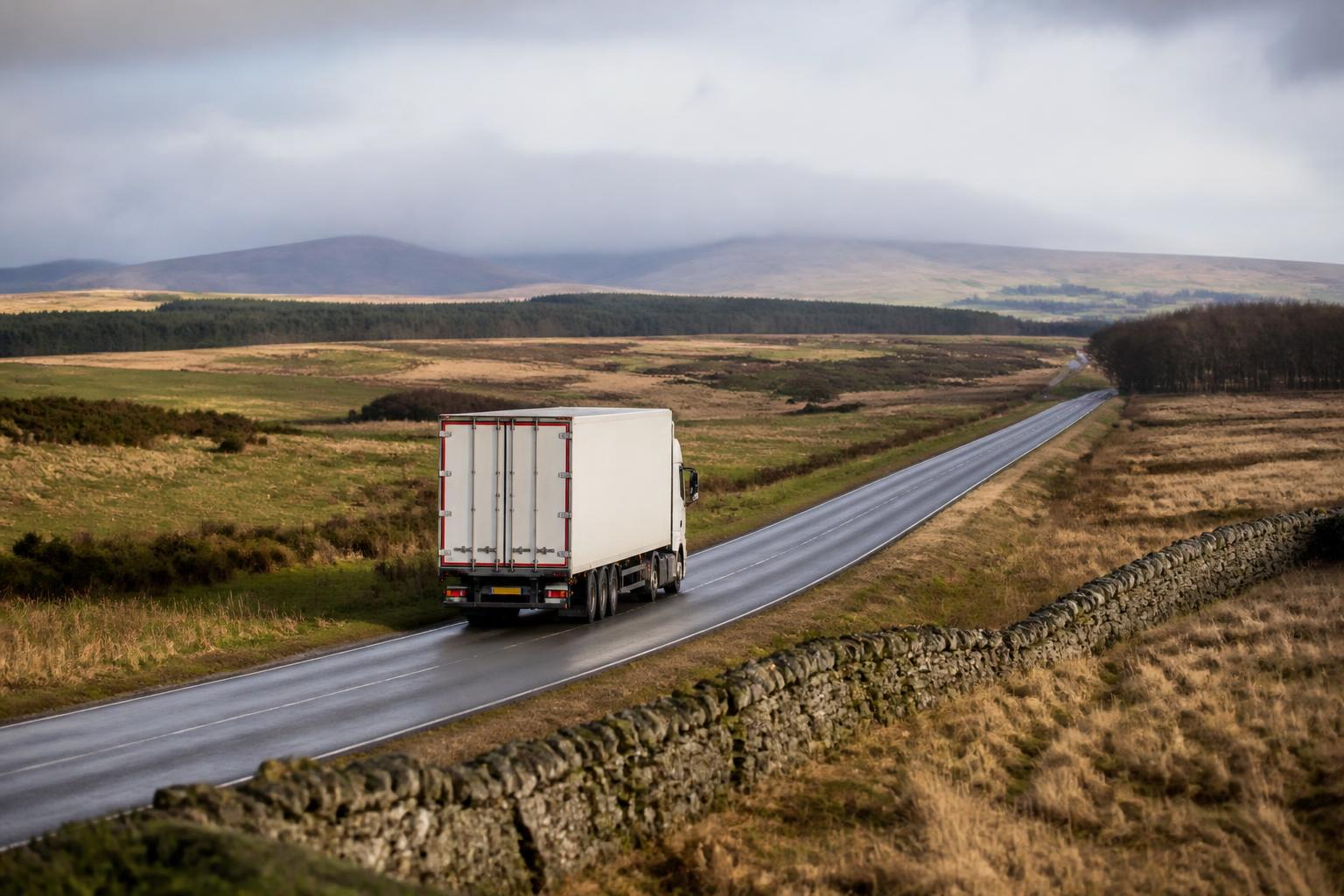
Haulage runs on timing, sequence and proof. A vehicle being somewhere on a map is useful, but it does not by itself help a traffic office decide whether a collection can still be made, whether a customer needs warning of a delay, or whether a driver has enough time left to complete the next leg legally. What keeps operations moving is live visibility that can be used in context, alongside driver availability, route changes, customer commitments and vehicle status.
That is where fleet tracking supports haulage operations properly. We use it to turn live vehicle positions into decisions, records and follow-up actions. In Fleetalyse, that means bringing GPS, Tachograph processes, Smart dashcams, reporting and fleet records into one working platform so planners, fleet managers and compliance teams are not piecing the day together from separate screens and spreadsheets.
What haulage operators need from fleet tracking
Most haulage operators are not looking for a map for its own sake. They are trying to solve recurring operational problems.
A planner needs to know which vehicle can realistically take an extra collection. A transport manager needs to know whether a late-running trunk is still recoverable. A customer service team needs a reliable ETA before they call a delivery point. An owner-driver needs a clear record of where time was lost and whether waiting time is becoming a pattern at a site. Across a mixed fleet, the same applies to HGV units, vans, trailers and plant or assets that are moved between jobs.
Simple location pings do not answer those questions well enough. In haulage, timing matters at the level of minutes, not just postcodes. You need to see whether a vehicle is moving, parked, delayed at a customer site, approaching a delivery point or deviating from the expected route. You also need enough history to review what actually happened after the event, especially where there is a service dispute, a missed slot or a query about unauthorised use.
That is why good tracking for haulage has to do more than show dots on a map. It needs dependable GPS updates, sensible mapping, clear vehicle lists, status information and reporting that people in the traffic office can use quickly. It also needs to work across the real shape of a commercial fleet. Some operators want a fast rollout using Fleetalyse-ready trackers. Others already have hardware preferences and want unlocked Teltonika devices. Others need a staged deployment across subcontracted vehicles, trailers and fixed assets.
The quality of the connection matters too. If the device cannot report consistently, visibility breaks down just when you need it. That is one reason we pay attention to hardware choice and connectivity, including how IoT SIMs keep tracking live on the road. A haulage operation does not benefit from theoretical visibility. It benefits from data that arrives when the office is making decisions.
Practical use also depends on access. Some businesses want the traffic office and management team to work inside the full platform. Others want selected customers or subcontract partners to see limited information. Within Fleetalyse, that can include role-based access and tools such as a Customer Portal or Tracker login, depending on how the operator wants information shared. The point is to control who sees what, while keeping one reliable operational picture.
How live GPS visibility supports daily traffic office decisions
The transport office uses live GPS data minute by minute. That is where the value becomes obvious.
A common example is ETA management. If a vehicle is held on the motorway, delayed at a quay, or queuing at a distribution centre, the office can see the delay developing rather than finding out after the missed slot. That changes the response. The team can ring ahead, re-sequence the next job, update the customer, or divert another vehicle to protect a timed collection. Without live visibility, those decisions are made late and usually with less choice.
This matters even more when the day does not go to plan, which is most days in haulage. A planner may have to decide whether to keep a vehicle on the original route, swap a delivery with another unit nearby, or drop a low-priority movement to preserve a high-priority one. Accurate live positions make those decisions faster. They also reduce the number of phone calls to drivers asking for location updates while they are working.
Collections are another pressure point. If a customer says goods are ready early, the office needs to know which vehicle can realistically get there. If a loading point is running behind, the office needs to avoid sending a driver who will simply sit and burn available time. Good live tracking helps separate what is possible from what looks possible on paper.
For customer communication, visibility is just as important. Many service failures are made worse by poor updates rather than by the original delay. When the office can see where the vehicle is and how long it has been stationary, updates are more credible. That protects relationships and reduces the back-and-forth between customer service, traffic office and driver.
History is useful here as well. If a consignee disputes an arrival time or claims a vehicle never attended, a route history gives the office something objective to check. If the same site repeatedly causes long waiting times, reporting can show that pattern and support a commercial conversation about booking practices, detention or route planning.
In Fleetalyse, we focus on making that visibility usable in day-to-day operations, not just visible in theory. Lists, maps and reports need to help the office answer practical questions quickly. For a wider view of those day-to-day blind spots, see how UK fleet tracking cuts blind spots in daily operations.
Mapping also matters more than people sometimes expect. OpenStreetMap gives a clear visual layer for route and position context, but the important part is not the map brand itself. It is whether the office can read the situation quickly and make the next decision without hunting through separate tools.
Where tracking fits with compliance and driver hours
Tracking helps compliance teams, but it is not a substitute for compliance systems or for proper management of legal duties. That distinction matters.
In UK haulage, driver hours rules and Tachograph requirements sit within a specific legal framework. For most HGV operations, compliance depends on correct recording, downloading, analysis and management of infringements, missing mileage, working time and driver activity. GPS location data supports that work by adding operational context, but it does not replace the Tachograph record.
Used properly, location data helps in several ways. It can show where a vehicle was when delays occurred, where a break appears to have been taken operationally, and whether routeing decisions contributed to pressure on available time. It can also help the office identify when a plan is likely to run into a driver hours problem before it becomes one. If a vehicle is still too far from the final drop, or too long at a loading site, that is visible early enough for the office to intervene.
Remote Tachograph downloads are another practical area. Instead of relying on manual vehicle access every time data is due, operators can keep download routines tighter and reduce the risk of missed collection windows. That does not remove the need to review files, manage cards, monitor exceptions and investigate issues, but it does make the process more workable across active fleets.
For audits and internal reviews, combining route history with Tachograph processes creates a stronger trail. If there is a question about where a vehicle was, whether a detour was authorised, or why a job overran, it is easier to reconstruct events when location records and compliance records are close together. That is especially useful in businesses where transport, compliance and operations are handled by different people.
It is also worth being clear on jurisdiction. In the UK, operators follow the rules that apply in Great Britain and Northern Ireland, including the domestic enforcement and operator licensing framework. There is overlap with wider EU rules because the core drivers' hours and Tachograph regime has common roots, but operators should not assume every detail is identical in practice, especially after legal changes and domestic implementation differences. For international work, the route, the country and the nature of the movement all matter.
Tracking also raises data protection and employment transparency questions. In the UK, businesses need to be clear about why vehicles are being tracked, who can access the data and how long it is retained. We cover that separately in our guide to the UK rules on tracking company vehicles. For haulage operators, the practical point is simple. Use tracking to improve oversight and auditability, but do not confuse it with the legal record created by the Tachograph itself.
How connected cameras and vehicle data add context
When an incident happens, a location trail tells you where a vehicle was. It does not always tell you what happened. That is where Smart dashcams and vehicle data add the context that transport teams often need.
Take a harsh braking event. On its own, that could indicate poor driving, a defensive reaction to another road user, heavy traffic, or a sudden hazard. A GPS event marker gives timing and place, but video evidence can show the actual cause. That helps managers distinguish between coaching issues and unavoidable road events. It also avoids unfair assumptions.
The same applies to collision review and insurance handling. If a vehicle is sideswiped, cut up at a roundabout, or struck while stationary, event footage can support the operator's account and speed up internal fact finding. For haulage businesses, that matters not just for claims but for downtime, customer commitments and driver support after an incident.
Smart dashcams are also useful in day-to-day driver management. They can highlight repeated behaviours such as phone distraction, close following, harsh cornering or failure to wear a seatbelt, depending on the camera setup and policy. Used sensibly, that evidence supports coaching and helps focus attention where there is a pattern rather than relying on anecdote.
Vehicle telemetry adds another layer. CAN data can provide information about ignition status, fuel-related signals, vehicle utilisation and other operational inputs, depending on the vehicle and installation. For a haulage operator, that can help answer practical questions such as whether a vehicle was idling excessively at a site, whether it was being used out of hours, or whether utilisation across the fleet is matching assumptions.
This context is often what turns raw tracking into useful fleet insight. A late arrival may have been caused by congestion, a lengthy site wait, a vehicle issue or an avoidable route choice. A route deviation may have been authorised, may have been a driver-led workaround, or may indicate misuse. A map alone rarely tells the full story.
For mixed fleets, the value is broader than the unit itself. Trailer tracking, asset visibility and linked event records can help operators understand where equipment is, how long it has been stationary, and whether supporting assets are being used efficiently. In busy transport businesses, that reduces the amount of time spent chasing information by phone.
Why haulage firms benefit from one platform instead of separate tools
Most operators do not struggle because they have no data. They struggle because the data is split across too many systems.
One supplier provides tracking. Another handles Tachograph downloads. A separate portal stores camera footage. Fleet records sit in spreadsheets. Driver and vehicle reports are emailed around. Customer updates are built manually from whatever the office can piece together. That setup creates friction every day. People spend time logging in and out, reconciling records and checking which version is current.
The practical advantage of Fleetalyse is that we bring those functions together in one platform designed around commercial fleet work. That means live GPS tracking, remote Tachograph downloads, connected camera visibility, reporting and fleet records are managed in one place instead of being spread across disconnected tools.
For a haulage business, that changes the workflow in straightforward ways. The traffic office can see where the vehicle is. Compliance can manage download routines and review records without chasing separate systems. Management can run reports without asking different providers for exports. Driver, vehicle and operational history are easier to review together. When an issue arises, fewer minutes are lost just getting to the information.
That joined-up approach also helps when fleets grow or change. An operator might start with a core HGV fleet, then add vans, trailers or subcontracted assets. They may begin with Fleetalyse-ready trackers for speed, then bring in unlocked Teltonika hardware for a tailored rollout. They may want a standard package first, then add Smart dashcams or CAN data later. Keeping those functions inside one platform is simpler than rebuilding the operating model each time another tool is introduced.
Administration matters too. Buyers often want a clean commercial process, especially when rolling out across multiple vehicles and depots. We support practical onboarding and account management, including common business requirements such as VAT handling and payment processes through Stripe where relevant. For companies that need supplier clarity, Fleeta Limited T/A Fleetalyse is the trading entity behind the service.
There is also a day-to-day reporting benefit. If an operator wants to review utilisation, stop durations, route adherence, out-of-hours movement or recurring delays, the reporting should sit close to the live data and fleet records it came from. That reduces manual reconciliation and makes reports more credible internally. Our focus is not reporting for its own sake, but reporting that helps people run the fleet.
When people ask how fleet tracking supports haulage operations, the short answer is that it helps the office make better decisions sooner. The fuller answer is that tracking works best when it is not isolated. It should sit alongside compliance processes, vehicle records, camera evidence and operational reporting so the business can move from visibility to action without changing systems every few minutes.
That is the approach we have built into Fleetalyse. Not just a map, and not just a compliance tool, but a practical operating platform for UK commercial fleets that need to keep vehicles moving, customers informed and records in order.
How does fleet tracking help a haulage business day to day?
It gives the traffic office live GPS visibility of vehicles so staff can manage ETAs, respond to delays, confirm arrivals and keep customers updated without relying on repeated driver calls.
Can fleet tracking help with driver hours management?
It can support oversight by showing where vehicles are and how work is unfolding, but it does not replace Tachograph records or the need to manage driver hours properly.
Is fleet tracking only useful for large HGV fleets?
No. It can help owner-drivers, small haulage firms and mixed fleets as well as larger HGV operations, especially where planners need better visibility without more spreadsheets.
What is the benefit of combining tracking with Smart dashcams?
Tracking shows where and when something happened. Smart dashcams add visual context, which can help with incident review, driver coaching and understanding what happened on the road.
Can Fleetalyse work with different hardware options?
Yes. Buyers can start with Fleetalyse-ready trackers, use unlocked Teltonika hardware or plan a customised commercial rollout depending on fleet needs.