
With over 64,000 freight companies now competing on UK roads, the difference between a profitable fleet and one facing a DVSA inquiry often comes down to a single missed download. Implementing integrated tachograph and tracking systems is no longer just an efficiency choice; it's a necessity for protecting your UK Operator Licence in a tightening regulatory environment. It’s frustrating to manage disconnected platforms whilst worrying about the July 2026 Smart Tachograph 2 requirements for light goods vehicles. You shouldn't have to waste hours chasing drivers for manual cards or feeling anxious about potential driver hour infringements.
We understand that your time is better spent on logistics than on administrative firefighting. This guide explains how to move to a single dashboard for location and live driver hours. We'll cover the transition to hands-off remote downloads and show you how to reduce the administrative burden on your transport office for good. You will learn the exact steps to streamline your operations whilst ensuring your fleet stays firmly on the right side of the law throughout 2026 and beyond.
Key Takeaways
- Understand how integrated tachograph and tracking systems combine GPS data with live telemetry to transform simple location tracking into a robust compliance tool.
- Discover how automated remote tachograph downloads eliminate the need to manually chase vehicles, saving your transport office hours of administrative work.
- Learn to use live driver hours visibility to prevent infringements before they happen, protecting your UK Operator Licence from DVSA scrutiny.
- Identify the right hardware mix for HGVs, vans, and trailers to ensure total asset visibility and compliance across your entire fleet.
- Evaluate the long-term benefits of a unified dashboard compared to disconnected software platforms to reduce your total cost of ownership and operational complexity.
The Evolution of Integrated Tachograph and Tracking Systems in the UK
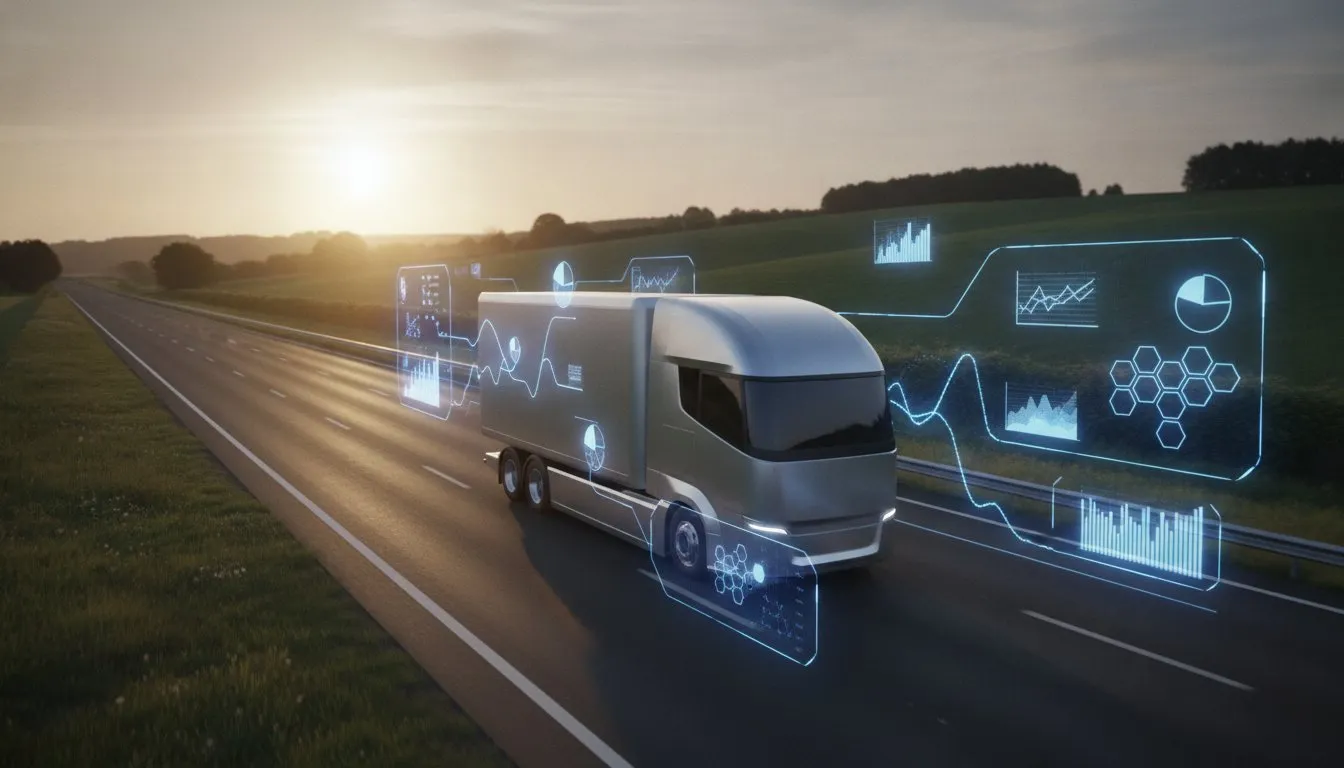
The UK transport industry has moved past the era of simple GPS tracking. Modern integrated tachograph and tracking systems now serve as a unified platform. They combine precise GPS location data with live tachograph telemetry to provide a complete picture of fleet activity. This represents a fundamental shift from viewing "dots on a map" to adopting "Compliance-as-a-Service". Transport managers no longer just look for vehicle locations; they manage regulatory health in real time.
The DVSA and Traffic Commissioner increasingly demand this digital oversight. Relying on manual records is a significant risk to your business. By 2026, technology has advanced to offer predictive compliance. These systems don't just report what happened; they flag what might go wrong before an infringement occurs. Understanding The Evolution of Tachograph Technology helps illustrate how the industry moved from paper discs to the Smart Tachograph 2 units now required for international LCV operations.
The Core Components of a UK-Ready System
A reliable system starts with the right hardware. HGVs require hardwired telematics units connected directly to the vehicle's CAN bus and tachograph head. For van fleets, plug-and-play trackers often suffice for location, but integrated tachograph and tracking systems for international hire and reward now require deeper integration to meet 2026 standards. Connectivity is equally vital. We utilise 4G and 5G networks to ensure data flows without interruption, even in remote UK locations. Finally, data sovereignty matters. Using secure, UK-accessible servers ensures your compliance records are available for audit whenever the DVSA requests them.
Why Real-Time Visibility is Essential for Operator Licence Safety
Live data changes how you manage your fleet. It allows you to move from reactive firefighting to proactive management of driver behaviour. If a driver is nearing their limit, you see it instantly. This protects your "O Licence" by creating an immediate, digital audit trail of your oversight. Real-time visibility also improves the bottom line. By monitoring idling and route deviations, you can reduce fuel consumption and operational waste. It's about more than just avoiding fines; it's about running a leaner, more professional transport office whilst maintaining total regulatory control.
Essential Compliance Features for Commercial Fleet Management
Compliance is the heartbeat of any successful transport office. Whilst many providers offer basic location tracking, integrated tachograph and tracking systems focus on the complex legal requirements that keep your vehicles on the road. These systems act as a digital safety net. They ensure your business meets DVSA standards without the need for constant manual intervention. By centralising your data, you create a robust audit trail that protects your Operator Licence.
Remote Tachograph Download: Eliminating Manual Chasing
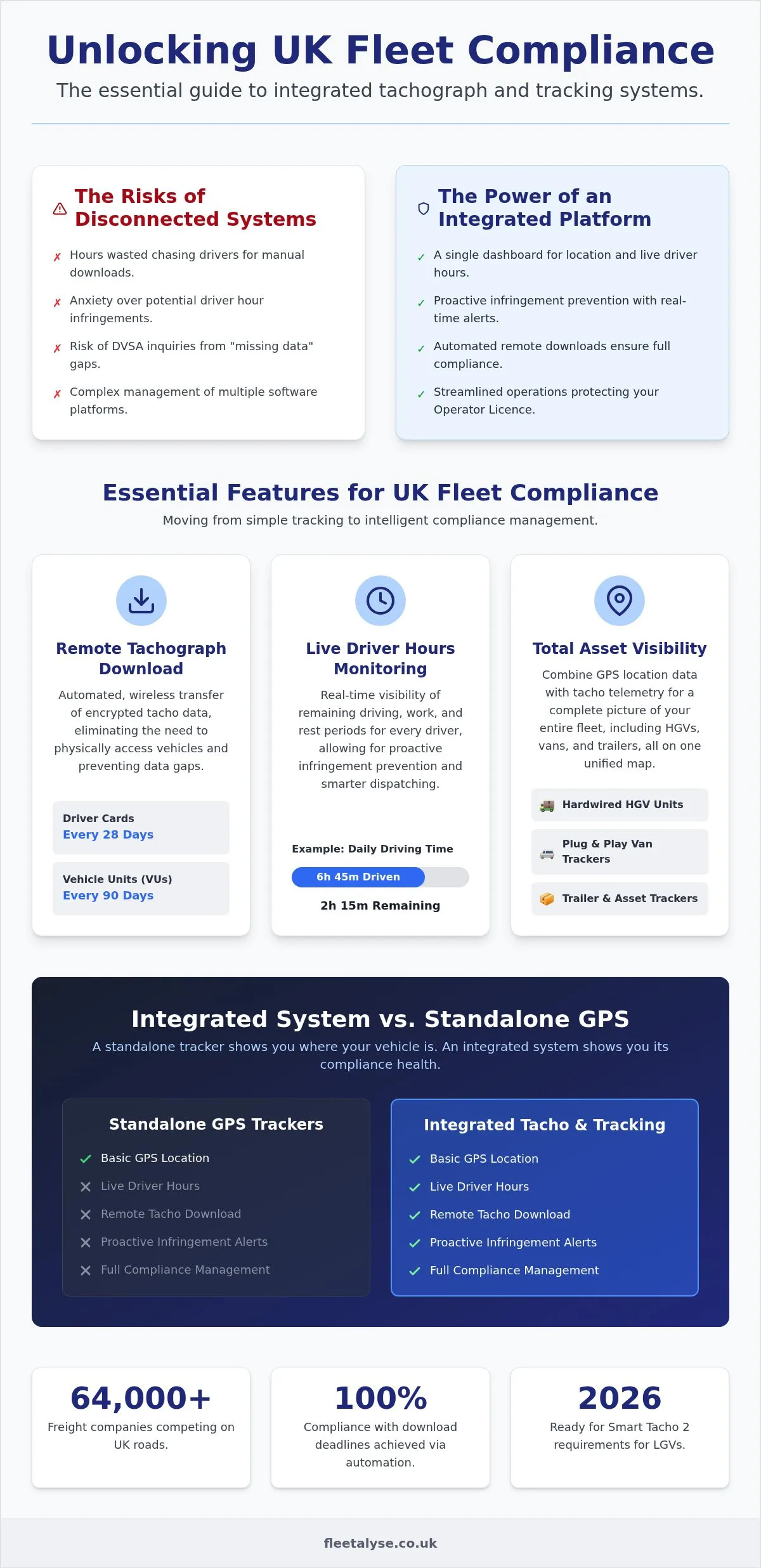
Remote Tachograph Download is the automated, wireless transfer of encrypted tacho data to a central server. This technology removes the administrative burden of physically visiting every vehicle in the fleet. You must download driver cards every 28 days and vehicle units every 90 days. Automation ensures you never miss these critical deadlines. It eliminates "missing data" gaps that often trigger red flags during a DVSA inspection. By keeping your records current and complete, you demonstrate professional competence and stay in control of your regulatory obligations.
Monitoring Live Driver Hours and Rest Periods
Real-time visibility is vital for effective dispatching. Your office team needs to know the exact remaining driving time for every driver to plan routes safely. This live data prevents infringements before they occur. It's much easier to manage schedules when you have an accurate view of the UK Government's Drivers' Hours Rules directly on your dashboard. Automated alerts for upcoming rest breaks help your drivers stay safe and legal. This proactive approach reduces the stress of cross-referencing manual logbooks with vehicle movements.
Beyond hours and downloads, monitoring driver behaviour is a powerful tool for fleet safety. Tracking incidents of harsh braking, speeding, or excessive idling allows you to coach drivers toward more efficient styles. This data doesn't just improve safety; it lowers fuel costs and reduces wear on your assets. To secure your fleet's compliance status and automate your reporting, you can view our remote download packages. Every data point collected serves as evidence of your commitment to road safety and operational excellence.
Integrated Systems vs. Standalone GPS Trackers: Which is Best?
Many operators start with standalone GPS trackers because the initial hardware cost is low. However, this creates a "Data Silo" problem. When your location data lives in one app and your tachograph data in another, your transport office must manually cross-reference them. This increases administrative costs and the risk of human error. Choosing integrated tachograph and tracking systems eliminates this friction by merging two critical data streams into one dashboard.
Evaluating the total cost of ownership (TCO) is essential. A cheap standalone tracker might save you money upfront, but it costs more in the long run through lost productivity. If your team spends hours every week matching GPS logs to driver infringements, you are overpaying for "simple" tracking. True value comes from automation. Following the UK Government's 2022 Tachograph Regulations, the shift toward more complex, digital oversight means that disconnected systems are becoming a liability for regional operators.
Seamless Tachograph Analysis Integration
Integrated systems send data directly to your chosen analysis software. This allows for immediate infringement reporting without manual file uploads. It streamlines the path toward DVSA Earned Recognition status, as you can prove consistent, digital oversight of your fleet. By removing manual data entry from the compliance workflow, you reduce the chance of missing a critical card download or vehicle unit file. It makes the entire audit process transparent and straightforward.
Total Asset Visibility: HGVs, Trailers, and Vans
A modern fleet is rarely uniform. You might manage HGVs alongside trailers and light commercial vehicles. Each requires different tracking logic. Trailer tracking is vital for managing sub-contractors and ensuring asset security in remote yards. Conversely, van tracking focuses on local delivery efficiency and protecting against unauthorised vehicle use. Integrated tachograph and tracking systems allow you to organise this mixed fleet into a single, cohesive operational picture. You see everything in one place, regardless of the asset type.
Reliability is non-negotiable in the UK transport sector. When technical issues arise on a Friday afternoon, you don't want to deal with a distant, global software provider. We pride ourselves on being a localized specialist. Having UK-based support means you can resolve hardware or connectivity issues quickly during your actual operational hours. This pragmatic approach ensures your compliance tools remain functional when you need them most, rather than becoming another administrative headache. You can explore our unified tracking solutions at fleetalyse.co.uk to see how we simplify mixed fleet management.
How to Implement a Compliance-First Tracking System Successfully
Successful implementation of integrated tachograph and tracking systems begins with a clear audit of your current fleet gaps. You need to identify exactly where manual processes are failing. This might be missing card downloads, late vehicle unit transfers, or a total lack of trailer visibility. Selecting hardware that matches your specific asset mix is the next step. HGVs, vans, and trailers all have different data requirements and connection points. Once the hardware is chosen, you must train your transport office team on the unified dashboard. They need to be comfortable with automated reporting tools to get the most value from the system.
Hardware Installation and Minimising Fleet Downtime
Scheduling is critical. We recommend installing hardwired units in HGVs during planned vehicle maintenance or six-weekly inspections. This avoids unnecessary operational disruption. For your van fleet, plug-and-play trackers offer a faster setup that doesn't require a specialist technician. High-quality hardware is a non-negotiable requirement. Using reliable components prevents data dropouts that could lead to compliance gaps during a DVSA audit. Choosing the right time for installation ensures your fleet stays earning whilst the upgrade takes place.
Setting Up Custom Compliance Alerts
Avoid data overload by configuring your dashboard for "management by exception". This allows your team to focus only on high-priority events, such as imminent driver hour infringements or missed rest periods. Automate your weekly compliance reports so they reach transport managers and directors without manual effort. Ensure your remote download schedule is synchronised perfectly with your analysis software requirements. This keeps your records current and your business audit-ready at all times. Automation is the only way to guarantee 100% data consistency across a busy regional fleet.
Communication with your drivers is just as important as the technology. Position the system as a tool that protects their professional licence by preventing accidental infringements. It’s a support mechanism, not a surveillance device. When drivers understand that live visibility prevents them from facing heavy fixed penalties, adoption becomes much smoother. Finally, review your performance against ROI goals after the first 90 days. Look for reductions in administrative hours and fuel waste to quantify the system's value. This review helps justify the investment to stakeholders and confirms that your compliance gaps are closed.
Ready to automate your fleet administration and protect your licence? You can order your remote download and tracking hardware here to begin your implementation today.
Why Fleetalyse is the Strategic Partner for UK Fleet Operators
Fleetalyse is a specialist UK provider built specifically for the domestic transport sector. We don't offer generic global software that ignores the nuances of British roads. We provide a localized solution for regional operators who need reliable data. Our integrated tachograph and tracking systems are designed to handle the specific rigours of UK compliance. We believe in transparent pricing and straightforward partnerships. You won't find hidden costs or complex contracts here. Our expertise helps you maintain an audit-ready status for the DVSA every single day.
The platform acts as a unified tool for your transport office. It combines GPS fleet tracking with live driver hours to give you total control. You can see exactly where your HGVs, vans, and trailers are located whilst viewing the legal status of your drivers. This level of visibility is essential for protecting your Operator Licence. We understand that your reputation depends on your compliance record. That's why our system prioritises data accuracy and ease of use over flashy, unnecessary features.
Pragmatic Support for UK Transport Managers
You need support that understands the daily pressures of haulage. Our UK-based phone support connects you with experts who know the industry. We don't use distant call centres or automated scripts. If you have a hardware issue or a connectivity question, we resolve it quickly during your operational hours. Our platform prioritises functional utility. We avoid the "hidden complexity" common with global providers. We focus on regulatory compliance so you can focus on your customers and your bottom line.
Future-Proofing Your Fleet for 2026 and Beyond
Regulations are evolving rapidly. The introduction of Smart Tachograph 2 for international LCV operations in July 2026 is a major shift for many fleets. Staying ahead of these digital record-keeping requirements is vital for your business survival. Our system is built to scale. Whether you have a single vehicle or a multi-asset operation, the software grows with you. You can easily add trailer tracking or van tracking as your requirements change. We ensure your data retention meets the standard 12-month UK requirement for tacho data without manual effort.
Learn more about our integrated tracking solutions for UK operators. We are a reliable ally for your business. Our goal is to reduce your administrative burden whilst keeping your fleet safe and legal. By choosing a partner dedicated to the UK market, you ensure your compliance tools remain relevant to domestic laws and infrastructure. We value your time and resources, and we are committed to helping you run a more professional, efficient transport operation.
Securing Your Fleet's Future in a Digital Era
Maintaining a clean compliance record shouldn't be a full-time administrative burden. By adopting integrated tachograph and tracking systems, you move from reactive firefighting to proactive oversight. You've seen how automated remote downloads eliminate missing data gaps and how live visibility protects your Operator Licence from DVSA scrutiny. With the July 2026 Smart Tachograph 2 deadline approaching for international LCV operations, now is the time to unify your fleet management and remove the stress of manual record-keeping.
At Fleetalyse, we act as your UK-based compliance specialists. We provide straightforward technology with transparent pricing and no hidden complexities. You get live visibility of driver hours and location data in one cohesive dashboard, ensuring you remain audit-ready at all times. Don't leave your regulatory health to chance or disconnected software platforms. Take control of your transport office today and build a more resilient, efficient operation for the years ahead. Secure your fleet and simplify compliance at our online checkout. We're here to help you stay legal and stay on the road.
Frequently Asked Questions
Is remote tachograph download mandatory for UK HGV fleets?
Remote downloading is not a legal requirement, but downloading the data itself is mandatory. You must ensure that driver and vehicle data is collected within the statutory timeframes. Using a remote system simply automates this process to prevent human error. It ensures you never miss a deadline, which is vital for protecting your Operator Licence during a DVSA inspection or a routine record check.
How much does a commercial fleet tracking system cost in the UK?
Costs vary depending on your fleet size and the specific features you require. While basic GPS units have lower entry points, integrated tachograph and tracking systems offer a higher return through administrative savings. You should evaluate the total cost of ownership by including installation and subscription fees. Investing in a unified platform often reduces the long-term expense of managing multiple disconnected compliance software packages.
Can I track my trailers separately from my HGVs on the same system?
You can track trailers independently from your tractor units on a single dashboard. Dedicated trailer tracking hardware allows for constant visibility, even when the asset is uncoupled in a remote yard. This is a crucial feature for managing asset security and ensuring efficient trailer utilisation. It allows transport managers to see the location of every asset in the fleet without switching between different software platforms.
What is the difference between telematics and basic GPS tracking?
Basic GPS tracking only provides location and movement data on a map. Telematics is far more advanced, connecting directly to the vehicle's internal computer and tachograph head. It provides detailed insights into fuel consumption, engine health, and live driver hours. For UK operators, this data is essential for managing regulatory compliance and improving overall fleet efficiency rather than just seeing where a vehicle is parked.
Will an integrated system help my business pass a DVSA audit?
An integrated system is a powerful tool for maintaining an audit-ready status. It provides the DVSA with a transparent, digital record of your fleet's activities and compliance history. By automating data collection and analysis, you demonstrate that you have robust systems in place to manage driver hours. This proactive approach significantly reduces the risk of being penalised for missing data or unmanaged infringements during a formal audit.
How does live driver hours monitoring prevent legal infringements?
Live monitoring allows your transport office to see a driver's remaining time in real time. This means you can identify if a driver is approaching their limit or needs a rest break before a violation occurs. It removes the guesswork involved in manual scheduling and retrospective analysis. By intervening early, you protect both the driver's professional licence and your company's reputation whilst ensuring road safety standards are met.
Do I need to inform my drivers if I install tracking and tacho systems?
You must inform your drivers if you intend to install tracking or tachograph monitoring systems. Under UK GDPR, you have a duty to be transparent about what data you collect and why you are collecting it. You should update your driver handbook and privacy policies to reflect these changes. Explaining that the system is there to support their compliance and prevent accidental fines usually helps build trust within the team.
How often should I download my driver and vehicle tachograph cards?
UK law dictates that driver cards must be downloaded every 28 days and vehicle units every 90 days. However, using integrated tachograph and tracking systems allows you to download this data much more frequently, often daily. Regular downloads ensure your analysis is always up to date. This allows you to spot patterns in driver behaviour and address potential issues long before they become a serious risk to your business.
Frequently asked questions
Is remote tachograph download mandatory for UK HGV fleets?
Remote downloading is not a legal requirement, but downloading the data itself is mandatory. You must ensure that driver and vehicle data is collected within the statutory timeframes. Using a remote system simply automates this process to prevent human error. It ensures you never miss a deadline, which is vital for protecting your Operator Licence during a DVSA inspection or a routine record check.
How much does a commercial fleet tracking system cost in the UK?
Costs vary depending on your fleet size and the specific features you require. While basic GPS units have lower entry points, integrated tachograph and tracking systems offer a higher return through administrative savings. You should evaluate the total cost of ownership by including installation and subscription fees. Investing in a unified platform often reduces the long-term expense of managing multiple disconnected compliance software packages.
Can I track my trailers separately from my HGVs on the same system?
You can track trailers independently from your tractor units on a single dashboard. Dedicated trailer tracking hardware allows for constant visibility, even when the asset is uncoupled in a remote yard. This is a crucial feature for managing asset security and ensuring efficient trailer utilisation. It allows transport managers to see the location of every asset in the fleet without switching between different software platforms.
What is the difference between telematics and basic GPS tracking?
Basic GPS tracking only provides location and movement data on a map. Telematics is far more advanced, connecting directly to the vehicle's internal computer and tachograph head. It provides detailed insights into fuel consumption, engine health, and live driver hours. For UK operators, this data is essential for managing regulatory compliance and improving overall fleet efficiency rather than just seeing where a vehicle is parked.
Will an integrated system help my business pass a DVSA audit?
An integrated system is a powerful tool for maintaining an audit-ready status. It provides the DVSA with a transparent, digital record of your fleet's activities and compliance history. By automating data collection and analysis, you demonstrate that you have robust systems in place to manage driver hours. This proactive approach significantly reduces the risk of being penalised for missing data or unmanaged infringements during a formal audit.
How does live driver hours monitoring prevent legal infringements?
Live monitoring allows your transport office to see a driver's remaining time in real time. This means you can identify if a driver is approaching their limit or needs a rest break before a violation occurs. It removes the guesswork involved in manual scheduling and retrospective analysis. By intervening early, you protect both the driver's professional licence and your company's reputation whilst ensuring road safety standards are met.
Do I need to inform my drivers if I install tracking and tacho systems?
You must inform your drivers if you intend to install tracking or tachograph monitoring systems. Under UK GDPR, you have a duty to be transparent about what data you collect and why you are collecting it. You should update your driver handbook and privacy policies to reflect these changes. Explaining that the system is there to support their compliance and prevent accidental fines usually helps build trust within the team.
How often should I download my driver and vehicle tachograph cards?
UK law dictates that driver cards must be downloaded every 28 days and vehicle units every 90 days. However, using integrated tachograph and tracking systems allows you to download this data much more frequently, often daily. Regular downloads ensure your analysis is always up to date. This allows you to spot patterns in driver behaviour and address potential issues long before they become a serious risk to your business.