
What if the DVSA could detect a tachograph manipulation device in your vehicle at 60mph without ever pulling the driver over? With the deployment of DSRC remote sensing technology, this isn't a future scenario; it's the current reality for UK hauliers. Maintaining a clean record is getting harder, especially when you cannot be in the cab to monitor every driver's behaviour. You know that a single instance of tampering can lead to an unlimited fine or the total loss of your Operator’s Licence.
Preventing tachograph manipulation requires moving beyond manual spot checks toward a strategy of real-time data integrity. This guide shows you how to safeguard your fleet against tampering through advanced technology and robust internal auditing. We will explore the mandatory transition to Smart Tachograph Version 2, the implications of the 56-day roadside record rule, and how automated remote downloads provide peace of mind during inspections. You will learn how to identify technical signatures like motion data errors and use live driver hours to ensure your compliance reporting remains bulletproof. It is time to replace the fear of audits with automated, manipulation-proof operations.
Key Takeaways
- Understand the severe legal consequences of non-compliance, including unlimited fines and the potential for a two-year custodial sentence for tachograph fraud.
- Identify common physical and digital tampering methods to implement proactive strategies for preventing tachograph manipulation across your vehicle fleet.
- Learn how Smart Tachograph Version 2 and DSRC technology allow the DVSA to detect discrepancies remotely whilst vehicles are in motion.
- Establish a robust internal auditing process that moves beyond basic data collection to active driver behaviour monitoring and weekly analysis.
- Discover how integrating GPS fleet tracking with live driver hours creates a transparent data environment that protects your Operator's Licence.
The Legal and Financial Risks of Tachograph Manipulation
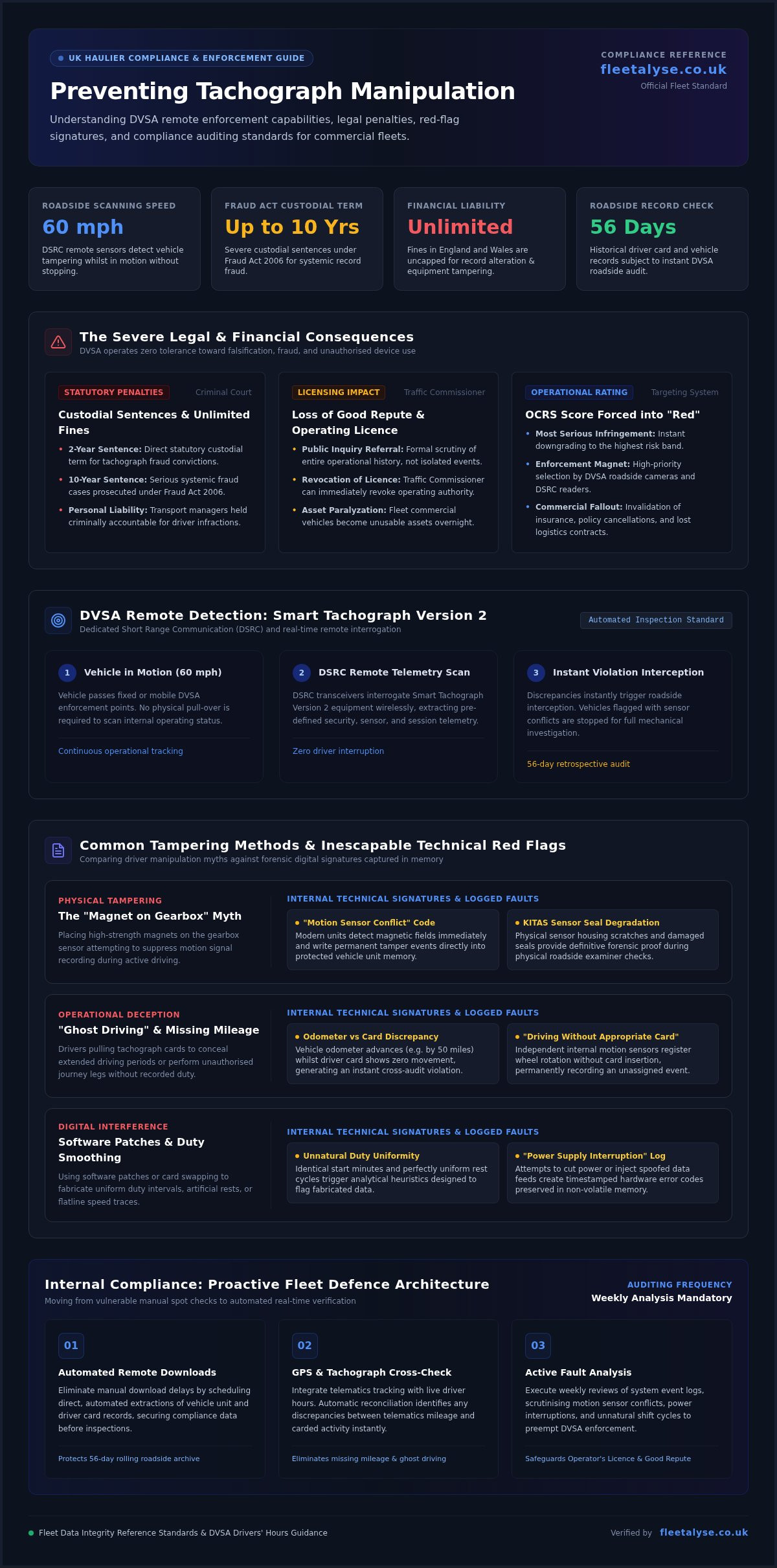
The DVSA treats tachograph fraud with absolute zero tolerance. If an examiner finds evidence of tampering, they don't just issue a warning. They start a process that can dismantle your business. Knowingly altering records or interfering with equipment carries an unlimited fine in England and Wales. For serious cases involving systemic fraud, custodial sentences can reach ten years under the Fraud Act 2006. Preventing tachograph manipulation isn't just a matter of operational best practice; it's a legal necessity for survival.
Financial losses extend far beyond the initial fine. Expect your insurance premiums to skyrocket or your policy to be cancelled entirely. In the logistics industry, word travels fast. Major contracts often require a clean compliance record. If you lose your Operator’s Licence, your assets become liabilities overnight. You cannot afford the reputational damage that follows a public inquiry.
DVSA Enforcement and Prosecution Standards
The Traffic Commissioner holds the power to revoke your "Good Repute". During a public inquiry, they look at more than just the current offence. They scrutinise your entire history. Examiners use advanced tools to probe the digital tachograph architecture, looking for technical signatures of interference. If they find a pattern of missing mileage or sensor conflicts, they won't hesitate to refer the case for criminal prosecution. The shift towards criminal charges for records interference means transport managers are now personally liable for the actions of their drivers.
Impact on Your Operator Compliance Risk Score (OCRS)
Your OCRS is your fleet's reputation in a single letter and number. A tachograph manipulation offence is classified as a "Most Serious Infringement". It pushes your score into the "Red" category instantly. Once you are Red, your vehicles become magnets for roadside checks. DVSA cameras and DSRC readers will flag your vehicles every time they pass an enforcement point. This constant scrutiny leads to delays, missed delivery slots, and unhappy clients. A poor OCRS score makes your fleet a permanent target for enforcement, draining your time and resources through constant inspections. Preventing tachograph manipulation is the only way to shield your organisation from these outcomes. Reliable partners like Fleetalyse help you maintain this transparency through automated monitoring and real-time alerts.
Identifying Common Manipulation Techniques and Red Flags
Methods for interfering with recording equipment have evolved from crude physical blocks to sophisticated digital deception. However, the technical signatures left behind are nearly impossible to erase. Preventing tachograph manipulation requires a keen eye for discrepancies between what the driver card says and what the vehicle actually did. As a fleet manager, you're responsible for spotting these red flags before a DVSA examiner does.
Missing mileage remains the primary indicator of foul play. If a vehicle's odometer has advanced by 50 miles but the driver card shows no movement, you have a problem. This often points to "ghost driving," where a driver pulls their card to hide an extra leg of a journey. You should also watch for unnatural patterns in duty cycles. A driver who consistently starts their shift at the exact same minute or records perfectly uniform rest periods every day may be using software patches to "clean up" their data. Any inconsistency between the physical odometer and the digital record is a breach of the standards found in the DVSA drivers' hours and tachograph guidance.
The "Magnet" Myth and Modern Detection
Some drivers still believe a simple magnet on the gearbox sensor can hide their movement. This is a dangerous misconception. Modern digital tachographs are designed to detect external magnetic fields instantly. When a magnet is applied, the system generates specific error codes such as "Motion sensor conflict" or "Power supply interruption." Physical inspections often reveal the truth through damaged seals or scratches on the KITAS sensor housing. Don't rely on visual checks alone; your analysis software will log these technical faults as permanent events in the vehicle unit memory.
Digital Discrepancies in Driver Records
Digital manipulation often involves card-sharing or unauthorised software interference. You can spot these by cross-referencing vehicle downloads with driver cards. Look for speed traces that show unnatural flatlines. A vehicle rarely maintains a perfectly identical speed over undulating terrain without digital interference. Sudden drops to zero km/h whilst the vehicle's GPS shows it is still in motion are another clear sign of an interrupt switch. To stay ahead of these risks, you might consider how automated compliance reporting can flag these anomalies the moment they occur. Identifying these patterns early protects your repute and keeps your fleet on the road.
Leveraging Technology to Block Unauthorised Interference
Technology has shifted the balance of power back to the operator. Sophisticated hardware now makes preventing tachograph manipulation a passive process rather than a constant manual struggle. The latest smart tachographs use encrypted signals to verify every movement. These units are built to resist external interference, ensuring the data you download is authentic and legally defensible. By removing the human element from data collection, you eliminate the risk of accidental or intentional record gaps.
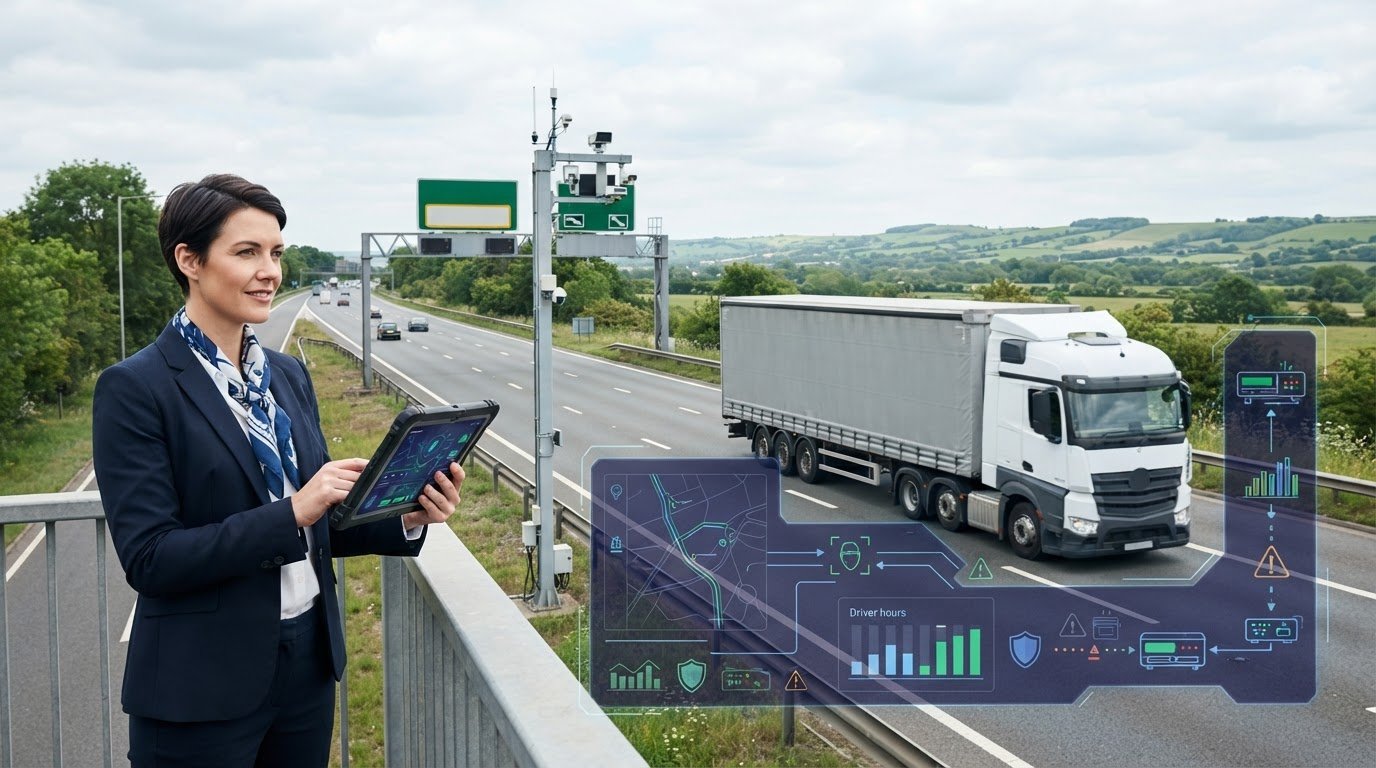
The DVSA now utilises 5.8 GHz Dedicated Short-Range Communication (DSRC) to interrogate vehicles at speed. This system extracts 19 separate parameters, including motion data conflicts and power interruptions. To counter GPS spoofing, Version 2 units employ Open Service Navigation Message Authentication (OSNMA). This technology verifies satellite signals, making it impossible for drivers to fake their location using signal jammers. Adopting these smart tachograph anti-tampering standards is no longer optional for international hauliers; it's a critical shield for your business reputation.
The Security Architecture of Smart Tachograph G2V2
Smart Tachograph Version 2 (G2V2) introduces automatic border-crossing registration. This feature removes the need for drivers to stop and manually enter location data, which was a common point for manipulation. The enhanced GNSS positioning continuously cross-references vehicle location against driver logs. For operators of light commercial vehicles, the mandate starting 1 July 2026 brings vans between 2,501kg and 3,500kg into this secure framework. Upgrading your hardware isn't just a regulatory hurdle. It's a defensive business move that protects you from undetectable "ghost driving" events.
How Remote Tachograph Downloads Prevent Tampering
Manual downloads create an "opportunity window" where data can be lost or records interfered with before they reach your office. Automated data retrieval closes this gap. By scheduling daily or weekly over-the-air card downloads, you ensure that records are captured in their original state. This prevents the classic tactic of "cleaning up" records at the end of a month. Implementing a Fleetalyse remote tachograph download solution provides real-time visibility that drivers cannot hide from. When data is transmitted securely and encrypted, it becomes a single source of truth that stands up to the most rigorous DVSA audits. You don't just see the violations; you see them the moment they happen, allowing for immediate intervention.
Establishing a Robust Internal Compliance Framework
Compliance isn't a passive state. It's an active management discipline. Preventing tachograph manipulation requires a framework where transparency is the default, not an afterthought. Waiting for a monthly analysis report is a high-risk strategy. By the time you spot a discrepancy, the driver could've committed dozens more infringements, leaving your Operator's Licence exposed. For high-risk fleets or those operating internationally, weekly data reviews are essential. This frequency allows you to identify technical anomalies before they become systemic failures.
Transport managers must be trained to look beyond simple driving time infringements. You need to recognise digital signatures like motion sensor conflicts or odometer jumps. Preventing tachograph manipulation is only possible when you bridge the gap between office records and vehicle reality. Implementing a clear, zero-tolerance disciplinary policy for interference is vital. Drivers need to know that tampering isn't a shortcut; it's a career-ending decision. When the consequences are clearly defined, the culture of the entire fleet shifts toward honesty.
Step-by-Step Data Audit Protocol
A robust audit goes beyond the tachograph file. You must cross-reference multiple data streams to ensure record integrity. Start by comparing fuel card transactions against vehicle location at the time of purchase. If a driver is refuelling whilst their card shows "Rest," you've uncovered a violation. Perform gate-to-gate audits, accounting for every minute from the moment a vehicle enters a depot until it leaves. Reconcile GPS tracking logs with tachograph driving states. If the GPS shows movement but the tacho shows "Rest," you have evidence of manipulation. Document every discrepancy and the corrective action taken to prove your professional competence to the DVSA.
Driver Training and Behavioural Monitoring
Education is your first line of defence. Many drivers don't realise that tachograph fraud can lead to a two-year prison sentence. Explain these personal risks clearly during induction and regular refresher sessions. Monitoring shouldn't just be about punishment, though. Incentivise clean records and accurate manual entries rather than just focusing on delivery speed. Use live driver hours tracking to catch accidental infringements before they escalate. When drivers know you have real-time visibility, the temptation to "pull a card" or use an interrupt switch vanishes. You can automate your compliance monitoring today to ensure your fleet remains manipulation-proof.
Automating Your Defences with Fleetalyse Solutions
Preventing tachograph manipulation requires a move from retrospective checks to live oversight. If you only look at data once a month, you are managing by looking in the rear-view mirror. Fleetalyse provides the real-time visibility needed to spot discrepancies as they happen. By integrating GPS fleet tracking directly with tachograph data, we create a single source of truth. This makes it impossible for a vehicle to move without being accounted for in your compliance logs. When the physical location of the asset and the digital record of the driver are merged, tampering has nowhere to hide.
Automating the remote download process is a fundamental step in securing your records. It removes the manual burden from your transport managers and eliminates the risk of missing the 28-day driver card or 90-day vehicle unit deadlines. Automated data retrieval ensures that every byte of information is captured accurately and sent straight to your analysis software. This pragmatic approach protects your Operator's Licence whilst freeing up your team to focus on core operations. You don't just save time; you build a bulletproof audit trail that stands up to DVSA scrutiny.
Live Driver Hours: The Ultimate Deterrent
Live monitoring acts as the ultimate deterrent against ghost driving. When a vehicle is in motion but no driver card is inserted, the system triggers an immediate alert. This prevents "driving without card" incidents from becoming systemic issues that could trigger a public inquiry. By comparing actual asset location with tachograph activity in real-time, you can verify that a driver is where they claim to be. Fleetalyse streamlines this data, ensuring it is ready for your tachograph analysis integration. This level of transparency makes the old tactics of pulling cards or using interrupt switches obsolete.
Future-Proofing Your Fleet for 2026 and Beyond
The regulatory environment is shifting rapidly. With the 1 July 2026 mandate bringing international vans between 2,501kg and 3,500kg into the tachograph framework, the scope of enforcement is expanding. Automated compliance isn't just about avoiding fines. It is a strategic investment in your business's longevity. The financial ROI of automation far outweighs the cost of manual auditing or the devastating impact of a vehicle prohibition. You need a partner that understands the specific challenges of the UK market and regional infrastructure. Organise a consultation with Fleetalyse today to secure your fleet data and ensure you are ready for the next generation of enforcement standards.
Secure Your Fleet’s Future Through Data Integrity
The landscape of UK haulage compliance is no longer a manual paper trail; it's a digital battlefield. Relying on monthly manual downloads leaves your Operator's Licence vulnerable to undetected errors and intentional tampering. By embracing Smart Tachograph Version 2 technology and establishing a weekly audit protocol, you move from reactive damage control to proactive fleet management. Preventing tachograph manipulation is about more than just avoiding fines; it's about building a business culture rooted in transparency and professional standards.
Fleetalyse serves as your pragmatic expert partner, offering real-time live driver hours visibility and seamless tachograph analysis integration. As UK-based compliance specialists, we provide the tools you need to stay ahead of the DVSA's remote enforcement capabilities. Automated systems eliminate the "opportunity window" for records interference, ensuring your data remains a single source of truth during any inspection. You don't have to navigate these regulatory complexities alone. Protect your Operator Licence with Fleetalyse Remote Downloads and gain the peace of mind that comes with total operational clarity. Your fleet is the backbone of your business; keep it protected, compliant, and moving forward.
Frequently Asked Questions
What is the most common method of tachograph manipulation in the UK?
The most common methods of tachograph interference in the UK are physical magnets on the gearbox sensor and "ghost driving," where the driver card is removed whilst the vehicle is in motion. Magnets attempt to suppress the pulse signal to hide movement. However, modern digital units detect these external fields and log a "Sensor Conflict" error. Card pulling remains a frequent tactic to record driving time as rest, though it is easily spotted through missing mileage audits.
Can the DVSA detect tachograph manipulation remotely?
Yes, the DVSA uses Dedicated Short-Range Communication (DSRC) technology to interrogate vehicles at highway speeds without stopping them. These roadside readers extract 19 specific parameters, including motion data errors and power interruptions. If the reader flags a technical signature of tampering, the examiner will pull the vehicle over with forensic evidence already in hand. This makes preventing tachograph manipulation a critical priority, as enforcement is now automated and highly targeted.
What are the penalties for a driver caught manipulating a tachograph?
Drivers caught manipulating records face severe criminal penalties, including an unlimited fine in England and Wales and up to two years’ imprisonment. Beyond criminal charges, the DVSA issues a £300 graduated fixed penalty at the roadside and an immediate vehicle prohibition. The driver's vocational licence is also likely to be revoked by the Traffic Commissioner, effectively ending their career in the transport industry. Operators face public inquiries and potential licence loss.
How does a Smart Tachograph G2V2 prevent data tampering?
Smart Tachograph Version 2 (G2V2) introduces Open Service Navigation Message Authentication (OSNMA) to verify satellite signals, making GPS spoofing nearly impossible. These units automatically record border crossings and vehicle positions every three hours of accumulated driving. By removing the need for manual location entries, the system eliminates a key opportunity for data falsification. The hardware also features enhanced internal security to resist physical interrupter switches and unauthorised software patches.
Is it possible for a driver to manipulate a digital tachograph without a magnet?
It is entirely possible to manipulate a digital tachograph without a magnet through "ghost switches" or unauthorised software patches. These electronic interrupters are spliced into the vehicle’s wiring to cut the signal between the sensor and the vehicle unit. Some drivers also use card-sharing tactics or abuse the "OUT of scope" mode to hide commercial driving. These digital methods are more sophisticated than magnets but still leave technical traces in the vehicle unit's memory.
How often should I download my tachograph data to prevent manipulation gaps?
Whilst the legal minimum is every 28 days for driver cards and 90 days for vehicle units, you should download data daily or weekly. Frequent downloads reduce the "opportunity window" for records to be altered or lost. Automated remote systems ensure that data is captured in its original state and processed immediately. This proactive approach to preventing tachograph manipulation allows transport managers to spot missing mileage or unknown driver movements before they become systemic compliance failures.
Does remote tachograph downloading help with DVSA Earned Recognition?
Remote tachograph downloading is a cornerstone of the DVSA Earned Recognition scheme. To qualify and maintain status, operators must share a set of Key Performance Indicators (KPIs) regarding drivers’ hours and tachograph compliance. Automated systems ensure these reports are accurate, timely, and free from manual errors. Using a platform like Fleetalyse allows you to demonstrate high levels of data integrity and professional competence, reducing the likelihood of roadside stops.
What should I do if I suspect a driver has tampered with their records?
If you suspect a driver has tampered with records, you must launch an immediate internal investigation. Compare fuel card receipts, GPS tracking logs, and gate-to-gate records against the tachograph files. Document all findings and the corrective actions taken, such as formal disciplinary proceedings or retraining. Failing to act on suspected manipulation can lead the Traffic Commissioner to conclude that you have lost control of your fleet, resulting in the revocation of your Operator's Licence.
Frequently asked questions
What is the most common method of tachograph manipulation in the UK?
The most common methods of tachograph interference in the UK are physical magnets on the gearbox sensor and "ghost driving," where the driver card is removed whilst the vehicle is in motion. Magnets attempt to suppress the pulse signal to hide movement. However, modern digital units detect these external fields and log a "Sensor Conflict" error. Card pulling remains a frequent tactic to record driving time as rest, though it is easily spotted through missing mileage audits.
Can the DVSA detect tachograph manipulation remotely?
Yes, the DVSA uses Dedicated Short-Range Communication (DSRC) technology to interrogate vehicles at highway speeds without stopping them. These roadside readers extract 19 specific parameters, including motion data errors and power interruptions. If the reader flags a technical signature of tampering, the examiner will pull the vehicle over with forensic evidence already in hand. This makes preventing tachograph manipulation a critical priority, as enforcement is now automated and highly targeted.
What are the penalties for a driver caught manipulating a tachograph?
Drivers caught manipulating records face severe criminal penalties, including an unlimited fine in England and Wales and up to two years’ imprisonment. Beyond criminal charges, the DVSA issues a £300 graduated fixed penalty at the roadside and an immediate vehicle prohibition. The driver's vocational licence is also likely to be revoked by the Traffic Commissioner, effectively ending their career in the transport industry. Operators face public inquiries and potential licence loss.
How does a Smart Tachograph G2V2 prevent data tampering?
Smart Tachograph Version 2 (G2V2) introduces Open Service Navigation Message Authentication (OSNMA) to verify satellite signals, making GPS spoofing nearly impossible. These units automatically record border crossings and vehicle positions every three hours of accumulated driving. By removing the need for manual location entries, the system eliminates a key opportunity for data falsification. The hardware also features enhanced internal security to resist physical interrupter switches and unauthorised software patches.
Is it possible for a driver to manipulate a digital tachograph without a magnet?
It is entirely possible to manipulate a digital tachograph without a magnet through "ghost switches" or unauthorised software patches. These electronic interrupters are spliced into the vehicle’s wiring to cut the signal between the sensor and the vehicle unit. Some drivers also use card-sharing tactics or abuse the "OUT of scope" mode to hide commercial driving. These digital methods are more sophisticated than magnets but still leave technical traces in the vehicle unit's memory.
How often should I download my tachograph data to prevent manipulation gaps?
Whilst the legal minimum is every 28 days for driver cards and 90 days for vehicle units, you should download data daily or weekly. Frequent downloads reduce the "opportunity window" for records to be altered or lost. Automated remote systems ensure that data is captured in its original state and processed immediately. This proactive approach to preventing tachograph manipulation allows transport managers to spot missing mileage or unknown driver movements before they become systemic compliance failures.
Does remote tachograph downloading help with DVSA Earned Recognition?
Remote tachograph downloading is a cornerstone of the DVSA Earned Recognition scheme. To qualify and maintain status, operators must share a set of Key Performance Indicators (KPIs) regarding drivers’ hours and tachograph compliance. Automated systems ensure these reports are accurate, timely, and free from manual errors. Using a platform like Fleetalyse allows you to demonstrate high levels of data integrity and professional competence, reducing the likelihood of roadside stops.
What should I do if I suspect a driver has tampered with their records?
If you suspect a driver has tampered with records, you must launch an immediate internal investigation. Compare fuel card receipts, GPS tracking logs, and gate-to-gate records against the tachograph files. Document all findings and the corrective actions taken, such as formal disciplinary proceedings or retraining. Failing to act on suspected manipulation can lead the Traffic Commissioner to conclude that you have lost control of your fleet, resulting in the revocation of your Operator's Licence.