
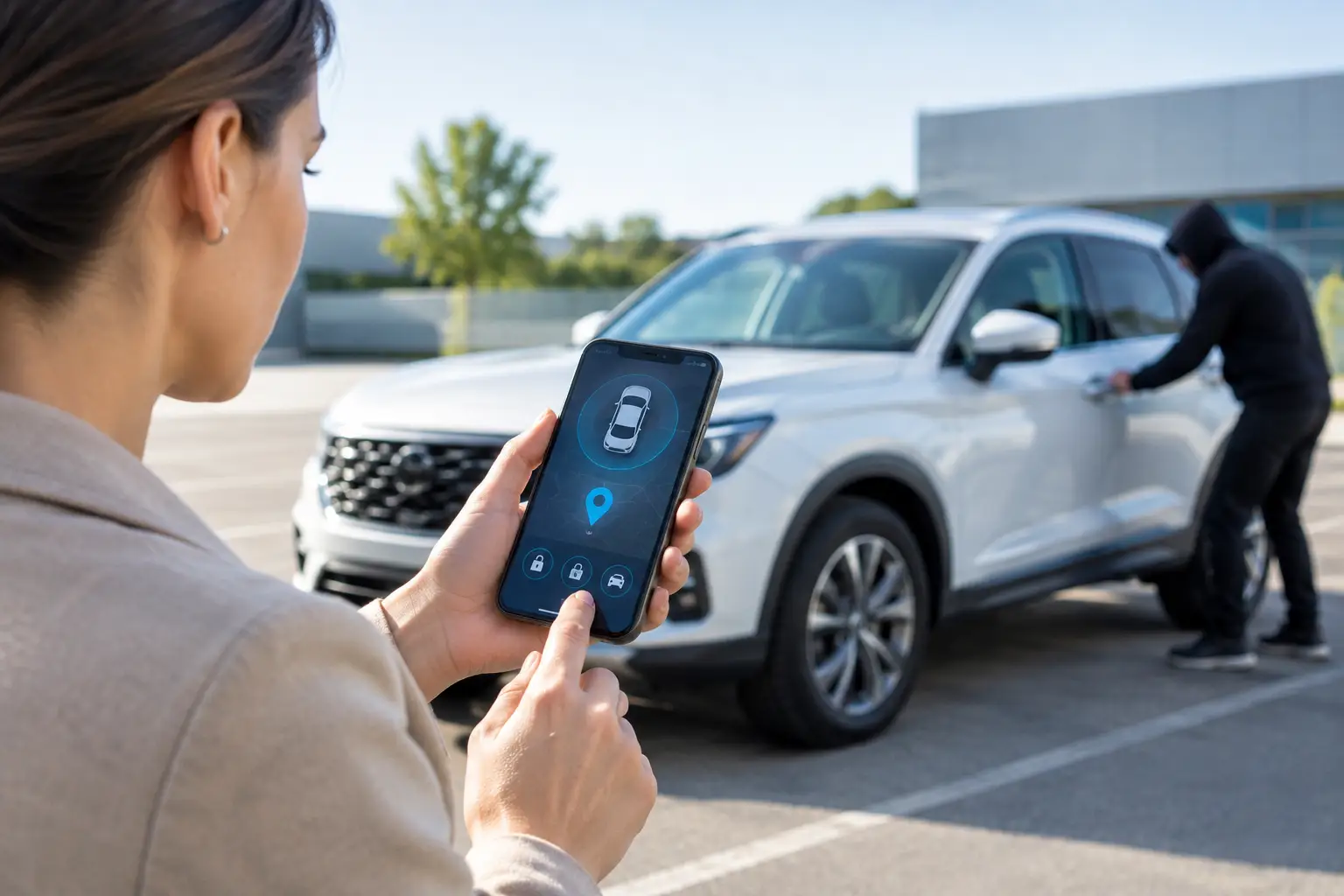
A vehicle leaving the yard without being on the plan creates more than a mileage issue. It can affect insurance, fuel spend, maintenance intervals, driver hours records and, in the worst cases, an operator's ability to account for where a vehicle has been and who was responsible for it. So, can telematics prevent unauthorised vehicle use? It can make it far harder to conceal, much quicker to detect and easier to address before a small control gap becomes a serious incident.
For UK fleet operators, the value is not simply a dot moving on a map. The practical benefit comes from combining live vehicle location with driver identification, geofences, reporting and a clear process for responding to exceptions. Used properly, telematics gives transport teams evidence and control without creating another manual task.
How telematics prevents unauthorised vehicle use
Telematics cannot physically stop every vehicle from moving. A tracker is not an immobiliser, and it should not be presented as one. What it does provide is immediate visibility of vehicle activity, including location, journey time, route, stops and, where relevant, the driver assigned to the vehicle.
That changes the risk calculation. An unauthorised journey that may previously have been found weeks later through fuel receipts, mileage discrepancies or customer complaints can be identified while it is happening. The transport manager can check whether the movement is legitimate, contact the driver or supervisor, and retain an accurate record of what occurred.
This is especially useful where vehicles are kept at a depot overnight, shared across shifts, taken home by authorised drivers or used across multiple operating centres. The more people, vehicles and locations involved, the easier it is for informal use to go unnoticed without a central record.
Live tracking creates a reliable movement record
Live GPS tracking shows where a van, lorry or trailer is, where it has travelled and when it stopped. It gives dispatch teams a factual answer when a vehicle appears outside its expected area or operating hours.
The deterrent effect matters too. Drivers and employees are less likely to use an asset for private work, unapproved collections or personal errands when they understand that journeys are visible and reviewed. That is not about assuming poor conduct. It is about having the same clear controls that would apply to fuel cards, keys and maintenance records.
Historical journey reports are equally valuable. If an incident is raised after the event, the business can review the actual route, timings and distance travelled rather than relying on recollection. This can help resolve disputes fairly, identify repeat patterns and separate a genuine operational change from misuse.
Geofences turn exceptions into alerts
A geofence is a virtual boundary placed around a location or area. Operators commonly set them around depots, customer sites, vehicle parks, workshops and drivers' home locations where take-home arrangements are approved.
When a vehicle enters or leaves that boundary, the system records the event and can alert nominated personnel. An out-of-hours departure from a depot, for example, does not automatically mean the vehicle is being misused. It may be a planned night trunk, emergency recovery or an early collection. But it gives the team a prompt to confirm that the movement is expected.
Geofences work best when they reflect the real operating plan. A broad boundary around an entire industrial estate may generate little useful information. A correctly sized depot geofence, combined with agreed operating hours and escalation contacts, provides a much clearer exception.
Driver identification closes the accountability gap
A vehicle record alone is useful, but commercial fleets need to know who was using the asset. This is particularly important for shared HGVs and vans, agency drivers, multi-drop operations and mixed fleets.
For tachograph-equipped vehicles, driver card data can help establish who was driving and when. A platform that brings remote tachograph downloads, driver hours information and vehicle tracking into the same view reduces the need to compare separate systems or spreadsheets. Managers can investigate a movement alongside the driver activity associated with it.
For vehicles without tachographs, driver ID solutions and properly managed vehicle allocation records can provide the same operational discipline. The objective is straightforward: each journey should have an accountable driver, an understood purpose and a record that can be checked.
This also protects drivers. If a vehicle is moved while allocated to someone who was not working, accurate identification helps demonstrate that they were not responsible. Good telematics is not just a management tool. It provides evidence when facts matter.
Set controls around the moments misuse is most likely
Unauthorised use rarely looks the same across every fleet. For one operator, the issue may be vans used privately at weekends. For another, it may be trailers moved between yards without being recorded, vehicles leaving before a planned shift, or drivers taking unapproved routes that add time and fuel.
The strongest approach starts with the specific risks in your operation. Most fleets should define what counts as authorised use, who can approve exceptions and how those exceptions are recorded. From there, alerts and reports can be configured around meaningful triggers.
Useful controls may include out-of-hours movement alerts, depot departure notifications, unauthorised area reports and route reviews for vehicles assigned to specific contracts. If the fleet has take-home vehicles, a geofence around the driver's normal home area can distinguish an approved commute from repeated private mileage elsewhere.
Do not create alerts simply because the system can generate them. If every late departure or boundary crossing produces a notification, the team will stop noticing the important ones. Start with a small number of high-value exceptions, review the results, then refine the rules.
Telematics supports wider fleet control
Preventing unauthorised use is rarely a stand-alone task. The same data can expose utilisation issues, wasted fuel, excessive idling, harsh driving events and maintenance risks.
Consider a vehicle that is repeatedly moved after hours. The immediate concern may be whether the use was approved. But the journey data may also explain unexplained fuel consumption, an overdue maintenance trigger or mileage that does not match the planned workload. A single platform makes those connections easier to spot.
For operator licence holders, this joined-up view is particularly useful. Vehicle tracking does not replace legal compliance processes, and it does not remove the need to manage driver hours, walkaround checks, defects or maintenance planning correctly. It does, however, provide timely operational evidence that supports better supervision.
Fleetalyse combines vehicle and trailer tracking with remote tachograph downloads, live driver hours monitoring, driver behaviour reporting and maintenance reminders in one platform. That means transport teams can investigate an unexpected vehicle movement without switching between tracking software, card download files and spreadsheet records.
Where telematics has limits
Telematics is most effective when it sits within a clear fleet policy. A tracker cannot decide whether an unplanned journey was a genuine emergency, a dispatch change or deliberate misuse. People and processes still matter.
You also need to be open with drivers about what is monitored, why it is monitored and how data will be used. Policies should cover personal use, take-home arrangements, out-of-hours access, alert handling and disciplinary procedures. They should also be applied consistently. Monitoring should be proportionate, with appropriate privacy and data protection controls, particularly where vehicles may be used outside working hours.
There is a technical limitation as well. Location updates depend on device configuration and mobile network coverage. A system can give highly useful near-real-time information, but no operator should assume it is a substitute for secure key management, depot security or, where justified, an approved immobilisation strategy.
Turn visibility into a workable response process
The difference between useful telematics and unused data is the response process. Decide who receives an alert, who checks the planned work, and who contacts the driver or duty manager if the movement cannot be explained. Record the outcome so the same issue does not have to be investigated again later.
Review exception reports at a sensible interval. Daily review may suit high-risk, high-value or tightly controlled operations. Weekly reporting may be sufficient for a smaller fleet with stable routes. The point is to make review routine, not to create an administrative burden.
When an issue is confirmed, deal with it consistently. It could be a simple allocation error, a gap in shift communication or a breach of policy. The telematics record gives managers the detail needed to have a fair, evidence-based conversation rather than relying on assumptions.
Unauthorised vehicle use is often a symptom of limited visibility, unclear rules or disconnected records. Telematics gives fleet teams the timely information to put those controls back in place, protect assets and keep every journey accountable.