
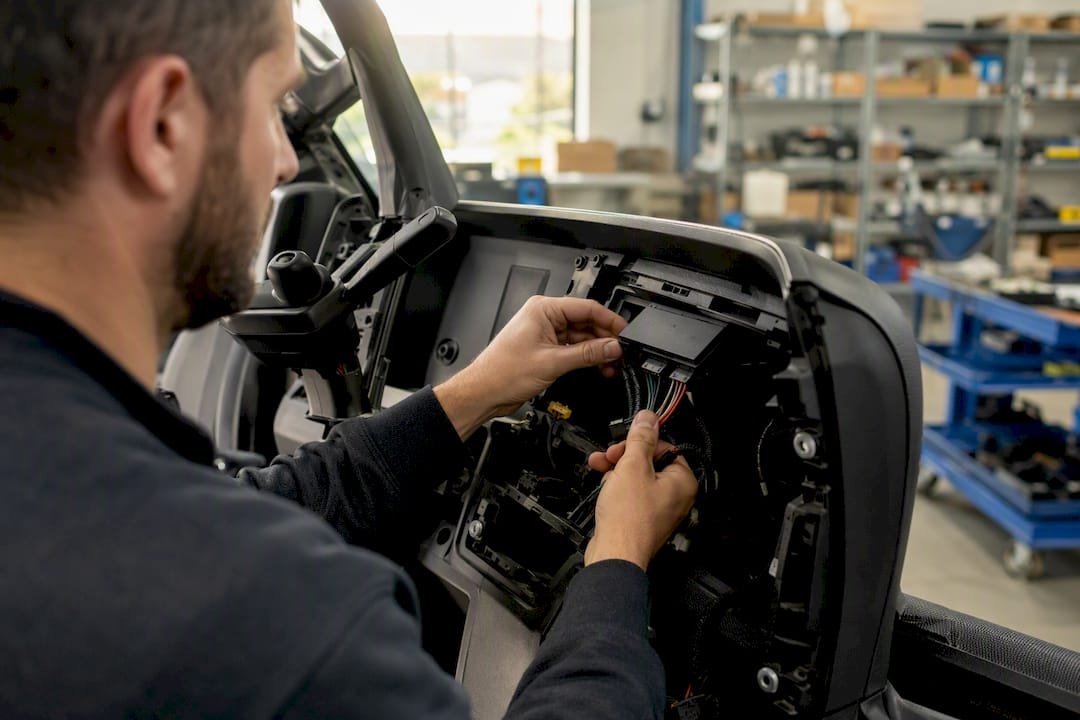
5–10 Vehicle Pilot Proves Connected Dashcam Telematics for UK Fleets
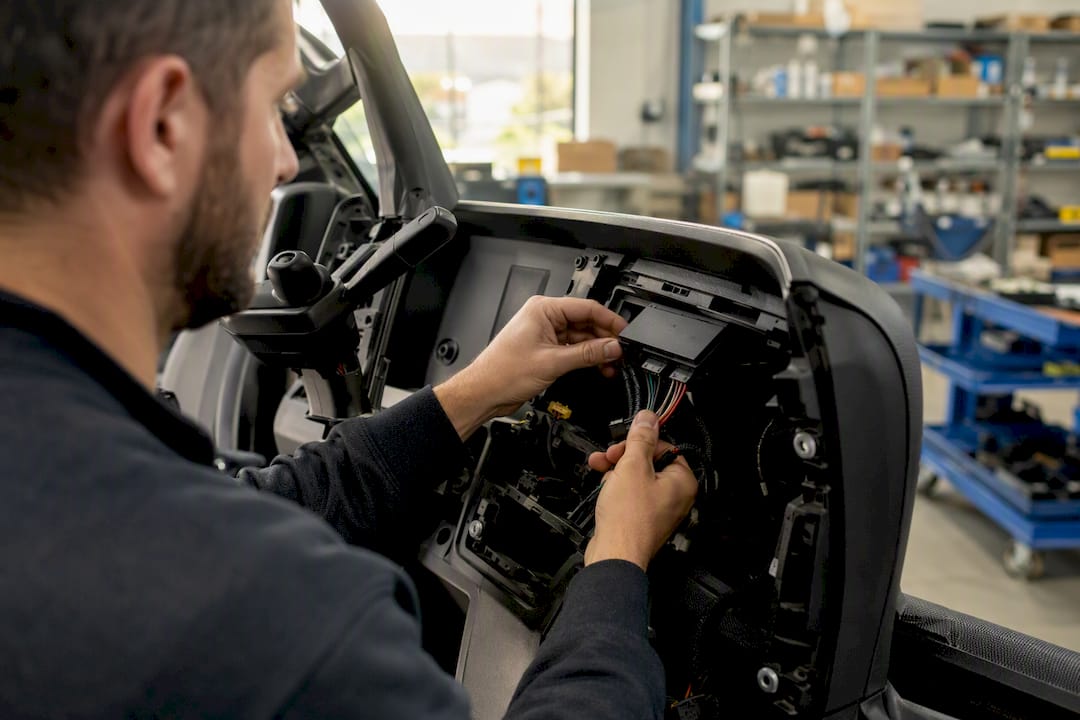
Connected dashcam telematics fuses AI-powered video with live vehicle data to cut incident investigation time, sharpen driver coaching and defend claims with timestamped evidence. It suits mixed commercial fleets most, especially HGVs, vans and trailer operations juggling multiple vehicle types under one Operator Licence. Fleetalyse builds this integration into a single platform, so footage and telemetry never live in separate silos.
TL;DR:
- Combining AI dashcams with telematics provides real-time driver alerts and precise incident timing, improving safety and claims defense in mixed vehicle fleets.
- Hardware compatibility varies by vehicle type, with plug-and-play units supporting both light vehicles and heavy trucks to simplify deployment and avoid warranty issues.
- Fast, accurate incident review relies on sub-second timestamping of video and telemetry, with cloud processing handling long-term analytics and driver scoring.
- Success depends on defining clear KPIs, supporting in-cab coaching, and integrating hardware and software to streamline driver monitoring and incident management.
Table of Contents
- What is connected dashcam telematics, and how is it different?
- What are the real benefits for safety, operations and claims?
- How does dashcam video sync with telematics data?
- What does deployment and hardware compatibility actually cost?
- How do you choose and deploy connected dashcam telematics?
- Fleetalyse’s approach to connected dashcam telematics
- What UK fleet operators should prioritise first
- Get connected dashcam telematics built for UK fleets
- Sources
What is connected dashcam telematics, and how is it different?
Connected dashcam telematics links camera footage directly to your vehicle’s GPS, speed and movement data, so every clip carries context rather than sitting as an isolated recording. That distinguishes it from two older approaches: standalone dashcams, which store footage locally with no link to driving data, and standalone telematics, which tracks location and speed but offers no visual record of what actually happened. Video telematics closes that gap by making footage searchable against the telemetry that surrounds it.
A working system needs four parts pulling together:
- Dashcam hardware with forward and often cabin-facing lenses for full-scene capture.
- A telematics unit or connection harness that reads vehicle data via the diagnostic port.
- A connectivity layer, usually a SIM card, that pushes flagged footage to the cloud.
- A platform with analytics that turns raw clips into driver scores and incident reports.
Fleets running older HGVs or a mix of vans and trailers benefit most from this setup, because a single dashboard replaces what would otherwise be two disconnected systems and two separate logins.
What are the real benefits for safety, operations and claims?
Safety improves first, and it improves quickly. In-cab alerts warn drivers the moment the system detects tailgating, harsh braking or distraction, giving them a chance to correct behaviour before it becomes a collision. Verizon Connect reports that AI dashcams with in-cab alerts can reduce specific risky behaviours, though the scale of improvement depends heavily on how consistently a fleet acts on the coaching data it generates.
Operationally, the gains show up in less obvious places. Reviewing footage against timestamped GPS and speed data means a transport manager can jump straight to the moment of an event instead of scrubbing through an hour of dashcam video looking for it.
Metrics worth tracking from month one: incident frequency per 100,000 miles, average time-to-close on claims, and driver-behaviour scores across harsh braking, cornering and acceleration events.
For claims and insurance, defensible footage changes the conversation entirely. A driver wrongly blamed for a collision can be cleared in minutes rather than months, and insurers increasingly favour fleets that can produce synchronised video evidence on demand.
How does dashcam video sync with telematics data?
The mechanics come down to timing. Modern systems timestamp video and telemetry to sub-second accuracy, so a footage clip lines up precisely with the GPS position, speed reading and g-force spike recorded at that exact moment. Zonar’s fleet camera systems describe this sub-second correlation as the difference between an isolated clip and a genuinely searchable incident record.
Processing splits across two layers:
- Edge AI, running on the device itself, flags risky events instantly and triggers the in-cab alert without waiting for a cloud connection.
- Cloud processing handles the deeper analytics: driver scoring trends, fleet-wide behaviour patterns and long-term reporting.
Connectivity matters just as much as the algorithms. Devices built with built-in 4G LTE can switch networks automatically to maintain coverage and support live streaming or remote clip retrieval, though genuinely live access typically depends on an active data subscription rather than being a default feature of the hardware itself.
Retention strategy is the part fleets underestimate. Sensible systems buffer footage locally on a rolling basis and only push flagged events to the cloud, which keeps data costs sane while still preserving everything you’d need for a claim. Edge-based classification cuts false alarms this way, uploading only verified or flagged clips rather than every second of driving.
What does deployment and hardware compatibility actually cost?
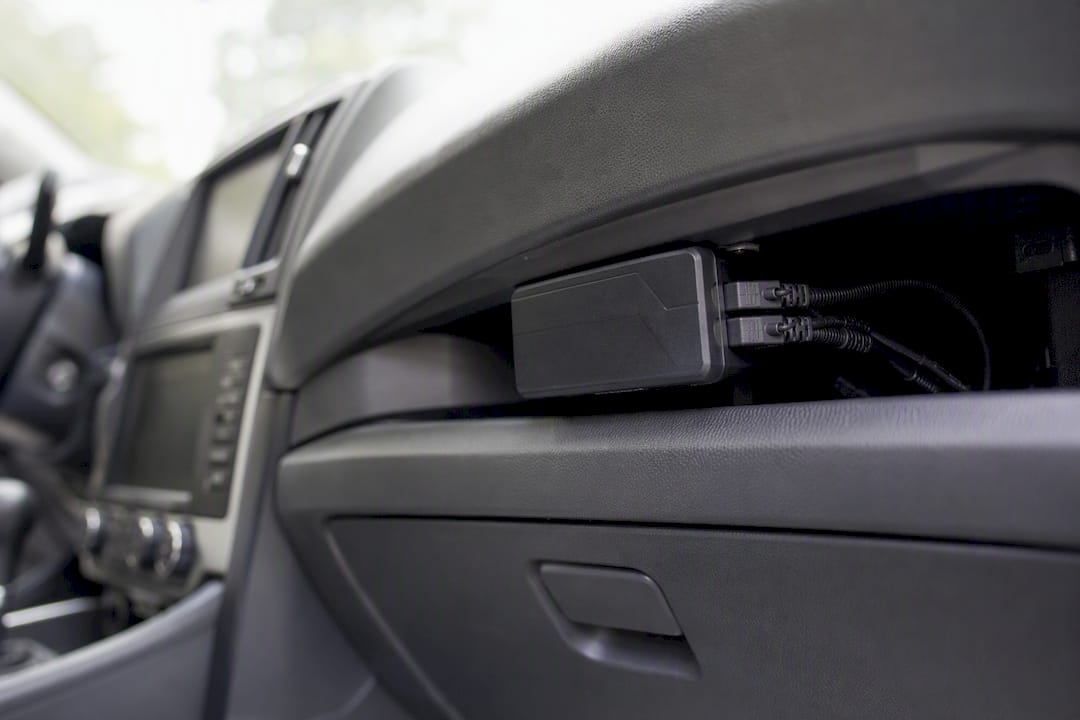
Hardware compatibility decides how smooth your rollout will be, and it deserves attention before price does. Devices connecting via OBD-II suit cars and light vans, while HGVs and older commercial vehicles typically need J1708 or J1939 compatibility through the correct harness. Plug-and-play units that support both routes without a full rewire are consistently faster to deploy than legacy hardwired systems, and that speed difference matters when you’re running a mixed fleet with vehicles from different eras and manufacturers.
A practical rollout sequence looks like this:
- Pilot on 5 to 10 vehicles across your different vehicle types before committing fleet-wide.
- Confirm harness availability for every vehicle age and model in your fleet, not just the newest ones.
- Check warranty implications with hardwired installs, since some manufacturers void warranty cover on unauthorised wiring work.
- Budget for the full cost stack: device hardware, one-off installation, and a monthly fee that scales with cloud storage and AI feature tiers. Industry pricing for advanced AI dashcams sits well above basic camera units, reflecting the processing power behind live detection.
Connectivity blackspots remain a genuine constraint in rural areas, so ask suppliers how their devices handle offline periods. On privacy, be upfront with drivers about what’s recorded, how long footage is retained, and who can access it, since GDPR obligations apply to in-cab footage just as they do to any other personal data.
Pro Tip: Run your pilot across your oldest and newest vehicles simultaneously. Compatibility problems almost always surface at the extremes of your fleet age range, not in the middle.
How do you choose and deploy connected dashcam telematics?
Selecting a system comes down to matching capability against your actual operational needs, not chasing the longest feature list. Work through this sequence before signing anything:
- Define your objectives and KPIs first. Are you primarily solving for claims defence, driver coaching, fuel efficiency or Operator Licence compliance? The answer shapes which features actually matter.
- Confirm hardware compatibility across every vehicle type in your fleet, including trailers if they carry their own telematics.
- Verify live access and retention terms. Ask exactly how long flagged footage is stored and whether live streaming needs an ongoing subscription, since some connected dashcams gate remote features behind a paid plan.
- Request a genuine pilot, not a demo video, on a representative slice of your fleet.
- Evaluate support and SLAs before hardware specs. A brilliant camera with no UK-based support desk becomes a liability the first time it fails on a wet Tuesday.
Ask suppliers directly about integration with your existing transport management system, evidence export formats for insurers, and exactly who owns the data once it’s captured. Red flags include vague answers on data ownership, no UK support number, and pricing that hides monthly fees until after signup. A sensible pilot timeline runs four to six weeks, long enough to capture a genuine spread of driving conditions.
Fleetalyse’s approach to connected dashcam telematics
Fleetalyse builds its dashcam and telematics integration around the same problem every UK operator faces: too many disconnected tools and not enough time to review them all. The platform pairs 4G smart dashcams with plug-and-play telematics hardware, remote tachograph downloads and driver behaviour scoring in one system.
That combination matters for three practical reasons:
- Plug-and-play hardware means most installs avoid a full rewire, cutting downtime across mixed fleets.
- UK-based support means troubleshooting doesn’t route through an overseas call centre when a device drops offline.
- Compliance-ready features, including automated driver hours monitoring, support Operator Licence obligations without extra admin.
If you’re weighing up a pilot, Fleetalyse’s integrated GPS and dashcam solutions page walks through how the hardware and software connect in practice, useful reading before any procurement conversation with your compliance team.
What UK fleet operators should prioritise first
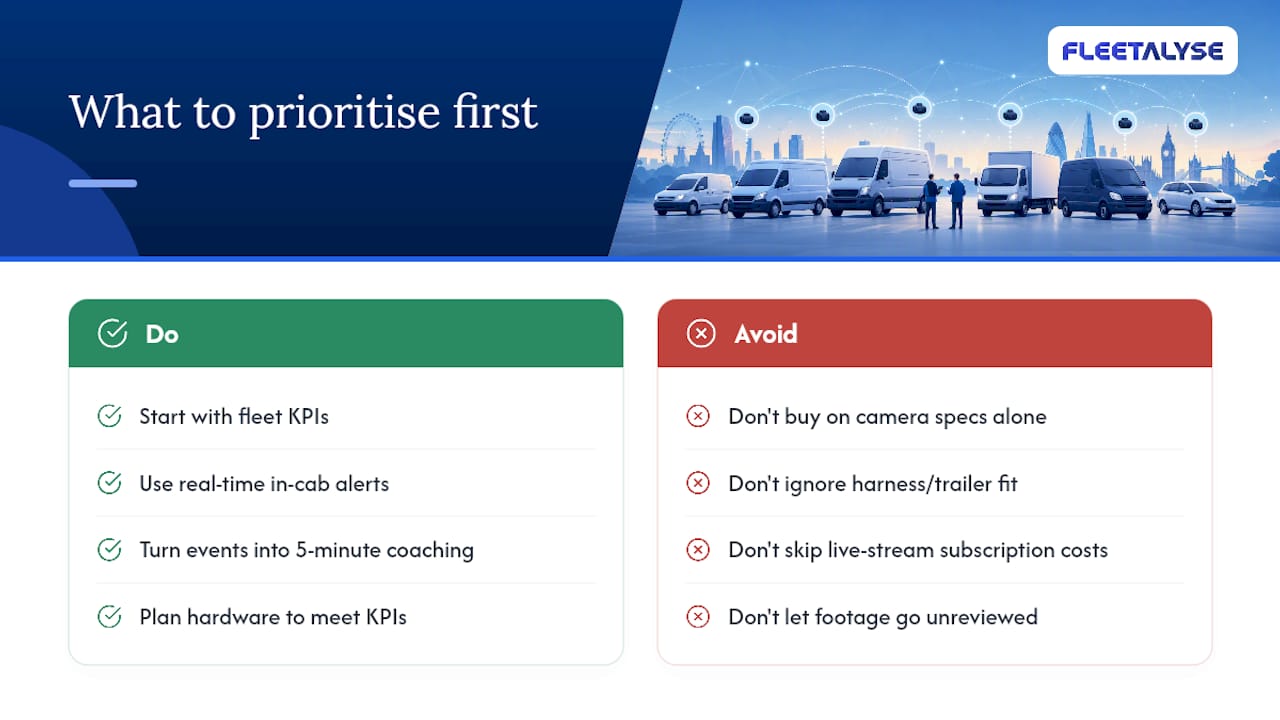
The industry’s conventional pitch on dashcam telematics leans hard on the camera, as if better footage alone fixes bad driving. It doesn’t. Footage that nobody reviews or acts on is just storage cost with extra steps. The systems that actually change behaviour are the ones where in-cab alerts reach the driver in real time, and where the fleet manager has a workflow for turning flagged events into a five-minute coaching conversation the same week, not a quarterly review nobody has time for.
Where most operators go wrong is buying on camera resolution and AI marketing copy, then discovering months later that the harness doesn’t fit half their trailers or that live streaming needs a subscription they never budgeted for. Start with your KPIs, not the spec sheet. Decide what “success” looks like for your fleet, whether that’s fewer at-fault claims or faster Operator Licence audits, then work backwards to the hardware. The technology genuinely delivers. It just rewards fleets that deploy it with a plan, not the ones chasing the flashiest dashcam on the shelf.
— Vytautas
Get connected dashcam telematics built for UK fleets
Fleetalyse gives you dashcam footage and telematics data in one dashboard, not two logins you have to cross-reference manually after every incident. That’s the practical edge over piecing together a camera system and a separate tracking platform yourself, and it’s exactly what the deployment checklist above is built to help you assess in a supplier.
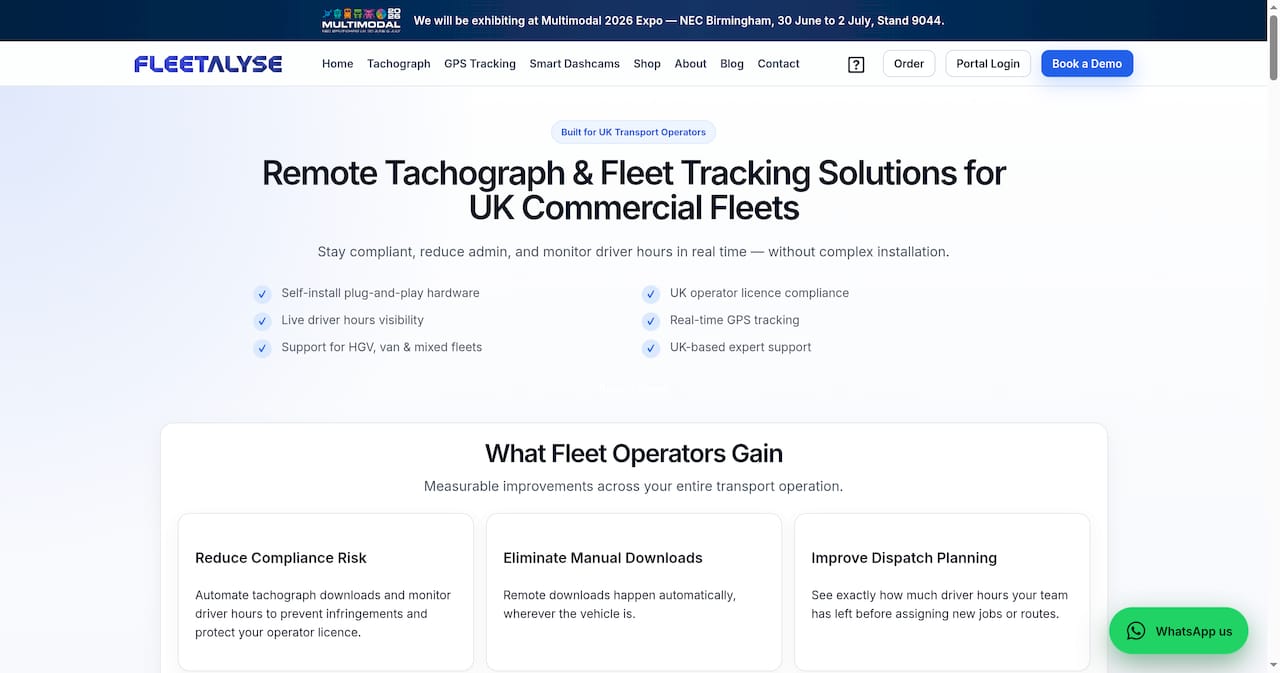
The platform’s driver behaviour monitoring tools turn flagged events into coaching data your transport managers can act on the same week, while plug-and-play hardware keeps installation disruption to a minimum across vans, HGVs and trailers alike. If you’d rather assess hardware options first, browse Fleetalyse’s unlocked GPS trackers to see what fits your existing vehicle mix. Book a pilot on a handful of vehicles and see how the data holds up against your own KPIs before committing fleet-wide.
Sources
For deeper technical grounding beyond this guide, the ExpertMarket breakdown of video telematics covers cost ranges and component detail in more depth. Nomora’s guide to vehicle tracking technology explains the telematics side in plainer terms, and FrenzyCars’ dashcam buying guide is a useful reference on camera features generally, though it’s written for consumer buyers rather than fleets.
- What Is Video Telematics? How it Works, Benefits & Costs in 2026
- Fleet camera systems & video telematics solutions | Zonar
- Trucking Hub: Dashcam One — hardware compatibility and plug-and-play deployment