
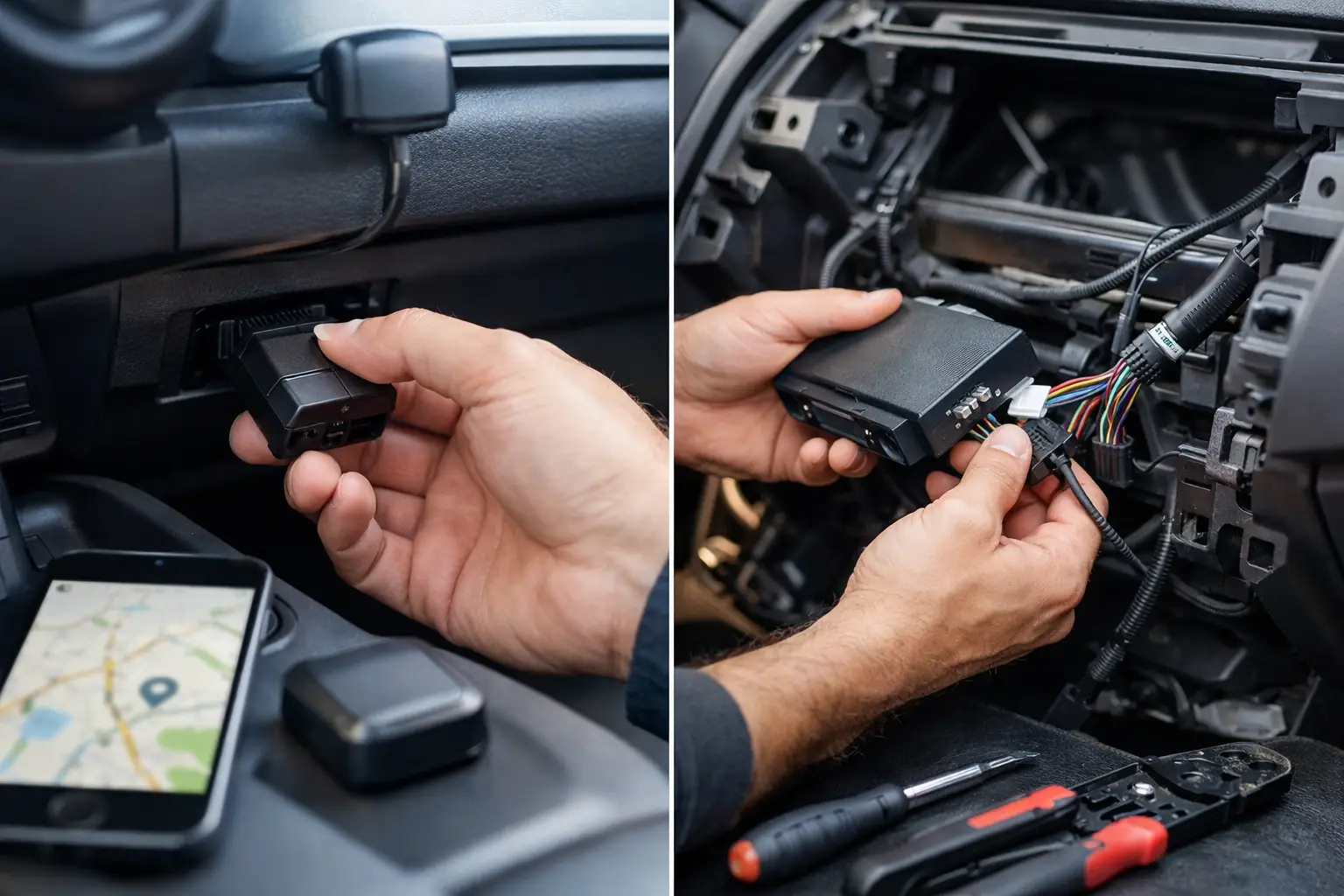
A telematics decision usually looks simple until it hits the workshop diary. You want tracking, driver data and better control, but the real question is how quickly you can get it live without creating more admin. That is where self install telematics vs hardwired becomes a practical fleet decision, not just a hardware preference.
For UK operators, the right answer depends less on the device itself and more on what you need it to support. If your priority is fast rollout across vans, trailers or mixed assets, self-install often makes immediate operational sense. If you need a more permanent setup tied into specific vehicle systems, hardwired may be the better fit. The difference shows up in downtime, install cost, flexibility and how much internal effort the rollout actually takes.
Self install telematics vs hardwired: what is the difference?
Self-install telematics usually means plug-and-play hardware that can be fitted without booking an engineer for every vehicle. In many cases, the unit connects through a standard vehicle port or uses a straightforward install method that depot teams can manage themselves. The main advantage is speed. Vehicles stay available, deployment is simpler, and scaling across a fleet is far less disruptive.
Hardwired telematics is physically connected into the vehicle’s electrical system. That can offer a more concealed and permanent install, and in some use cases it is necessary. It usually involves an engineer or qualified fitter, booked downtime and a more structured rollout plan. That is not automatically a drawback, but it does change the cost and pace of implementation.
The mistake many operators make is assuming hardwired always means better. In practice, better depends on the fleet, the reporting requirement and how much operational friction you can afford.
Where self-install works best
Self-install telematics is well suited to fleets that need speed, flexibility and minimal disruption. If you are rolling out tracking across vans or light commercial vehicles, the value is obvious. A depot team can fit devices quickly, vehicles do not need to sit off road waiting for an appointment, and you can start collecting usable data much sooner.
It is also a strong option for leased vehicles, short replacement cycles and mixed fleets where hardware may need to move between assets. If a vehicle leaves the fleet, the device can often be removed and reassigned without starting the whole process again. That matters if you are managing cost per vehicle closely or trying to avoid stranded hardware.
For operators focused on operational control, self-install also reduces the barrier to adoption. Instead of treating telematics as a project with workshop planning, engineer schedules and staged rollout dates, it becomes something you can implement as part of normal fleet activity.
That simplicity matters more than many buyers expect. A system that is easier to fit is usually easier to deploy properly across the whole fleet. And rollout consistency is what gives you useful reporting, not just a few fitted vehicles producing isolated data.
Where hardwired telematics still has a place
Hardwired telematics remains relevant where the installation needs to be hidden, fixed long term or integrated more deeply with vehicle systems. Some operators prefer it for security reasons, especially where they do not want the device to be visible or easily removed. In certain specialist vehicle types, hardwiring may also be the cleaner technical approach.
There are also use cases where a fleet wants telematics to be treated as a permanent part of the vehicle from day one. If the asset is expected to stay in service for years and the operating model supports planned workshop time, a hardwired install can fit that environment well.
But hardwired should be chosen for a clear reason, not by default. It brings more installation coordination, more dependency on third-party fitters and less flexibility when vehicles are reassigned, sold or returned. For some fleets, those trade-offs are worth it. For many, they are simply inherited costs.
Cost is not just the device price
When comparing self install telematics vs hardwired, the most common mistake is focusing only on hardware cost. The bigger cost often sits around the installation process.
A hardwired rollout may involve engineer fees, travel, booking management and lost vehicle time. Even if each individual install looks affordable, the total can climb quickly across a larger fleet. Then there is the hidden admin. Someone has to coordinate bookings, chase attendance, move vehicles through the workshop and handle failed or delayed appointments.
Self-install changes that equation. The device may not eliminate all labour, but it usually reduces external fitting costs and cuts downtime significantly. That is especially relevant for fleets where vehicle utilisation is tight and taking assets off the road has a direct impact on service delivery.
There is also a longer-term cost consideration. If you expect fleet changes during the contract period, self-install hardware is generally easier to redeploy. That improves asset value over time and reduces waste when vehicles leave the operation.
Downtime, rollout speed and operational disruption
Most transport teams do not struggle with the idea of telematics. They struggle with implementation. If a system is awkward to install, it competes with service schedules, PMI planning, defect management and day-to-day dispatch pressure.
That is why rollout speed matters. Self-install telematics can often be deployed vehicle by vehicle without waiting for workshop windows. You can phase it in across depots, prioritise problem areas first, and get live visibility sooner. That has a direct impact on planning, driver management and reporting.
Hardwired systems are slower by nature because each install requires more coordination. On paper that may only add a few hours per vehicle. Across dozens or hundreds of vehicles, it becomes a significant operational task.
If your current challenge is poor visibility, delayed data or heavy manual admin, waiting weeks or months for a fully hardwired rollout may delay the very improvements you are trying to achieve.
Does hardwired mean better data?
Not necessarily. Data quality depends on the platform, the device capability and the way information is turned into usable alerts and reports. A poor platform with a hardwired device still gives poor management information.
For many UK fleets, the key question is whether the system helps you act faster. Can you see where vehicles are, manage driver behaviour, spot underused assets, schedule maintenance prompts and reduce admin around compliance tasks? If the answer is yes, the install method matters less than the operational result.
This is especially true where telematics is part of a wider control platform rather than a standalone tracker. If the system combines vehicle visibility with tachograph downloads, live driver hours and fleet reporting, the biggest gain comes from having everything in one place. The install method should support that outcome, not dictate it.
Compliance and fleet type should shape the decision
For HGV and mixed fleets, the telematics conversation is often tied to compliance rather than tracking alone. Operators are not just trying to see vehicle location. They need to reduce manual processes, stay on top of driver hours, protect the operator licence and make faster decisions with accurate live data.
In that environment, self-install can be particularly attractive because it removes friction from adoption. If compliance tools and telematics can be introduced without major workshop dependency, operators are far more likely to roll them out fully and use them consistently.
That said, fleet type still matters. A van fleet with high turnover may strongly favour self-install. A specialist fleet with fixed assets and long service life may be comfortable with hardwired. Trailer tracking adds another layer again, where install practicality and redeployment flexibility often matter more than permanence.
There is no universal rule. The right choice is the one that fits how your vehicles are used, how often assets change, and how quickly you need the system to start solving real operational problems.
What UK fleet operators should ask before choosing
Before deciding, it helps to test the install method against daily reality rather than spec sheets. How much downtime can you genuinely absorb? Who will manage the rollout? Will vehicles stay in the fleet long enough to justify a permanent install? Do you need a simple path to reassign devices later? And most importantly, what problem are you trying to fix first - visibility, compliance, utilisation, driver performance or admin time?
If the answer points to fast deployment and low disruption, self-install is often the stronger commercial decision. If it points to permanent fitment for a stable asset base with specific technical requirements, hardwired may still be right.
For many operators, the best telematics setup is the one that gets used properly across the whole fleet, not the one that looks most technical on paper. That is why businesses looking for practical control often favour a platform built around plug-and-play deployment and compliance outcomes, as Fleetalyse does.
The useful question is not which install type sounds more advanced. It is which one gives your transport team working data, less admin and fewer delays from the moment it goes live.