
What if your vehicle cameras did more than just store video on a fragile SD card? For most regional operators, the traditional dashcam is a passive tool that only proves its value hours or days after an incident occurs. By switching to 4G dashcams for HGV fleets, you move beyond simple recording. These devices act as real-time compliance nodes, providing instant access to footage the moment a sensor is triggered.
We understand the pressure of rising insurance premiums and the constant threat of 'crash for cash' scams. Manually retrieving footage is a drain on your time and resources that you can't afford. This guide explains how connected technology eliminates those pain points while helping you meet strict Direct Vision Standard (DVS) requirements. You'll discover how to use live data to improve driver behaviour scores and protect your Operator Licence.
We will compare the latest hardware, from dual-channel to multi-camera systems, and examine how they integrate with your existing tracking tools. You'll learn why fleets using this technology see accident rates drop by up to 55 per cent according to Dataintelo research. It's time to stop chasing SD cards and start managing your fleet with total clarity.
Key Takeaways
- Understand why moving from SD cards to 4G connectivity is essential for instant incident evidence and reducing vehicle downtime.
- Learn how multi-camera setups help you meet Direct Vision Standard (DVS) requirements and eliminate dangerous blind spots.
- Discover the significant ROI of 4G dashcams for HGV fleets, from lower insurance premiums to the elimination of manual footage retrieval costs.
- Explore how AI-powered behaviour monitoring identifies risks like fatigue and distraction before they lead to costly accidents.
- See how integrating real-time video with live driver hours and tachograph analysis creates a robust, proactive compliance framework for your operation.
What are 4G Dashcams for HGV Fleets and Why are They Replacing SD Systems?
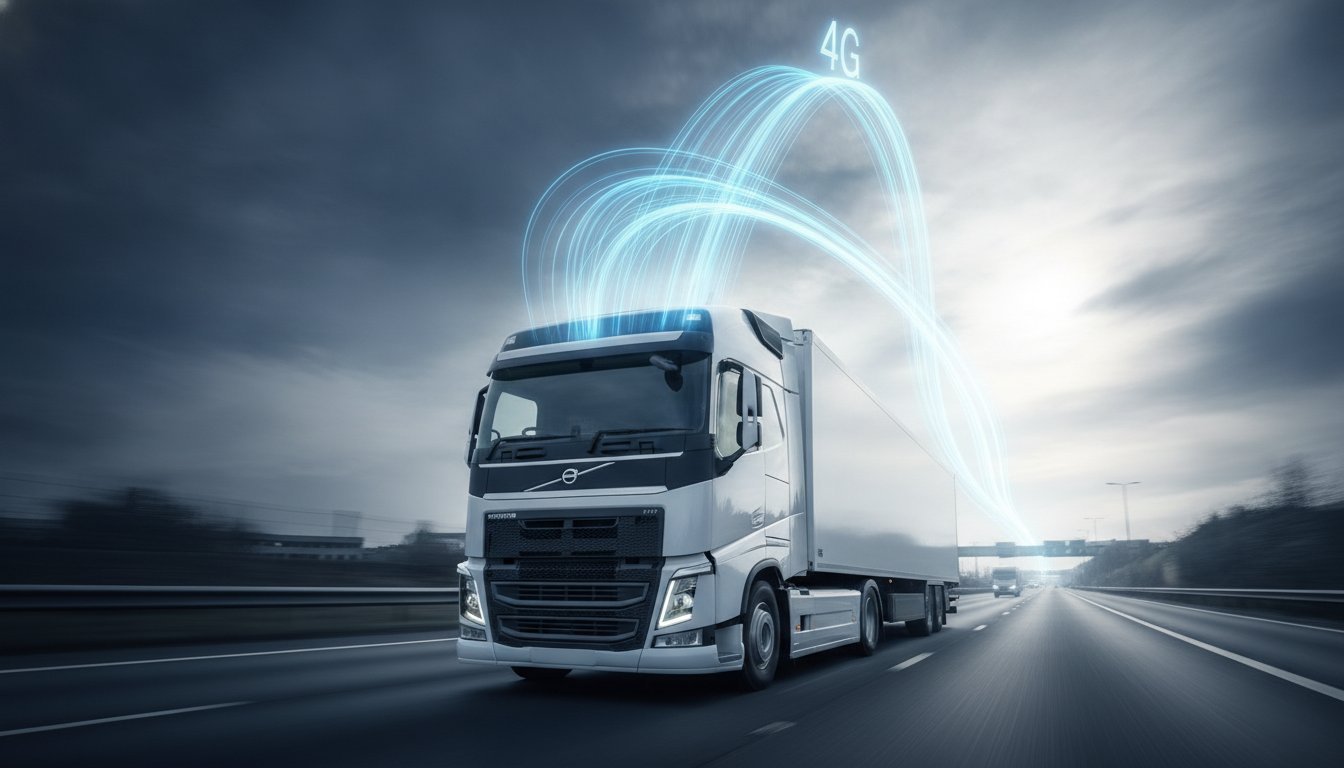
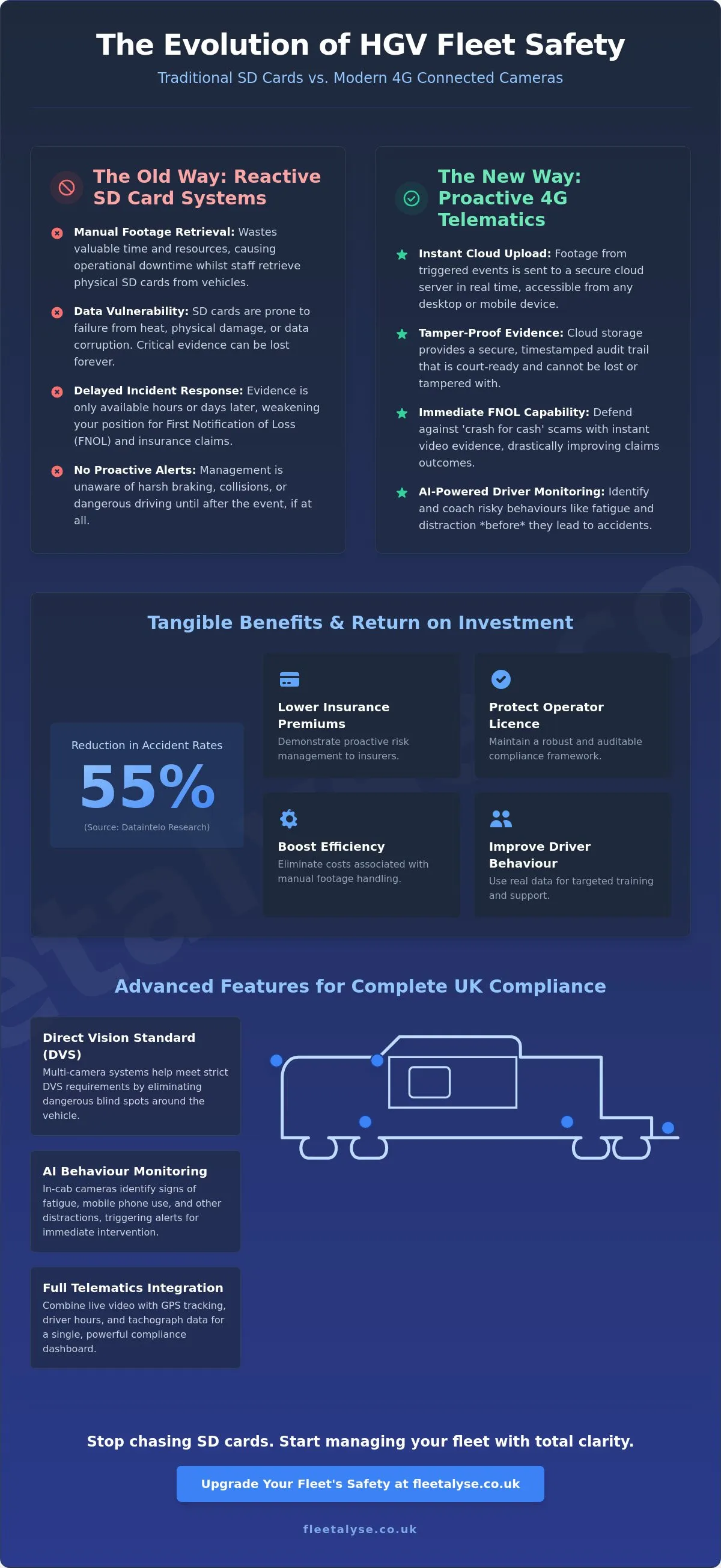
For years, fleet managers relied on standalone SD card cameras. These systems were reactive by design. You only knew something was wrong after a driver returned to the depot or, worse, after an insurance claim landed on your desk. 4G dashcams for HGV fleets have changed this dynamic. By using LTE connectivity, these devices upload incident footage to the cloud the moment a G-sensor or AI trigger is activated. This shift from reactive recording to proactive management is the single biggest advancement in modern road safety for the haulage sector.
Standard consumer cameras cannot handle the demands of 24/7 haulage. They suffer from heat-related failures, card corruption, and lack the multi-camera inputs required for large vehicles. Professional 4G systems are built for the rigours of the road. They offer tamper-proof storage and constant uptime, ensuring you never miss a critical second of footage due to a full or faulty memory card. This reliability is why more operators are moving away from retail hardware toward integrated solutions from providers like Fleetalyse.
The Core Difference: Connected vs. Standalone Cameras
Standalone cameras require physical intervention. Someone must walk to the vehicle, remove the card, and find a computer to view the file. This creates significant operational downtime and administrative burden. 4G systems bypass this entirely. You receive a notification on your desktop before the driver has even pulled over to call the office. This real-time alerting allows for immediate First Notification of Loss (FNOL), which is vital for defending against 'crash for cash' scams. Additionally, cloud-stored video is far more 'court-ready'. It provides a secure, timestamped audit trail that is harder to challenge than a loose physical card.
Why 4G is the Current Standard for UK Hauliers
While 5G gets the headlines, 4G/LTE remains the sweet spot for UK road networks. It offers the perfect balance of deep geographic coverage and sufficient bandwidth for high-definition video streaming. With the ongoing sunset of 2G and 3G networks, older tracking units are rapidly becoming obsolete. A 4G dashcam is a cellular-enabled telematics device that bridges the gap between video and GPS data. These video telematics systems provide a future-proof solution that doesn't require the expensive, often patchy infrastructure of 5G to deliver reliable results. By choosing 4G, you ensure your fleet remains connected in rural areas and urban centres alike.
- Instant Access: No waiting for vehicles to return to base.
- Evidence Security: Footage is saved to the cloud automatically during an event.
- Operational Efficiency: Eliminates the need for manual SD card management.
Advanced Features of 4G Connected Cameras for Large Goods Vehicles
Modern 4G dashcams for HGV fleets are no longer isolated recording devices. They function as comprehensive safety hubs. By integrating high-speed cellular connectivity with advanced sensor arrays, these systems provide a level of oversight that was previously impossible. This technology is becoming increasingly central to UK vehicle safety technologies, moving the industry toward a standard where every incident is backed by irrefutable data.
The core of these systems relies on G-Sensor technology. When the hardware detects a sudden impact or harsh braking event, it automatically tags the footage and uploads it to the cloud. This ensures that even if the vehicle is severely damaged, the evidence is already safe on your server. It's a fail-safe approach that protects your business from liability when drivers are not at fault.
Dual-Vision and Multi-Channel Systems
Protecting the 'blind side' is a critical requirement for HGV operators. Multi-channel systems allow for up to five or more cameras to be linked to a single 4G hub. This configuration typically covers the front, the driver, both sides, and the rear of the trailer. High-definition 1080p resolution is the baseline standard for these units. It ensures that number plates and road signs are legible even at a distance or in poor weather. For nocturnal operations, infrared and night vision capabilities are essential. These features ensure that even in total darkness, the camera captures clear evidence of roadside incidents or attempted fuel theft.
Telematics Integration and Live Streaming
The most significant leap in recent years is the inclusion of AI-driven driver behaviour monitoring. These systems detect signs of fatigue, mobile phone use, and distracted driving in real-time. According to research from Dataintelo (March 2026), fleets using AI-enabled dashcams report accident rate reductions of 35% to 55%. When a risk is identified, the camera issues an in-cab alert and uploads a clip to the cloud for review.
These cameras sync video footage with exact speed and location data via GPS fleet tracking. This creates a historical breadcrumb trail where every video clip is pinned to a map. Managers can also perform remote health checks to ensure every camera in the fleet is recording correctly. You don't need to visit the cab to know your data is secure. If you're ready to upgrade your fleet's visibility, explore our range of connected camera hardware to find the right fit for your heavy goods vehicles.
Connected vs. SD Card Systems: Analysing the ROI for UK Operators
Many transport managers view the move to 4G connectivity as an additional monthly expense. This perspective often ignores the substantial hidden costs associated with unmanaged SD card systems. When you calculate the true cost of manual footage retrieval, including fuel, labour, and vehicle downtime, the financial argument for 4G dashcams for HGV fleets becomes clear. Relying on physical cards means your data is only as good as the last time a human checked the hardware.
Manual retrieval is a drain on resources. If an HGV must deviate from its route or sit idle at the depot while an administrator swaps a card, you're losing money. In contrast, 4G systems provide instant access to incident clips. This speed allows for immediate First Notification of Loss (FNOL). According to research from Dataintelo (March 2026), insurance premium savings for fleets with connected dashcams average 15 per cent to 22 per cent annually. These savings often cover the subscription costs entirely, turning a perceived overhead into a protective asset.
The Administrative Burden of SD Cards
SD cards are the single point of failure in traditional setups. They corrupt easily due to constant overwriting and vibration. You often don't realise a card has failed until you desperately need the footage. Consider the time required to retrieve just five clips from five different vehicles. Between locating the trucks, accessing the cabs, and finding the correct timestamps, a simple task can take hours. 4G systems pay for themselves through administrative time saved alone; managers can pull specific clips from their desks in seconds.
Insurance and Legal Protection
Undeniable cloud-stored evidence is your best defence against 'crash for cash' scams. Proving your driver wasn't at fault within minutes of an incident prevents long, drawn-out legal battles. Industry data indicates that 4G dashcams can reduce disputed claim settlements by up to 40 per cent by providing immediate, objective evidence. This proactive approach significantly improves your fleet's insurance loss ratio over a 12-month period. By exonerating drivers instantly, you also protect their professional reputation and reduce the stress associated with roadside incidents. If you want to see how these savings apply to your specific operation, Fleetalyse can help you calculate the potential return on investment for your heavy goods vehicles.
- Eliminate Downtime: No need for vehicles to return to base for footage checks.
- Protect Your Drivers: Instant exoneration prevents unnecessary disciplinary processes.
- Speed Up Claims: Faster FNOL leads to lower overall settlement costs.
Maintaining Compliance and Driver Standards with Real-Time Video Data
Compliance in the UK haulage industry is often viewed as a paperwork exercise. However, real-time video data transforms this into a dynamic safety culture. Using 4G dashcams for HGV fleets allows you to verify that your drivers adhere to the same standards you report during audits. This technology directly supports your remote tachograph download strategy by providing visual context to driving hours and rest periods. If a driver is flagged for a fatigue-related infringement, video evidence helps you understand if they showed physical signs of tiredness before the breach occurred.
Maintaining your Operator Licence (O-Licence) requires proving you have continuous and effective management of your transport activities. 4G video provides the "effective" part of that requirement. It demonstrates to the DVSA that you aren't just recording data; you're acting on it. This proactive oversight is a cornerstone of the DVSA 'Earned Recognition' scheme, where operators share performance data to prove they meet high safety standards.
Video as a Tool for Driver Coaching
Coaching should move away from being a disciplinary tool. Use video to identify 'near-miss' events, such as a late reaction to a hazard or a sharp swerve. These moments are often missed by standard telematics but are clearly visible on camera. By creating a 'Top Driver' leaderboard based on combined video and telematics scores, you incentivise professional behaviour. Present these clips to drivers in a private, constructive setting. Focus on what was done well and where a different choice could have reduced risk. This approach builds trust rather than resentment amongst your team.
Legal Compliance and the DVSA
Under UK health and safety laws, you have a 'Duty of Care' to your employees and other road users. Professional 4G dashcams for HGV fleets provide the documented evidence required to prove you've met this obligation. In the event of a serious incident, police enquiries will focus on whether the operator took all reasonable steps to prevent the accident. Having a clear audit trail of driver coaching and real-time monitoring protects your business from potential corporate manslaughter charges and heavy fines. To ensure your fleet meets these high standards, order your 4G-connected dashcam hardware today.
Addressing privacy is vital for driver buy-in. Implement a robust 'fair use' policy that clearly states when and why footage is reviewed. Drivers are more likely to accept in-cab cameras when they know the data is used for their protection and professional development, not just for constant surveillance. Transparency regarding data retention and access rights is the best way to ensure long-term driver acceptance.
Selecting and Implementing the Right 4G Dashcam Solution with Fleetalyse
Choosing 4G dashcams for HGV fleets requires a tailored approach. A one-size-fits-all hardware solution rarely works for mixed fleets. An articulated lorry needs multi-channel coverage to eliminate blind spots; a delivery van might only require a dual-vision unit. Fleetalyse ensures your hardware matches your vehicle type and operational risk. We focus on providing the right tool for the specific job rather than pushing generic hardware.
Our approach centres on technical synergy. We integrate video evidence directly with live driver hours monitoring. This allows transport managers to cross-reference visual data with tachograph status instantly. Before signing any 4G data contract, ask your provider about data caps. Video consumes significant bandwidth. You need a data plan that handles high-definition event uploads without hidden overage charges or throttled speeds during critical periods.
Professional installation is non-negotiable for heavy goods vehicles. Improperly fitted cameras can interfere with vehicle electronics or fail during a high-impact collision. Professional engineers ensure cameras are positioned to meet legal visibility requirements and are securely hardwired to the vehicle power supply. This prevents tampering and ensures the system is always active when the engine is running.
Integration with the Compliance Ecosystem
Managing multiple software platforms is inefficient and leads to data silos. Fleetalyse provides a single pane of glass for your tracking, tachograph data, and video footage. This unified view simplifies data management for busy transport offices. You no longer need to jump between different windows to investigate a driving infringement. Everything you need for an internal audit or a police enquiry is available in one secure location. We ensure your data plan is sufficient for your fleet's specific upload volume, preventing unexpected service interruptions.
Getting Started: A Pragmatic Implementation Plan
Implementation should be logical and measured. Start with a phased rollout. Prioritise high-risk routes or vehicles with a history of frequent insurance claims. This allows you to refine your coaching processes before a full-fleet deployment. Communicate the benefits to your drivers early. Explain that the system is there to exonerate them from false 'crash for cash' claims. Transparency is the only way to secure long-term driver buy-in and maintain a positive workplace culture.
The best way to understand the value of a connected system is to see it in your own operational context. Book a demo with Fleetalyse to see 4G video in action alongside your live tacho data. Experience how integrated technology makes your fleet safer, more compliant, and significantly easier to manage.
Future-Proof Your Fleet with Real-Time Connectivity
The move to 4G connectivity isn't just about clearer video. It's about fundamental operational control. By eliminating the administrative burden of SD cards, you gain instant visibility that protects your drivers and your Operator Licence. You've seen how integrating video with tachograph data creates a robust compliance framework that standalone cameras can't match. This proactive approach ensures your business remains resilient against insurance scams and regulatory scrutiny.
Choosing 4G dashcams for HGV fleets from a specialist partner means you get hardware built for the rigours of the road. We offer seamless integration with Tachograph Analysis and provide UK-based technical support to keep your vehicles moving. Our commitment to transparent pricing means you won't face hidden data fees or unexpected contract complexities. It's time to replace guesswork with certainty.
Secure your fleet and streamline compliance with Fleetalyse 4G Dashcams. Start managing your road risk with the precision your business deserves.
Frequently Asked Questions
How much data does a 4G dashcam use per month?
Data consumption depends on your specific settings and how often you use live-view features. For most 4G dashcams for HGV fleets, background telemetry and automatic incident uploads typically use between 1GB and 2GB per month. If your managers frequently stream live video to check on vehicles, this usage will increase. Most professional data plans are structured to handle these variations without penalty.
Will a 4G dashcam drain my HGV battery when the engine is off?
Professional grade hardware includes built-in low-voltage cut-off sensors to prevent battery drain. The system monitors the vehicle's battery level and will automatically shut down if the voltage drops below a safe threshold. Most cameras enter a low-power sleep mode when the ignition is off, only waking up to record and upload footage if the G-sensor detects a physical impact.
Can I live-stream video from my fleet at any time?
You can access a live stream from any vehicle as long as it is within an area with cellular coverage. This is managed through a secure cloud portal, allowing you to see exactly what the driver sees in real-time. It's an essential tool for verifying roadside conditions during a breakdown or checking driver welfare in high-risk environments.
Are 4G dashcams compliant with GDPR and UK privacy laws?
Yes, provided you implement a clear data protection policy and use appropriate signage. To remain compliant with UK GDPR, you must inform drivers they are being recorded and ensure that footage is only accessed by authorised personnel for legitimate business reasons. Data retention should be limited to what is necessary, typically 30 days unless a specific clip is required for an ongoing investigation.
What happens to the video if the HGV travels through a 4G dead zone?
The camera continues to record to its internal storage or local SD card regardless of the cellular signal. If an incident occurs in a dead zone, the device tags the footage and uploads it to the cloud as soon as the vehicle reconnects to the network. You won't lose any evidence; the transmission is simply buffered until a signal is available.
Do 4G dashcams require a specific SIM card or data plan?
Most professional 4G dashcams for HGV fleets use specialised M2M (Machine-to-Machine) SIM cards. These are different from standard consumer SIMs as they are designed for high-vibration environments and can often roam across multiple UK networks to find the strongest signal. These are usually provided by your hardware partner as part of a managed service.
How long is footage stored in the cloud for HGV fleets?
Standard cloud retention is typically 30 days, which aligns with most privacy recommendations. However, any footage marked as an 'event' or 'incident' can be locked and stored for much longer if it is needed for an insurance claim or legal proceeding. You can also download these clips to your own local servers for permanent archiving if required.
Can 4G dashcams help with insurance premium negotiations?
Providing your insurer with evidence of a managed camera system is a powerful tool for reducing premiums. Insurers value the ability to settle claims quickly through First Notification of Loss (FNOL) and the reduced risk of fraudulent 'crash for cash' claims. Demonstrating a proactive safety culture often leads to more favourable terms during your annual renewal negotiations.
Frequently asked questions
The Core Difference: Connected vs. Standalone Cameras
Standalone cameras require physical intervention. Someone must walk to the vehicle, remove the card, and find a computer to view the file. This creates significant operational downtime and administrative burden. 4G systems bypass this entirely. You receive a notification on your desktop before the driver has even pulled over to call the office. This real-time alerting allows for immediate First Notification of Loss (FNOL), which is vital for defending against 'crash for cash' scams. Additionally, cloud-stored video is far more 'court-ready'. It provides a secure, timestamped audit trail that is harder to challenge than a loose physical card.
Why 4G is the Current Standard for UK Hauliers
While 5G gets the headlines, 4G/LTE remains the sweet spot for UK road networks. It offers the perfect balance of deep geographic coverage and sufficient bandwidth for high-definition video streaming. With the ongoing sunset of 2G and 3G networks, older tracking units are rapidly becoming obsolete. A 4G dashcam is a cellular-enabled telematics device that bridges the gap between video and GPS data. These video telematics systems provide a future-proof solution that doesn't require the expensive, often patchy infrastructure of 5G to deliver reliable results. By choosing 4G, you ensure your fleet remains connected in rural areas and urban centres alike. Modern 4G dashcams for HGV fleets are no longer isolated recording devices. They function as comprehensive safety hubs. By integrating high-speed cellular connectivity with advanced sensor arrays, these systems provide a level of oversight that was previously impossible. This technology is becoming increasingly central to UK vehicle safety technologies, moving the industry toward a standard where every incident is backed by irrefutable data. The core of these systems relies on G-Sensor technology. When the hardware detects a sudden impact or harsh braking event, it automatically tags the footage and uploads it to the cloud. This ensures that even if the vehicle is severely damaged, the evidence is already safe on your server. It's a fail-safe approach that protects your business from liability when drivers are not at fault.
Dual-Vision and Multi-Channel Systems
Protecting the 'blind side' is a critical requirement for HGV operators. Multi-channel systems allow for up to five or more cameras to be linked to a single 4G hub. This configuration typically covers the front, the driver, both sides, and the rear of the trailer. High-definition 1080p resolution is the baseline standard for these units. It ensures that number plates and road signs are legible even at a distance or in poor weather. For nocturnal operations, infrared and night vision capabilities are essential. These features ensure that even in total darkness, the camera captures clear evidence of roadside incidents or attempted fuel theft.
Telematics Integration and Live Streaming
The most significant leap in recent years is the inclusion of AI-driven driver behaviour monitoring. These systems detect signs of fatigue, mobile phone use, and distracted driving in real-time. According to research from Dataintelo (March 2026), fleets using AI-enabled dashcams report accident rate reductions of 35% to 55%. When a risk is identified, the camera issues an in-cab alert and uploads a clip to the cloud for review. These cameras sync video footage with exact speed and location data via GPS fleet tracking. This creates a historical breadcrumb trail where every video clip is pinned to a map. Managers can also perform remote health checks to ensure every camera in the fleet is recording correctly. You don't need to visit the cab to know your data is secure. If you're ready to upgrade your fleet's visibility, explore our range of connected camera hardware to find the right fit for your heavy goods vehicles. Many transport managers view the move to 4G connectivity as an additional monthly expense. This perspective often ignores the substantial hidden costs associated with unmanaged SD card systems. When you calculate the true cost of manual footage retrieval, including fuel, labour, and vehicle downtime, the financial argument for 4G dashcams for HGV fleets becomes clear. Relying on physical cards means your data is only as good as the last time a human checked the hardware. Manual retrieval is a drain on resources. If an HGV must deviate from its route or sit idle at the depot while an administrator swaps a card, you're losing money. In contrast, 4G systems provide instant access to incident clips. This speed allows for immediate First Notification of Loss (FNOL). According to research from Dataintelo (March 2026), insurance premium savings for fleets with connected dashcams average 15 per cent to 22 per cent annually. These savings often cover the subscription costs entirely, turning a perceived overhead into a protective asset.
The Administrative Burden of SD Cards
SD cards are the single point of failure in traditional setups. They corrupt easily due to constant overwriting and vibration. You often don't realise a card has failed until you desperately need the footage. Consider the time required to retrieve just five clips from five different vehicles. Between locating the trucks, accessing the cabs, and finding the correct timestamps, a simple task can take hours. 4G systems pay for themselves through administrative time saved alone; managers can pull specific clips from their desks in seconds.
Insurance and Legal Protection
Undeniable cloud-stored evidence is your best defence against 'crash for cash' scams. Proving your driver wasn't at fault within minutes of an incident prevents long, drawn-out legal battles. Industry data indicates that 4G dashcams can reduce disputed claim settlements by up to 40 per cent by providing immediate, objective evidence. This proactive approach significantly improves your fleet's insurance loss ratio over a 12-month period. By exonerating drivers instantly, you also protect their professional reputation and reduce the stress associated with roadside incidents. If you want to see how these savings apply to your specific operation, Fleetalyse can help you calculate the potential return on investment for your heavy goods vehicles. Compliance in the UK haulage industry is often viewed as a paperwork exercise. However, real-time video data transforms this into a dynamic safety culture. Using 4G dashcams for HGV fleets allows you to verify that your drivers adhere to the same standards you report during audits. This technology directly supports your remote tachograph download strategy by providing visual context to driving hours and rest periods. If a driver is flagged for a fatigue-related infringement, video evidence helps you understand if they showed physical signs of tiredness before the breach occurred. Maintaining your Operator Licence (O-Licence) requires proving you have continuous and effective management of your transport activities. 4G video provides the "effective" part of that requirement. It demonstrates to the DVSA that you aren't just recording data; you're acting on it. This proactive oversight is a cornerstone of the DVSA 'Earned Recognition' scheme, where operators share performance data to prove they meet high safety standards.
Video as a Tool for Driver Coaching
Coaching should move away from being a disciplinary tool. Use video to identify 'near-miss' events, such as a late reaction to a hazard or a sharp swerve. These moments are often missed by standard telematics but are clearly visible on camera. By creating a 'Top Driver' leaderboard based on combined video and telematics scores, you incentivise professional behaviour. Present these clips to drivers in a private, constructive setting. Focus on what was done well and where a different choice could have reduced risk. This approach builds trust rather than resentment amongst your team.
Legal Compliance and the DVSA
Under UK health and safety laws, you have a 'Duty of Care' to your employees and other road users. Professional 4G dashcams for HGV fleets provide the documented evidence required to prove you've met this obligation. In the event of a serious incident, police enquiries will focus on whether the operator took all reasonable steps to prevent the accident. Having a clear audit trail of driver coaching and real-time monitoring protects your business from potential corporate manslaughter charges and heavy fines. To ensure your fleet meets these high standards, order your 4G-connected dashcam hardware today. Addressing privacy is vital for driver buy-in. Implement a robust 'fair use' policy that clearly states when and why footage is reviewed. Drivers are more likely to accept in-cab cameras when they know the data is used for their protection and professional development, not just for constant surveillance. Transparency regarding data retention and access rights is the best way to ensure long-term driver acceptance. Choosing 4G dashcams for HGV fleets requires a tailored approach. A one-size-fits-all hardware solution rarely works for mixed fleets. An articulated lorry needs multi-channel coverage to eliminate blind spots; a delivery van might only require a dual-vision unit. Fleetalyse ensures your hardware matches your vehicle type and operational risk. We focus on providing the right tool for the specific job rather than pushing generic hardware. Our approach centres on technical synergy. We integrate video evidence directly with live driver hours monitoring. This allows transport managers to cross-reference visual data with tachograph status instantly. Before signing any 4G data contract, ask your provider about data caps. Video consumes significant bandwidth. You need a data plan that handles high-definition event uploads without hidden overage charges or throttled speeds during critical periods. Professional installation is non-negotiable for heavy goods vehicles. Improperly fitted cameras can interfere with vehicle electronics or fail during a high-impact collision. Professional engineers ensure cameras are positioned to meet legal visibility requirements and are securely hardwired to the vehicle power supply. This prevents tampering and ensures the system is always active when the engine is running.
Integration with the Compliance Ecosystem
Managing multiple software platforms is inefficient and leads to data silos. Fleetalyse provides a single pane of glass for your tracking, tachograph data, and video footage. This unified view simplifies data management for busy transport offices. You no longer need to jump between different windows to investigate a driving infringement. Everything you need for an internal audit or a police enquiry is available in one secure location. We ensure your data plan is sufficient for your fleet's specific upload volume, preventing unexpected service interruptions.
Getting Started: A Pragmatic Implementation Plan
Implementation should be logical and measured. Start with a phased rollout. Prioritise high-risk routes or vehicles with a history of frequent insurance claims. This allows you to refine your coaching processes before a full-fleet deployment. Communicate the benefits to your drivers early. Explain that the system is there to exonerate them from false 'crash for cash' claims. Transparency is the only way to secure long-term driver buy-in and maintain a positive workplace culture. The best way to understand the value of a connected system is to see it in your own operational context. Book a demo with Fleetalyse to see 4G video in action alongside your live tacho data. Experience how integrated technology makes your fleet safer, more compliant, and significantly easier to manage. The move to 4G connectivity isn't just about clearer video. It's about fundamental operational control. By eliminating the administrative burden of SD cards, you gain instant visibility that protects your drivers and your Operator Licence. You've seen how integrating video with tachograph data creates a robust compliance framework that standalone cameras can't match. This proactive approach ensures your business remains resilient against insurance scams and regulatory scrutiny. Choosing 4G dashcams for HGV fleets from a specialist partner means you get hardware built for the rigours of the road. We offer seamless integration with Tachograph Analysis and provide UK-based technical support to keep your vehicles moving. Our commitment to transparent pricing means you won't face hidden data fees or unexpected contract complexities. It's time to replace guesswork with certainty. Secure your fleet and streamline compliance with Fleetalyse 4G Dashcams. Start managing your road risk with the precision your business deserves.
How much data does a 4G dashcam use per month?
Data consumption depends on your specific settings and how often you use live-view features. For most 4G dashcams for HGV fleets, background telemetry and automatic incident uploads typically use between 1GB and 2GB per month. If your managers frequently stream live video to check on vehicles, this usage will increase. Most professional data plans are structured to handle these variations without penalty.
Will a 4G dashcam drain my HGV battery when the engine is off?
Professional grade hardware includes built-in low-voltage cut-off sensors to prevent battery drain. The system monitors the vehicle's battery level and will automatically shut down if the voltage drops below a safe threshold. Most cameras enter a low-power sleep mode when the ignition is off, only waking up to record and upload footage if the G-sensor detects a physical impact.
Can I live-stream video from my fleet at any time?
You can access a live stream from any vehicle as long as it is within an area with cellular coverage. This is managed through a secure cloud portal, allowing you to see exactly what the driver sees in real-time. It's an essential tool for verifying roadside conditions during a breakdown or checking driver welfare in high-risk environments.
Are 4G dashcams compliant with GDPR and UK privacy laws?
Yes, provided you implement a clear data protection policy and use appropriate signage. To remain compliant with UK GDPR, you must inform drivers they are being recorded and ensure that footage is only accessed by authorised personnel for legitimate business reasons. Data retention should be limited to what is necessary, typically 30 days unless a specific clip is required for an ongoing investigation.
What happens to the video if the HGV travels through a 4G dead zone?
The camera continues to record to its internal storage or local SD card regardless of the cellular signal. If an incident occurs in a dead zone, the device tags the footage and uploads it to the cloud as soon as the vehicle reconnects to the network. You won't lose any evidence; the transmission is simply buffered until a signal is available.
Do 4G dashcams require a specific SIM card or data plan?
Most professional 4G dashcams for HGV fleets use specialised M2M (Machine-to-Machine) SIM cards. These are different from standard consumer SIMs as they are designed for high-vibration environments and can often roam across multiple UK networks to find the strongest signal. These are usually provided by your hardware partner as part of a managed service.
How long is footage stored in the cloud for HGV fleets?
Standard cloud retention is typically 30 days, which aligns with most privacy recommendations. However, any footage marked as an 'event' or 'incident' can be locked and stored for much longer if it is needed for an insurance claim or legal proceeding. You can also download these clips to your own local servers for permanent archiving if required.
Can 4G dashcams help with insurance premium negotiations?
Providing your insurer with evidence of a managed camera system is a powerful tool for reducing premiums. Insurers value the ability to settle claims quickly through First Notification of Loss (FNOL) and the reduced risk of fraudulent 'crash for cash' claims. Demonstrating a proactive safety culture often leads to more favourable terms during your annual renewal negotiations.