
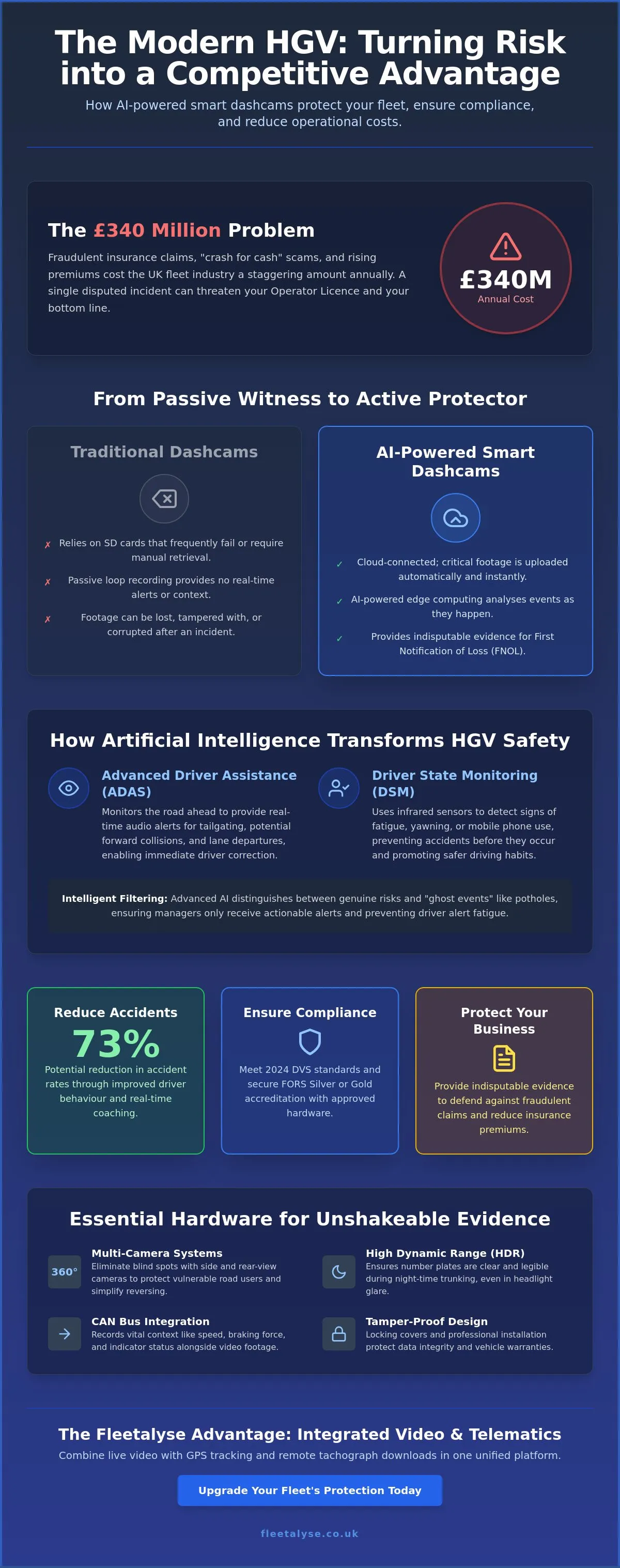
Fraudulent insurance claims cost the UK fleet industry an estimated £340 million annually. This figure highlights the constant financial pressure of "crash for cash" scams and rising premiums on your HGV operations. You're likely also balancing the complexity of DVS 2024 compliance whilst trying to manage driver resistance to in-cab technology. It's a difficult environment where one disputed incident can threaten your Operator Licence and your bottom line.
Choosing the right smart dashcams for lorry fleets turns these risks into a clear operational advantage. This guide explains how AI-integrated systems provide the indisputable evidence required for insurance claims and legal protection. We'll show you how to achieve seamless DVSA compliance and reduce accident rates by up to 73% through improved driver behaviour. You will learn how to integrate video with your existing tracking and tacho data to create a safer, more transparent fleet.
Key Takeaways
- Understand how AI-enabled smart dashcams for lorry fleets transition your operation from passive recording to active, real-time risk management.
- Learn how to meet the 2024 Direct Vision Standard (DVS) and secure FORS Silver or Gold accreditation through approved camera hardware.
- Identify essential hardware features like 360-degree visibility and High Dynamic Range (HDR) to ensure clear evidence during night-time trunking.
- Recognise the importance of professional installation for protecting vehicle warranties and providing indisputable evidence for insurance claims.
- Discover the benefits of integrating live video with GPS tracking and remote tachograph downloads to simplify fleet management and compliance.
What defines a "Smart" Dashcam for Lorry Fleets?
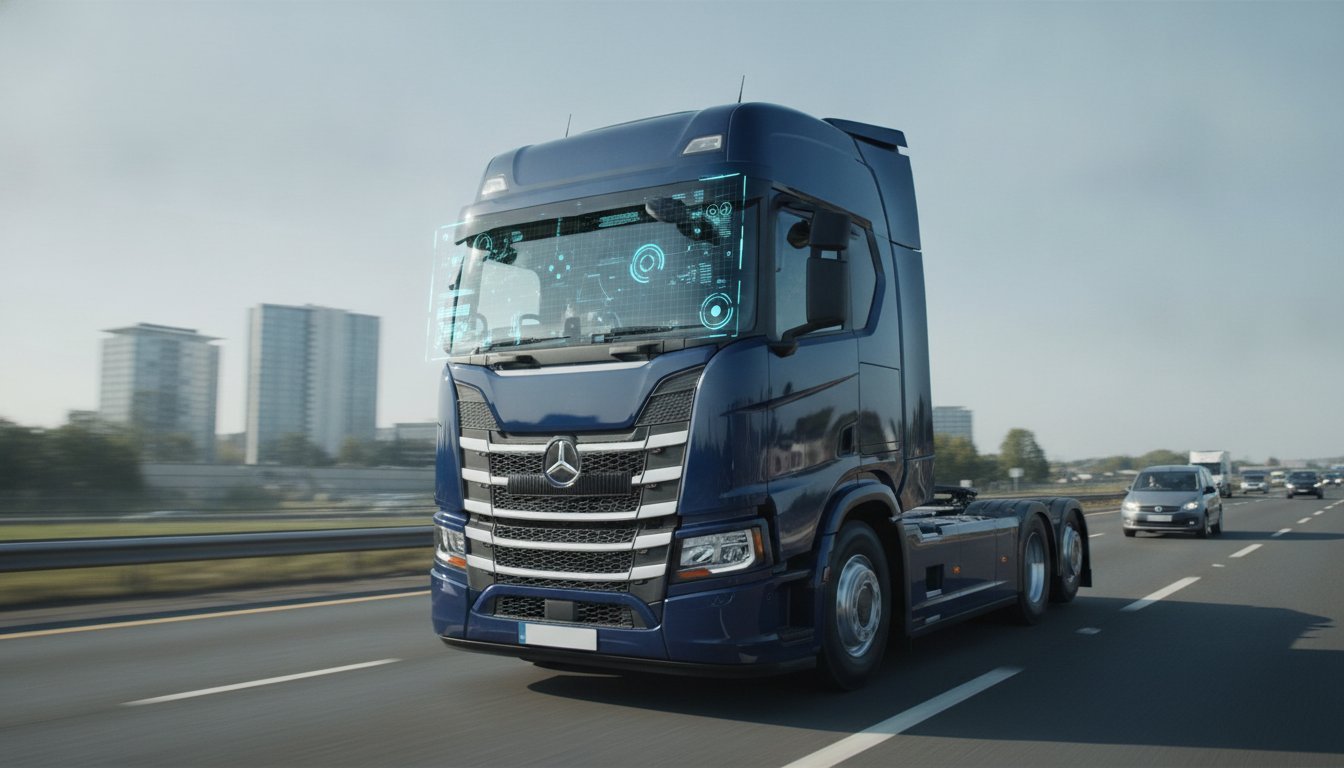
A smart dashcam is no longer just a digital witness. It's a cloud-connected IoT sensor. Traditional systems rely on SD cards that frequently fail or require manual retrieval. In contrast, smart dashcams for lorry fleets use edge computing to analyse footage as it happens. This means the device identifies a harsh braking event or a lane departure instantly. It only uploads the relevant clip to the cloud. This efficiency prevents your data bills from spiralling whilst ensuring you never miss a critical incident. For a broader dashcam technology overview, it's clear the industry has moved far beyond simple loop recording.
Lorries aren't vans. An HGV requires hardware built for 24V systems and the constant vibrations of long-haul trunking. You need multi-camera support to cover massive blind spots that a standard commercial dashcam cannot reach. These specialised systems often integrate directly with the vehicle's CAN bus. This provides vital context, such as whether the indicator was active during a side-swipe or the exact brake pressure applied before an impact.
The Role of Artificial Intelligence in HGV Safety
AI transforms these devices into active safety assistants rather than passive recorders. Advanced Driver Assistance Systems (ADAS) monitor the road ahead, providing real-time alerts for tailgating or imminent forward collisions. Simultaneously, Driver State Monitoring (DSM) uses infrared sensors to detect signs of fatigue, yawning, or mobile phone use. Crucially, modern AI filters out "ghost events". It distinguishes between a deep pothole and an actual collision. This ensures fleet managers aren't buried under thousands of useless notifications, allowing them to focus only on genuine risks.
Cloud Connectivity and Real-Time Data Transfer
Integrated 4G or 5G SIM cards are the backbone of any smart system. If an accident occurs, the footage is available in your management dashboard before the driver has even stepped out of the cab. This immediate retrieval is vital for First Notification of Loss (FNOL), which can significantly reduce claim costs. You can also use "live look-in" features to check vehicle surroundings or weather conditions in real-time. Because footage uploads automatically during an event, you're protected against SD card corruption or intentional tampering. It's about having the right data exactly when you need it.
Essential Features for UK Lorry Camera Systems
Choosing the right hardware is about more than just video resolution. Whilst standard commercial cameras might suffice for a van, smart dashcams for lorry fleets require a robust specification to handle the complexities of heavy haulage. High Dynamic Range (HDR) is non-negotiable for night-time trunking. It balances light levels to ensure that number plates remain legible under harsh motorway lighting or in the glare of oncoming headlights. Without it, your night-time footage is often useless for insurance purposes.
Data integrity is the foundation of any legal defence. Professional systems feature locking covers and tamper-proof designs to prevent unauthorised personnel from removing SD cards or disconnecting the power. Furthermore, integrating the camera with the vehicle's CAN-bus provides the "why" behind the "what". It records speed, braking force, and indicator status alongside the video. This context is vital when defending against "crash for cash" scams where the other driver's behaviour is the primary cause.
If you're ready to upgrade your fleet's protection, you can enquire about our professional camera solutions today.
Multi-Camera Systems for Blind Spot Elimination
Single forward-facing cameras leave massive blind spots along the trailer and at the rear. A comprehensive HGV system combines side-view cameras to protect vulnerable road users, particularly cyclists in urban environments. Rear-facing cameras integrate with the driver's display to make reversing into tight loading bays safer and faster. This 360-degree coverage ensures you have evidence for every angle of an incident, which is a requirement for many modern safety standards.
In-Cab Driver Coaching and Alerts
Immediate feedback is the most effective way to improve road safety. In-cab audio alerts notify drivers of harsh braking, cornering, or speeding as they happen. This real-time coaching allows for instant correction. It's far more impactful than a disciplinary meeting held a week after the event. However, the system must be calibrated to avoid alert fatigue. Overloading a driver with constant beeps during a long-distance shift is counterproductive. A well-configured system prioritises only the most critical safety warnings.
Compliance Standards: DVS, FORS, and GDPR
Compliance is the bedrock of a sustainable HGV operation. In the UK, the regulatory environment for heavy goods vehicles is tightening. As of 28 October 2024, all HGVs over 12 tonnes operating in Greater London must have a minimum three-star Direct Vision Standard (DVS) rating or be fitted with a Progressive Safe System (PSS). Failing to comply results in a Penalty Charge Notice (PCN) of up to £550. Smart dashcams for lorry fleets are no longer optional extras. They are essential compliance sensors.
Beyond London, the Fleet Operator Recognition Scheme (FORS) remains a critical commercial benchmark. The current FORS Standard version 7.1 requires specific camera and monitoring equipment for Silver and Gold accreditation. Many high-value contracts now mandate these levels. Implementing a smart camera system doesn't just protect you from fines; it opens doors to new business opportunities. It demonstrates a commitment to road safety that insurers and clients value.
Equally important is the protection against "crash for cash" scams. Fraudulent insurance claims cost the UK fleet industry an estimated £340 million annually. Indisputable HD video evidence is your primary defence against these staged accidents. It protects your No-Claims Bonus and prevents the "your word against theirs" scenarios that often lead to expensive settlements. Video data provides the clarity needed to resolve claims in days rather than months.
Meeting the DVS 2024 Progressive Safe System
The 2024 update mandates more than just a basic camera. You need a Camera Monitoring System (CMS) that effectively replaces or supplements mirrors to eliminate blind spots on the nearside. A Moving Off Information System (MOIS) is also required at the front of the lorry to warn drivers of pedestrians or cyclists in the immediate blind spot when pulling away. Modern smart dashcams for lorry fleets often integrate these sensors into a single, unified platform. This reduces cab clutter and simplifies maintenance for your engineering team.
GDPR and Driver Privacy in the Cab
With the Data (Use and Access) Act 2026 now in force, data protection is a live issue. Fleet operators must register with the Information Commissioner's Office (ICO) and pay the annual data protection fee, usually £52 for small businesses. You must conduct a clear Privacy Impact Assessment before installing in-cab cameras. Best practice involves using road-facing cameras by default and ensuring in-cab recording is only active when safety triggers occur. Providing drivers with a "privacy mode" for rest breaks helps overcome the "spy-in-the-cab" stigma and ensures your data retention policies remain legally sound.
Professional Installation and Fleet Implementation
Installing smart dashcams for lorry fleets isn't a task for the depot manager on a Saturday morning. It's a technical necessity that requires precision. Professional hardwiring typically costs between £50 and £150 per vehicle. This investment is vital to protect your vehicle warranty. DIY attempts often lead to drained batteries or interference with complex electronic control units. For modern HGVs, especially those with sophisticated battery management or electric drivetrains, professional integration ensures the camera doesn't compromise the vehicle's primary systems.
Data integrity depends on a clean installation. Cables must be hidden to prevent tampering and to maintain a professional cab environment. A poorly fitted camera that vibrates or loses power during an impact is useless for insurance purposes. By using certified engineers, you ensure that every unit is positioned to meet DVS visibility requirements whilst remaining securely fastened for the long term. If you're ready to secure your vehicles, you can book your professional fleet installation here to ensure your hardware is fitted correctly and legally.
Minimising Downtime During Rollout
Successful implementation relies on smart logistics. You shouldn't pull a vehicle off the road solely for a camera fitment. Coordinate installations with mandatory six-weekly inspections or driver rest periods to keep your fleet moving. Nationwide mobile installation services allow engineers to visit your yard when the trucks are stationary. Whilst "Plug and Play" devices are available, they are often less secure and prone to being unplugged. Hardwired systems are the industry standard for permanent HGV fleets. They provide a cleaner look and more reliable power delivery across 24V systems.
Securing Driver Buy-In
Driver resistance is a common hurdle. You must frame the technology as a "silent witness" that protects the person behind the wheel. In a non-fault accident, the camera is the driver's best friend. It provides the proof needed to clear their name instantly. Be transparent about data usage. Explain that the system only flags specific triggers, like harsh braking or collisions. Some operators use telematics data to reward high-performing drivers. This turns a surveillance tool into a positive performance incentive. When drivers see the camera as a shield rather than a spy, adoption rates improve significantly.
Ongoing maintenance is the final piece of the puzzle. A dashcam is only useful if it's recording clear footage. Include lens checks in your daily walkaround routines to ensure they're free from dirt or obstructions. Fleet managers should also monitor firmware updates via the cloud. These updates often include critical security patches or improvements to AI detection accuracy. Keeping your software current is just as important as keeping the glass clean.
The Fleetalyse Advantage: Integrated Video and Telematics
Standalone cameras offer limited value if the footage sits in a silo. True operational efficiency comes from linking smart dashcams for lorry fleets directly with your wider management systems. By connecting video data to GPS fleet tracking, you gain a complete narrative of every journey. You don't just see that a vehicle braked hard; you see exactly where it happened on a map and what the road conditions were at that precise second. This level of detail is indispensable for defending your drivers and your reputation.
This integrated approach significantly reduces the "compliance burden" that plagues regional operators. When video evidence complements your remote tachograph download, you create a bulletproof audit trail. You can verify that a driver's reported hours align with the actual footage of the vehicle's movement. It removes the guesswork from tacho analysis and ensures you're always prepared for a DVSA inspection. Using a single platform for all fleet data saves time and prevents the errors associated with switching between multiple software providers.
Unified Compliance Monitoring
Correlating different data streams allows you to spot risks before they lead to accidents. For example, matching harsh driving events with live driver hours helps identify signs of fatigue that a simple tacho reading might miss. You can also use video to verify unauthorised asset movement or confirm that a vehicle was at a specific loading bay at the correct time. Storing all this evidence in one secure location streamlines your internal audits and provides a clear, chronological record of fleet activity.
Calculating ROI for Smart Dashcam Investment
The financial returns on this technology are tangible and immediate. Research shows that commercial vehicles can see an 86% reduction in collision costs over three years following installation. You'll also find that many insurers offer discounts between 5% and 15% for fleets using approved camera systems. Beyond accident prevention, the data encourages smoother driving habits across the board. This shift in behaviour leads to lower wear and tear on tyres and brakes, extending the lifecycle of your assets. Smart dashcams for lorry fleets deliver a significant return on investment by facilitating a 15% reduction in fuel costs through more efficient driving patterns. These combined savings often cover the initial hardware and subscription costs within the first year of operation.
Future-Proof Your HGV Fleet Today
Adopting smart dashcams for lorry fleets is a strategic move for any modern haulier. You've seen how AI technology shifts your operation from reactive recording to proactive risk management. By integrating video with your existing tachograph and tracking data, you simplify your compliance workflow. You also protect your drivers from false claims. This isn't just about recording the road; it's about building a transparent, efficient business that meets the rigorous standards of DVS 2024 and FORS.
We understand the daily pressures of regional transport. Our team has specialised in UK transport compliance since 2020. We provide pragmatic support and seamless tachograph analysis integration to ensure your fleet remains productive and legal. You don't need flashy features. You need reliable data that stands up in court or at a DVSA audit.
Ready to secure your operation? See our published pricing for your fleet dashcam rollout. Take the next step toward a safer, more profitable fleet with a partner you can trust.
Frequently Asked Questions
Are smart dashcams legal in HGVs under UK law?
Yes, smart dashcams are entirely legal in the UK as long as they are installed correctly. The camera must not obstruct more than 40mm of the swept area of the windscreen. You must also comply with the Data (Use and Access) Act 2026 by registering with the ICO. Operators should have a clear policy on data usage and provide signage if recording is taking place.
How much data do smart dashcams use for a lorry fleet?
Data usage varies based on how many "events" your fleet triggers. Unlike older systems that stream 24/7, smart dashcams for lorry fleets use edge computing to only upload critical clips. A typical vehicle might use between 500MB and 2GB per month for standard event alerts and occasional live look-ins. This efficient approach prevents massive data bills whilst ensuring all incidents are captured in the cloud.
Can smart dashcams help reduce my HGV insurance premiums?
Installing approved cameras can lead to premium discounts between 5% and 15%. However, the primary financial benefit is protecting your No-Claims Bonus. By providing indisputable evidence in "crash for cash" scenarios, you avoid fault being wrongly attributed to your drivers. This prevents the sharp premium hikes that usually follow an unresolved or split-liability claim.
What happens to the footage in areas with poor 4G/5G signal?
Footage is never lost during signal dropouts. The device records continuously to internal storage or a tamper-proof SD card. Once the vehicle enters an area with better 4G or 5G coverage, the system automatically syncs the pending event clips to the cloud. You can still retrieve footage manually from the device if an incident occurs in a complete dead zone.
Do smart dashcams record audio inside the cab?
Most systems offer audio recording, but it's not enabled by default. Recording private conversations in the cab is a sensitive area under GDPR. If you choose to record audio, you must justify the safety requirement in your Privacy Impact Assessment. Drivers must be informed, and many operators choose to disable this feature to maintain a better relationship with their staff.
How long is dashcam footage typically stored in the cloud?
Standard cloud storage for fleet systems is usually 30 days. This provides ample time to review incidents or respond to insurance queries. However, specific event clips flagged by AI are often stored indefinitely or until manually deleted. You can configure retention periods to match your company's data policy, ensuring you don't keep personal data longer than necessary.
Is a driver-facing camera mandatory for DVS compliance?
No, a driver-facing camera is not a mandatory requirement for the Direct Vision Standard. DVS focuses on eliminating external blind spots to protect vulnerable road users like cyclists. Whilst not a legal mandate for London's Progressive Safe System, many operators include driver-facing AI cameras to monitor fatigue and distraction. These features help reduce accident rates but are separate from DVS hardware requirements.
How do smart dashcams integrate with existing tachograph systems?
Integration happens at the software level through unified fleet management platforms. By syncing the timestamps from your smart dashcams for lorry fleets with your remote tachograph downloads, you can see video evidence alongside driver hours. This allows you to verify why a driver may have exceeded their hours due to an incident or road closure. It creates a single, transparent record for compliance audits.
Frequently asked questions
The Role of Artificial Intelligence in HGV Safety
AI transforms these devices into active safety assistants rather than passive recorders. Advanced Driver Assistance Systems (ADAS) monitor the road ahead, providing real-time alerts for tailgating or imminent forward collisions. Simultaneously, Driver State Monitoring (DSM) uses infrared sensors to detect signs of fatigue, yawning, or mobile phone use. Crucially, modern AI filters out "ghost events". It distinguishes between a deep pothole and an actual collision. This ensures fleet managers aren't buried under thousands of useless notifications, allowing them to focus only on genuine risks.
Cloud Connectivity and Real-Time Data Transfer
Integrated 4G or 5G SIM cards are the backbone of any smart system. If an accident occurs, the footage is available in your management dashboard before the driver has even stepped out of the cab. This immediate retrieval is vital for First Notification of Loss (FNOL), which can significantly reduce claim costs. You can also use "live look-in" features to check vehicle surroundings or weather conditions in real-time. Because footage uploads automatically during an event, you're protected against SD card corruption or intentional tampering. It's about having the right data exactly when you need it. Choosing the right hardware is about more than just video resolution. Whilst standard commercial cameras might suffice for a van, smart dashcams for lorry fleets require a robust specification to handle the complexities of heavy haulage. High Dynamic Range (HDR) is non-negotiable for night-time trunking. It balances light levels to ensure that number plates remain legible under harsh motorway lighting or in the glare of oncoming headlights. Without it, your night-time footage is often useless for insurance purposes. Data integrity is the foundation of any legal defence. Professional systems feature locking covers and tamper-proof designs to prevent unauthorised personnel from removing SD cards or disconnecting the power. Furthermore, integrating the camera with the vehicle's CAN-bus provides the "why" behind the "what". It records speed, braking force, and indicator status alongside the video. This context is vital when defending against "crash for cash" scams where the other driver's behaviour is the primary cause. If you're ready to upgrade your fleet's protection, you can enquire about our professional camera solutions today.
Multi-Camera Systems for Blind Spot Elimination
Single forward-facing cameras leave massive blind spots along the trailer and at the rear. A comprehensive HGV system combines side-view cameras to protect vulnerable road users, particularly cyclists in urban environments. Rear-facing cameras integrate with the driver's display to make reversing into tight loading bays safer and faster. This 360-degree coverage ensures you have evidence for every angle of an incident, which is a requirement for many modern safety standards.
In-Cab Driver Coaching and Alerts
Immediate feedback is the most effective way to improve road safety. In-cab audio alerts notify drivers of harsh braking, cornering, or speeding as they happen. This real-time coaching allows for instant correction. It's far more impactful than a disciplinary meeting held a week after the event. However, the system must be calibrated to avoid alert fatigue. Overloading a driver with constant beeps during a long-distance shift is counterproductive. A well-configured system prioritises only the most critical safety warnings. Compliance is the bedrock of a sustainable HGV operation. In the UK, the regulatory environment for heavy goods vehicles is tightening. As of 28 October 2024, all HGVs over 12 tonnes operating in Greater London must have a minimum three-star Direct Vision Standard (DVS) rating or be fitted with a Progressive Safe System (PSS). Failing to comply results in a Penalty Charge Notice (PCN) of up to £550. Smart dashcams for lorry fleets are no longer optional extras. They are essential compliance sensors. Beyond London, the Fleet Operator Recognition Scheme (FORS) remains a critical commercial benchmark. The current FORS Standard version 7.1 requires specific camera and monitoring equipment for Silver and Gold accreditation. Many high-value contracts now mandate these levels. Implementing a smart camera system doesn't just protect you from fines; it opens doors to new business opportunities. It demonstrates a commitment to road safety that insurers and clients value. Equally important is the protection against "crash for cash" scams. Fraudulent insurance claims cost the UK fleet industry an estimated £340 million annually. Indisputable HD video evidence is your primary defence against these staged accidents. It protects your No-Claims Bonus and prevents the "your word against theirs" scenarios that often lead to expensive settlements. Video data provides the clarity needed to resolve claims in days rather than months.
Meeting the DVS 2024 Progressive Safe System
The 2024 update mandates more than just a basic camera. You need a Camera Monitoring System (CMS) that effectively replaces or supplements mirrors to eliminate blind spots on the nearside. A Moving Off Information System (MOIS) is also required at the front of the lorry to warn drivers of pedestrians or cyclists in the immediate blind spot when pulling away. Modern smart dashcams for lorry fleets often integrate these sensors into a single, unified platform. This reduces cab clutter and simplifies maintenance for your engineering team.
GDPR and Driver Privacy in the Cab
With the Data (Use and Access) Act 2026 now in force, data protection is a live issue. Fleet operators must register with the Information Commissioner's Office (ICO) and pay the annual data protection fee, usually £52 for small businesses. You must conduct a clear Privacy Impact Assessment before installing in-cab cameras. Best practice involves using road-facing cameras by default and ensuring in-cab recording is only active when safety triggers occur. Providing drivers with a "privacy mode" for rest breaks helps overcome the "spy-in-the-cab" stigma and ensures your data retention policies remain legally sound. Installing smart dashcams for lorry fleets isn't a task for the depot manager on a Saturday morning. It's a technical necessity that requires precision. Professional hardwiring typically costs between £50 and £150 per vehicle. This investment is vital to protect your vehicle warranty. DIY attempts often lead to drained batteries or interference with complex electronic control units. For modern HGVs, especially those with sophisticated battery management or electric drivetrains, professional integration ensures the camera doesn't compromise the vehicle's primary systems. Data integrity depends on a clean installation. Cables must be hidden to prevent tampering and to maintain a professional cab environment. A poorly fitted camera that vibrates or loses power during an impact is useless for insurance purposes. By using certified engineers, you ensure that every unit is positioned to meet DVS visibility requirements whilst remaining securely fastened for the long term. If you're ready to secure your vehicles, you can book your professional fleet installation here to ensure your hardware is fitted correctly and legally.
Minimising Downtime During Rollout
Successful implementation relies on smart logistics. You shouldn't pull a vehicle off the road solely for a camera fitment. Coordinate installations with mandatory six-weekly inspections or driver rest periods to keep your fleet moving. Nationwide mobile installation services allow engineers to visit your yard when the trucks are stationary. Whilst "Plug and Play" devices are available, they are often less secure and prone to being unplugged. Hardwired systems are the industry standard for permanent HGV fleets. They provide a cleaner look and more reliable power delivery across 24V systems.
Securing Driver Buy-In
Driver resistance is a common hurdle. You must frame the technology as a "silent witness" that protects the person behind the wheel. In a non-fault accident, the camera is the driver's best friend. It provides the proof needed to clear their name instantly. Be transparent about data usage. Explain that the system only flags specific triggers, like harsh braking or collisions. Some operators use telematics data to reward high-performing drivers. This turns a surveillance tool into a positive performance incentive. When drivers see the camera as a shield rather than a spy, adoption rates improve significantly. Ongoing maintenance is the final piece of the puzzle. A dashcam is only useful if it's recording clear footage. Include lens checks in your daily walkaround routines to ensure they're free from dirt or obstructions. Fleet managers should also monitor firmware updates via the cloud. These updates often include critical security patches or improvements to AI detection accuracy. Keeping your software current is just as important as keeping the glass clean. Standalone cameras offer limited value if the footage sits in a silo. True operational efficiency comes from linking smart dashcams for lorry fleets directly with your wider management systems. By connecting video data to GPS fleet tracking, you gain a complete narrative of every journey. You don't just see that a vehicle braked hard; you see exactly where it happened on a map and what the road conditions were at that precise second. This level of detail is indispensable for defending your drivers and your reputation. This integrated approach significantly reduces the "compliance burden" that plagues regional operators. When video evidence complements your remote tachograph download, you create a bulletproof audit trail. You can verify that a driver's reported hours align with the actual footage of the vehicle's movement. It removes the guesswork from tacho analysis and ensures you're always prepared for a DVSA inspection. Using a single platform for all fleet data saves time and prevents the errors associated with switching between multiple software providers.
Unified Compliance Monitoring
Correlating different data streams allows you to spot risks before they lead to accidents. For example, matching harsh driving events with live driver hours helps identify signs of fatigue that a simple tacho reading might miss. You can also use video to verify unauthorised asset movement or confirm that a vehicle was at a specific loading bay at the correct time. Storing all this evidence in one secure location streamlines your internal audits and provides a clear, chronological record of fleet activity.
Calculating ROI for Smart Dashcam Investment
The financial returns on this technology are tangible and immediate. Research shows that commercial vehicles can see an 86% reduction in collision costs over three years following installation. You'll also find that many insurers offer discounts between 5% and 15% for fleets using approved camera systems. Beyond accident prevention, the data encourages smoother driving habits across the board. This shift in behaviour leads to lower wear and tear on tyres and brakes, extending the lifecycle of your assets. Smart dashcams for lorry fleets deliver a significant return on investment by facilitating a 15% reduction in fuel costs through more efficient driving patterns. These combined savings often cover the initial hardware and subscription costs within the first year of operation. Adopting smart dashcams for lorry fleets is a strategic move for any modern haulier. You've seen how AI technology shifts your operation from reactive recording to proactive risk management. By integrating video with your existing tachograph and tracking data, you simplify your compliance workflow. You also protect your drivers from false claims. This isn't just about recording the road; it's about building a transparent, efficient business that meets the rigorous standards of DVS 2024 and FORS. We understand the daily pressures of regional transport. Our team has specialised in UK transport compliance since 2020. We provide pragmatic support and seamless tachograph analysis integration to ensure your fleet remains productive and legal. You don't need flashy features. You need reliable data that stands up in court or at a DVSA audit. Ready to secure your operation? See our published pricing for your fleet dashcam rollout. Take the next step toward a safer, more profitable fleet with a partner you can trust.
Are smart dashcams legal in HGVs under UK law?
Yes, smart dashcams are entirely legal in the UK as long as they are installed correctly. The camera must not obstruct more than 40mm of the swept area of the windscreen. You must also comply with the Data (Use and Access) Act 2026 by registering with the ICO. Operators should have a clear policy on data usage and provide signage if recording is taking place.
How much data do smart dashcams use for a lorry fleet?
Data usage varies based on how many "events" your fleet triggers. Unlike older systems that stream 24/7, smart dashcams for lorry fleets use edge computing to only upload critical clips. A typical vehicle might use between 500MB and 2GB per month for standard event alerts and occasional live look-ins. This efficient approach prevents massive data bills whilst ensuring all incidents are captured in the cloud.
Can smart dashcams help reduce my HGV insurance premiums?
Installing approved cameras can lead to premium discounts between 5% and 15%. However, the primary financial benefit is protecting your No-Claims Bonus. By providing indisputable evidence in "crash for cash" scenarios, you avoid fault being wrongly attributed to your drivers. This prevents the sharp premium hikes that usually follow an unresolved or split-liability claim.
What happens to the footage in areas with poor 4G/5G signal?
Footage is never lost during signal dropouts. The device records continuously to internal storage or a tamper-proof SD card. Once the vehicle enters an area with better 4G or 5G coverage, the system automatically syncs the pending event clips to the cloud. You can still retrieve footage manually from the device if an incident occurs in a complete dead zone.
Do smart dashcams record audio inside the cab?
Most systems offer audio recording, but it's not enabled by default. Recording private conversations in the cab is a sensitive area under GDPR. If you choose to record audio, you must justify the safety requirement in your Privacy Impact Assessment. Drivers must be informed, and many operators choose to disable this feature to maintain a better relationship with their staff.
How long is dashcam footage typically stored in the cloud?
Standard cloud storage for fleet systems is usually 30 days. This provides ample time to review incidents or respond to insurance queries. However, specific event clips flagged by AI are often stored indefinitely or until manually deleted. You can configure retention periods to match your company's data policy, ensuring you don't keep personal data longer than necessary.
Is a driver-facing camera mandatory for DVS compliance?
No, a driver-facing camera is not a mandatory requirement for the Direct Vision Standard. DVS focuses on eliminating external blind spots to protect vulnerable road users like cyclists. Whilst not a legal mandate for London's Progressive Safe System, many operators include driver-facing AI cameras to monitor fatigue and distraction. These features help reduce accident rates but are separate from DVS hardware requirements.
How do smart dashcams integrate with existing tachograph systems?
Integration happens at the software level through unified fleet management platforms. By syncing the timestamps from your smart dashcams for lorry fleets with your remote tachograph downloads, you can see video evidence alongside driver hours. This allows you to verify why a driver may have exceeded their hours due to an incident or road closure. It creates a single, transparent record for compliance audits.