
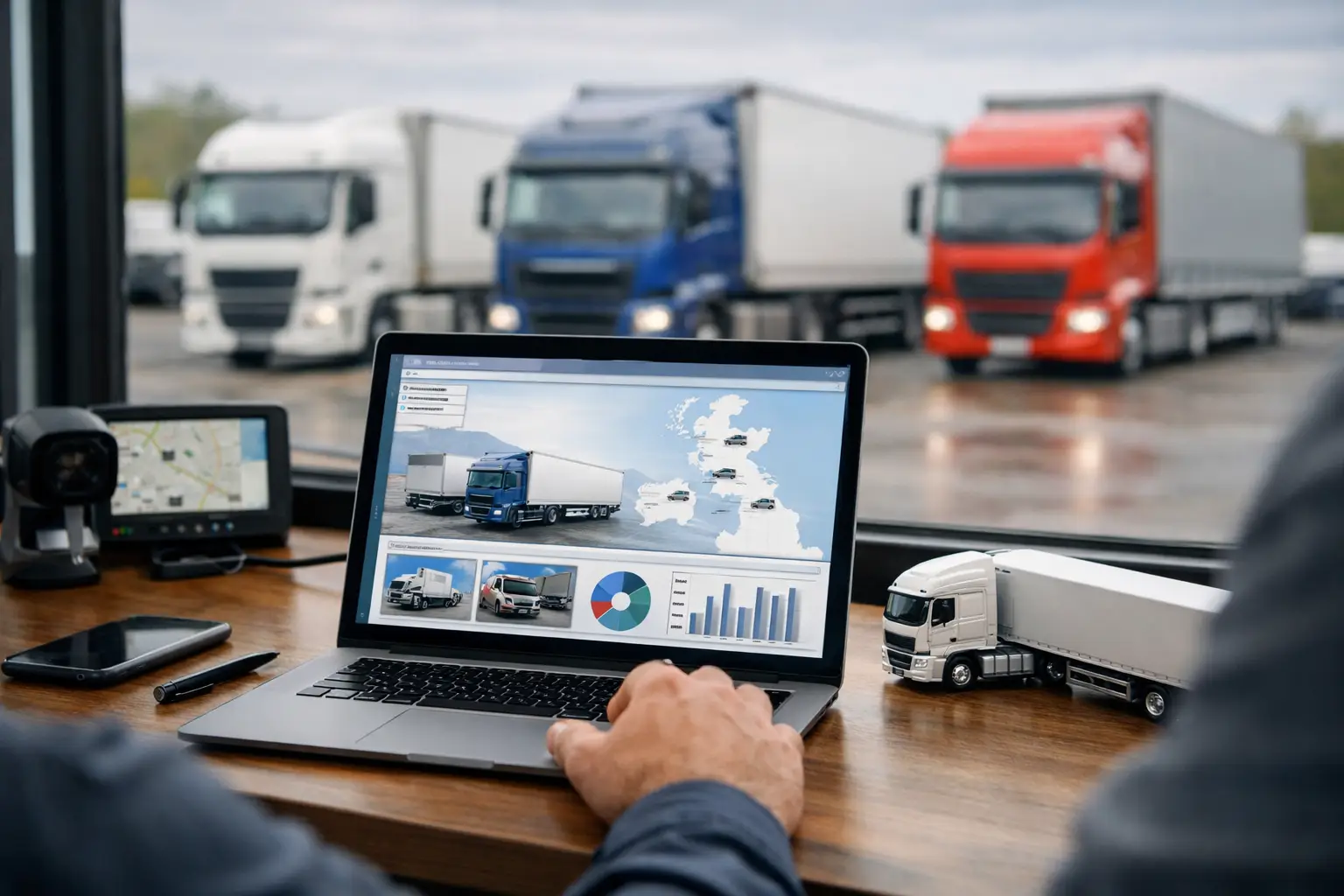
A planner rings a driver for an ETA. The driver is delayed at a delivery point, the tachograph download is overdue, and nobody is quite sure which trailer is parked at which customer site. That is the sort of ordinary operational friction that decides whether the best fleet software for haulage is worth paying for.
For UK operators, this is not just a software buying exercise. It is about protecting the operator licence, cutting admin, improving dispatch decisions and getting one reliable view of vehicles, trailers and drivers without stitching together spreadsheets and separate systems. The strongest platforms do not simply show dots on a map. They help transport teams stay in control of compliance and day-to-day movement at the same time.
What the best fleet software for haulage should actually do
Haulage businesses have different priorities from a general service fleet. A plumbing company may only need live tracking and job updates. A haulage operator is dealing with driver hours, tachograph rules, vehicle utilisation, trailer visibility, maintenance schedules and customer deadlines across longer distances and tighter margins.
That changes the definition of value. The best fleet software for haulage should bring compliance and telematics into one operational view. If your team still needs one system for tracking, another for driver hours and another spreadsheet for maintenance or trailer locations, you have not really solved the problem. You have only moved it around.
At a practical level, the software should support remote tachograph downloads, live visibility of driver hours, GPS tracking for powered vehicles and trailers, driver behaviour reporting, fuel and idling analysis, and maintenance alerts that are easy to act on. It should also be simple enough for a busy traffic office to use without specialist training.
Compliance cannot be an afterthought
Many platforms are sold as fleet software but are really tracking tools with a few reports added on. That may be enough for some sectors, but haulage is different. If you operate HGVs in the UK, compliance is not a nice extra. It sits at the centre of daily transport management.
This matters because software that handles compliance badly creates hidden admin. A transport manager ends up checking several portals, chasing manual downloads or correcting gaps in driver records. That costs time, but it also increases risk. Missed downloads, poor driver hours visibility or weak audit trails can become serious issues if the business is ever scrutinised.
A stronger system helps you stay ahead of problems rather than react to them. You should be able to see which downloads are due, where potential infringements are developing and which drivers are running short on available hours before a plan falls apart. That is far more useful than a dashboard full of generic charts.
Real-time tracking still matters, but context matters more
Live location remains essential. Dispatch teams need to know where vehicles are, whether a route is slipping and which asset is closest to the next job. But location on its own only tells part of the story.
For haulage, the real benefit comes when tracking data sits alongside driver status, trailer positions and historical movement. A vehicle may look available on the map, but if the driver is close to their limit, the job cannot simply be reassigned without consequences. Likewise, a trailer may be at the right site, but if no one can confirm how long it has been there or whether it is being utilised properly, the data is less useful than it first appears.
Good software turns raw location data into planning confidence. It helps operators answer practical questions quickly. Which driver can legally take the next movement? Which trailer is underused? Which vehicle is idling excessively? Which delivery point is causing repeated delays?
One platform usually beats several disconnected ones
There is a reason many transport teams become frustrated with fleet systems. They often buy tools one at a time. First tracking, then dashcams, then tachograph management, then maintenance reminders. On paper, each product solves a problem. In reality, the office ends up with multiple logins, duplicated data and no single source of truth.
That fragmentation creates drag. Drivers get managed in one place, vehicles in another, trailers somewhere else and compliance records in a separate folder or spreadsheet. Reporting becomes manual because no one system sees the full picture.
An integrated platform is usually the better route, particularly for small to mid-sized haulage operators who do not have time to administer a stack of software. It simplifies training, improves adoption and gives management a cleaner operational view. The trade-off is that not every all-in-one platform is equally strong across every function, so buyers need to check depth as well as breadth.
What to compare when choosing fleet software
Price matters, but so does where the cost sits. Some systems look competitive until hardware, installation, contracts or add-on modules are included. Others appear cheaper because they only handle one part of the job, which means you still pay for other tools elsewhere.
When comparing providers, look beyond the monthly fee. Check whether the hardware is straightforward to deploy, whether trailer tracking is included or separate, whether remote downloads need extra equipment, and whether support is geared to UK transport operations rather than generic fleet use. Ask how quickly a planner or compliance manager can get to the information they need on a normal working day.
You should also pay attention to implementation. A platform that takes months to roll out may be acceptable for a national group with a dedicated project team. For many haulage firms, it is not. They need something practical that can be fitted and adopted without vehicles sitting off the road or the office being buried in setup work.
The best fleet software for haulage is built around daily use
The test is simple. Can your team use it to make better decisions before lunch on a Tuesday?
That means clear exception reporting, not just data dumps. It means sensible alerts for overdue downloads, maintenance dates, unauthorised use or excessive idling. It means planners can find the nearest available vehicle quickly, compliance staff can review driver activity without chasing files, and managers can spot underused assets before costs drift.
This is where specialist transport platforms tend to outperform broad fleet products. They are designed around the reality of operator licence risk, mixed fleets, depot routines and trailer control. A general fleet tool may still work, but the more your operation relies on tachograph compliance and dispatch accuracy, the more expensive that compromise becomes.
For that reason, many UK operators now favour platforms that combine telematics, smart dashcams, tachograph compliance and maintenance oversight in one system. Fleetalyse is one example of that approach, built around practical fleet control rather than generic vehicle tracking alone.
When a simpler system may still be enough
Not every operator needs the same level of software. A smaller van-led fleet with limited compliance exposure may not require full tachograph functionality. A subcontract-only model may care more about visibility and proof of service than detailed asset utilisation. In those cases, a lighter platform can be perfectly sensible.
The issue is knowing where simplicity becomes a false economy. If the business is growing, adding HGVs, managing trailers or relying on manual compliance checks, the software should be chosen for where the operation is heading, not just where it is today. Changing systems later often costs more in disruption than buying the right one earlier.
A better buying question
Instead of asking which product has the longest feature list, ask which system gives your transport team the clearest operational control with the least friction. That is usually what separates software that gets used properly from software that ends up ignored.
The best fleet software for haulage should reduce admin, improve visibility and help you act earlier when something starts to go wrong. If it can do that while keeping pricing clear and rollout straightforward, it is likely to earn its place very quickly.
The right platform should leave your office chasing fewer updates, your compliance process less exposed and your planning decisions based on facts rather than guesswork.