
Compliance isn't a hardware problem; it's a data management failure that puts your operator licence at risk every single day. Chasing drivers across the country to manually download cards is a drain on your resources and a constant risk to your business. Implementing a dedicated tachograph download solution for fleets is the only reliable way to eliminate the administrative burden that leads to missed legal deadlines.
We understand that keeping track of vehicle and driver data feels like a constant battle against the clock. This article will show you how to automate your data collection entirely, ensuring you remain fully DVSA compliant whilst meeting the new 56-day data retention requirements for international journeys. We'll examine the best remote tools for real-time visibility of driver hours and explain how the July 2026 Smart Tachograph 2 mandate affects your fleet. Discover how to move from manual chaos to a streamlined, audit-ready operation that protects your time and your reputation.
Key Takeaways
- Automate data collection via GPRS/4G to eliminate manual errors and stop wasting time chasing driver cards across the country.
- Discover why a tachograph download solution for fleets is essential for meeting the updated 56-day data retention requirements and passing DVSA audits.
- Secure your operations by understanding how encrypted transfers and remote company card racks protect your sensitive vehicle and driver data.
- Calculate the true value of remote technology by comparing the total cost of compliance against traditional, labour-intensive manual methods.
- Follow a clear, pragmatic roadmap to audit your fleet hardware and integrate live driver hours with your existing analysis platform.
What is a Remote Tachograph Download Solution?
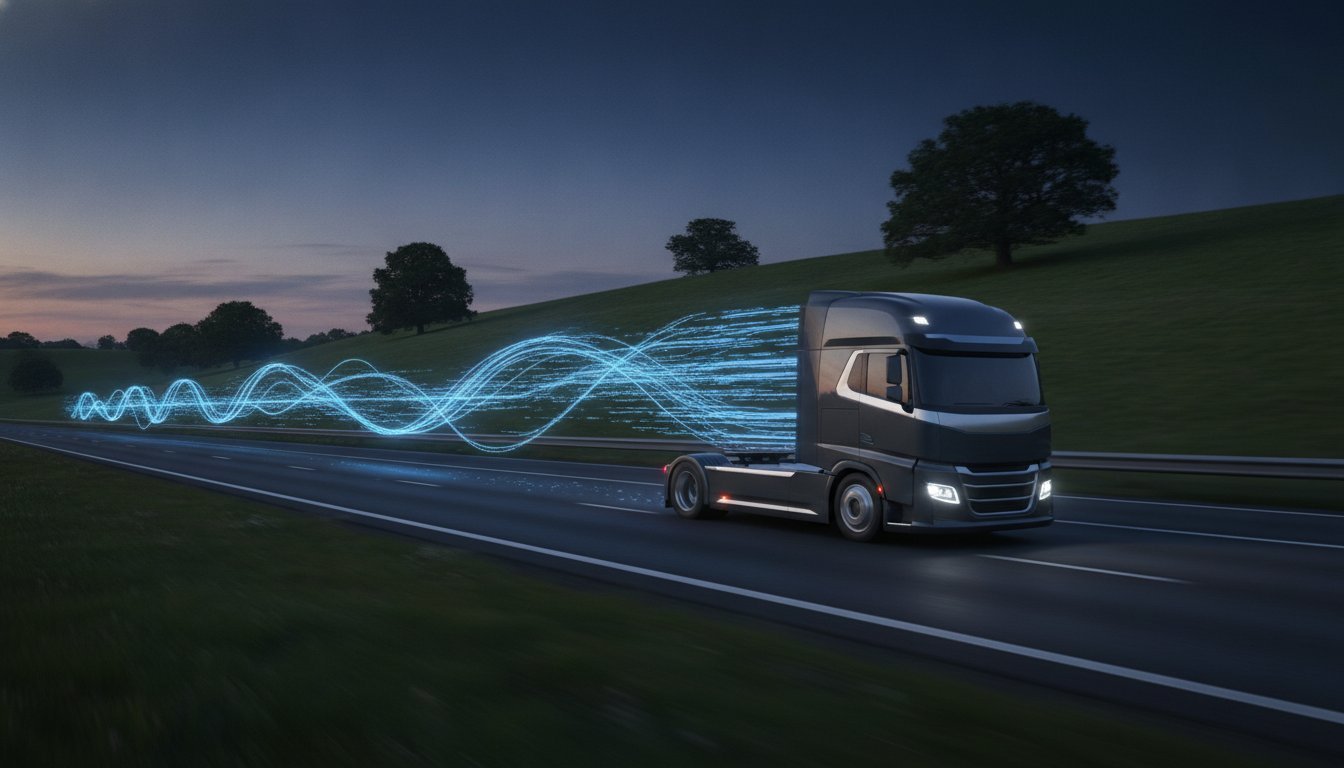
Remote tachograph downloading is the automated transfer of encrypted data from a vehicle to a secure server via GPRS or 4G networks. It removes the need for physical contact with the vehicle or the driver card. For most UK operators, a tachograph download solution for fleets has transitioned from a luxury to a necessity. Manual downloading is simply too slow for modern logistics. It creates bottlenecks where drivers must return to base just to have their cards read. Automation replaces this friction with a "set and forget" schedule. Compliance happens in the background without human intervention.
Understanding the data is vital. Before diving into the tech, it helps to know What is a Tachograph and how it records information. There are two distinct data streams required for compliance. The Vehicle Unit (VU) data and the Driver Card data. The VU records vehicle speed, distance, and technical faults. The Driver Card tracks individual activities, including driving time and rest periods. A remote system handles both simultaneously. It pulls the files wirelessly whilst the vehicle is out on the road.
The Core Components of a Remote System
Reliable automation relies on three pillars. First is the hardware. This is a small telematics device that connects directly to the tachograph head. It acts as the bridge between the vehicle and the office. Second is the cloud-based software. This platform stores your files and provides a clear dashboard of your current compliance status. Finally, there is analysis integration. Raw data files are useless without context. A professional tachograph download solution for fleets sends these files directly to your analysis provider to flag infringements immediately.
Legal Deadlines: Why Timing is Everything
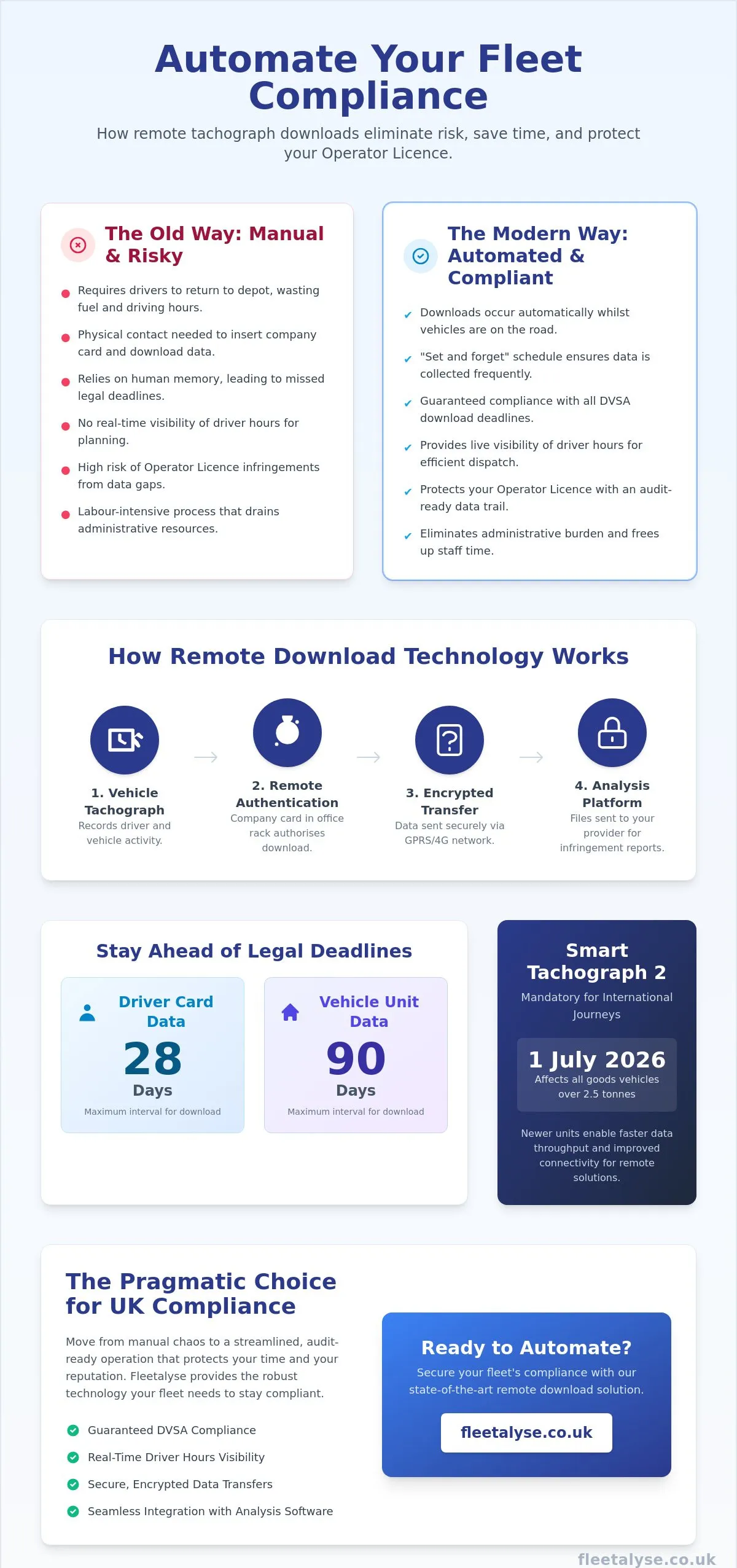
The DVSA is strict about data intervals. You must download Driver Card data at least every 28 days. VU data must be collected every 90 days. These are the absolute legal limits. They aren't targets. Missing these deadlines is a major infringement that can trigger a full fleet audit. It puts your Operator Licence at risk. Manual systems often fail here because they rely on human memory and driver availability. Automated solutions eliminate this risk. They trigger downloads every week or even daily. This ensures you always have a complete record ready for inspection.
How Remote Download Technology Works in Real-World Operations
Remote downloading is a secure, wireless handshake between your vehicle and your office. It doesn't require the driver to press any buttons or stop the vehicle. The process begins with an authentication request sent from the server to the vehicle via the GPRS or 4G network. Once the connection is verified, the data is encrypted and transmitted directly to your storage platform. This happens whilst the vehicle is in motion. It removes the need for drivers to visit the depot just to have their cards read. It's a silent, background process that ensures your records are always up to date.
The introduction of Smart Tachograph 2 technology has significantly improved this workflow. From 1 July 2026, these units will be mandatory for all goods vehicles over 2.5 tonnes undertaking international journeys. These newer units are designed for faster data throughput and better connectivity. They make implementing a robust tachograph download solution for fleets even more efficient. The hardware handles the heavy lifting, meaning your office staff don't have to spend hours manually collating files or chasing missing data gaps. You can explore automated hardware options to see how this fits your specific vehicle types.
The Role of the Remote Card Rack
In a traditional setup, you had to physically insert a company card into the truck to authorise a download. Remote systems change this entirely through a central card rack. Your company card stays in a secure, controlled environment in your office. When a vehicle needs to download, the system "calls" the office card rack to authenticate the session. One single company card can serve a national fleet of hundreds of vehicles simultaneously. It's a more secure, pragmatic approach that prevents cards from being lost or damaged in the field.
Live Driver Hours and Real-Time Visibility
The most significant operational gain is the move towards Live Driver Hours. Because the system downloads data frequently, dispatchers get a real-time view of every driver's remaining time. You no longer have to guess who has enough hours left for a late-afternoon collection. This visibility is crucial for reducing the risk of fatigue-related infringements. It allows you to plan routes based on actual, legal availability rather than optimistic estimates. The right tachograph download solution for fleets turns compliance data into a live planning tool. It helps you keep your fleet moving whilst staying strictly within the law.
Manual vs. Remote: A Practical Comparison for Fleet Managers
Manual kits often appeal to smaller operators due to their low one-off cost. However, the "sticker price" of hardware is a poor metric for long-term efficiency. The total cost of compliance tells a different story. Every time a vehicle deviates from its route to return to the depot for a download, you're burning fuel and wasting driver hours. These are dead miles. They add no value to your customers but significantly increase your overheads. A remote tachograph download solution for fleets pays for itself by reclaiming these lost resources. It moves the focus from chasing data to analysing it.
Accuracy levels also differ significantly between the two methods. Manual systems rely entirely on human memory and driver cooperation. A driver might forget to hand over a card, or a manager might miss a deadline during a particularly busy week. These small oversights create data gaps that are difficult to fix after the fact. Automation ensures perfection. It follows a strict, digital schedule that never forgets. It removes the stress of an impending DVSA inspection because the data is already securely stored and ready for review.
The Hidden Costs of Manual Compliance
Manual data collection is a drain on management time. Consider the hourly rate of a fleet manager spent walking to cabs or calling drivers to remind them about card downloads. It's an expensive way to perform a basic administrative task. There's also the financial risk of non-compliance. DVSA fines can reach £300 per offence. Persistent failures can lead to the loss of an operator's licence. Beyond the financial impact, manual chasing damages driver morale. Constant nagging about paperwork creates unnecessary friction. Automation removes this conflict entirely, allowing your team to focus on their primary jobs.
Scalability: Growing Your Fleet Without Growing Your Office
Manual systems usually break down once a fleet grows beyond five or ten vehicles. The administrative burden becomes exponential. You end up hiring more office staff just to keep up with the paper trail. Remote solutions allow for "management by exception". This means you only intervene when the system flags a specific issue or a missing file. This efficiency is even more powerful when combined with other telematics tools. You can Learn more about our GPS Fleet Tracking to see how integrated data creates a complete picture of your operations. Implementing a modern tachograph download solution for fleets ensures your office stays lean as your vehicle count increases.
Steps to Implementing a Tachograph Download Solution
Successful implementation begins with a thorough fleet audit. You must identify exactly which tachograph heads are currently fitted across your vehicles. Older HGVs may use first-generation digital units, whilst newer assets will likely feature Smart Tachograph 1 or the latest Smart Tachograph 2. This distinction is critical because it dictates how the hardware interacts with the vehicle's CAN bus. Once you understand your hardware baseline, you can select a provider that offers a unified tachograph download solution for fleets, covering both the physical telematics and the backend analysis integration.
Next, organise the hosting of your Company Card. You don't want this card sitting in a desk drawer. Professional providers host your card in a secure, climate-controlled server centre. This ensures 24/7 availability for remote authentication requests. Once hosted, you can configure your download frequencies. Don't settle for the legal minimums. Set your system to download driver cards every seven days and vehicle units every thirty days. This proactive approach creates a safety buffer and ensures you are always audit-ready. It removes the panic of a looming deadline.
Hardware Installation and Compatibility
Modern telematics units are increasingly "plug-and-play", but don't underestimate the value of professional installation. For HGVs and specialist vehicles, a clean connection to the rear of the tachograph head is essential for data integrity. It also protects your vehicle warranty and insurance standing. A pragmatic partner will ensure the hardware is compatible with your entire fleet, from older 2014 models to the newest 2026-compliant vans. You can order your remote download hardware here to begin the transition immediately.
Integrating with Tachograph Analysis Software
A download is only half the battle. Raw data files are useless if they sit in a folder. Your tachograph download solution for fleets must feed directly into analysis software to be effective. This integration automates the identification of infringements, such as exceeded driving hours or insufficient rest periods. The system should then generate reports that are sent directly to drivers for digital signature. This creates a closed-loop compliance workflow. It moves your staff from manual data entry to active infringement monitoring via live dashboards. Training your team to use these dashboards ensures that small errors are caught before they become major DVSA liabilities.
Why Fleetalyse is the Pragmatic Choice for UK Compliance
Fleetalyse provides a straightforward, transparent approach to regulatory adherence. We don't hide behind complex jargon or flashy features that add no value to your daily operations. Instead, we offer a tachograph download solution for fleets that's built for the rigours of real-world UK logistics. Our hardware is reliable and tested in local conditions, ensuring that your data moves from the vehicle to the server without interruption. We position ourselves as a pragmatic expert partner. This means we focus on the practical needs of regional operators who require audit-ready reports and total operational clarity.
Integration is at the core of our service. We ensure that our remote download hardware works seamlessly with leading tachograph analysis software. This connection allows you to move beyond simple data collection and into active management. You won't just be storing files; you'll be using them to improve driver behaviour and operational efficiency. By choosing a specialist who understands the specific challenges of the UK domestic market, you gain a reliable ally that values your time and resources. We're here to ensure you meet the 56-day retention rules without the stress of manual chasing.
Beyond Downloads: A Holistic Compliance View
Our solution offers more than just automated file transfers. By combining tachograph data with GPS Fleet Tracking and asset management, we provide a holistic view of your entire operation. You can see live driver hours alongside real-time vehicle locations on a single dashboard. This visibility allows dispatchers to make informed decisions based on legal availability and physical proximity. It's about reducing administrative overhead so your team can focus on core logistics. Whether you're managing HGVs or monitoring trailers, having all your compliance and tracking data in one place removes the friction of switching between multiple systems.
Getting Started with Fleetalyse
We're committed to clear communication and financial transparency. There are no hidden complexities or unexpected contractual terms when you work with us. Our goal is to help UK operators stay fully compliant with DVSA regulations and the upcoming Smart Tachograph 2 mandates. We provide the technical expertise and reliable hardware needed to ensure your fleet is always audit-ready. If you're ready to move away from the burden of manual data chasing, we're here to help you automate the process efficiently. Optimise your fleet compliance with Fleetalyse today and see the difference a pragmatic partner makes to your bottom line.
Secure Your Fleet’s Future with Automated Compliance
Manual data collection is a liability that modern logistics operators can no longer afford. Transitioning to an automated system removes the risk of missing legal deadlines and eliminates the "dead miles" caused by vehicles returning to base for downloads. By integrating live driver hours with your existing analysis platform, you turn compliance from a reactive administrative task into a proactive planning tool. Investing in a reliable tachograph download solution for fleets is the most pragmatic step you can take to protect your operator licence and streamline your daily operations.
We provide UK-based expert support and seamless tachograph analysis integration to ensure your data is always audit-ready. Our approach is built on transparent pricing and straightforward hardware without the marketing hyperbole found elsewhere. It's time to stop chasing driver cards and start focusing on your core delivery business. Automate your fleet compliance with Fleetalyse today. Your team deserves a system that works as hard as they do.
Frequently Asked Questions
How often should I download my tachograph data?
Legally, you must download driver card data at least every 28 days and vehicle unit data every 90 days. However, a tachograph download solution for fleets allows for much higher frequency. Most operators choose weekly or even daily downloads to ensure they have real-time visibility. This proactive approach prevents data gaps and ensures you remain audit-ready. If a driver is stopped at the roadside, you'll have the most recent 56 days of data available as required by the latest regulations.
Does remote tachograph downloading work with all vehicle types?
Remote downloading is compatible with almost any vehicle fitted with a digital or smart tachograph. This includes HGVs, buses, and the vans that will require units for international work starting in July 2026. It doesn't work with older analogue tachographs that use paper charts. For a mixed fleet, conducting a hardware audit is the first step to ensure your telematics units can communicate correctly with your specific tachograph head versions across your entire asset list.
Do I still need a driver card reader if I have a remote solution?
You don't need a physical card reader for your daily compliance once the remote system is active. The hardware handles all transfers wirelessly. However, keeping a manual reader in the office is a pragmatic backup. It's useful for reading cards of agency drivers or new starters before they are fully integrated into your automated schedule. For the vast majority of your fleet, the manual process becomes entirely obsolete once the remote system is installed.
What happens if a vehicle is out of mobile signal during a scheduled download?
The system simply retries the download once the vehicle returns to an area with mobile coverage. Data is stored securely on the tachograph unit and driver card until the transfer is successful. You don't lose any information during signal blackspots. Because the downloads happen automatically in the background, these temporary interruptions don't require any manual intervention from your office staff or the driver. The process is designed to be resilient and reliable.
Can remote tachograph downloads help me pass a DVSA audit?
Automated downloads are a major asset during a DVSA audit. They provide a complete, chronological record of all driver activities and vehicle data without the gaps common in manual systems. Using a tachograph download solution for fleets ensures you can produce clean, accurate reports at a moment's notice. It demonstrates to the DVSA that you have robust, professional systems in place to manage your operator licence obligations effectively and transparently.
Is remote tachograph downloading secure?
Remote downloading is highly secure and uses encrypted data tunnels for every transfer. The connection between the vehicle and the server is authenticated using your company card, which stays safely in a secure hosting centre. This setup is actually more secure than manual downloading, as it reduces the risk of physical card damage or loss. Your sensitive fleet data is protected by industry-standard encryption protocols throughout the entire process, ensuring total data integrity.
What is the difference between Gen 1 and Gen 2 smart tachographs for downloads?
Gen 2 (Smart Tachograph 2) units offer faster data transfer and more advanced features compared to Gen 1. From 1 July 2026, Gen 2 units are mandatory for international journeys in vehicles over 2.5 tonnes. These newer units are designed to make remote enforcement and data collection more efficient. Whilst Gen 1 units still support remote downloading, the Gen 2 hardware is built for the higher data demands of modern UK and EU regulations.
Do I need a separate company card for every vehicle?
You definitely don't need a separate card for every vehicle. A single company card placed in a remote card rack can serve a fleet of hundreds of vehicles. The system uses this one card to authenticate multiple simultaneous download requests from across your entire operation. This centralisation is much more efficient than the old method of keeping multiple cards in a drawer or sending them out with drivers, which often led to lost cards.
Frequently asked questions
The Core Components of a Remote System
Reliable automation relies on three pillars. First is the hardware. This is a small telematics device that connects directly to the tachograph head. It acts as the bridge between the vehicle and the office. Second is the cloud-based software. This platform stores your files and provides a clear dashboard of your current compliance status. Finally, there is analysis integration. Raw data files are useless without context. A professional tachograph download solution for fleets sends these files directly to your analysis provider to flag infringements immediately.
Legal Deadlines: Why Timing is Everything
The DVSA is strict about data intervals. You must download Driver Card data at least every 28 days. VU data must be collected every 90 days. These are the absolute legal limits. They aren't targets. Missing these deadlines is a major infringement that can trigger a full fleet audit. It puts your Operator Licence at risk. Manual systems often fail here because they rely on human memory and driver availability. Automated solutions eliminate this risk. They trigger downloads every week or even daily. This ensures you always have a complete record ready for inspection. Remote downloading is a secure, wireless handshake between your vehicle and your office. It doesn't require the driver to press any buttons or stop the vehicle. The process begins with an authentication request sent from the server to the vehicle via the GPRS or 4G network. Once the connection is verified, the data is encrypted and transmitted directly to your storage platform. This happens whilst the vehicle is in motion. It removes the need for drivers to visit the depot just to have their cards read. It's a silent, background process that ensures your records are always up to date. The introduction of Smart Tachograph 2 technology has significantly improved this workflow. From 1 July 2026, these units will be mandatory for all goods vehicles over 2.5 tonnes undertaking international journeys. These newer units are designed for faster data throughput and better connectivity. They make implementing a robust tachograph download solution for fleets even more efficient. The hardware handles the heavy lifting, meaning your office staff don't have to spend hours manually collating files or chasing missing data gaps. You can explore automated hardware options to see how this fits your specific vehicle types.
The Role of the Remote Card Rack
In a traditional setup, you had to physically insert a company card into the truck to authorise a download. Remote systems change this entirely through a central card rack. Your company card stays in a secure, controlled environment in your office. When a vehicle needs to download, the system "calls" the office card rack to authenticate the session. One single company card can serve a national fleet of hundreds of vehicles simultaneously. It's a more secure, pragmatic approach that prevents cards from being lost or damaged in the field.
Live Driver Hours and Real-Time Visibility
The most significant operational gain is the move towards Live Driver Hours. Because the system downloads data frequently, dispatchers get a real-time view of every driver's remaining time. You no longer have to guess who has enough hours left for a late-afternoon collection. This visibility is crucial for reducing the risk of fatigue-related infringements. It allows you to plan routes based on actual, legal availability rather than optimistic estimates. The right tachograph download solution for fleets turns compliance data into a live planning tool. It helps you keep your fleet moving whilst staying strictly within the law. Manual kits often appeal to smaller operators due to their low one-off cost. However, the "sticker price" of hardware is a poor metric for long-term efficiency. The total cost of compliance tells a different story. Every time a vehicle deviates from its route to return to the depot for a download, you're burning fuel and wasting driver hours. These are dead miles. They add no value to your customers but significantly increase your overheads. A remote tachograph download solution for fleets pays for itself by reclaiming these lost resources. It moves the focus from chasing data to analysing it. Accuracy levels also differ significantly between the two methods. Manual systems rely entirely on human memory and driver cooperation. A driver might forget to hand over a card, or a manager might miss a deadline during a particularly busy week. These small oversights create data gaps that are difficult to fix after the fact. Automation ensures perfection. It follows a strict, digital schedule that never forgets. It removes the stress of an impending DVSA inspection because the data is already securely stored and ready for review.
The Hidden Costs of Manual Compliance
Manual data collection is a drain on management time. Consider the hourly rate of a fleet manager spent walking to cabs or calling drivers to remind them about card downloads. It's an expensive way to perform a basic administrative task. There's also the financial risk of non-compliance. DVSA fines can reach £300 per offence. Persistent failures can lead to the loss of an operator's licence. Beyond the financial impact, manual chasing damages driver morale. Constant nagging about paperwork creates unnecessary friction. Automation removes this conflict entirely, allowing your team to focus on their primary jobs.
Scalability: Growing Your Fleet Without Growing Your Office
Manual systems usually break down once a fleet grows beyond five or ten vehicles. The administrative burden becomes exponential. You end up hiring more office staff just to keep up with the paper trail. Remote solutions allow for "management by exception". This means you only intervene when the system flags a specific issue or a missing file. This efficiency is even more powerful when combined with other telematics tools. You can Learn more about our GPS Fleet Tracking to see how integrated data creates a complete picture of your operations. Implementing a modern tachograph download solution for fleets ensures your office stays lean as your vehicle count increases. Successful implementation begins with a thorough fleet audit. You must identify exactly which tachograph heads are currently fitted across your vehicles. Older HGVs may use first-generation digital units, whilst newer assets will likely feature Smart Tachograph 1 or the latest Smart Tachograph 2. This distinction is critical because it dictates how the hardware interacts with the vehicle's CAN bus. Once you understand your hardware baseline, you can select a provider that offers a unified tachograph download solution for fleets, covering both the physical telematics and the backend analysis integration. Next, organise the hosting of your Company Card. You don't want this card sitting in a desk drawer. Professional providers host your card in a secure, climate-controlled server centre. This ensures 24/7 availability for remote authentication requests. Once hosted, you can configure your download frequencies. Don't settle for the legal minimums. Set your system to download driver cards every seven days and vehicle units every thirty days. This proactive approach creates a safety buffer and ensures you are always audit-ready. It removes the panic of a looming deadline.
Hardware Installation and Compatibility
Modern telematics units are increasingly "plug-and-play", but don't underestimate the value of professional installation. For HGVs and specialist vehicles, a clean connection to the rear of the tachograph head is essential for data integrity. It also protects your vehicle warranty and insurance standing. A pragmatic partner will ensure the hardware is compatible with your entire fleet, from older 2014 models to the newest 2026-compliant vans. You can order your remote download hardware here to begin the transition immediately.
Integrating with Tachograph Analysis Software
A download is only half the battle. Raw data files are useless if they sit in a folder. Your tachograph download solution for fleets must feed directly into analysis software to be effective. This integration automates the identification of infringements, such as exceeded driving hours or insufficient rest periods. The system should then generate reports that are sent directly to drivers for digital signature. This creates a closed-loop compliance workflow. It moves your staff from manual data entry to active infringement monitoring via live dashboards. Training your team to use these dashboards ensures that small errors are caught before they become major DVSA liabilities. Fleetalyse provides a straightforward, transparent approach to regulatory adherence. We don't hide behind complex jargon or flashy features that add no value to your daily operations. Instead, we offer a tachograph download solution for fleets that's built for the rigours of real-world UK logistics. Our hardware is reliable and tested in local conditions, ensuring that your data moves from the vehicle to the server without interruption. We position ourselves as a pragmatic expert partner. This means we focus on the practical needs of regional operators who require audit-ready reports and total operational clarity. Integration is at the core of our service. We ensure that our remote download hardware works seamlessly with leading tachograph analysis software. This connection allows you to move beyond simple data collection and into active management. You won't just be storing files; you'll be using them to improve driver behaviour and operational efficiency. By choosing a specialist who understands the specific challenges of the UK domestic market, you gain a reliable ally that values your time and resources. We're here to ensure you meet the 56-day retention rules without the stress of manual chasing.
Beyond Downloads: A Holistic Compliance View
Our solution offers more than just automated file transfers. By combining tachograph data with GPS Fleet Tracking and asset management, we provide a holistic view of your entire operation. You can see live driver hours alongside real-time vehicle locations on a single dashboard. This visibility allows dispatchers to make informed decisions based on legal availability and physical proximity. It's about reducing administrative overhead so your team can focus on core logistics. Whether you're managing HGVs or monitoring trailers, having all your compliance and tracking data in one place removes the friction of switching between multiple systems.
Getting Started with Fleetalyse
We're committed to clear communication and financial transparency. There are no hidden complexities or unexpected contractual terms when you work with us. Our goal is to help UK operators stay fully compliant with DVSA regulations and the upcoming Smart Tachograph 2 mandates. We provide the technical expertise and reliable hardware needed to ensure your fleet is always audit-ready. If you're ready to move away from the burden of manual data chasing, we're here to help you automate the process efficiently. Optimise your fleet compliance with Fleetalyse today and see the difference a pragmatic partner makes to your bottom line. Manual data collection is a liability that modern logistics operators can no longer afford. Transitioning to an automated system removes the risk of missing legal deadlines and eliminates the "dead miles" caused by vehicles returning to base for downloads. By integrating live driver hours with your existing analysis platform, you turn compliance from a reactive administrative task into a proactive planning tool. Investing in a reliable tachograph download solution for fleets is the most pragmatic step you can take to protect your operator licence and streamline your daily operations. We provide UK-based expert support and seamless tachograph analysis integration to ensure your data is always audit-ready. Our approach is built on transparent pricing and straightforward hardware without the marketing hyperbole found elsewhere. It's time to stop chasing driver cards and start focusing on your core delivery business. Automate your fleet compliance with Fleetalyse today. Your team deserves a system that works as hard as they do.
How often should I download my tachograph data?
Legally, you must download driver card data at least every 28 days and vehicle unit data every 90 days. However, a tachograph download solution for fleets allows for much higher frequency. Most operators choose weekly or even daily downloads to ensure they have real-time visibility. This proactive approach prevents data gaps and ensures you remain audit-ready. If a driver is stopped at the roadside, you'll have the most recent 56 days of data available as required by the latest regulations.
Does remote tachograph downloading work with all vehicle types?
Remote downloading is compatible with almost any vehicle fitted with a digital or smart tachograph. This includes HGVs, buses, and the vans that will require units for international work starting in July 2026. It doesn't work with older analogue tachographs that use paper charts. For a mixed fleet, conducting a hardware audit is the first step to ensure your telematics units can communicate correctly with your specific tachograph head versions across your entire asset list.
Do I still need a driver card reader if I have a remote solution?
You don't need a physical card reader for your daily compliance once the remote system is active. The hardware handles all transfers wirelessly. However, keeping a manual reader in the office is a pragmatic backup. It's useful for reading cards of agency drivers or new starters before they are fully integrated into your automated schedule. For the vast majority of your fleet, the manual process becomes entirely obsolete once the remote system is installed.
What happens if a vehicle is out of mobile signal during a scheduled download?
The system simply retries the download once the vehicle returns to an area with mobile coverage. Data is stored securely on the tachograph unit and driver card until the transfer is successful. You don't lose any information during signal blackspots. Because the downloads happen automatically in the background, these temporary interruptions don't require any manual intervention from your office staff or the driver. The process is designed to be resilient and reliable.
Can remote tachograph downloads help me pass a DVSA audit?
Automated downloads are a major asset during a DVSA audit. They provide a complete, chronological record of all driver activities and vehicle data without the gaps common in manual systems. Using a tachograph download solution for fleets ensures you can produce clean, accurate reports at a moment's notice. It demonstrates to the DVSA that you have robust, professional systems in place to manage your operator licence obligations effectively and transparently.
Is remote tachograph downloading secure?
Remote downloading is highly secure and uses encrypted data tunnels for every transfer. The connection between the vehicle and the server is authenticated using your company card, which stays safely in a secure hosting centre. This setup is actually more secure than manual downloading, as it reduces the risk of physical card damage or loss. Your sensitive fleet data is protected by industry-standard encryption protocols throughout the entire process, ensuring total data integrity.
What is the difference between Gen 1 and Gen 2 smart tachographs for downloads?
Gen 2 (Smart Tachograph 2) units offer faster data transfer and more advanced features compared to Gen 1. From 1 July 2026, Gen 2 units are mandatory for international journeys in vehicles over 2.5 tonnes. These newer units are designed to make remote enforcement and data collection more efficient. Whilst Gen 1 units still support remote downloading, the Gen 2 hardware is built for the higher data demands of modern UK and EU regulations.
Do I need a separate company card for every vehicle?
You definitely don't need a separate card for every vehicle. A single company card placed in a remote card rack can serve a fleet of hundreds of vehicles. The system uses this one card to authenticate multiple simultaneous download requests from across your entire operation. This centralisation is much more efficient than the old method of keeping multiple cards in a drawer or sending them out with drivers, which often led to lost cards.