
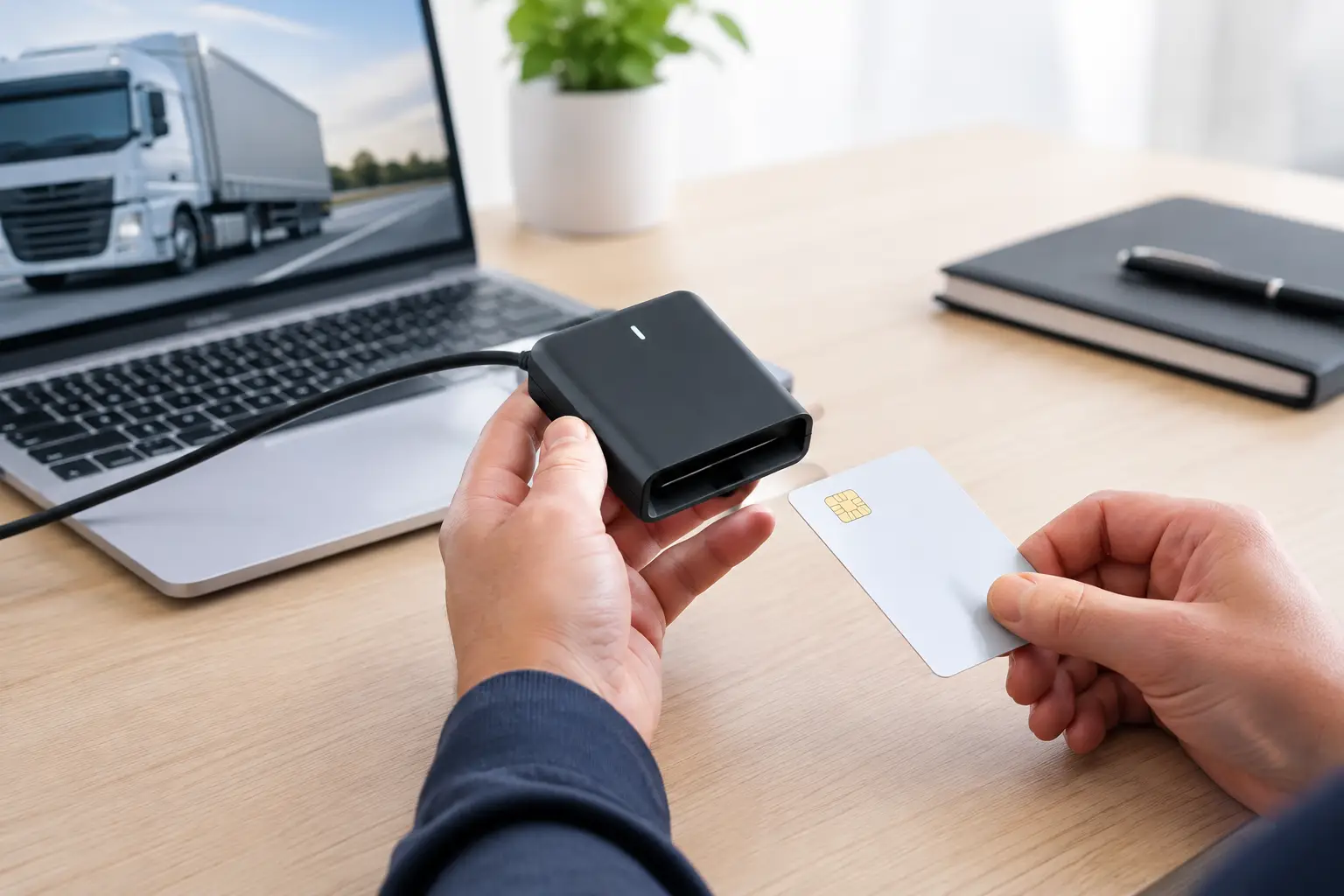
A tachograph download card reader can look like a small, straightforward purchase. In practice, it sits at the centre of your driver-hours process. If card downloads are delayed, files are stored in the wrong place or infringements are found too late, a simple reader becomes another source of admin rather than a compliance control.
For UK operators, the question is not simply which device reads a driver card. It is whether the process gives your transport team reliable files, clear deadlines and enough visibility to act before an issue affects drivers, schedules or your operator licence.
What a tachograph download card reader actually does
A tachograph download card reader transfers data from a driver card to a computer, tablet or compatible compliance system. The downloaded file records driving, other work, breaks, rest periods and any relevant events recorded by the tachograph. Your team can then store, analyse and review that data.
This is different from downloading the vehicle unit. A driver card reader retrieves an individual driver's data, while vehicle-unit downloads collect data held in the tachograph fitted to the lorry. Both are part of a complete compliance process, but they require different access methods and, in many cases, different hardware.
A company card also has a separate purpose. It identifies the operator and allows access to vehicle-unit data for vehicles assigned to the business. Depending on your setup, it may be used in a depot card reader, a download terminal or a secure remote-download solution. Confusing these roles is a common reason operators buy equipment that does not solve the problem they actually have.
The compliance deadlines are only the starting point
Driver cards must normally be downloaded at least every 28 days, and vehicle-unit data at least every 90 days. Those intervals are minimums, not a recommendation to leave every download until the final day. A driver may be on holiday, working away from base, leave unexpectedly or move between depots. A vehicle can be off the road when its file is due.
A practical operation builds in a buffer. For example, a weekly driver-card routine means missing one collection point does not immediately create a deadline risk. It also means the compliance team sees emerging driving-hours issues while they are still manageable.
Downloading alone is not enough. Files need to be retained securely, checked for completeness and analysed for infringements. A reader that creates a file on a desktop is useful, but it does not by itself tell a manager whether a driver is approaching weekly driving limits, whether missing mileage needs investigation or whether a recurring break issue needs coaching.
When a card reader is the right choice
A physical reader is often a sensible starting point for a small fleet where drivers regularly return to one depot. The upfront cost is usually modest, staff can be trained quickly, and the process can work well if one person owns the routine.
It is particularly effective where drivers hand in their cards at the end of a shift, or where an office-based administrator can collect data during a planned weekly check. For a small, stable operation, there is no need to overcomplicate a process that is consistently followed.
The trade-off is reliance on people being in the same place at the same time. If the transport manager is absent, cards are left in cabs or drivers finish away from base, the process can slip. Manual readers also give limited visibility between downloads. You may know what happened last week, but not what is happening on the road now.
That distinction matters for fleets with long-distance work, multiple depots, agency drivers or changing routes. In those environments, manual downloads can remain part of the process, but they should not be the only line of compliance control.
What to check before you buy
Compatibility should come first. Check that the reader supports the driver cards used by your team and works with your chosen tachograph analysis software. A reader that can create a file but cannot transfer it directly into your compliance system creates an avoidable manual step.
You should also consider where the files go after download. Saving files to individual desktops or shared folders makes it harder to prove a consistent process, identify missing records and restrict access to personal data. A central system gives the compliance team one source of truth and makes handovers far simpler.
Look closely at the day-to-day workflow. Does the device need software installed on each PC? Can depot staff see which cards are overdue? Is there a clear audit trail showing when a card was downloaded and by whom? These details are more valuable than a low purchase price when you are managing dozens of drivers.
For a mixed fleet, plan for growth. A reader that works for ten drivers at one site may become difficult to manage when you add a second depot, night shifts and subcontracted work. Choosing a process that can scale is usually cheaper than replacing fragmented systems later.
Manual downloads versus remote tachograph data
A card reader collects data when somebody has the card in hand. Remote tachograph downloading automatically retrieves data from the vehicle unit and, where supported by the setup, can collect driver-card files without waiting for the driver to return to the depot.
Remote downloading reduces the chase. Instead of asking drivers to remember a download date, the platform schedules collections, records successful transfers and flags exceptions. It is particularly useful where vehicles work nationally, drivers are tramping, or compliance staff are responsible for several operating centres.
However, remote downloads depend on the right in-vehicle hardware, a valid company card and a reliable configuration. They also do not remove management responsibility. Someone still needs to review missing files, investigate infringements and ensure the system reflects changes in drivers, vehicles and company-card status.
The strongest approach is often a combination. Remote downloads handle the routine flow of data and reduce deadline exposure, while a physical reader remains available for new starters, replacement cards, exceptional vehicles or a quick recovery when a driver returns to base. That gives the team a practical fallback without turning exceptions into the normal process.
Turn data collection into operational control
The real value of tachograph data is not the file itself. It is the decision made from it. When driver-hours information sits alongside live vehicle tracking, dispatch teams can avoid allocating a job to someone who is close to a break or daily-rest requirement. Transport managers can spot drivers repeatedly working towards limits and plan routes, handovers or relief cover more realistically.
This is where standalone readers can fall short. They provide evidence of what has happened, but they rarely provide the live operational context needed to prevent problems. A driver may have a clean download on Monday and still face a planning conflict on Thursday.
An integrated fleet platform brings those views together. Fleetalyse combines remote tachograph downloads and driver-hours monitoring with GPS tracking, vehicle and trailer visibility, dashcam evidence and reporting. Rather than moving between spreadsheets, card-reader software and tracking portals, a manager can work from one operational picture.
That matters beyond compliance. Better driver-hours visibility supports realistic ETAs, fewer last-minute reallocations and more confident customer updates. It can also reduce wasted calls between the office and drivers, especially when a planner needs to know whether a vehicle is available rather than simply where it is.
Set a process your depot can actually maintain
Technology only works if the routine is clear. Assign ownership for driver-card and vehicle-unit downloads, define how missed downloads are escalated, and make sure somebody reviews exception reports at a set frequency. Where several sites are involved, central oversight should not depend on local staff emailing files to head office.
Driver communication is equally practical. Drivers need to know when and where cards will be collected, what to do when a card is replaced or damaged, and who to tell if they are working away from their usual depot. A missed download often starts as a small process gap, not deliberate non-compliance.
Keep a fallback method for connectivity failures and equipment issues. The point is not to create a complex contingency plan. It is to ensure that a vehicle, driver or office problem does not become a missing-data problem that goes unnoticed for weeks.
A tachograph download card reader should make compliance easier to run, not merely easier to demonstrate after the event. Choose the method that matches how your drivers actually work, then build the visibility and ownership needed to keep control when the depot is busy.