
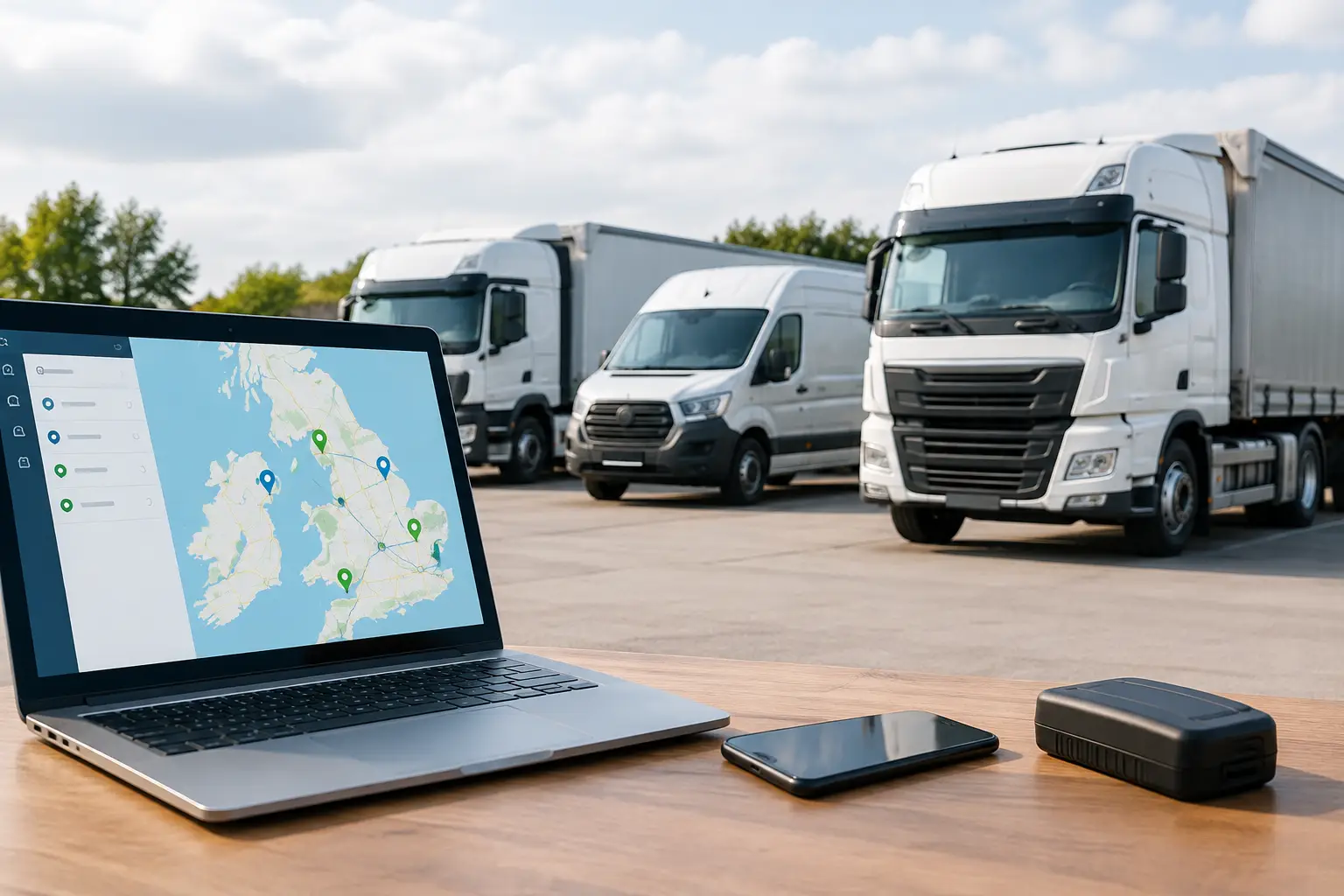
A vehicle dot on a map is useful, but it is not enough to run a professional transport operation. A proper commercial vehicle tracker comparison should show whether a system helps your team protect the operator licence, plan work with confidence and reduce the admin that builds up around drivers, vehicles and compliance.
For UK fleets, the best choice is rarely the system with the longest feature list. It is the one that gives transport managers useful information at the point they need it, without forcing depot teams to chase downloads, update spreadsheets or switch between separate platforms.
What should a commercial vehicle tracker comparison cover?
Start with the operational problems you need to solve. A van fleet focused on customer appointments may put live location, route history and driver behaviour first. An HGV operator has a wider requirement: tachograph data, driver hours, infringement risk, trailer visibility, planned maintenance and evidence for compliance processes all matter.
This distinction is where many tracker comparisons fall short. Generic GPS tracking can tell you where a lorry was. It may not tell you whether the driver is approaching a working-time limit, whether vehicle unit data has been downloaded on schedule, or whether a missing trailer is affecting the next day’s plan.
A system should therefore be assessed across four connected areas: live visibility, compliance control, operational reporting and practical deployment. If one area sits in a separate product, the apparent saving can quickly be lost in extra admin.
Live vehicle and trailer visibility
At a minimum, expect live locations, journey history, geofences and alerts. These functions give dispatch teams a clear view of where assets are, when they arrived and whether a vehicle has departed a site as expected. That can improve customer updates, reduce calls to drivers and support more realistic job allocation.
Look beyond the map, though. Check how frequently location data updates, how easily users can find a specific vehicle or driver, and whether the platform handles trailers as distinct assets. Trailer tracking is particularly valuable when trailers are shared across depots, left at customer sites or moved between vehicles. A tracker attached only to the tractor unit leaves a significant visibility gap.
It is also worth checking whether location history is easy to retrieve. When a customer disputes an arrival time or an incident needs investigating, the team needs a clear record rather than an awkward export that takes half an hour to interpret.
Tachograph compliance and driver hours
For operators running vehicles within tachograph rules, this is often the deciding factor. Remote tachograph downloads should remove the routine task of physically collecting driver card and vehicle unit data. More importantly, the information should be presented in a form that helps managers act before a missed deadline or infringement becomes a bigger issue.
Live driver hours monitoring gives planners a better basis for allocating work. Instead of relying on a phone call or an estimate, they can see remaining drive time, break requirements and available working time. That helps avoid plans that look efficient on paper but cannot be completed legally.
When comparing providers, ask whether tachograph features are genuinely integrated with tracking. A separate compliance portal may technically cover the requirement, but it creates duplicate logins, disconnected reports and more opportunities for information to be missed. One platform gives managers the context behind the data: the driver’s remaining time, current location and assigned vehicle can be viewed together.
Driver behaviour, fuel and utilisation
Tracking data becomes commercially useful when it helps explain how vehicles are being used. Reports on speeding, harsh braking, acceleration, idling and excessive engine running can identify patterns that increase fuel consumption, wear and collision exposure.
The purpose is not to create a league table that drivers resent. The most effective fleets use behaviour information for fair coaching, targeted conversations and evidence-based improvement. A recurring idling issue at a particular depot, for example, may point to poor loading arrangements rather than poor driver conduct.
Utilisation reporting deserves the same attention. A fleet can be busy while individual vehicles spend too much time parked, underloaded or travelling empty. Clear journey and activity data helps managers decide whether they need additional vehicles, better allocation or a different depot arrangement. It also provides firmer evidence when assessing contract work or reviewing fleet costs.
Compare the daily workload, not just the feature list
A feature is only valuable if people can use it consistently. During a commercial vehicle tracker comparison, ask how a typical transport manager starts the day, manages an exception and produces evidence at the end of the week.
For example, can the team immediately see drivers who are nearing available-hours limits? Can a dispatcher find the nearest suitable vehicle without ringing several drivers? Can a compliance manager check download status and investigate infringements from the same workspace? Can maintenance reminders be set around service intervals, inspections and other fleet requirements?
These questions reveal whether the platform supports day-to-day control or simply collects data. A low-cost tracking package can appear attractive until staff spend hours combining its exports with tachograph software, maintenance records and manually maintained vehicle lists.
Reports that support a decision
Reports should be clear enough to prompt action. A monthly PDF that arrives after the problem has passed is less useful than an alert that allows the depot to intervene while there is still time.
Look for reporting that can answer practical questions: which vehicles are idling excessively; which drivers need behaviour coaching; which assets have not moved; which driver cards or vehicle units need downloading; and which maintenance events are approaching. The best platforms let managers move from the exception to the relevant vehicle, driver or journey record without rebuilding the picture in a spreadsheet.
There is a trade-off here. Highly configurable reporting can be helpful for larger operations with established processes, but excessive setup can delay adoption. For many fleets, a strong set of operational reports that work from day one is more valuable than unlimited report-building options.
Check installation, pricing and support carefully
Hardware and contract terms can affect the real value of a tracker as much as the software. If fitting equipment requires prolonged vehicle downtime or a specialist installer at every location, rolling out the system across a mixed fleet becomes harder. Plug-and-play hardware can reduce disruption, particularly for vans and rapidly changing fleets, provided it is suitable for the required data and asset type.
Pricing should be transparent. Establish what is included in the monthly charge, whether hardware is leased or purchased, what contract period applies, and whether functions such as tachograph downloads, driver hours, trailer tracking or dashcam footage cost extra. A headline price for basic tracking is not a meaningful comparison if the essential compliance tools sit behind additional charges.
Also ask how support works when something goes wrong. Fleet teams operate early mornings, late evenings and weekends. They need clear onboarding, reliable help with hardware issues and people who understand the difference between a missed tracking point and a compliance concern. UK-based operational knowledge is especially useful where operator licence responsibilities shape the way a fleet is managed.
Choose a platform that reduces handovers
The strongest option is usually the one that reduces the number of handovers in your operation. If planners, compliance managers and depot teams can work from the same current information, decisions are faster and accountability is clearer.
Fleetalyse brings GPS tracking, remote tachograph downloads, live driver hours, trailer visibility, smart dashcam capability and fleet reporting into one platform built for UK commercial operators. That approach is designed to replace disconnected tools with practical control over the vehicles, drivers and compliance tasks that need attention each day.
Before making a decision, map one ordinary week in your operation: a late-running collection, a driver nearing their limit, a trailer left at a customer site, a service due and an infringement that needs review. The right tracker will make each of those situations easier to manage, not add another system for your team to maintain.