
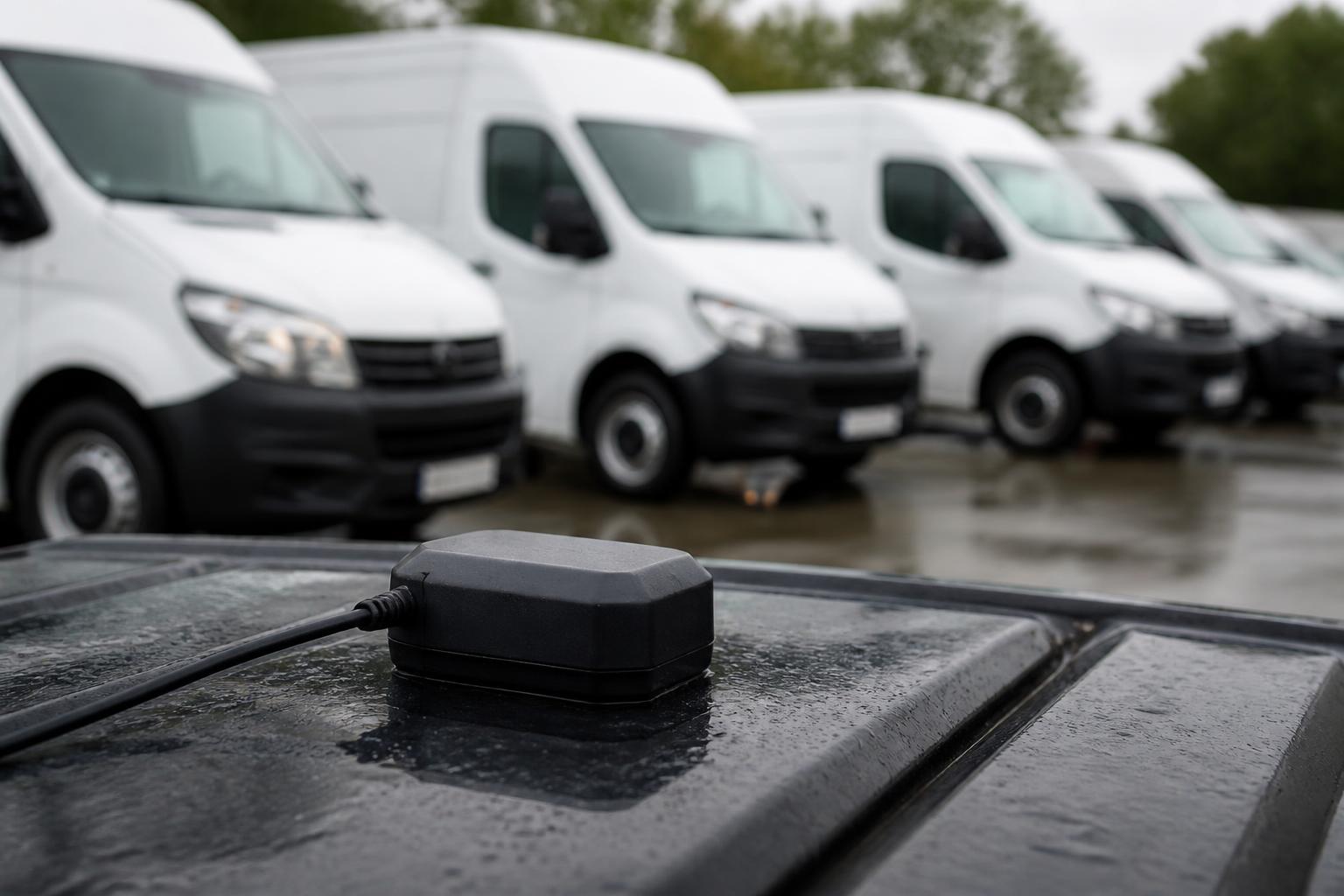
A low-cost tracker can be good enough for a fleet, but only when the job is genuinely simple. If all we need is to see where a van is, check where it has been, and confirm basic movement through the day, a budget unit can do that perfectly well. Many smaller operators do not need every vehicle to feed advanced data, support complex compliance workflows, or integrate several safety systems from day one.
The problem starts when “cheap” is measured only by the price of the box. In commercial fleet use, the real cost sits across fitting time, failed units, missed journeys, weak reporting, software limitations, and the extra admin created when tracking sits outside the way the transport team already works. That is where it helps to compare not just hardware cost, but whether the tracker actually supports one workable process inside Fleetalyse.
What buyers usually mean by a cheap tracker
When buyers ask about cheap vehicle tracking devices, they usually mean one of three different things.
First, they may mean low upfront hardware cost. That is the easiest number to compare. One device is simply cheaper to buy than another. For owner-drivers, small van fleets, and secondary assets, that matters. If we are fitting several non-critical vehicles, reducing the initial outlay can be the right move.
Second, they may mean low monthly cost. A tracker with a modest purchase price can still become expensive if the subscription, SIM arrangement, mapping, or reporting charges are high. Equally, a slightly better device may work out cheaper over a contract term if the monthly service is more sensible and includes what the fleet actually needs.
Third, they may mean low total running cost. For a commercial operator, this is normally the figure that matters most. Total running cost includes the hardware, fitting, support, replacement units, downtime, and the staff time spent dealing with weak data or a second system that nobody wants to manage.
That distinction matters because a tracker can be cheap to buy and expensive to run. We see this when fleets choose on unit price alone, then discover they need a different fitting method, better signal performance, stronger warranty cover, or software that can handle the daily transport workflow.
For example, if a low-cost device only gives us a basic map view but the operation also needs maintenance prompts, exception handling, asset groups, or clearer trip records, the saving on the hardware can disappear quickly. The same applies if the device is technically capable but awkward to support, locked into a limited portal, or not well matched to the vehicles being fitted.
In practice, the best value option is not always the cheapest box. It is the tracker that gives us enough visibility for the job, with stable data and manageable support, without forcing the fleet into a patchwork of separate systems.
When a budget device is enough for day-to-day fleet visibility
There are plenty of cases where a budget tracker is enough.
If we are running a small van fleet and the main requirement is live GPS position, trip history, and a simple view of whether a vehicle is moving or parked, we do not always need a more advanced unit. The same applies to cars used by supervisors, pool vehicles, service vans, and secondary assets where the fleet just wants basic visibility.
A lower-cost tracker can also be suitable where the purpose is mainly operational awareness. Typical examples include:
- seeing which vehicle is closest to the next job
- checking first movement and last movement each day
- reviewing journey history after a customer query
- confirming whether a vehicle attended a site
- monitoring occasional out-of-hours movement
- keeping a simple record of mileage and utilisation
For these use cases, a straightforward installed device often does the job well. If the fleet is not relying on the tracker for compliance-critical workflows, detailed engine data, or driver behaviour analysis, there is no reason to over-specify.
This is especially true for mixed fleets where not every asset needs the same level of intelligence. An HGV on long-distance work may need much more, while a yard vehicle, a spare van, or a non-powered asset may only need location and movement history. We often help operators separate those requirements rather than treating every vehicle as if it needs the same hardware.
Budget tracking can also make sense as a starting point. Some fleets need to get visibility in place quickly, then decide later which vehicles justify a wider connected setup. Using Fleetalyse-ready trackers for the simpler vehicles can be a practical way to bring them into the same platform while keeping specification aligned to use.
The key point is that “good enough” is a valid standard if the fleet is clear about the outcome. If day-to-day visibility is the real requirement, we should not force a more complex solution than the operation will use.
Where cheap tracking devices start to cost more in practice
The trade-offs usually show up after purchase, not before it.
One of the first is fitting time. A tracker that looks inexpensive on paper can become less attractive if installation is awkward, vehicle downtime is longer than expected, or the unit is not well suited to the electrical setup of the fleet. On commercial vehicles, fitting quality matters because poor installation often leads to intermittent power issues, unreliable data, or later fault-finding time. We cover some of that in our guide to vehicle tracking fitted with less fleet downtime.
Signal reliability is another common issue. A tracker can have GPS capability, but still deliver patchy results if its antenna performance, network behaviour, or installation position is poor. Fleets usually notice this as missing trip sections, delayed updates, or vehicles appearing to stop reporting at the wrong time. If dispatchers and transport planners stop trusting the map, the cheap tracker has already started costing more.
Reporting gaps are a related problem. Basic devices may give a location trail, but not always the level of event detail needed for confident operational use. If we cannot easily confirm start and stop times, idling patterns, route history, or geofence events, office staff end up checking manually and drivers get more calls than they should.
Power management also matters more than many buyers expect. Some low-cost units are fine on regularly used vehicles but perform poorly on assets that stand for long periods, have irregular usage patterns, or are sensitive to battery drain. A tracker that causes repeated battery concerns, or one that goes quiet after inactivity, creates avoidable workshop time and frustration.
Support is another hidden cost. When a fleet has a failed unit or odd behaviour in the field, it needs a clear process for diagnosis, replacement, and recommissioning. If support is weak, or if the hardware sits in a system that does not fit the rest of the fleet operation, every fault becomes a longer admin exercise than it should be.
Replacement rates matter too. A low purchase price is less impressive if units fail early, need frequent swaps, or are effectively disposable. The labour to remove and refit a tracker can exceed the value of the original saving.
Then there is the software question. A cheap tracker may come with its own portal, but if the fleet already works elsewhere, that portal becomes one more login, one more map, and one more reporting process. We see fleets lose time because tracking, maintenance notes, camera footage, and Tachograph tasks all sit in different places. The hardware may be cheap, but the workflow is not.
The checks that matter before you buy on price
Before buying on price, we suggest working through a short operational checklist.
Start with the vehicle type. A small car or van used daily is very different from an HGV unit, a trailer, a plant asset, or a vehicle that sits idle for long periods. The tracker needs to suit the electrical environment, usage pattern, and reporting expectation.
Then check the fitting method. Is the device hard-wired, plug-in, battery-powered, or intended for a mixed approach? Hard-wired units usually give better permanence and fewer tampering issues in commercial use, but the fitting plan still needs to be sensible. If the fleet is trying to minimise workshop interruption, it is worth looking at GPS vehicle tracking that cuts fleet blind spots alongside the practicalities of install and reporting.
Next, define the data requirement clearly. Do we only need location and trip history, or do we also need ignition status, utilisation, geofences, mileage confidence, or CAN data? If the operation expects more than simple dots on a map, it is better to confirm that before buying.
Reporting matters just as much as data capture. Ask what the office team will actually use every day. Is it enough to see vehicles live, or do we need exception reports, scheduled summaries, route review, and grouped fleet views? Good tracking is not just about collection. It is about whether the information is usable in the transport office.
Hardware quality and warranty should be checked properly. We would want to know what device family is being supplied, whether it is proven in UK commercial use, what warranty applies, and how replacement is handled. This is where recognised hardware such as Teltonika can make sense, especially when the fleet wants a known platform rather than an anonymous low-cost unit.
Connectivity should not be ignored either. IoT SIMs, network resilience, and roaming behaviour all affect real-world performance. A cheap tracker with weak connectivity planning is often not cheap for long.
Then check software fit. This is one of the most important questions. Does the tracker work with the software the fleet will actually run every day? If the answer is “we will use the cheap portal for location, then another system for compliance, then spreadsheets for exceptions”, the price comparison is already incomplete.
With Fleetalyse, operators can choose Fleetalyse-ready trackers, use unlocked Teltonika hardware, or plan a more tailored rollout. That matters because hardware choice should support the operating model, not dictate it.
Finally, check the commercial details properly. Confirm whether pricing is shown inclusive or exclusive of VAT, how billing works, whether payments are handled through Stripe, what access is available through the Customer Portal, and whether day-to-day users will have a simple Tracker login or a broader fleet view. Those details affect adoption more than many buyers expect.
Why HGV and compliance-led fleets often need more than the cheapest option
The point where a low-cost tracker stops being enough is usually the point where the fleet needs more than location.
For HGV operators, tracking is often only one part of the daily control picture. The transport office may also need Tachograph workflows, remote downloads, driver hours visibility, vehicle and driver exception handling, and stronger reporting across the operation. A basic tracker cannot cover that by itself.
This is particularly true in UK road transport, where compliance expectations for commercial operators are practical and ongoing. The issue is not simply whether a vehicle can be seen on a map. It is whether the office can manage movements, working patterns, and compliance tasks in one reliable process. That is why many haulage and logistics fleets move beyond the cheapest option quite quickly.
If the operation needs to see driver hours in the same working environment as vehicle location, a basic budget tracker is usually too narrow. The same applies if the fleet wants remote Tachograph downloads rather than manual collection, or if transport managers need one view across vehicle activity and compliance exceptions.
Safety systems can push the requirement further. If the fleet also wants Smart dashcams, event footage, or a joined-up picture of risk and driving activity, the cheapest tracker is unlikely to be enough on its own. At that point, the question is not whether low-cost hardware can produce a position. It is whether the whole setup supports the way the fleet is managed.
Mixed fleets feel this strongly. A van-only operation may cope happily with simple tracking. A mixed operation with HGV, vans, trailers, and assets usually needs a wider Fleet insight model, because planners, compliance teams, and managers all need different outputs from the same vehicles.
That is where integration matters more than unit price. If one system shows location, another handles Tachograph data, another stores camera footage, and another spreadsheet tracks maintenance and exceptions, the fleet ends up paying in admin and missed visibility.
How to compare low-cost tracking without creating another system to manage
The best way to compare low-cost tracking is to start with the process, not the device.
Ask how the fleet will actually run the day. Who checks first movement? Who reviews exceptions? Who follows up vehicles that have not reported? Who needs mileage confidence for planning and servicing? Who needs to see compliance-related information alongside location?
Once that is clear, compare each tracking option against one simple test. Does it support one workable process, or does it create another system to manage?
For many fleets, the real value is not the cheapest hardware. It is having tracking, exceptions, and operational reporting in one platform that people will actually use. That is why we focus on bringing live GPS, Tachograph workflows, camera inputs, and reporting together in Fleetalyse, rather than asking operators to juggle several disconnected tools.
A lower-cost device can still be the right answer if it feeds the same day-to-day workflow. If a simple tracker gives reliable location, sensible trip history, and stable reporting inside Fleetalyse, then it may be exactly the right fit for vans, secondary vehicles, or lower-priority assets. We do not need to overcomplicate that.
But if the cheaper option means separate portals, weak reporting, manual re-keying, or inconsistent visibility across the fleet, the saving is usually false. The transport office ends up doing the integration by hand.
This is also where mapping and usability matter. A platform built for fleet control should not just show positions. It should help the team interpret them quickly, whether that is through grouped views, event logic, or mapping layers such as OpenStreetMap. The tracker is only one part of the result.
For operators comparing options now, our advice is simple. Decide what “good enough” means for each vehicle group. Keep the specification light where the job is light. Spend more where compliance, utilisation, safety, or control genuinely depend on it. And make sure the chosen hardware fits the software process the fleet will live in every day.
That approach avoids two common mistakes. One is overspending on vehicles that only need basic visibility. The other is under-buying for vehicles that sit at the centre of compliance and daily transport control.
If we get that balance right, low-cost tracking can be a sensible commercial choice. If we get it wrong, we save on the box and pay for it in admin, downtime, and blind spots later. For fleets that want to avoid that split, we can help compare Fleetalyse-ready trackers, unlocked Teltonika hardware, and wider rollout options so the tracking choice fits the operation from the start. For more on the operational side of joined-up visibility, see our guide to fleet tracking for haulage running on time.
Fleeta Limited T/A Fleetalyse works with UK operators that need practical fleet control, not another disconnected portal. That is usually the difference between a tracker that is cheap to buy, and one that is genuinely cost-effective to run.
Are cheap vehicle tracking devices accurate enough?
Often yes for basic location, but accuracy is only part of the picture. Update frequency, signal stability, trip logging and data quality matter just as much in daily fleet use.
Is the cheapest tracker the lowest-cost option overall?
Not always. A lower unit price can be offset by weaker reporting, more fitting time, shorter lifespan, support issues or extra admin for the fleet team.
Can a low-cost tracker work for HGV fleets?
It can for simple location visibility, but HGV operators often need more than tracking alone. Compliance, Tachograph workflows and incident evidence may make a basic device too limited.
What should a fleet manager check first?
Start with the job the tracker must do: live visibility, trip history, utilisation, maintenance prompts or wider compliance workflows. That decides whether a budget device is enough.
Do cheaper trackers always mean poor quality?
No. Some lower-cost devices are perfectly suitable for straightforward use cases. The key is whether the device matches the vehicle, install method and reporting needs of the fleet.