
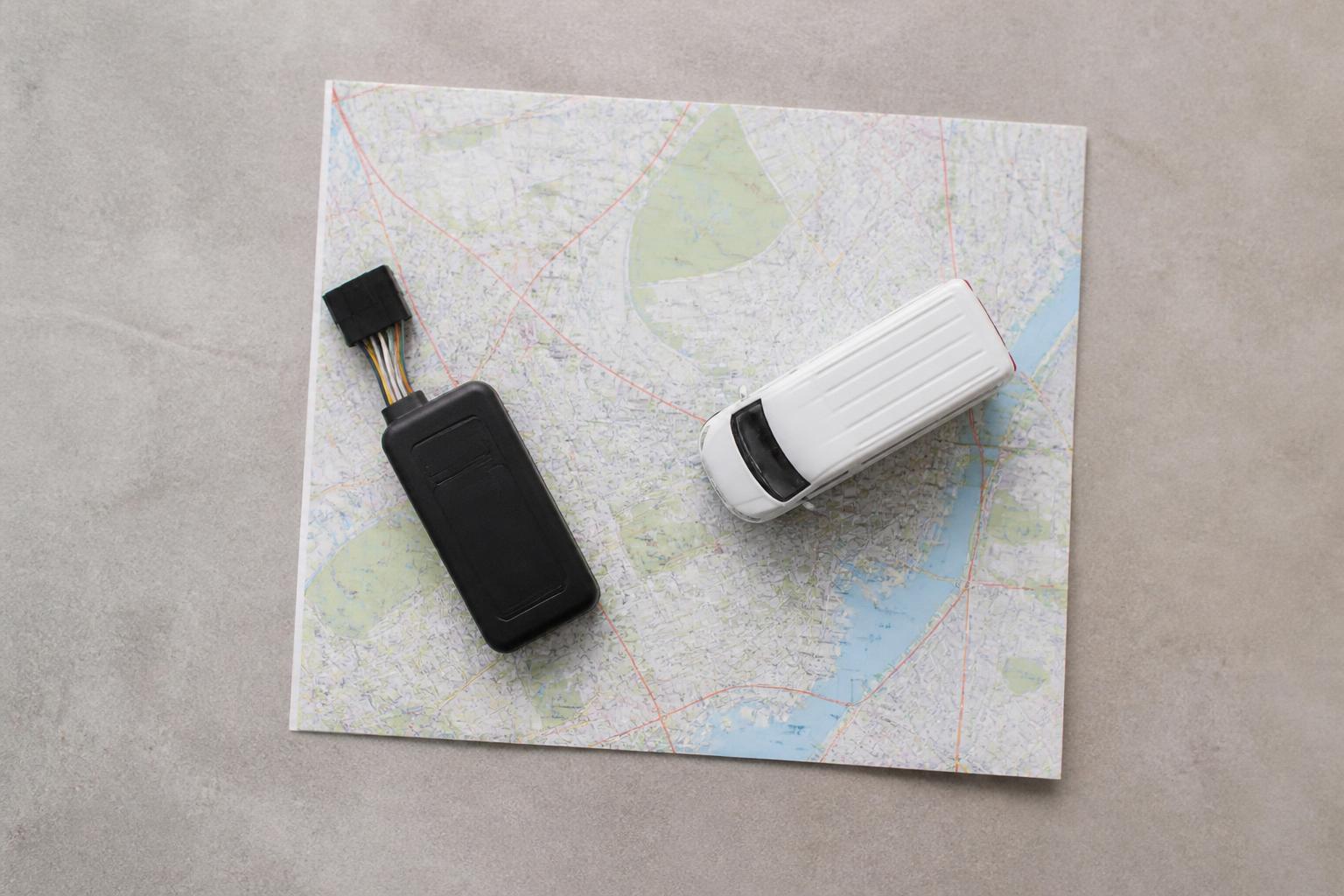
Blind spots in fleet operations rarely come from one big failure. They come from small gaps that build up through the day. A vehicle leaves late, the office does not spot it quickly enough, a customer asks for an ETA, a driver misses a route change, or a trailer sits unused because nobody has a clear view of where it is. GPS vehicle tracking cuts those gaps by giving us live location, movement history and operational context in one place, so decisions are based on what is actually happening on the road.
For UK operators, that matters far beyond map dots. Tracking helps us run tighter daily plans, respond faster when jobs move, improve vehicle use, and keep better records around movement, incidents and compliance support. When tracking sits alongside Tachograph, driver hours, cameras and reporting, it becomes part of day-to-day transport control rather than a separate tool that somebody checks only when there is a problem.
What GPS vehicle tracking does in day-to-day fleet operations
At a practical level, GPS tracking shows where a vehicle is, where it has been, and whether it is moving, stopped, idling or off the road. In a normal fleet operation, that gives transport teams a live operating picture instead of relying on phone calls, handwritten notes or delayed updates.
A typical system will show live map positions, journey history, stop locations, route playback and timestamps. Depending on the hardware and vehicle type, it may also show ignition status, speed events, geofences, battery condition for assets, and in some cases CAN data from the vehicle itself. That is especially useful where we want more than simple location and need a better picture of how vehicles are being used.
For an operator in a traffic office, the working day often starts with checking which vehicles are active, which are still at base, and whether any planned departures are already slipping. From there, tracking supports the normal flow of the day:
- confirming vehicles have left site
- checking progress against planned routes
- spotting long dwell times at customer premises
- seeing whether drivers are delayed in congestion
- reallocating work when a vehicle becomes available
- giving customers realistic arrival updates
- reviewing where time was lost after the job is done
That matters for HGV fleets, van operations, owner-drivers and mixed fleets alike. The exact workflow changes, but the need for visibility does not. A haulage operator may be watching trunk routes and delivery windows. A service fleet may care more about first job arrival, time on site and the nearest available van. A trailer fleet may focus on asset location, inactivity and recovery risk.
The best tracking systems are not just a map with a pin. They make it easy to move from a map view into the detail behind it. We should be able to click a vehicle, see its current position, understand its recent movement, and pull a report without jumping between different systems. That is where live operations become easier to manage.
Mapping also matters. A clear map layer, sensible refresh rates and reliable address matching all affect how useful the platform is in practice. We use OpenStreetMap within our platform because operators need mapping that is clear, dependable and practical for daily fleet use.
For fleets that want a broader operational picture, tracking can also sit alongside other workflows. If we are already recording defects, vehicle availability or delivery milestones, location data adds context. That is why many operators also look at track walkaround checks and vehicle location in one workflow, rather than treating each task as a separate process.
Which fleet problems GPS tracking helps solve
The most immediate problem tracking solves is not knowing where vehicles are without asking. If the office has to ring drivers for routine location updates, there is already a visibility problem. It wastes time for the planner and interrupts the driver. GPS tracking removes much of that routine chasing.
Missed updates are another common issue. A vehicle may be delayed at a delivery point, diverted by roadworks or stuck in queueing traffic. Without live visibility, the office often finds out late, and the customer hears even later. With tracking, we can see the delay developing and update the customer with a realistic ETA, rather than an estimate based on the original plan.
Routing inefficiency is also easier to spot when movement data is stored and searchable. Over time, route history shows repeated detours, avoidable mileage, poor sequencing and jobs that are allocated to the wrong depot or vehicle. Tracking does not replace route planning, but it gives us evidence about what is really happening on the road. That helps when we review recurring delays or compare planned work against actual movement.
Vehicle utilisation is another area where fleets often have blind spots. Some vehicles are overworked while others barely move, but without clear records it is hard to prove. Tracking reports can show start times, stop durations, days active, journey frequency and idle periods. That helps us answer practical questions such as:
- Which vehicles are used every day, and which are standing too often?
- Are we holding spare units that rarely leave the yard?
- Are trailers being rotated properly?
- Do some routes consistently absorb more time than expected?
- Is one part of the fleet carrying more of the workload than another?
For customer communication, the benefit is straightforward. We can give better updates when we know where the vehicle is and how the route is progressing. That matters in general haulage, final-mile delivery, service visits and timed collections. A customer is usually more understanding about a delay if the update is accurate, prompt and based on live information.
Tracking also helps after the event. When a delivery is disputed, an arrival time is questioned, or a customer says a vehicle never attended site, route history and stop records give us something objective to review. That does not solve every dispute on its own, but it is far better than relying on memory or incomplete notes.
For operators managing more than one vehicle type, visibility gaps often multiply because each category has historically been managed separately. Vans may have one tracking tool, HGV units another, and trailers none at all. We see strong demand from fleets that want one operational view across all of them. If that is a current issue, our guide to how mixed fleets get one view of vehicles and compliance sets out what that joined-up approach looks like in practice.
How GPS tracking supports compliance and driver management
Tracking has a clear role in compliance support, but it is important to be precise about what it does and does not cover.
GPS tracking is not a substitute for a Tachograph, and it does not in itself fulfil legal requirements around driver hours. In the UK, those requirements sit under the relevant drivers' hours rules and Tachograph obligations, and operators still need proper records, downloads and review processes. For some fleets, that means EU rules still apply because of the vehicles and journeys involved. For others, domestic UK rules may be relevant in different parts of the operation. The point is that tracking supports compliance visibility, it does not replace the formal compliance tools.
Where tracking helps is by adding operational context around movement and timing. If a vehicle appears to have started unusually early, remained stationary for a long period, or taken an unexpected route, the office can review that against Tachograph records and job details. It becomes easier to understand what happened on the day, not just what the compliance file says in isolation.
This is especially useful when tracking is combined with remote Tachograph downloads. Instead of treating location, driver activity and download status as separate admin tasks, we can view them as part of one operational picture. That helps transport teams spot issues earlier and reduces the amount of manual chasing.
Tracking data can also support driver management in sensible ways. For example, it can help us review repeated late starts, excessive idling, route deviations, unauthorised vehicle use, or consistent delays at handover points. Used properly, that gives us a factual basis for coaching and planning conversations. It should not be about monitoring for the sake of it. It should be about improving how the operation runs.
Incident review is another practical use. If there is a complaint, a near miss, suspicious vehicle movement or a question about where a unit was at a given time, tracking gives us timestamps and route history to review. If Smart dashcams are fitted as well, location and video together give a far clearer picture than either system alone.
Record-keeping benefits too. Operators are often asked to show what happened on a specific date, whether for internal review, customer queries, insurance matters or audit preparation. Tracking reports help us retrieve that information quickly. That is not the same as saying tracking alone satisfies every legal record requirement, because it does not. But it does strengthen the operational records around vehicle movement and event review.
For fleets that need a closer link between location and tacho-related visibility, it is worth looking at track tacho dates and vehicle locations in one view. That is where tracking becomes part of a more complete control process, rather than a standalone map.
What to look for in a GPS tracking system
UK operators should start with the basics. The system must show live vehicle positions reliably, with clear maps, sensible refresh behaviour and straightforward access to route history. If a planner cannot open the platform and understand what is happening within a few seconds, the system will not help much during a busy traffic day.
Reporting is the next key area. A good platform should let us review journeys, stops, utilisation and exceptions without exporting everything into spreadsheets first. Some fleets still want CSV exports, and that is fine, but routine reporting should be built in.
Hardware choice matters more than many buyers expect. Some fleets want a simple plug-and-play rollout. Others need hard-wired units, battery-powered asset trackers, or a tailored install across mixed vehicle types. We support operators who want Fleetalyse-ready trackers, those who prefer unlocked Teltonika hardware, and those planning a more customised commercial deployment. The right choice depends on fleet size, vehicle type, expected reporting detail and whether fixed or transferable devices make more sense.
Mixed fleet support is essential for many UK operators. A system should be able to handle HGV units, vans, trailers and other assets in one platform, not force the office into separate logins and inconsistent reports. That is particularly important where one transport team controls different fleet categories across several sites.
Integrations should also be considered early. Tracking works better when it connects with wider fleet processes, especially Tachograph downloads, camera systems, driver records and reporting. If every function sits in its own silo, the office still ends up juggling screens and duplicate data entry.
Ease of rollout is another practical buying criterion. Ask how devices are supplied, how installs are managed, how vehicles are added, and how users access the system. We offer a Customer Portal for account management and service visibility, and a Tracker login for day-to-day platform access. Buyers should also check how subscriptions are handled, what support is available during rollout, and whether billing is simple for the business to administer. We use Stripe for payments, which gives customers a familiar and straightforward process.
Connectivity should not be overlooked either. Reliable telematics depends on dependable mobile data, and fleet operators should understand how SIM provision is handled. We use IoT SIMs because commercial tracking needs resilient connectivity across moving assets, not consumer-grade arrangements that create avoidable gaps.
Finally, buyers should look at the supplier’s understanding of transport operations. A GPS platform is only useful if it reflects how fleets actually work. Terms such as Fleet insight sound simple, but in practice they mean the system must help the office make decisions quickly, not bury useful information behind extra clicks.
How Fleetalyse brings tracking together with wider fleet tools
At Fleetalyse, we built our platform for operators who do not want separate systems for location, Tachograph admin, cameras and reporting. Our aim is to give transport teams one working view of vehicles, drivers and operational activity, so daily control is simpler and blind spots are reduced.
Our live GPS tracking covers HGV, van, trailer, asset and mixed fleets. We provide hardware options that fit different operating models, including Fleetalyse-ready trackers for a straightforward start, unlocked Teltonika devices for fleets that want flexibility, and customised rollout planning for larger or more specific requirements. Where vehicle data requirements go further, CAN data support can form part of the solution.
Tracking is only part of the picture, so we also combine it with remote Tachograph downloads, Smart dashcams and fleet reporting. That means we can help operators move from basic location visibility into a broader operational setup without stitching together multiple providers.
For fleets running mixed vehicle types, one platform matters. The office should not have to check one system for vans, another for HGV units and another again for trailers or assets. We bring those views together, which makes it easier to plan work, answer customer queries and review what happened during the day.
We also keep rollout practical. Some customers want a small number of trackers and quick access to the platform. Others need a staged implementation across a larger fleet, with install planning, user setup and reporting needs defined from the start. We support both approaches. The goal is not to overcomplicate the setup, it is to get useful visibility into the operation quickly and then build on it.
Because we work with UK commercial fleets, we focus on what transport teams actually need to do. That includes seeing where vehicles are now, checking what happened earlier, reviewing issues against Tachograph and camera records, and keeping a better handle on utilisation and service levels. It also includes making access and administration straightforward, whether through the Customer Portal, the Tracker login, or the reporting views used by office teams every day.
If you are comparing options, it is worth reading GPS tracking that gives fleet managers one clear view for a closer look at what joined-up visibility should look like in practice.
Fleetalyse is provided by Fleeta Limited T/A Fleetalyse. We work with operators who need practical control over fleet movement, compliance visibility and safety, without adding another disconnected tool to the stack. When tracking, Tachograph data, Smart dashcams and reporting sit together properly, GPS vehicle tracking stops being a standalone feature and becomes part of how the fleet runs every day.
What is the difference between GPS tracking and fleet management software?
GPS tracking shows where vehicles are and how they are moving. Fleet management software uses that data alongside reports, compliance tools, cameras and workflows to help run the operation.
Can GPS tracking help with driver hours compliance?
It can support the process by improving visibility of vehicle activity and linking with Tachograph workflows, but GPS data does not replace legal driver hours records.
Is GPS tracking only useful for large fleets?
No. Small operators can use it for live visibility, job updates, vehicle security and simpler admin, while larger fleets often benefit from reporting, exception management and joined-up systems.
What vehicles can be tracked?
Tracking can be used across HGV, vans, trailers, plant, assets and mixed fleets, depending on the hardware fitted and the reporting needed.
Do I need special hardware for GPS vehicle tracking?
Yes. A vehicle or asset needs compatible tracking hardware installed. Fleetalyse offers Fleetalyse-ready trackers and unlocked Teltonika hardware for different rollout needs.