
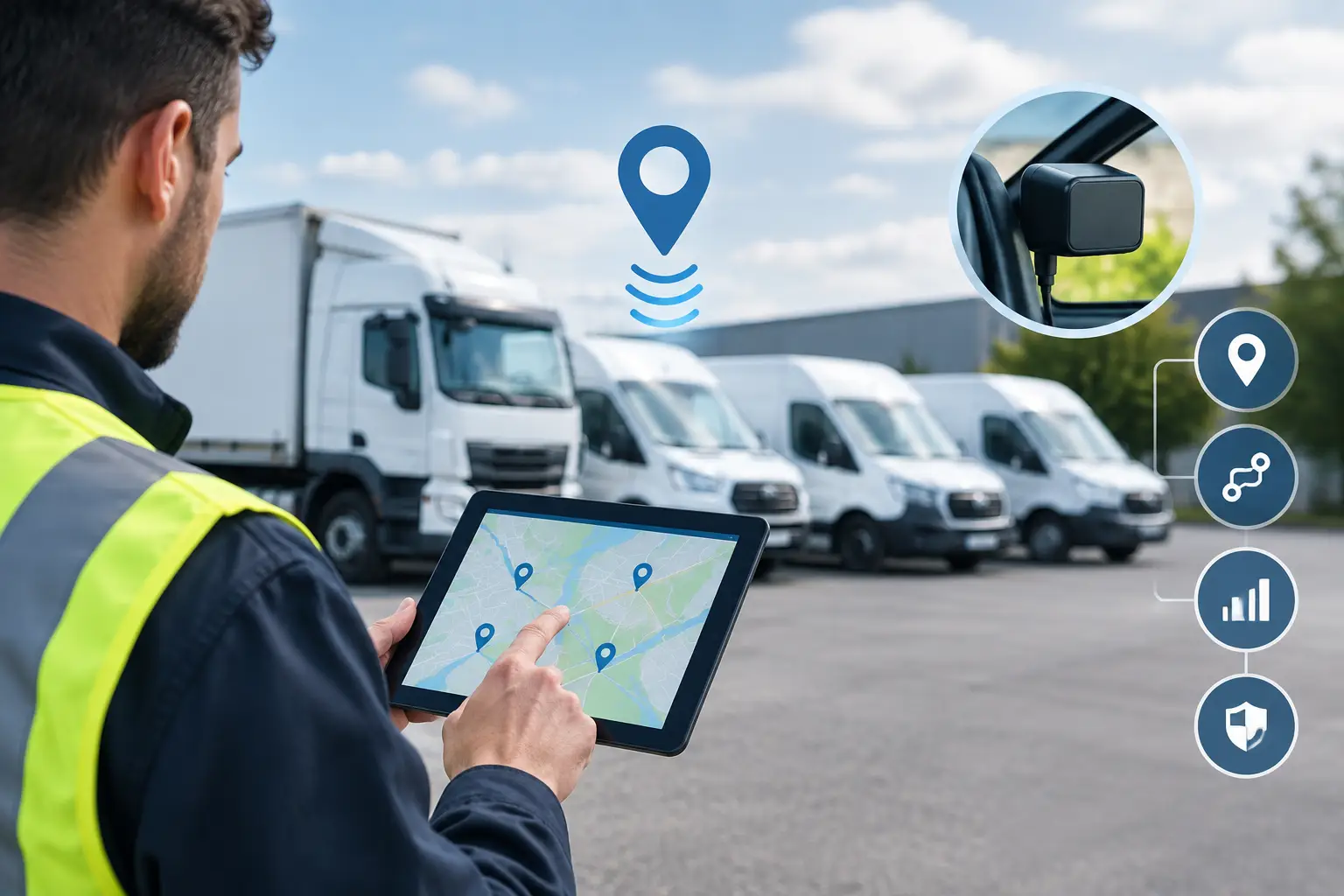
A vehicle icon moving across a map can be useful. But when a drivers’ hours issue, missed walkaround check or unexpected maintenance stop lands on a transport manager’s desk, location alone rarely answers the question. The practical difference in GPS tracking versus telematics is whether you can simply see where an asset is or use connected fleet data to take control of what happens next.
For UK operators running HGVs, vans, trailers or mixed fleets, that distinction affects compliance workload, dispatch decisions, fuel costs and the protection of an operator licence. GPS tracking has a clear role. Telematics goes further by turning vehicle and driver information into operational control.
GPS tracking versus telematics: the core difference
GPS tracking uses satellite positioning to report an asset’s location. A basic tracking system can show where a vehicle is now, where it has travelled, when it arrived or left a site, and sometimes its speed. It is particularly useful for dispatch teams answering straightforward questions: Which vehicle is nearest? Has the driver reached the customer? Is the trailer still at the expected location?
Telematics includes GPS location, but combines it with data from the vehicle, driver and connected compliance systems. Depending on the platform and hardware, this can include ignition status, mileage, fuel use, idling, harsh braking, driving time, fault alerts, maintenance intervals and tachograph data.
Put simply, tracking tells you where. Telematics helps explain how, when and why.
That does not mean every fleet needs every available data point. A small van operation focused on proof of attendance may find basic live tracking sufficient. A haulage operator managing drivers’ hours, vehicle inspections, trailers and maintenance deadlines needs a broader view. The right choice depends on the operational risk you need to manage, not on having the longest feature list.
What GPS tracking does well
GPS tracking is often the quickest way to remove uncertainty from day-to-day planning. Live location helps planners allocate work with more confidence, update customers accurately and respond when a vehicle is delayed. Historic journey data can also support mileage checks, delivery queries and investigation of unauthorised use.
Trailer tracking is another strong use case. Trailers can spend long periods away from the tractor unit, at customer sites or in third-party yards. Knowing their last reported location can reduce time spent calling depots, drivers and customers to establish where an asset has gone.
For fleets that currently rely on phone calls and estimated arrival times, even basic tracking can deliver an immediate improvement. It replaces guesswork with a shared operational view.
However, tracking has limits. A map may show that a lorry has been stationary for 45 minutes, but not whether it is loading, waiting at a delivery point, taking a legal break or experiencing a fault. It will not, by itself, show that a driver is approaching a driving-time limit or that a maintenance inspection is overdue.
What telematics adds to fleet control
Telematics turns location data into information that can be used across transport, compliance and maintenance. Rather than switching between tracking screens, manual tachograph downloads, spreadsheets and paper records, the team can work from a clearer picture of fleet activity.
Compliance visibility before an issue becomes an infringement
For operators subject to tachograph and drivers’ hours rules, this is often the biggest difference. A telematics platform with remote tachograph downloads and live drivers’ hours monitoring can show remaining driving time, breaks and working-time position while the driver is on the road.
That matters at the planning stage. A dispatcher can see that the nearest vehicle is not necessarily the best vehicle for the next collection because the driver needs a break or has limited driving time remaining. This reduces the risk of plans that look efficient on a map but create compliance pressure later in the shift.
Remote downloads also reduce the burden of collecting driver card and vehicle unit data manually. The result is not only less administration. It gives the compliance team more time to review exceptions, follow up on risks and maintain records that support operator licence obligations.
Better driver behaviour and fuel conversations
Location does not reveal much about how a vehicle has been driven. Telematics can identify patterns such as excessive idling, harsh acceleration, harsh braking and speeding events. These measures should be used sensibly, with routes, traffic, vehicle type and operating conditions considered. A single harsh-braking alert near a busy urban delivery point does not automatically indicate poor driving.
Over time, though, recurring patterns are useful. They can highlight where coaching is needed, support fair discussions with drivers and help reduce avoidable fuel waste and vehicle wear. A manager can move beyond general reminders to a conversation based on a specific journey pattern.
Maintenance planning linked to actual use
Mileage, engine data and scheduled reminders help teams organise maintenance around how vehicles are being used. Telematics cannot replace a proper maintenance regime or daily walkaround checks, but it can make missed actions easier to spot.
This is especially valuable where vans, HGVs and trailers are managed across several depots. Instead of relying on a spreadsheet that must be updated by hand, fleet teams can review upcoming service requirements, reported defects and vehicle utilisation in one place. That supports better workshop planning and reduces the chance that an asset is allocated when it should be off the road.
More useful utilisation data
A GPS breadcrumb trail can show movement. Telematics can help distinguish productive use from avoidable downtime by combining journey, ignition and mileage information. This gives operators a firmer basis for decisions about vehicle allocation, fleet size and depot capacity.
For example, a fleet may believe it needs additional vehicles because certain routes are consistently hard to cover. Utilisation data may show a different problem: vehicles are available but poorly allocated, left idling, or spending too long waiting between jobs. The answer may be better planning rather than more capital expenditure.
When GPS tracking is enough
Basic GPS tracking can be the sensible option when the requirement is narrow and clear. A business that needs to locate mobile engineers, verify arrival windows or recover a stolen asset may not need drivers’ hours data, vehicle diagnostics or detailed behaviour reporting.
It can also be a practical first step for a growing fleet. The key is to be honest about what the system will not solve. If the transport office still manually chases tachograph files, checks driving-time availability by phone and maintains service dates across several spreadsheets, tracking alone will not remove those pressures.
The cost comparison should reflect this. A low monthly tracking price can look attractive, but it may create hidden operational cost if staff still spend hours moving information between systems or if separate suppliers are required for compliance and maintenance processes.
When telematics is the stronger investment
Telematics is usually the better fit where daily decisions depend on more than location. That includes operators running HGVs under an operator licence, fleets with regular tachograph obligations, businesses managing high vehicle utilisation, and mixed fleets where vehicles and trailers need to be visible together.
It is also valuable where responsibility is split across departments. Dispatch wants live ETAs. Compliance needs driver card and vehicle unit data. Fleet management needs maintenance reminders. Directors want to understand fuel and utilisation. Separate systems can meet each need, but they often introduce duplicate data, manual reporting and gaps in accountability.
A single platform does not remove the need for good processes or competent people. It does make it easier for each person to work from the same operational facts. Fleetalyse is designed around that requirement, combining live vehicle and trailer visibility with tachograph compliance, drivers’ hours monitoring and fleet reporting in one practical platform.
Questions to ask before choosing either system
The most useful buying questions are operational rather than technical. Start with where time is currently lost and where risk is hardest to see. Can the transport team identify available drivers without a phone call? How are tachograph files collected and checked? Can the workshop see upcoming maintenance requirements? Do planners know why a vehicle is delayed, or only that it has stopped?
Then consider implementation. Hardware that is difficult to install or systems that need extensive manual configuration can delay the benefits. For many commercial fleets, plug-and-play devices, straightforward monthly pricing and clear reporting matter as much as the features themselves.
Finally, check whether the reporting is usable by the people who will act on it. A platform may produce hundreds of alerts, but that is not helpful if a busy transport manager cannot quickly identify the exceptions that require attention. The aim is not more data. It is fewer avoidable surprises.
The best system is the one that helps your team make the next decision with confidence: allocate the right vehicle, protect a driver’s remaining hours, address a defect, plan a service or give a customer an accurate update. Location is a useful starting point. For many professional fleets, the real value begins when that location becomes operational control.