

HGV route optimisation telematics: a UK fleet guide

HGV route optimisation telematics is the process of combining telematics data with specialised software to plan and manage the most efficient, compliant routes for heavy goods vehicles. For UK fleet operators, this goes far beyond plotting dots on a map. Platforms like Mapsly and Geotab pull live vehicle data, driver hours, and real-world traffic conditions into a single planning engine, producing routes that cut fuel costs, protect driver welfare, and satisfy DVSA requirements. The result is a measurable shift from reactive firefighting to proactive fleet control.
What tools and data do you need for HGV route optimisation telematics?
Effective HGV route optimisation telematics requires three things working together: quality telematics hardware, capable route planning software, and clean underlying data. Without all three, the output is unreliable regardless of how advanced the platform is.
Hardware and software integration
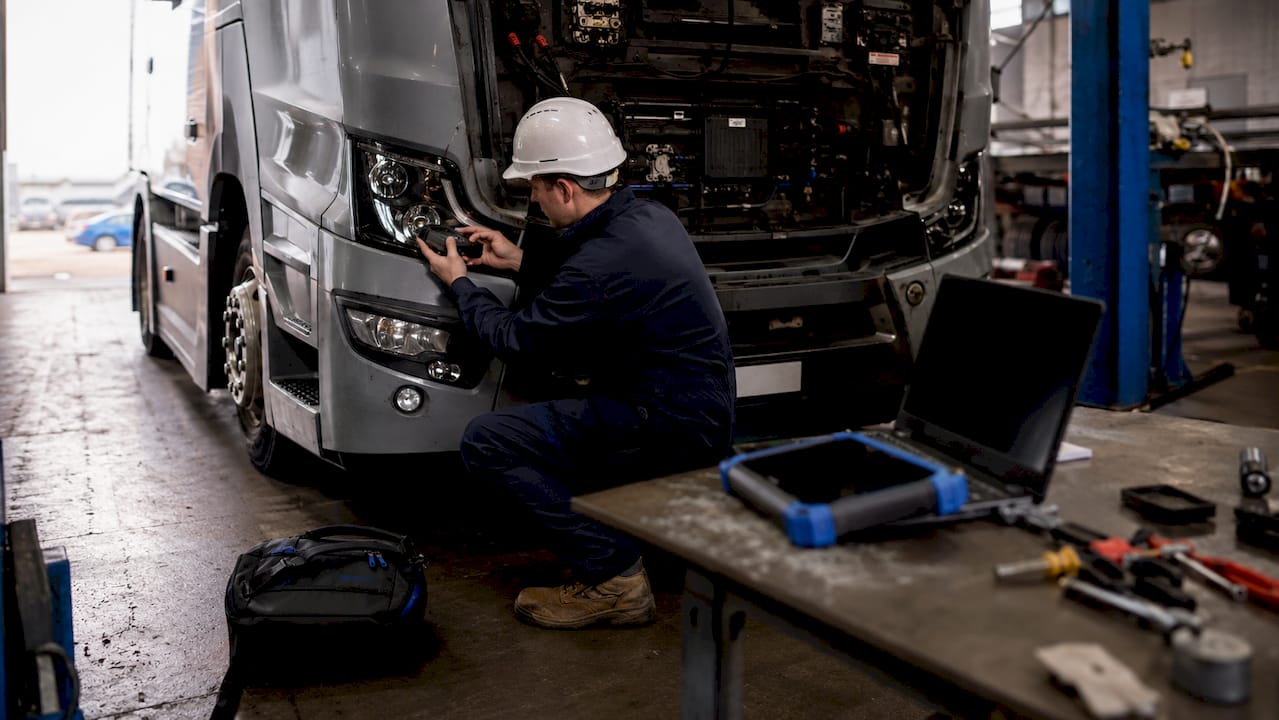
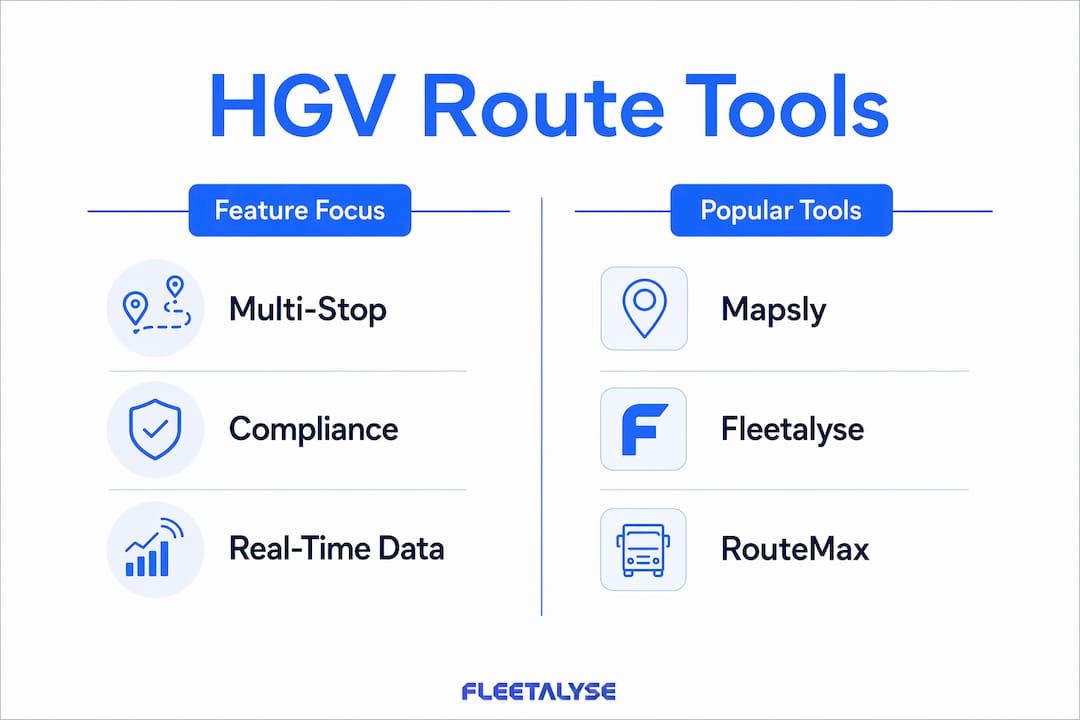
Telematics devices fitted to each vehicle collect GPS position, speed, engine data via CAN-bus, and tachograph activity. That data feeds into HGV route planning software such as Mapsly, which can plan up to 2,000 stops and 30 users simultaneously while accounting for driver skills and vehicle equipment. That scale matters for operators running mixed fleets across multiple depots.
Data inputs that determine route quality
The software is only as good as the data you feed it. Accurate vehicle data, including dimensions, weight, permitted load, and service windows, is non-negotiable. Driver schedules and rest period requirements must also be loaded correctly, since the system uses these to build legally compliant duty cycles.
Real-time inputs add a second layer of accuracy. Live traffic feeds, weather forecasts, and emission zone boundaries all affect which route is genuinely optimal on a given day. Platforms that ingest these dynamically produce far better outcomes than those relying on static map data alone.
Pro Tip: Before connecting any software, audit your vehicle master data. Incorrect height or weight figures will generate routes that look optimised on screen but create real-world compliance failures.
Comparing leading HGV route optimisation tools
| Tool | Key strength | HGV compliance features |
|---|---|---|
| Mapsly | Large-scale multi-stop routing | Vehicle dimension and driver skill constraints |
| Geotab | Deep telematics integration | Driver hours, DVSA data feeds |
| Dynamon Route Zero | Energy and emissions planning | Emission zone avoidance, EV range modelling |
How do you set up and execute optimised HGV routes?
Setting up compliant, efficient routes is a structured process. Rushing any step produces routes that fail in the field, waste fuel, or put drivers at legal risk.
- Load your fleet profile. Enter each vehicle’s height, weight, axle configuration, and any HAZMAT certifications into the platform.
- Import driver schedules. Include shift start times, maximum driving hours under EU or GB domestic rules, and mandatory rest breaks.
- Define delivery windows. Set customer time constraints so the system can sequence stops without breaching service agreements.
- Apply compliance guardrails. HGV route planners must include low bridge avoidance, weight limit restrictions, and Clean Air Zone boundaries as native filters, not manual overrides.
- Run the optimisation. Specialised tools reduce planning time from weeks to minutes by automating the modelling process. Review the output against known local knowledge before dispatching.
- Push routes to drivers. Send confirmed routes to in-cab devices or driver apps, with turn-by-turn guidance that respects HGV restrictions.
- Monitor live. Use GPS tracking to compare actual progress against the planned route in real time.
The shift from manual to automated planning is significant. A transport planner who once spent half a day building a multi-drop run can now validate an AI-generated route in under an hour.
Pro Tip: Always keep a manual override option available for drivers. Local knowledge about temporary road closures or site access issues will always outpace what any platform can detect automatically.
AI-driven route optimisation considers multiple variables beyond the shortest path, including driver hours, HAZMAT restrictions, live traffic, and weather forecasts. That multi-variable approach is what separates purpose-built HGV software from generic consumer navigation tools.
Common mistakes in HGV route optimisation telematics
Most implementation failures trace back to the same handful of errors. Knowing them in advance saves considerable time and cost.
- Dirty master data. Operators frequently fail to audit vehicle and driver records before deployment. Poor data quality produces flawed route outputs that appear optimised but generate real-world inefficiencies and compliance risks.
- Treating shortest route as optimal route. A shorter path that crosses a weight-restricted bridge or enters a Clean Air Zone is not optimal. Route optimisation software must move beyond shortest-path calculations to factor in hours-of-service rules, hazardous goods routing, and dynamic conditions.
- Over-relying on real-time rerouting. Constant route changes cause driver anxiety and operational disruption. Overuse of real-time rerouting is a recognised problem; best practice is setting a threshold so rerouting only triggers when the benefit exceeds a defined margin.
- Ignoring driver feedback. Drivers encounter conditions no algorithm sees. Excluding their input from route reviews means the same errors repeat.
- One-time deployment thinking. Buying software and walking away produces diminishing returns. The biggest benefits come from ongoing KPI monitoring and active refinement, not a single setup.
“The system is only as reliable as the discipline behind it. Technology does not replace operational rigour. It amplifies it.”
Pro Tip: Set your rerouting threshold at a meaningful saving, for example a minimum of ten minutes or a defined fuel saving, before the system triggers a live route change. This protects driver welfare without sacrificing responsiveness.
Reviewing delivery optimisation tips from logistics specialists reinforces one consistent message: the operators who get the most from route optimisation are those who treat it as an ongoing discipline, not a one-off technology purchase.
How do you monitor and improve HGV routes continuously?
Telematics data creates a feedback loop that makes every future route better than the last. The key is knowing which metrics to track and acting on what they reveal.
KPIs that drive route improvement
The metrics that matter most for HGV fleet management are cost per delivery, on-time delivery percentage, and fuel consumption per kilometre. Tracking these KPIs and refining routes based on actual telematics data is what generates measurable ROI. A route that looks efficient in planning but consistently runs late signals a structural problem, whether that is an unrealistic time window, a recurring traffic bottleneck, or a driver behaviour pattern.
AI and machine learning in route refinement
Telematics data creates a continuous feedback loop, allowing AI-based optimisation to learn from real-world outcomes like fuel waste and service delays. Over time, the system builds a picture of which route variants perform best under specific conditions, such as early morning versus afternoon runs, or winter versus summer weather patterns. That accumulated learning is a genuine competitive advantage for operators who commit to the process.
Traditional vs data-driven route management
| Approach | Planning method | Adaptation | Performance visibility |
|---|---|---|---|
| Traditional | Manual, experience-based | Reactive, after complaints | Limited, paper-based |
| Data-driven | Automated, AI-assisted | Proactive, threshold-triggered | Real-time dashboards |
| Telematics-integrated | Live data plus planned routes | Dynamic, compliance-aware | Full KPI tracking |
The gap between traditional and telematics-integrated management widens over time. Each completed run adds data. Each data point sharpens the next plan.
Pro Tip: Review your route performance data weekly, not monthly. Patterns that look minor over four weeks can represent significant cumulative fuel waste or missed delivery windows when examined at shorter intervals.
Key takeaways
HGV route optimisation telematics delivers its full value only when clean data, compliance-aware software, and continuous KPI monitoring work together as a single system.
| Point | Details |
|---|---|
| Data quality is foundational | Audit vehicle dimensions, driver schedules, and service windows before running any optimisation. |
| Compliance must be built in | Use software with native HGV guardrails for bridge heights, weight limits, and emission zones. |
| Rerouting needs thresholds | Set a minimum benefit trigger to avoid driver anxiety from constant live route changes. |
| KPIs drive ongoing improvement | Track cost per delivery, fuel use, and on-time rates weekly to identify and fix systemic failures. |
| Telematics creates a learning loop | AI-based platforms improve future routes by learning from real-world vehicle and driver data. |
Why most UK fleets underestimate what telematics routing actually demands
I have spoken with transport managers who bought capable route optimisation platforms and saw little improvement in the first six months. Almost every time, the root cause was the same: the technology was ready, but the operation was not.
The most common gap is data discipline. Operators load vehicle records that have not been updated since the last fleet refresh. Heights are wrong. Weight limits are approximated. Driver licence categories are missing. The software then builds routes on a false foundation, and the results reflect that. No platform, however sophisticated, can compensate for inaccurate inputs.
The second gap is cultural. Drivers who have run the same rounds for years often distrust algorithmically generated routes. That scepticism is not irrational. Algorithms do not know about the yard with the awkward turning circle or the customer who locks the gate at noon. The operators who succeed treat driver feedback as a data source, not an obstacle. They build review cycles where drivers flag issues, planners update the system, and the next run benefits from that knowledge.
There is also a tendency to treat compliance as a constraint that slows things down. The opposite is true. Building DVSA rules, tachograph limits, and Clean Air Zone boundaries into your routing from the start means you never face the cost of an enforcement notice or an out-of-hours delivery failure. Compliance-aware routing is not cautious. It is efficient.
My honest view is that the operators who get the most from GPS fleet tracking are those who invest as much in process and people as they do in hardware and software. The technology is the easy part.
— Vytautas
See how Fleetalyse supports smarter HGV routing
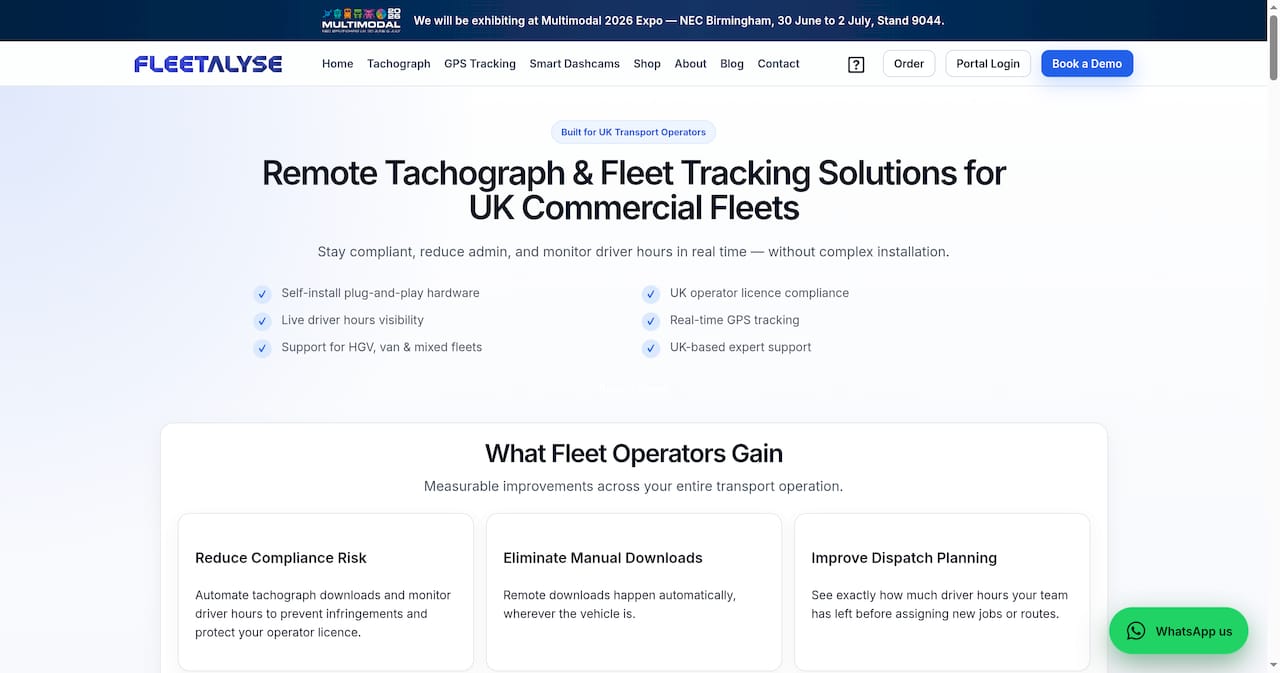
Fleetalyse gives UK fleet operators the telematics foundation that route optimisation depends on. The platform combines real-time GPS tracking, automated tachograph downloads, and driver behaviour monitoring into a single system built for HGV compliance. Every vehicle position, driver hour, and fuel consumption figure feeds directly into your planning process, giving your route optimisation software the accurate, live data it needs to perform. If you are ready to move beyond manual planning and reactive management, explore the full range of Fleetalyse telematics solutions or browse HGV GPS trackers designed specifically for UK commercial fleets.
FAQ
What is route optimisation telematics for HGVs?
HGV route optimisation telematics combines GPS tracking and vehicle data with specialised software to plan the most efficient and legally compliant routes for heavy goods vehicles. It accounts for driver hours, vehicle restrictions, and real-time traffic conditions.
How does telematics improve HGV route planning?
Telematics feeds live vehicle and driver data into route planning software, enabling dynamic adjustments and compliance checks that static planning tools cannot provide. Platforms like Geotab and Mapsly use this data to refine routes continuously based on real-world performance.
What are the biggest mistakes in HGV route optimisation?
The most common errors are using inaccurate master data, treating the shortest route as the best route, and over-relying on real-time rerouting without setting benefit thresholds. Each of these degrades route quality and increases operational risk.
Do HGV route planners account for UK-specific restrictions?
Purpose-built HGV route planning software includes native filters for low bridges, weight limits, and Clean Air Zones across the UK road network. Generic navigation tools do not carry these guardrails, making them unsuitable for commercial HGV operations.
How do you measure the ROI of route optimisation telematics?
ROI is measured by tracking KPIs including cost per delivery, fuel consumption per kilometre, and on-time delivery percentage before and after implementation. Continuous monitoring and route refinement based on telematics data is what drives sustained improvement over time.