
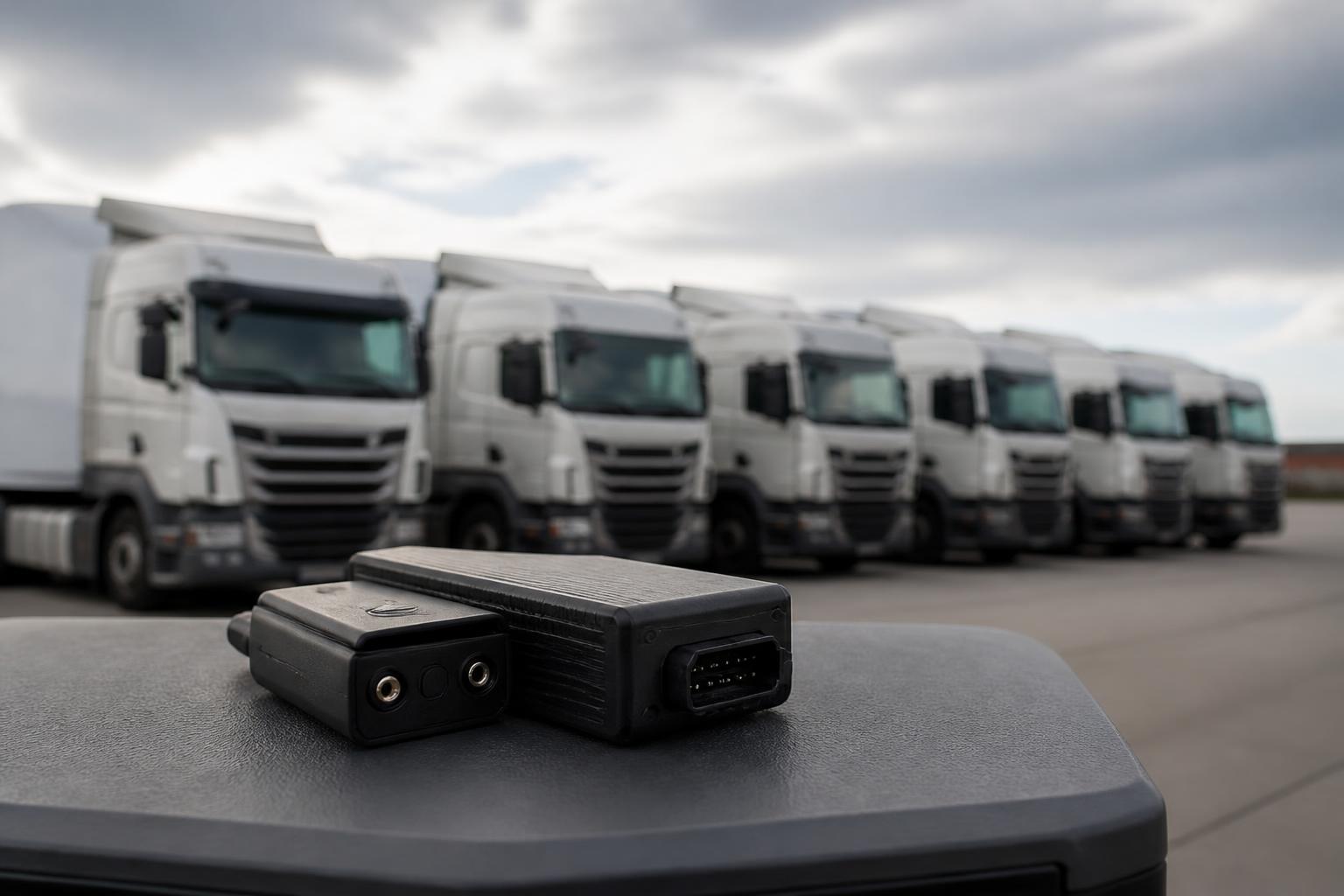
Good daily fleet control depends on seeing the right information early enough to act on it. For most UK operators, that means knowing where vehicles are, what work they are doing, whether drivers are within driver hours rules, and whether any issue needs attention before it becomes a service failure, an infringement, or a safety problem. That is where fleet data matters. Used properly, it turns separate signals from vehicles, drivers and equipment into a working picture of the day.
In practice, the value is not in having more reports. It is in having one place to check live status, exceptions and history across HGV, van, trailer and asset operations. At Fleetalyse, we build our platform around that operational need, combining tracking, Tachograph, Smart dashcams and reporting so transport teams can manage the fleet without switching between disconnected systems.
What fleet data means in day-to-day operations
In day-to-day UK transport operations, fleet data is the operational information generated by vehicles, drivers and related assets as work is planned, dispatched, completed and reviewed. It includes live location, movement history, mileage, idling, ignition status, route progress, driver activity, Tachograph records, trailer position, camera events and, where available, CAN data from the vehicle itself.
For a fleet manager or transport operator, the important point is that this is not abstract business intelligence. It is the information used to answer practical questions throughout the day.
Is the vehicle on site or delayed?
Has the driver started within the planned shift?
Which unit is closest to the next collection?
Has a trailer been left where it should be?
Do we need to intervene because of a driver hours risk?
Did the vehicle actually attend the customer location when challenged on a delivery time?
That is why the most useful fleet data is tied to operational workflow. A transport office does not need a stack of isolated exports. It needs a clear view of current activity and recent history, with enough detail to support dispatch, customer communication, compliance checks and incident review.
The main data types operators work with tend to fall into a few groups:
Location and movement data, usually from GPS tracking, showing position, speed, route history, stops and geofenced arrivals or departures.
Driver activity and legal records from the Tachograph, used for driver hours monitoring, remote downloads and compliance review.
Vehicle behaviour and condition data, including harsh braking, acceleration, idling and, where connected, CAN data such as fuel use or odometer readings.
Video and event data from Smart dashcams, helping operators understand what happened before, during and after an incident.
Asset status data for trailers, plant, containers or other non-powered equipment, so operators can see where units are and whether they are being used.
Each type serves a different purpose. Together, they give control.
Where fleet data comes from across a commercial fleet
Across a commercial fleet, the data does not come from one source. It comes from several hardware and software layers, each contributing a different view of the operation.
GPS tracking is usually the starting point. A vehicle tracker reports location, movement and ignition status at set intervals or based on events. This gives the live map view most operators rely on for dispatch and customer updates. It also creates the journey history used to check arrivals, departures, route adherence and utilisation. Mapping quality matters here. A platform built on OpenStreetMap can provide practical route and location context without making the map itself the whole story.
Tachograph systems provide legally important driver and vehicle activity records. For operators running in scope vehicles, this data is essential for monitoring driver hours, rest, breaks and working patterns. In the UK, the rules remain aligned in many practical areas with the EU drivers' hours framework for goods vehicles, but operators still need to manage them in line with UK enforcement expectations and domestic working arrangements. A Tachograph connection also supports remote download workflows, reducing the need to physically bring vehicles or cards back just to collect files.
Smart dashcams add visual context. A tracking alert may tell you a harsh braking event happened at 10:42 on the A14. Smart dashcams can show what caused it, whether the driver reacted appropriately, and whether there was a third-party factor involved. That matters for coaching, claims handling and protecting drivers from unfair allegations. We see many operators use connected camera coverage for incident review and driver visibility alongside tracking and Tachograph data because one source alone rarely tells the full story.
CAN data comes from the vehicle network where supported and correctly integrated. It can provide additional detail such as fuel level, engine parameters, mileage and other operational signals. The exact fields available depend on the vehicle, body type and installation method. For mixed fleets, this can vary significantly between manufacturers and model years, so it is important to assess what is genuinely available rather than assuming every vehicle will return the same data set.
Asset tracking covers trailers and non-powered equipment that still need operational control. A trailer without a tractor unit is still part of the service chain. If it is in the wrong yard, still loaded, or not where the next job expects it to be, the operation is affected. Battery-powered or solar asset trackers can provide location and movement events for these units without the complexity of a full vehicle installation.
Connectivity underpins all of this. Devices need stable communications, and in practical rollout terms that often means selecting hardware and IoT SIMs that suit UK coverage conditions, cross-border movement if relevant, and the reporting frequency the operation needs.
How operators use fleet data to improve visibility and control
The first operational benefit is live visibility. A transport office can see which vehicles are active, stationary, delayed or approaching a site. That helps with dispatch decisions, especially when jobs change during the day. Instead of phoning around to find the nearest available unit, planners can work from a live map and current status view.
Historic data is just as important. When a customer queries a missed slot or a late arrival, the answer usually sits in the journey record. Arrival time, dwell time, route taken and departure time can all be checked quickly. This is where Fleet insight matters. A clear operational timeline is often more useful than a large report because it supports a decision in the moment.
Utilisation is another major use. Many fleets know how many vehicles they own or hire, but have a weaker view of how those vehicles are actually used across the week. Tracking history and mileage patterns can show underused units, recurring delays, unnecessary idling or vehicles that are overloaded with work while others stand. For HGV and van fleets alike, this can support better planning before additional vehicles are added.
Exception management is where good control really shows. Most operators do not need to watch every movement all day. They need alerts and workflows for the events that matter, such as unauthorised use, out-of-hours movement, prolonged idling, route deviation, missed geofence arrival, low battery on an asset tracker, or a Tachograph download becoming overdue. The system should help the office focus on exceptions, not create more noise.
Customer communication improves when the transport team is working from reliable fleet data. If a vehicle is delayed in traffic, the customer can be updated with a realistic ETA rather than a guess. If a driver has completed a call but is held on site, the office can explain that the delay sits at the delivery point, not on the road. This is particularly useful where operators provide access to selected information through a Customer Portal, so customers can see progress without constant phone calls to the traffic desk.
Mixed fleet oversight is another common requirement. Many operators run a combination of HGV, vans, trailers and other mobile assets. If those are split across different systems, the office spends time reconciling screens, exports and logins. We design Fleetalyse to reduce that fragmentation, bringing several daily controls into one place. For operators reviewing options, it is worth looking at fleet software and hardware for mixed commercial operations rather than adding another standalone tool.
Using fleet data for compliance, driver hours and safety
Compliance visibility is one of the strongest reasons to bring fleet systems together. For operators running in scope vehicles, driver hours oversight cannot depend on manual chasing and delayed checks. You need to know which downloads are due, which cards or vehicle units have not reported, and where a potential issue is building before it becomes an infringement pattern.
Remote Tachograph downloads are a practical step forward here. Instead of scheduling vehicles back to base purely to collect files, operators can retrieve the required data remotely, provided the right hardware and permissions are in place. This helps maintain continuity for vehicles working nationally or spending long periods away from the operating centre. It also supports better download discipline, because the process is built into the system rather than left to ad hoc office reminders.
Driver hours checks become more useful when they are visible in the same operating environment as the rest of the fleet. A planner who can see both the vehicle location and the driver's available time is in a better position to allocate work safely. That does not remove the need for proper transport management judgement, but it gives the office a stronger basis for decisions.
Safety is another area where joined-up fleet data helps. Tracking can flag speeding patterns, harsh events or unusual out-of-hours use. Smart dashcams can provide footage for event review and coaching. Tachograph records can add context around fatigue risk, break compliance or long duty patterns. Used together, these tools support fairer and more targeted intervention.
Incident review is a good example. After a collision or complaint, operators usually need to establish where the vehicle was, what it was doing, whether the driver was within legal limits, and what happened on the road. If that requires four separate systems and a spreadsheet, the review slows down and the picture is weaker. If the journey, driver record and camera event are accessible together, the office can respond faster and with more confidence.
UK operators also need to keep the legal distinction clear between what the system shows and what management must do with it. A platform can highlight risks and missed downloads, but the operator remains responsible for acting on them, reviewing infringements, and maintaining proper compliance processes. Good fleet data supports that responsibility. It does not replace it.
What makes fleet data useful rather than just more reporting
Useful fleet data is accurate, timely and connected to a workflow. If the location is stale, if the odometer is unreliable, or if downloads fail without anyone noticing, the data quickly loses operational value.
Installation quality matters. Hardware should be fitted correctly, configured properly and matched to the fleet type. A trailer tracker that reports too infrequently may not support yard control. A vehicle tracker fitted without understanding power behaviour may create false assumptions about ignition or movement. CAN data needs careful validation because not every feed is equally clean or available on every vehicle.
Data also needs context. A map full of icons is not enough. Operators need geofences, event logic, driver association where relevant, and reports that answer real questions. Who has not moved for three days? Which trailers have left a defined area? Which vehicles are approaching a service interval? Which driver cards have not downloaded on time?
Joined-up systems are just as important. If tracking sits in one portal, compliance in another, camera footage in another, and workshop notes in a spreadsheet, the office spends time moving between tools instead of managing the fleet. That is why many buyers now want fewer systems with better integration. At Fleetalyse, we see the strongest operational results where live tracking, Tachograph visibility, camera events and reporting sit together under one login.
Clear user access matters too. Different people need different views. A transport manager may need the full compliance and exceptions picture. A customer service team may only need delivery progress. A subcontractor or customer may need limited external access through a Customer Portal. Internal admin teams may need billing or account controls without access to operational detail. Simple account structure helps here, whether users enter through a main platform, a Tracker login, or defined customer access.
Reporting should lead to action. A weekly idling report is only useful if someone reviews it, identifies the cause and changes behaviour or planning. A missed download alert is only useful if it triggers a follow-up. The best fleet data platform is not the one with the most dashboards. It is the one that helps the office act consistently.
What to look for in a fleet data platform
Start with fleet type. An HGV operation with Tachograph requirements, driver hours checks and remote downloads needs more than basic van tracking. A trailer-heavy fleet needs strong asset visibility and battery-aware hardware. A mixed operation needs one platform that can handle different unit types without creating system sprawl.
Then look at hardware choice. Some operators want a standardised rollout with Fleetalyse-ready trackers, preselected for quick deployment and straightforward support. Others want unlocked Teltonika hardware because they have specific installation preferences, existing engineering relationships or a phased migration plan. Both approaches can work, but the key is making sure the hardware and the software are aligned from the start.
Assess the platform on operational tasks, not just features. Can the traffic office see live vehicles and trailers together? Can compliance staff manage Tachograph downloads and exceptions without exporting files all day? Can camera events be reviewed alongside trip history? Can you set practical alerts and geofences without needing a developer? Can the system support growth without another portal being added six months later?
Check how the supplier handles rollout and commercial setup as well. For UK buyers, that includes account structure, contract clarity, billing, VAT treatment and payment processes where relevant. If online purchasing is part of the route, systems such as Stripe may sit behind payment collection, but that should not complicate the operational setup. Buyers should know exactly what they are ordering, how devices will be provisioned, and what support they will receive after installation.
It is also worth checking whether the platform is built for practical transport use rather than generic telematics. We recommend looking at real operational fit, including mixed fleet support, compliance visibility and workshop planning. Our article on using tracker data to reduce HGV workshop disruption shows the kind of day-to-day control that matters more than headline feature lists.
Finally, look for a supplier that can support the way your fleet actually runs. Some operators want to buy online and deploy in stages through the online shop for tracking and fleet hardware. Others need a customised rollout across vehicles, trailers and camera systems with different installation needs. We support both through Fleetalyse, provided by Fleeta Limited T/A Fleetalyse, because good fleet control starts with a system that fits the operation, not the other way round.
When fleet data is accurate, connected and easy to act on, it improves daily control in the places that matter most, dispatch, utilisation, compliance, safety and customer service. That is the difference between collecting information and actually running a better fleet.
What is fleet data?
Fleet data is the operational information produced by vehicles, drivers and fleet systems. It can include location, mileage, journey history, Tachograph records, driver hours, camera events, asset status and reporting trends.
Why is fleet data important for UK operators?
It gives operators better visibility of vehicles, drivers and compliance tasks. That helps with planning, customer updates, exception handling, safety review and reducing time spent chasing information across separate systems.
Is GPS data enough on its own?
Usually not. GPS is useful for location and movement, but operators often also need Tachograph information, driver hours visibility, Smart dashcams, trailer or asset tracking and reporting to understand the full picture.
How does fleet data help with compliance?
It can support remote Tachograph downloads, driver hours checks, vehicle activity records and audit trails. The main benefit is earlier visibility of issues, so transport teams can act before small gaps become bigger problems.
Can smaller fleets benefit from fleet data?
Yes. Smaller operators often feel the admin burden most sharply, especially when information sits in spreadsheets, messages and separate logins. Clear reporting and live visibility can save time even in a modest fleet.
What should buyers ask before choosing a system?
Ask what data the platform brings together, which hardware it supports, how reporting works, whether it suits HGV and mixed fleets, and how daily users will access the information they actually need.