
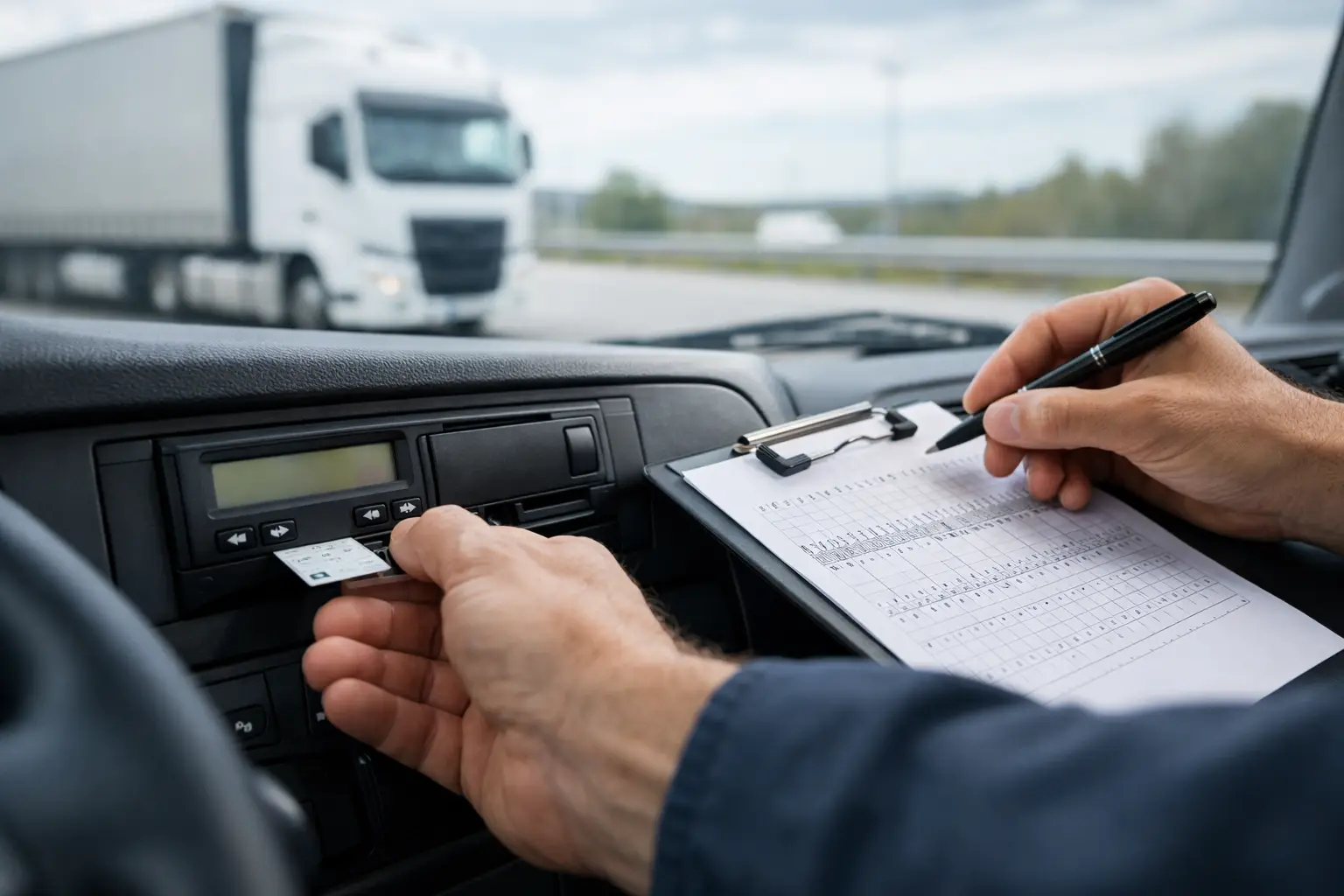
A driver who starts a shift with the wrong mode selected can create a compliance problem before the first delivery is even off the board. That is why knowing how to avoid tachograph infringements is not just about understanding the rules. It is about building a routine that catches issues early, reduces admin pressure, and protects your operator licence.
For most UK operators, infringements rarely come from one dramatic failure. They come from repeated small gaps - missed manual entries, late downloads, drivers stretching available time, depot teams working from old information, or managers only spotting a problem after the report lands. If you want fewer infringements, the fix is operational. You need clearer processes, better visibility, and faster intervention.
How to avoid tachograph infringements in day-to-day operations
The most effective fleets treat tachograph compliance as a live control process, not a back-office task. If your team is relying on weekly checks, manual reminders, and spreadsheets, you are usually working too late. By the time an infringement appears in a historic report, the breach has already happened and the chance to prevent it has gone.
Avoiding infringements starts with three basics working together. Drivers need clear expectations, managers need current information, and records need to be complete. If one of those breaks down, the rest quickly follow.
That sounds straightforward, but the pressure points are familiar. Routes overrun. Agency drivers are less familiar with your process. Vehicles change hands mid-week. A card download gets missed because the vehicle is away from base. None of that is unusual, which is exactly why compliance systems need to cope with normal fleet disruption rather than ideal conditions.
Train drivers on the mistakes that actually happen
Generic driver briefings do not usually solve infringement risk. The issue is not whether drivers have heard of the rules. It is whether they understand the practical errors that trigger infringements during a busy working week.
Most fleets see recurring problems around break timing, daily rest, manual entries, ferry or train mode, and mode selection during loading, waiting, or other work. These are not edge cases. They are routine parts of transport operations, and they need to be trained as routine.
Short, specific refreshers tend to work better than occasional broad sessions. Show drivers what went wrong, why it created a breach, and how it should be recorded next time. If a driver can recognise a mistake while the shift is still live, you have a much better chance of stopping a minor issue becoming a pattern.
Stop relying on delayed data
One of the biggest causes of avoidable infringements is simple: the transport office does not know enough, soon enough. If driver hours data is only reviewed after manual downloads or historic reports, planning decisions are being made with partial information.
That creates obvious risk. A driver may be assigned work with limited driving time left. A planner may not realise a rest requirement is approaching. A compliance manager may only discover a repeated issue after several shifts have already been completed the same way.
Live visibility changes that. When current driver hours status is available during the day, depot teams can make informed decisions before the infringement happens. Work can be reassigned, breaks can be protected, and exceptions can be managed in real time rather than explained afterwards.
The process gaps that lead to tachograph infringements
Most operators do not have a knowledge problem. They have a consistency problem. The rules are known, but they are not always applied the same way across vehicles, depots, and drivers.
Late downloads are a common example. If vehicle unit and driver card downloads depend on somebody remembering to chase them, there will be gaps. The same applies to infringement reviews. If reports are run irregularly or only when time allows, issues stay buried for longer than they should.
There is also a trade-off here. Manual processes can work in small fleets with stable operations and strong discipline. But once the fleet grows, shifts vary, or vehicles stay away from base for longer periods, that approach becomes harder to control. Admin rises, and compliance visibility usually drops at the same time.
Make downloads automatic wherever possible
Remote tachograph downloads remove one of the most common weak points in compliance management. Instead of waiting for vehicles and cards to come back to base, data can be collected on schedule without chasing drivers or tying the process to depot availability.
That matters for two reasons. First, it reduces the risk of missed legal download deadlines. Second, it gives transport teams cleaner, more regular data to review. Better data flow does not guarantee fewer infringements on its own, but it removes the lag that allows basic issues to go unnoticed.
Review infringements quickly, not eventually
An infringement report is only useful if it leads to action. If the same driver appears with the same breach type over several reporting periods, the process is already too slow.
The better approach is early review and documented follow-up. Was the infringement caused by planning pressure, poor understanding, card misuse, or a one-off operational disruption? Each needs a different response. Treat every event as driver fault and you miss planning issues. Treat every event as bad luck and patterns keep repeating.
This is where an integrated compliance platform is more useful than a standalone download tool. When driver hours, vehicle activity, and operational visibility sit together, it is easier to understand what actually happened and respond properly.
Build planning around remaining hours, not assumptions
A surprising number of infringements begin in the traffic office. Not because planners intend to create risk, but because they are dispatching work without a live view of legal availability.
If a route only works by assuming the driver will "make it fit", the infringement risk is already built into the job. The same goes for last-minute additions to a run, unexpected delays, or backloads added without checking remaining driving and working time.
Good planning means using available hours as a live operational constraint, the same way you would use vehicle location or delivery windows. That does not make every day easy. There will still be jobs that need reshuffling and margins that tighten. But it gives the office a realistic basis for decisions.
For mixed fleets, this becomes even more important. Different job types, vehicle classes, and driver patterns create more opportunity for assumptions to creep in. A single system that combines live fleet visibility with driver hours data gives planners a stronger view of what can be done legally, not just what looks possible on paper.
Use exception management, not blanket checking
Checking everything manually is rarely sustainable. As fleets grow, the volume of data makes that approach slow and expensive.
A better model is exception-led management. Focus attention on overdue downloads, missing records, repeated infringements, drivers nearing limits, and vehicles or teams with unusual patterns. That allows compliance managers to spend time where risk is highest instead of working through low-value administration.
The point is not to reduce oversight. It is to direct it more effectively.
Keep records clean and defensible
Avoiding infringements is one part of the job. Being able to show that the business is monitoring, addressing, and improving compliance is the other.
That means keeping clear records of downloads, infringement reviews, driver debriefs, and remedial action. If the Traffic Commissioner or DVSA looks at your operation, they will want to see more than good intentions. They will want evidence that issues are identified promptly and dealt with properly.
This is where disconnected systems create unnecessary friction. When downloads sit in one place, vehicle tracking in another, and driver follow-up in spreadsheets or emails, the audit trail becomes harder to manage. A joined-up system reduces that burden and makes it easier to demonstrate control.
For many operators, that is the real shift. Compliance stops being a series of separate admin jobs and becomes part of everyday fleet management. Fleetalyse is built around that model, combining tachograph compliance, tracking, and live operational visibility so transport teams can act earlier and spend less time stitching information together.
No fleet removes infringements completely. Real operations are too variable for that. But the operators with the fewest problems usually have the same advantage: they do not wait for compliance issues to become history before dealing with them. They build visibility into the working day, and that is where control starts.